Hello, this is Bae Tae-seong, the chief director of Jamsil Go Unsesang Dermatology.
During consultations in the clinic,
I often hear comments like,
"I feel like my skin has lost elasticity," and
"My facial contours seem to have collapsed."
Many people think of aging
as simply a skin issue,
but in actual clinical practice, changes in the
"facial muscles (expression muscles)," which are deeper than the skin,
are often what cause facial aging.
Why should we look at muscles when it comes to facial aging?
The most common concerns I hear in the clinic are
"I feel like my skin has lost elasticity" and
"My facial line seems to have collapsed."
However, facial aging is not just a skin problem.
Under the skin, fat, fascia, and muscles work together,
and aging progresses across all of these structures at the same time.
Repeated facial expressions → Wrinkles become fixed
Reduced muscle elasticity → Changes in contour
Decreased support → Volume shifts to the lower face
In other words, an approach that only manages the skin
may have limitations.
Lifting that also considers the muscles: Emface
When looking at facial aging,
it is necessary to understand not only the skin visible on the surface,
but also the structures beneath it.
In many cases, rather than a simple decrease in skin elasticity,
facial expressions muscles in deeper layers than the skin weaken,
making the face appear saggy.
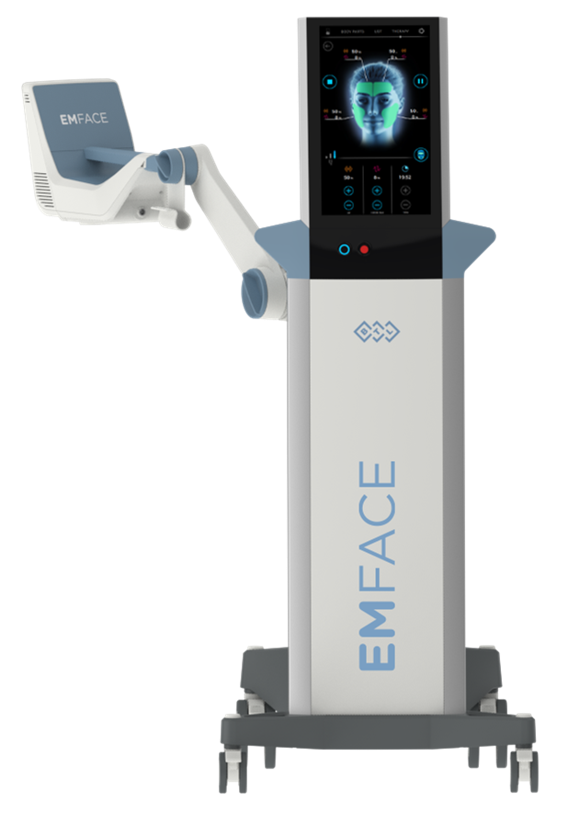
Source: Emface headquarters
Emface uses RF (radiofrequency current) and
HIFES together to
simultaneously approach the skin layer and the facial muscle layer.
Its 특징 is that it goes beyond simply improving skin elasticity
and also considers muscle activation and balance.
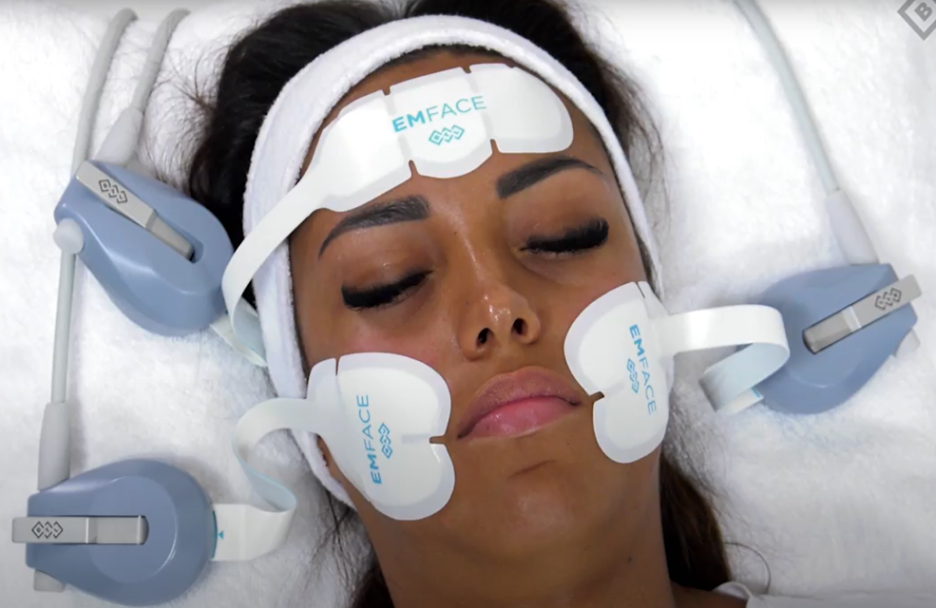
Source: researchgate
However, depending on an individual’s skin thickness, muscle condition, and facial expression habits,
the treatment area and intensity can vary,
so an accurate analysis must come first.
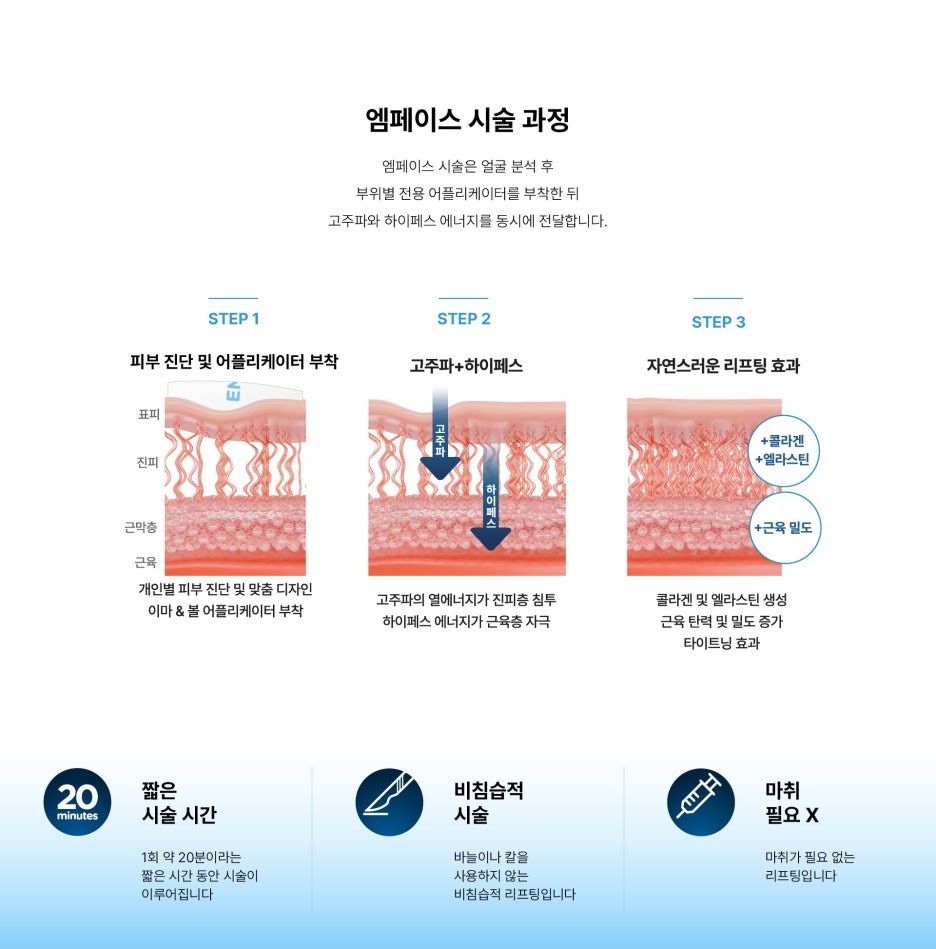
Source: BTL Medical Technology Korea Co., Ltd.
If you notice these changes
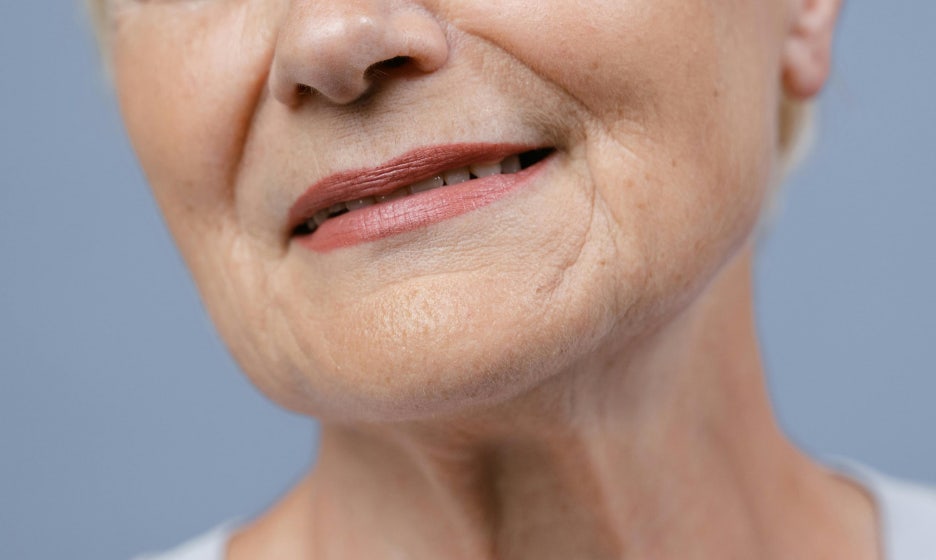
Source: pexels
-
If you recently feel that your facial line has become less defined than before
-
If you are concerned about changes in the lower face contour
-
If surgical methods feel burdensome
-
If you want to manage the skin and facial muscles together
Especially if you have undergone skin care or lifting procedures but
have not felt the changes you expected,
it is worth checking whether other structural factors besides the skin are at work.
However, the progression of aging, facial structure,
and muscle usage patterns differ from person to person.
Therefore, the same method
cannot be applied to everyone.
After sufficient consultation and diagnosis,
it is important to accurately analyze the current condition
and then establish a treatment direction that fits it.
An accurate diagnosis comes first
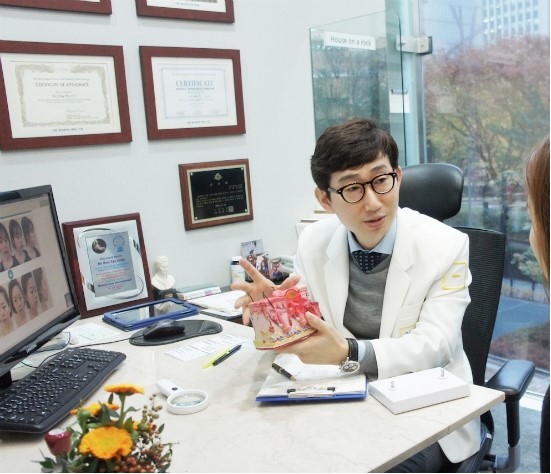
Facial aging is not just a matter of skin elasticity,
but a process that appears as the skin and facial muscles
change together.
Therefore, rather than judging only by outward symptoms,
an approach that understands the overall facial structure is needed.
Emface lifting is
one of the device-based treatments that takes these points into account,
and the application method may vary depending on an individual’s skin condition and muscle usage patterns.
Because the facial area differs in skin thickness, muscle tension,
and left-right balance,
the process of carefully determining the depth and range of stimulation
is important.
Because these anatomical characteristics and changes must be
overall considered,
it is necessary to plan treatment through a dermatology specialist
who understands the skin structure and muscles.
Based on sufficient consultation and analysis,
we guide each person toward a direction suited to them.
[ Jamsil Go Unsesang Dermatology Directions ]
[ Jamsil Go Unsesang Dermatology Clinic Information ]
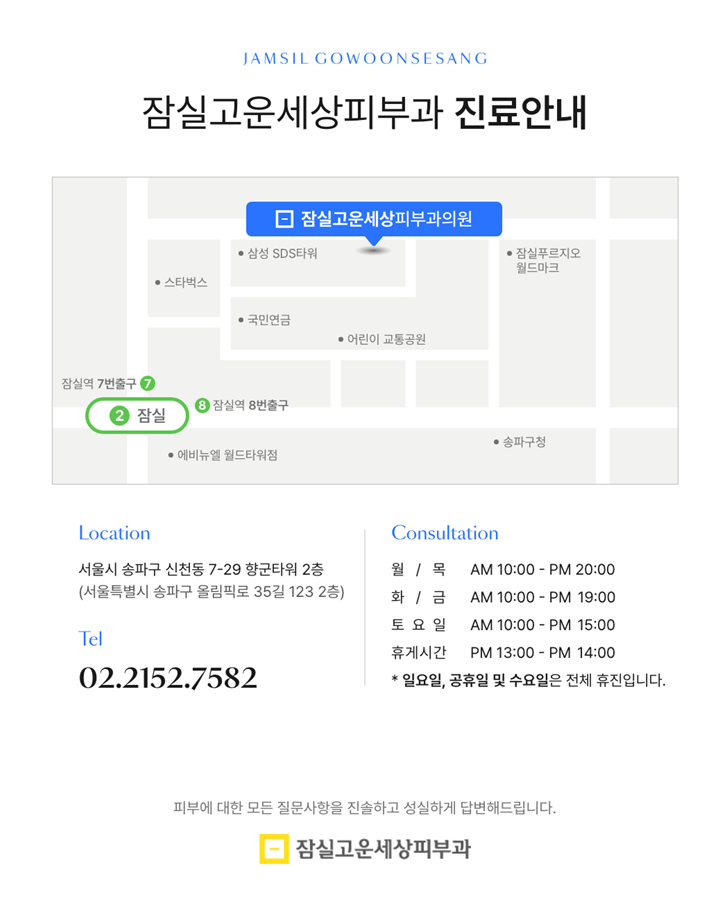
[ Jamsil Go Unsesang Dermatology Website ]
This article is provided by Jamsil Go Unsesang Dermatology for the provision of medical information,
in accordance with Article 56, Paragraph 1 of the Medical Service Act.
Since all procedures/surgeries carry the risk of side effects such as bleeding, infection, and nerve damage,
please proceed carefully after sufficient consultation with the medical staff.