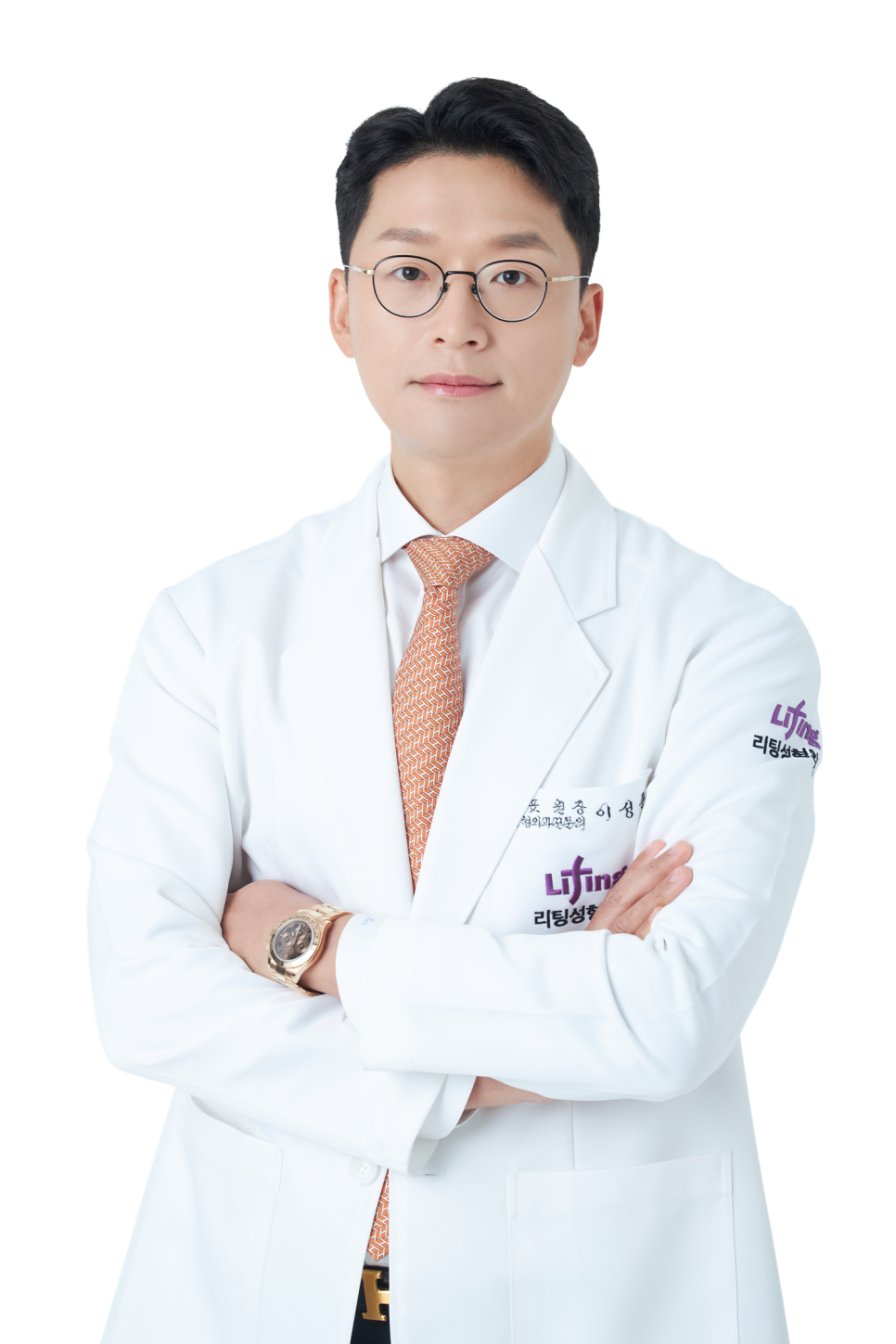
Hello, this is Lee Seong-joon, Chief Director of the Seoul branch of Liting Plastic Surgery.
As we get older and gain more years of experience, there are times when we miss our youth.
The vitality and energy that could only be had at that age are more beautiful than anything else.
What evokes a sense of longing is not just memories.
The elasticity of skin in your 20s, and the bright appearance that comes from it, is difficult to restore no matter how diligently you take care of yourself.
As human beings, we know this is an unavoidable part of life, but when we look in the mirror and see our own face losing elasticity, feelings of loss and depression can follow.
If this kind of concern is lowering your confidence, you can regain your youth through surgery at a facelift plastic surgery clinic.

What is a facelift?
Although it varies from person to person, skin aging generally begins in the mid-20s.
In the early stages of skin aging, sagging and loss of elasticity are not severe, so it can be managed with simple procedures such as thread lifting or skin boosters.
However, once you move past your youth and enter middle age, the effects of gravity become much more significant over time.
As a result, the strength of the SMAS layer and retaining ligaments also declines considerably, leading to visible signs of aging.
A facelift is a surgery used to tighten excessively sagging and stretched skin.
By separating the weakened SMAS layer and retaining ligaments and precisely lifting them, it can create a more elastic-looking face.
 Who is it recommended for?
Facelift surgery is suitable for those who want a youthful-looking life with a noticeably changed appearance, and for those who want a natural-looking lift.
Because it finely lifts the areas most affected by gravity and restores the overall firmness of the skin, it can bring back the elasticity you had when you were younger.
It also has high satisfaction for cases where the forehead has dropped and the cheeks have sagged due to gravity, making a person look older than their age.
Some people are concerned about a negative impression because sagging skin has caused jowls to form.
Because this surgery works by lifting the SMAS layer of the skin, it can improve jowls and create a more positive and brighter impression.
In addition, it can tighten a sagging jawline, deep wrinkles on the forehead and around the mouth, and even neck wrinkles, helping create a smoother line.
Overall, by lifting sagging skin, it gives a more lively and softer impression.
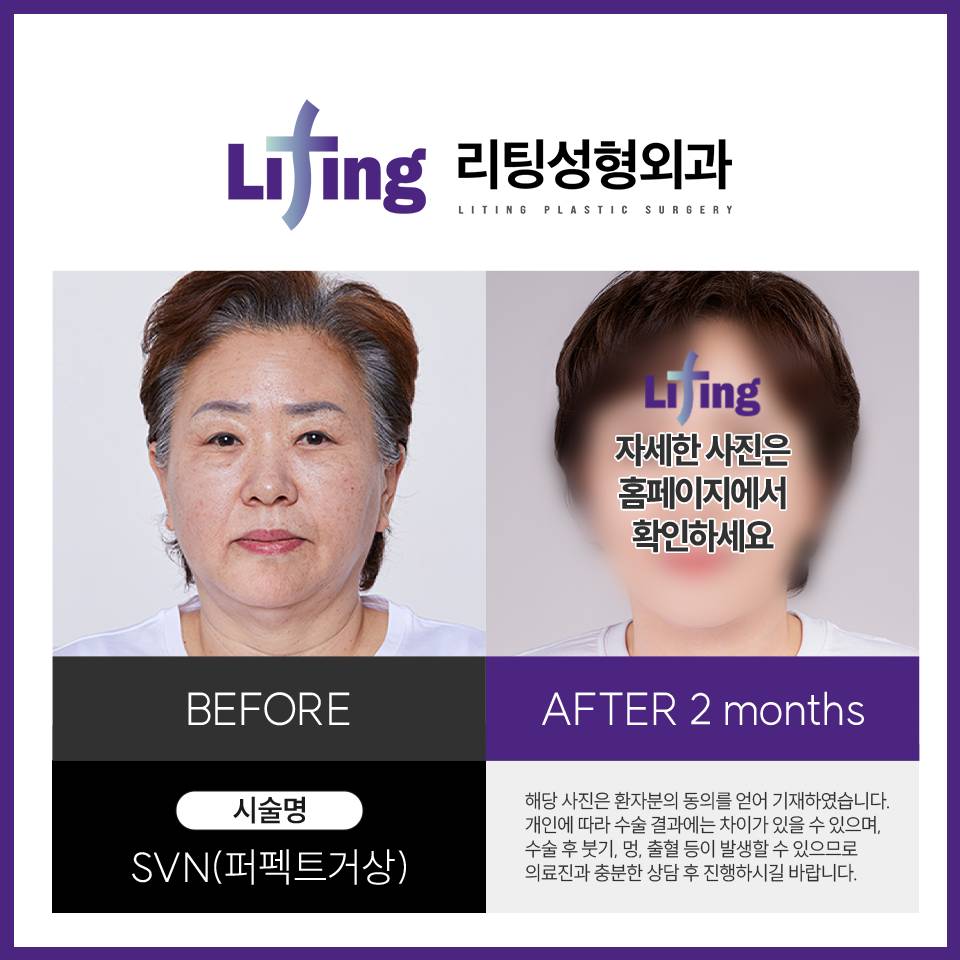



Things to be careful about
Although this is a method that can quickly change concerns caused by aging, careful judgment is needed when looking for a facelift plastic surgery clinic.
At first glance, you may think it simply means lifting the entire face, but in reality, it is important to design the result without damaging your natural appearance.
No matter how powerful the lift may be, if the result is overly artificial or significantly different from your original impression, satisfaction will inevitably decrease.
That is why you should clearly identify your desired needs and look for a clinic that proposes a design reflecting those wishes.

Our clinic carefully identifies, through sufficient preoperative consultation and communication, how much lifting you want and what kind of appearance you hope to achieve.
Because we have big data based on countless cases accumulated through focusing on lifting, we can deliver the results you want with our own expertise.
We consider what the optimal design would be and remove excessive elements to achieve a natural lift.
Even for the same facelift, we do not apply it in the exact same way.
Depending on the patient’s needs, we combine procedures suited to the situation, such as applying a facelift to the upper face and thread lifting to the lower face, to create harmonious beauty.
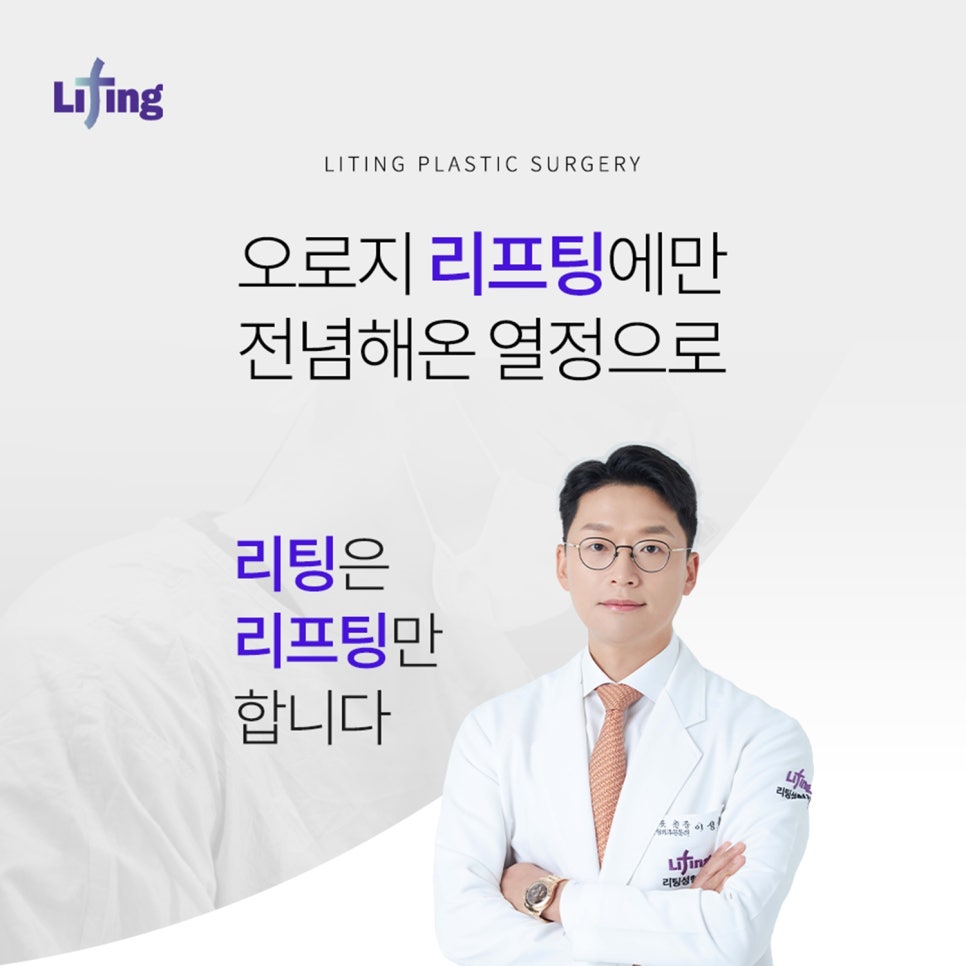
When looking for a facelift plastic surgery clinic, you must check the skill and experience of the medical staff.
For a facelift, it is important to delicately dissect the SMAS layer, that is, the fascia layer and retaining ligaments.
The fascia layer exists between the subcutaneous fat layer and the facial muscles, and because it is thin and composed of multiple layers, it requires highly detailed dissection skills.
In addition, because the fiber runs in one direction, if the fascia structure is not properly understood and lifted, problems such as tearing of the thin membrane can occur.
Also, if the fascia layer is not precisely targeted, the risk of bleeding, bruising, and swelling increases further, making it difficult to expect good postoperative results.

Experience that cannot be matched
Our clinic has focused solely on lifting for a long time, so both our surgical experience and skill level are naturally exceptional.
Because we understand the anatomical structure and function of the skin and have expertise honed through many surgeries, we can minimize damage while still bringing about strong changes.
A facelift involves both dissection of the SMAS layer and resection of the retaining ligaments.
Since we have handled so many cases, we can accurately identify the retaining ligaments and remove them in one step, reducing surgery time and also easing swelling and bleeding.
You can think of it like being so familiar with the area around your home that you know the way without looking at a map.
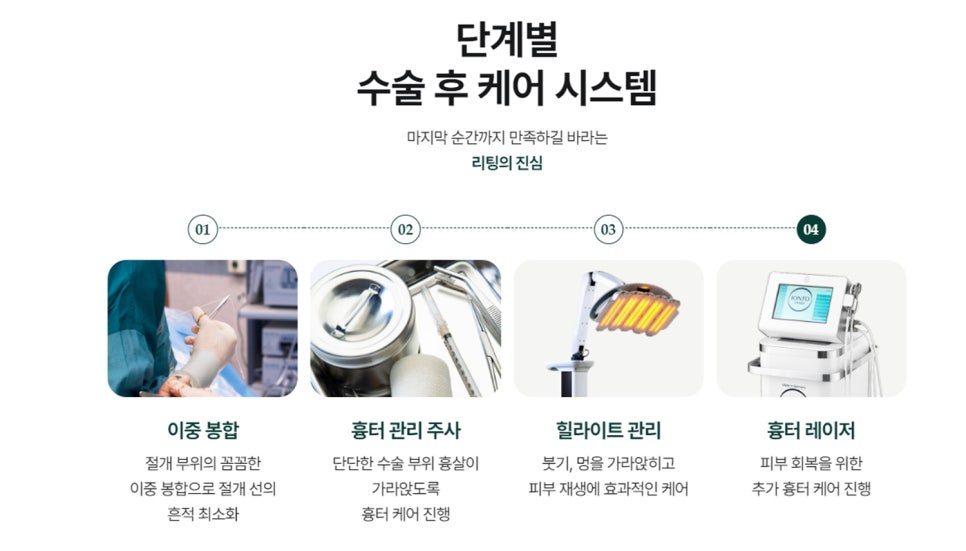
Thorough postoperative care as well
Among those considering a facelift, some may also worry about scars.
Our clinic carefully performs double-layer closure of the incision area to reduce the trace of the incision line.
In addition, we provide scar management injections to help reduce unsightly scar tissue.
We also combine various methods that help recovery so you can return to daily life more quickly, so you may be able to set aside some of those concerns.
Above all, because we prioritize health, we do not forget follow-up observation and provide thorough postoperative care.
If you are looking for a facelift plastic surgery clinic, we hope you will visit our clinic, where we offer natural beauty, and enjoy a youthful and vibrant transformation.
Worried about earlobe distortion after a facelift?