Hello, I’m Lee Seong-jun, the chief director of Liting Plastic Surgery Clinic’s Seoul branch.
As time passes, skin naturally begins to sag.
It is something every person inevitably goes through, but the stress caused by that change is considerable.
Many of you may be considering a facelift in order to reduce those concerns.
Because it is not a simple procedure, I expect there are quite a few worries and questions before surgery.
Today, for those of you, I’d like to take some time for a Gangnam facelift Q&A.

Q. What is a facelift?
A Gangnam facelift refers to a procedure that removes not only skin that has sagged under the force of gravity, but also internal retaining ligaments, and then pulls the tissue down to the fascial layer.
By tightly lifting the wrinkled tissue and removing unnecessary parts, it can create a much more youthful result.
Although it is a method that can produce dramatic changes, it is considered a major surgery and is relatively difficult.
So it is best to decide only after evaluating the experience and skill of the plastic surgery team you will visit.
Because it is important to adjust the lift appropriately according to each person’s degree of sagging, whether they have had previous procedures/surgeries, facial features, and needs, the skill and judgment of the medical team play a very important role.
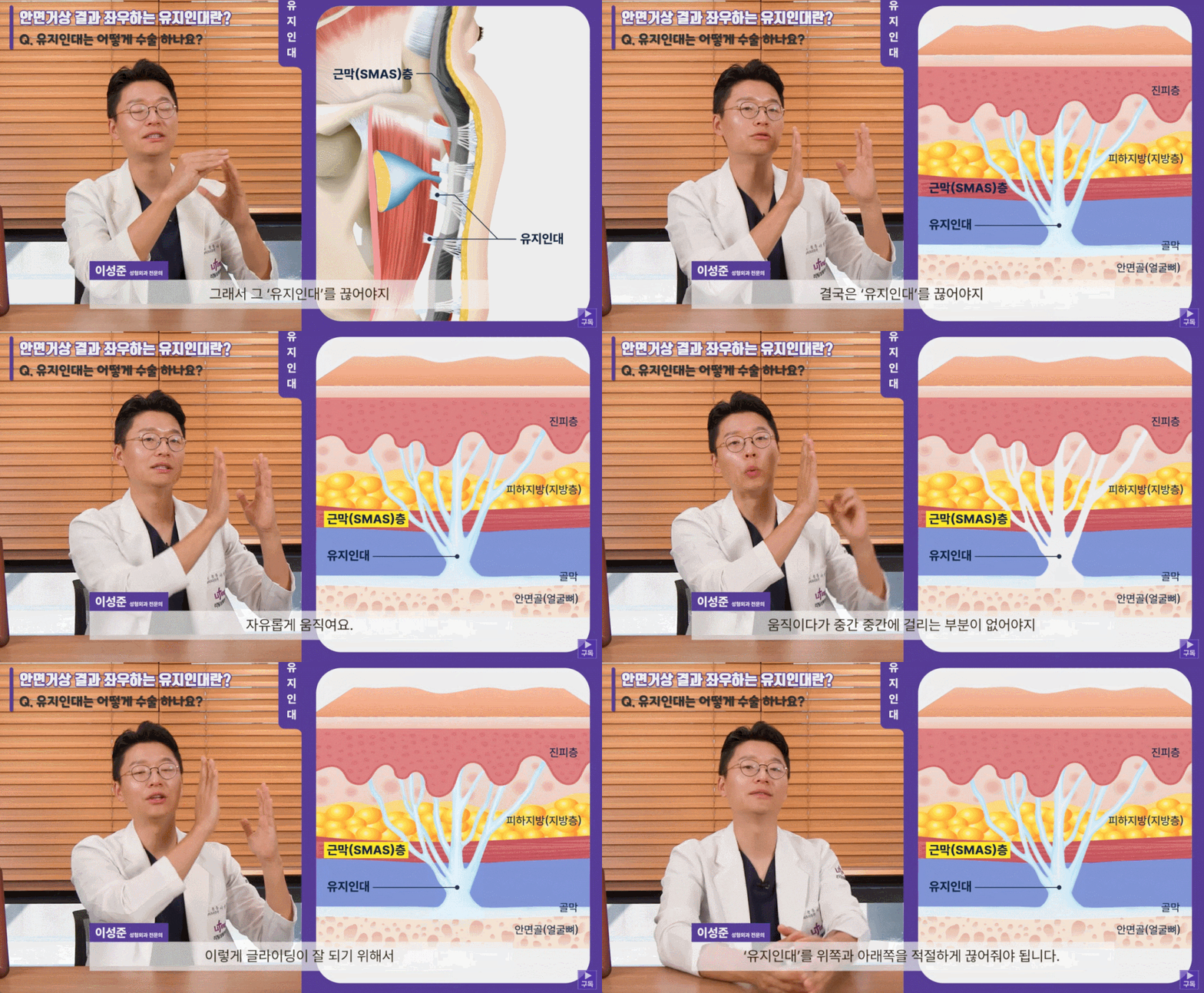
Q. Why do the retaining ligaments need to be cut?
Retaining ligaments are the ligaments that hold the outer skin and the inner fascia in place.
Therefore, if the retaining ligaments are not removed, the fascia cannot move freely.
At this point, the important thing is the technique of removing only as much as necessary so that the fascial layer can be gently lifted while still maintaining facial harmony.
At Liting Plastic Surgery Clinic, because we focus solely on lifting and are always studying it, this process is applied as a basic step.
Please note that there are cases where the desired result is not achieved due to insufficient removal of retaining ligaments or inadequate work on the fascial layer.
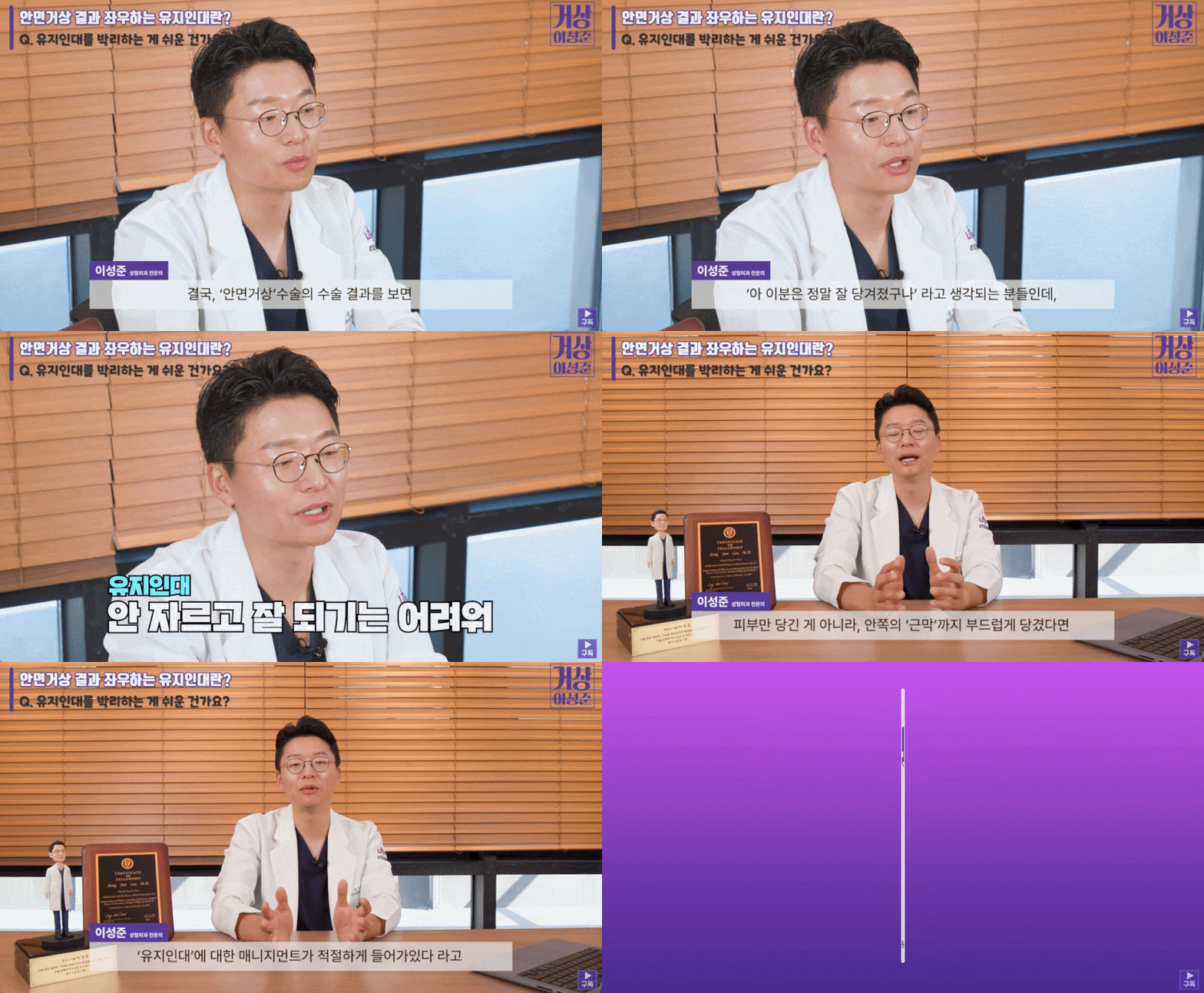
Q. I’m curious about the key point of a facelift.
The key to a Gangnam facelift can be seen as the “medical team’s experience.”
That is because there are many things to consider depending on the person, such as how much the retaining ligaments should be removed and how much tension should be applied to the fascia and skin, making it a procedure where the surgeon’s experience, skill, and know-how are fully reflected.
As of January to September 2024, our Liting Plastic Surgery Clinic Seoul branch has performed more than 26,000 lifting procedures, so we have handled many cases.
Because of that, we can easily determine whether surgery is necessary, the design that suits each individual, and the synergy with other procedures/surgeries.
If these factors are not considered, there is a possibility that you may have to keep results that are not satisfying for a long time.
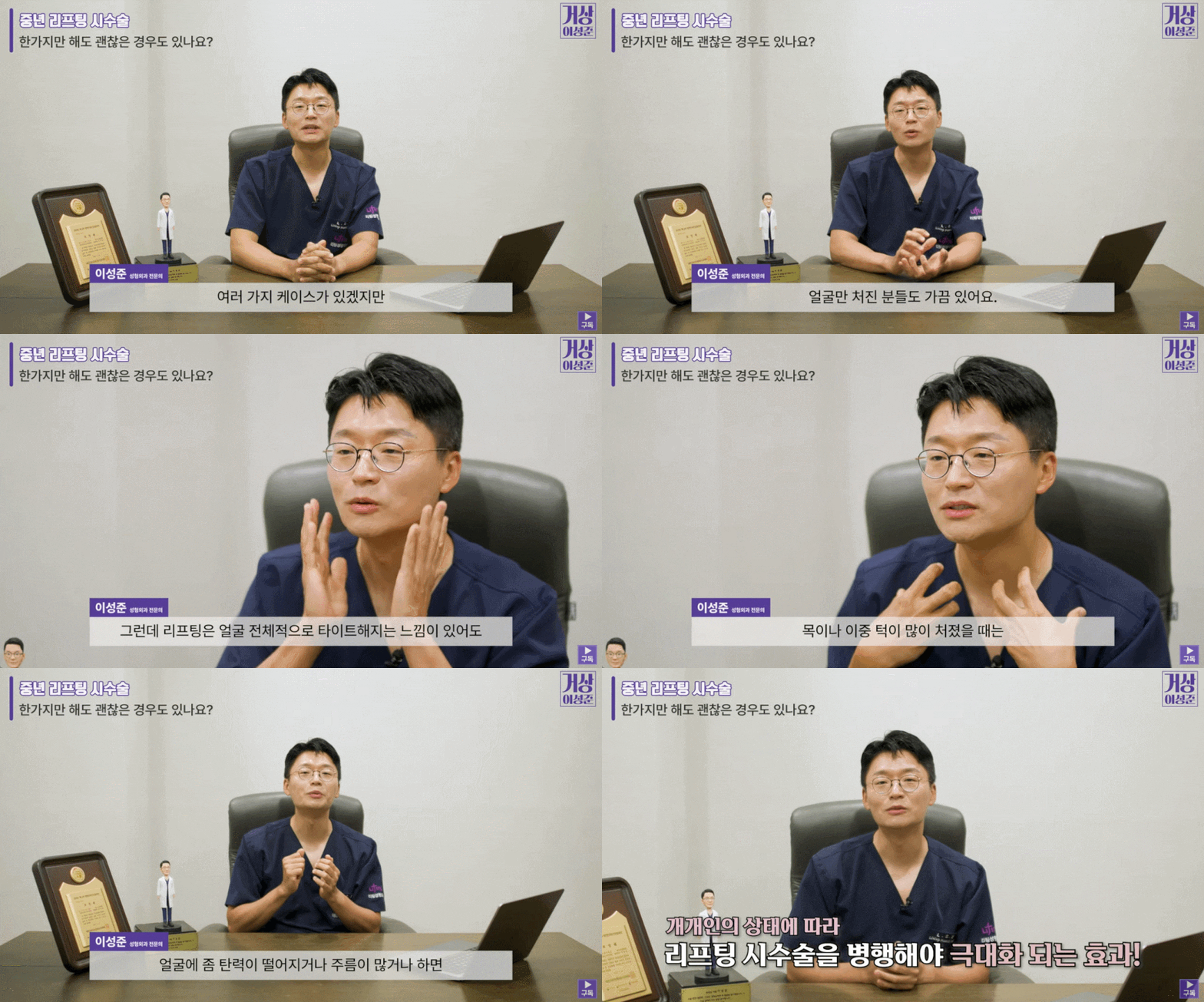
Q. What is the synergy effect with other procedures/surgeries?
When you receive a consultation about a facelift, there are cases where other procedures/surgeries are recommended.
The aging that comes to us appears in various areas, but it is not applied uniformly.
Therefore, for the areas that have sagged significantly, a facelift should be applied, and for areas that need a more natural lift, threads or lasers should be used to achieve the best results.
I propose appropriate solutions for each person by harmoniously combining various procedures/surgeries according to the degree of aging in each area.
In this way, rather than applying a one-size-fits-all approach, we establish a plan by understanding each person’s different characteristics, allowing you to experience a custom lift that suits you better.
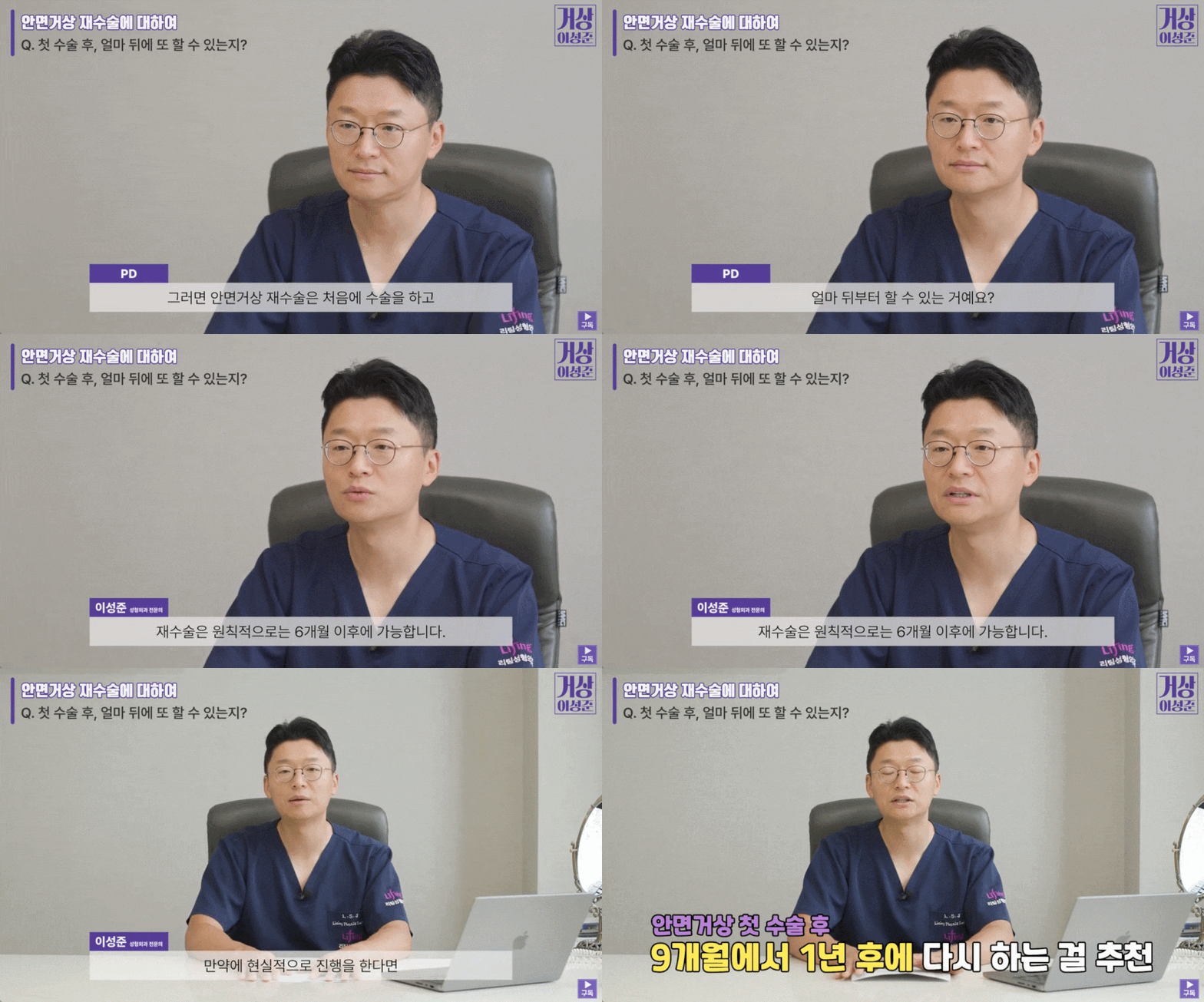
Q. When can a revision surgery be done?
There are also people who had a Gangnam facelift done somewhere else and came to our clinic because they were not satisfied.
There can be various reasons for lower satisfaction, such as proceeding without considering foreign substances injected during the previous procedure/surgery, or removing the skin too loosely.
For this reason, if you are hoping for revision surgery, we recommend waiting at least 6 months before proceeding.
Because the procedure involves pulling the skin, removing it, and fixing it in place, revision is difficult if there is not much remaining skin.
Above all, to avoid revision surgery, it is important to accurately assess the individual’s needs and characteristics during the initial procedure and pull only as much as necessary, and it is also necessary to maintain the skin so that it does not sag.
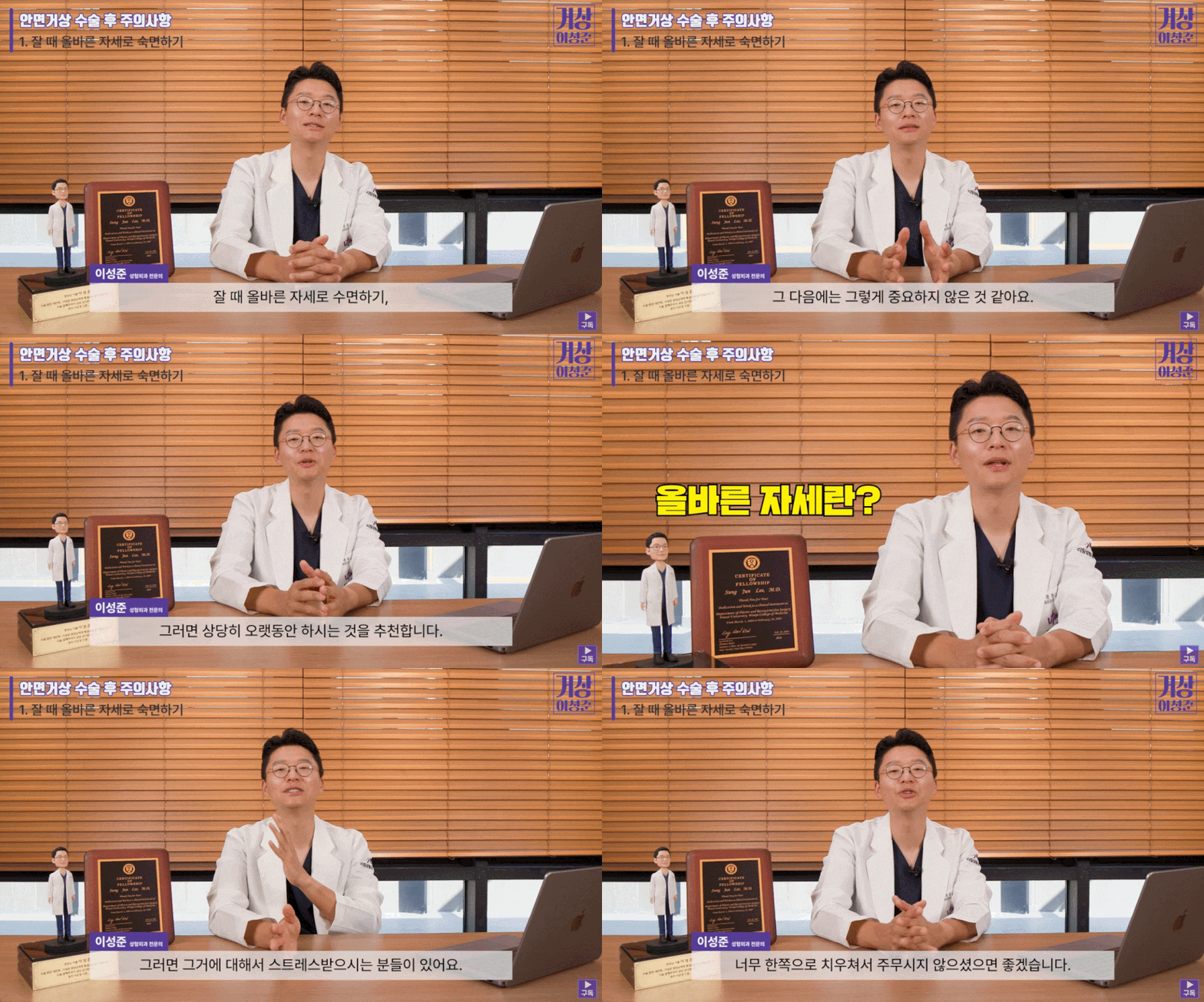
Q. How should it be cared for?
After a facelift, we recommend sleeping in the correct position for about 3 days.
However, if you are older, skin sensation may be reduced and there is a possibility of frostbite, so it is better to try this only for short periods of time.
In addition, because healing of the affected area is important, you should avoid activities that put strain on the face, as well as frequently scratching or touching it.
Some people also ask whether they can drink coffee.
Caffeine can interfere with hemostasis, so it is better not to consume it for 72 hours.
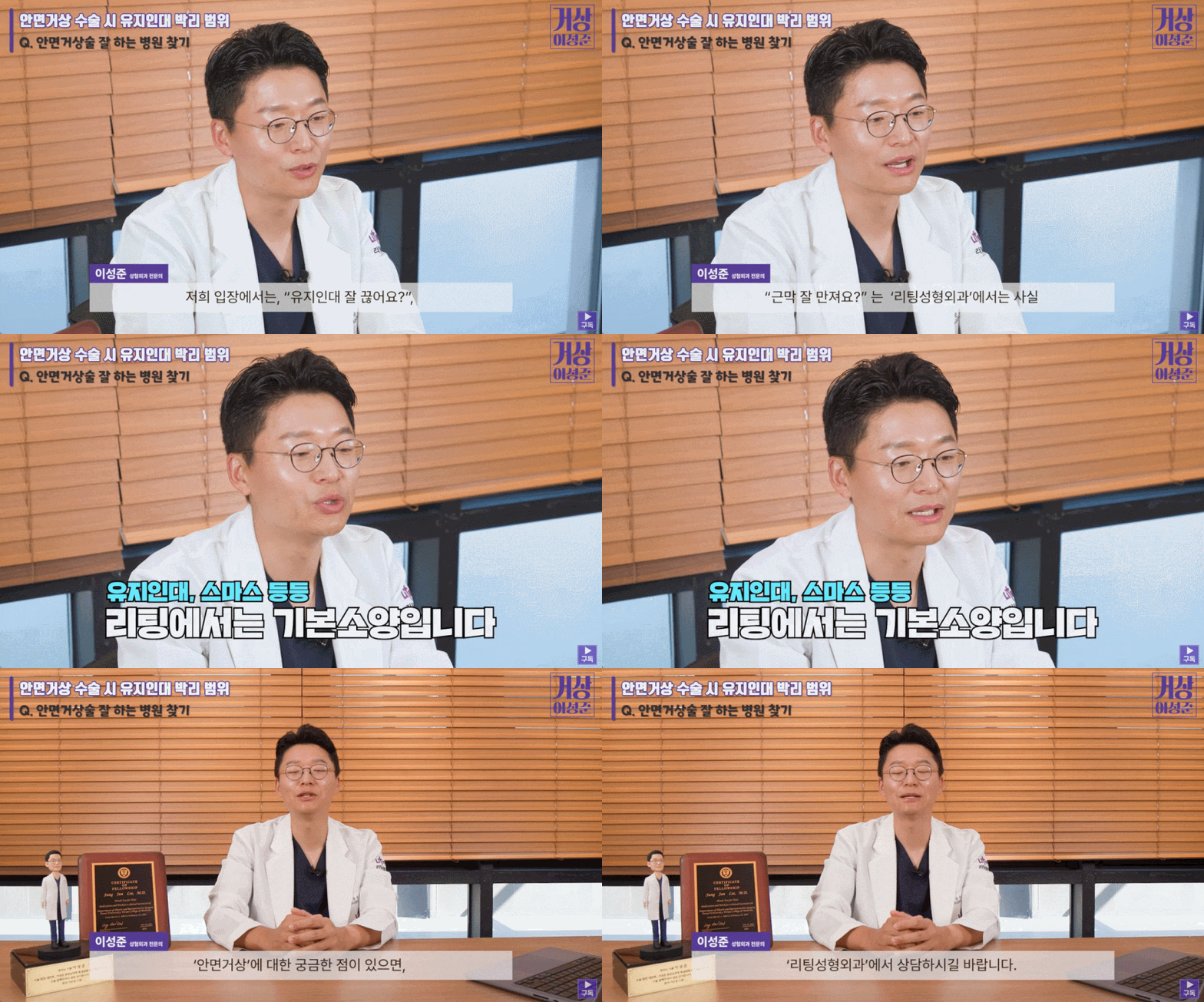
Q. Why choose Liting Plastic Surgery Clinic for lifting?
Our clinic can confidently say that we are a leader in lifting, having focused on this field for a long time.
We continue to conduct research for more advanced lifting and have developed various signature procedures/surgeries, recommending methods that suit each individual.
The “Liting Dream Team,” made up of medical professionals with extensive experience and excellent skills, delivers natural yet dramatic results, from simple procedures to difficult Gangnam facelifts.
With a systematic collaborative system in place from consultation to surgery, progress, and aftercare, inconvenience is reduced and more stable outcomes can be expected.
We hope you can enjoy a renewed youth through Liting Plastic Surgery Clinic’s custom lifting, which reflects age, degree of aging, needs, and your natural appeal.
Become younger tomorrow than you were yesterday!
The key points of mini facelift surgery, answered by a practicing doctor