Hello, I’m Lee Seong-jun, chief director of the Seoul branch of Liting Plastic Surgery.
As we get older, skin elasticity decreases, leading to wrinkles or sagging, and many people start looking into lifting procedures.
When skin elasticity declines, it does not just cause wrinkles; it can also change the overall impression of a person’s face.
This sagging of the face is a natural result of aging, so it is an unavoidable process.
However, with proper care, it is possible to restore some degree of elasticity.
Simple methods include using a moisturizer with wrinkle-improving functions, applying a sheet mask, or doing lifting through massage.
If your skin elasticity has declined, please consider getting a consultation about the Smile Lift.

What causes decreased elasticity?
The cause of reduced skin elasticity is aging.
This is related to the main components of the dermis.
Skin is made up of the epidermis, dermis, subcutaneous fat, fascia layer, and muscle layer from the outside inward, and the proteins in the dermis, which is the layer beneath the epidermis, help maintain skin elasticity.
Therefore, when proteins in the dermis decrease, elasticity declines and the skin becomes dry, leading to symptoms such as sagging and wrinkles.
In general, beginning in the late 20s, the rate of protein production starts to slow down, and from the 30s onward, elasticity decreases, causing the skin to become thinner, duller, and wrinkled.
And because these proteins also serve to protect against external irritation, when they decrease, the skin becomes more prone to damage.
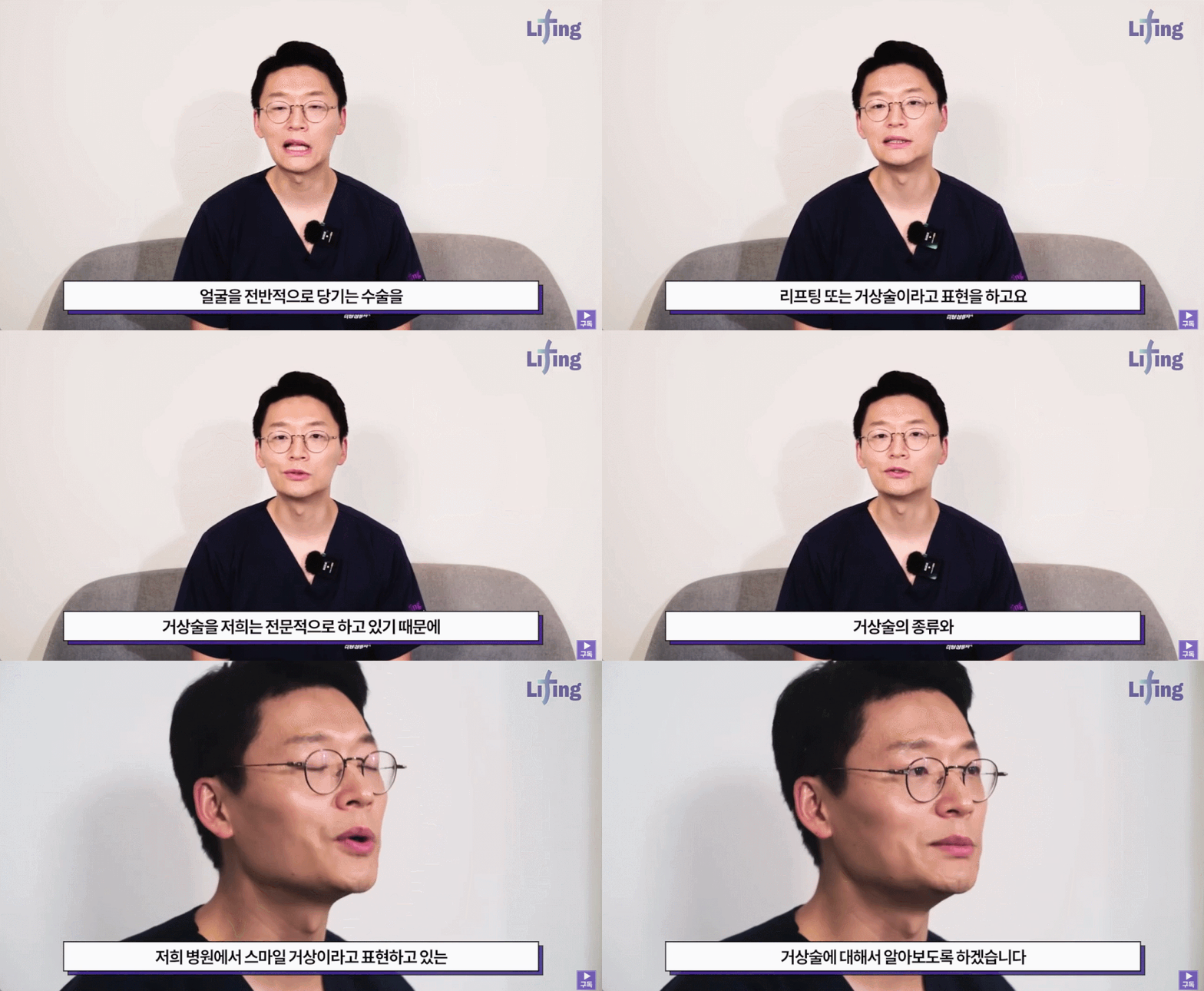
What is a lift?
A lifting procedure pulls and smooths sagging skin, and is also called a lift.
Lifting procedures can also be further classified depending on the direction in which the fascia is pulled or the degree of dissection of the fascia layer.
At our clinic, we divide them into two types.
First is the Smile Lift.
This is recommended for people in their 50s and older, and is performed in cases where wrinkles have not been well smoothed with existing lifting methods.
The second is the Perfect Lift, which is commonly received by people in their 60s and older. Because it is a larger surgery than the two methods described above, swelling after surgery may last longer.
What is the Smile Lift procedure like?
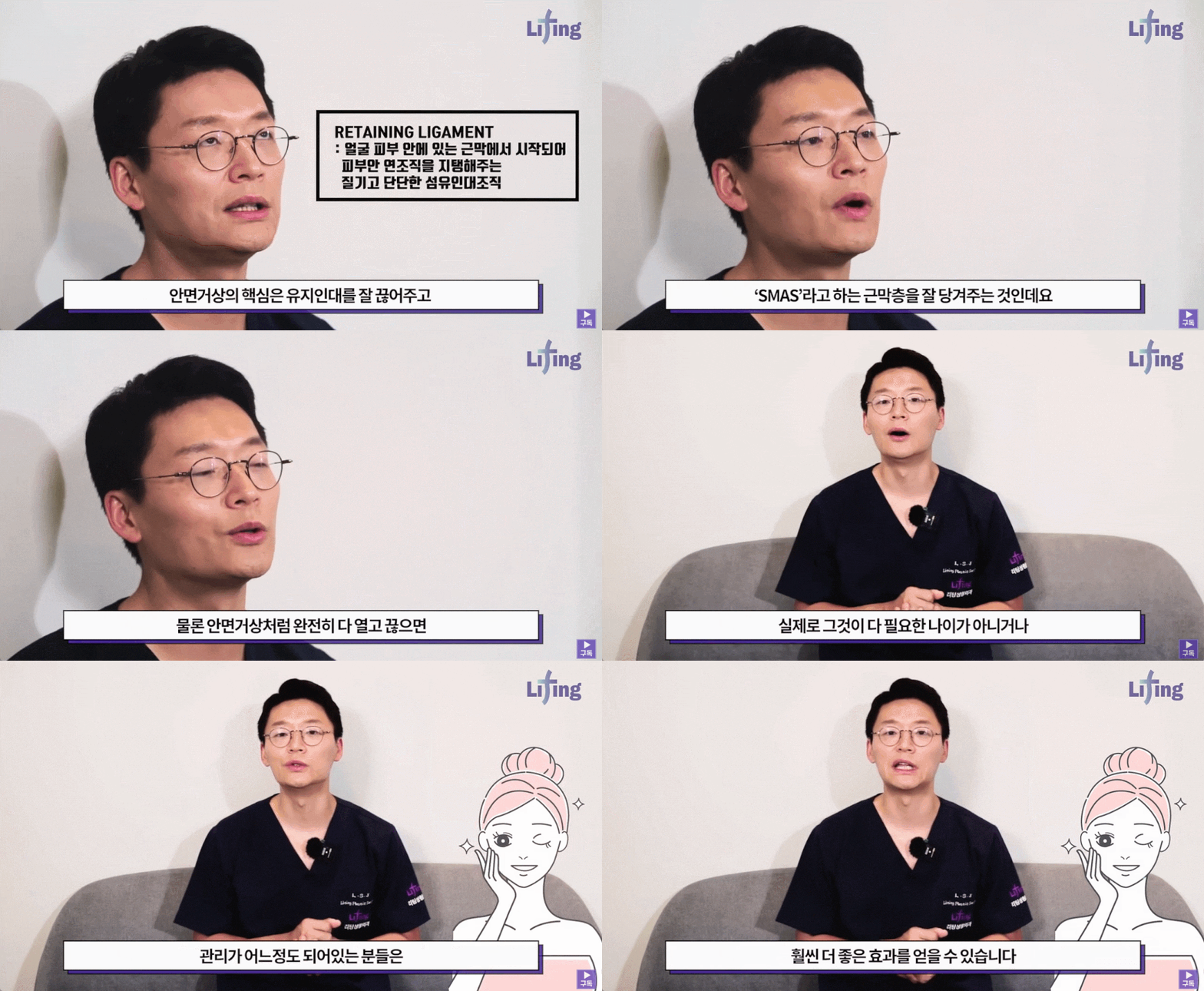
The Smile Lift is a surgery that tightens the fascia layer through an incision so the face looks firmer.
For that reason, sedation anesthesia is performed before the incision.
After anesthesia, an incision is made along the hairline, and the ligaments holding the fascia layer in place are dissected.
Then, the fascia layer that has sagged downward as the skin loosened is pulled and fixed in place.
Finally, the procedure is completed with a double-layer closure to remove tissue that has sagged due to aging and to reduce scarring.
The surgery takes about 2 hours and 30 minutes, and because it is a smaller procedure than a facelift, it tends to be relatively less painful.
However, because it involves pulling and fixing the fascia rather than stopping aging itself, the skin can sag again over time.
The lifting procedure performed at our clinic can last for about 5 years, and we also provide aftercare.
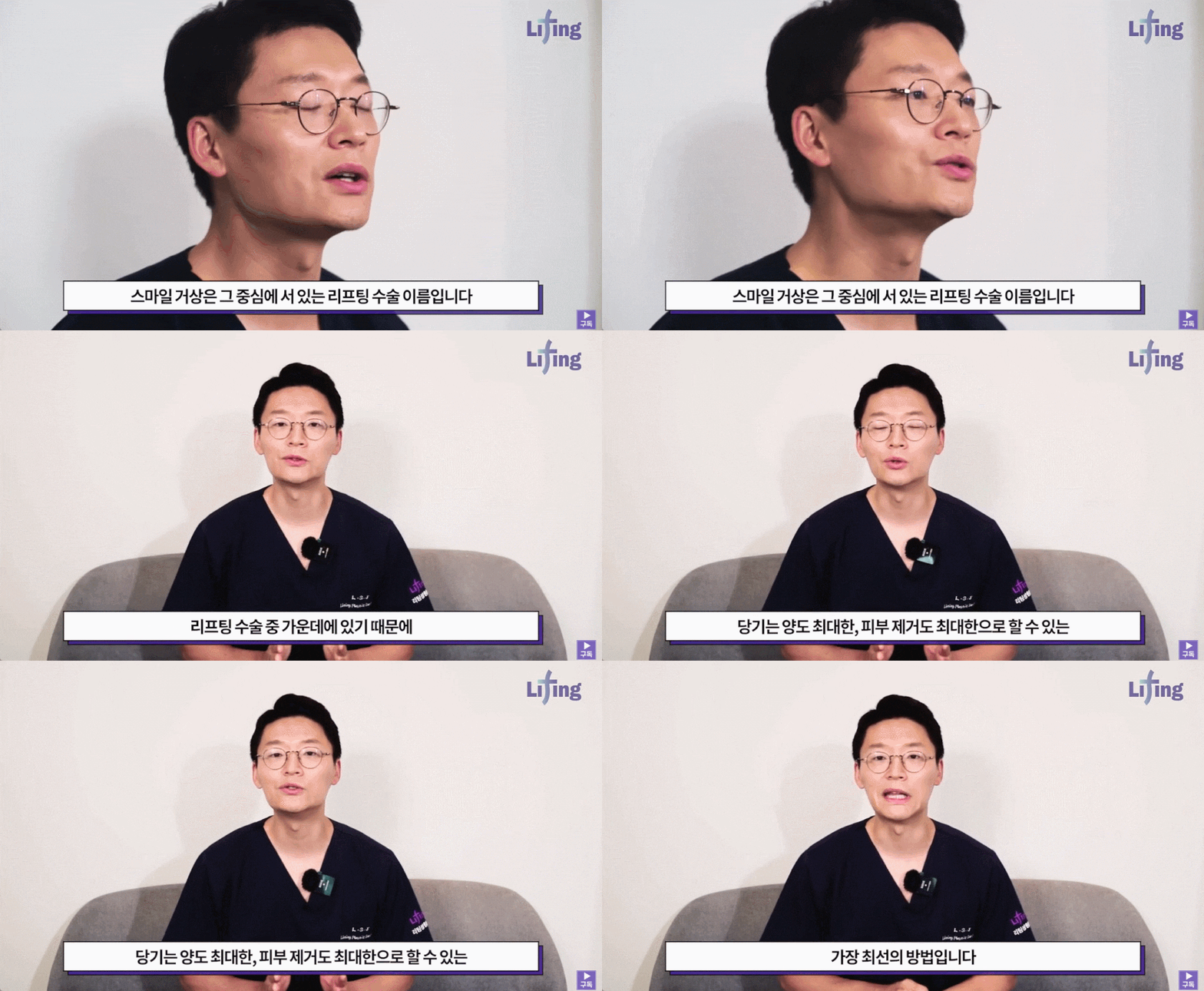
A Smile Lift with volume
Skin sagging and wrinkles are symptoms that can appear in anyone as they get older, so many people who want to regain a youthful look also consider lifting procedures.
However, even after lifting, the face may still look tired and older.
This is because only the fascia layer was pulled and fixed.
As aging progresses, wrinkles cause the skin to hollow out, and if only the fascia layer is pulled, depressed areas remain in the skin, making it look dull.
Therefore, if the subcutaneous fat above the fascia layer is also pulled together, volume is added and the skin can look firmer and younger without fat grafting.
As such, there are many different types of lifting procedures, and because the duration, postoperative pain, and degree of improvement vary depending on the surgical method, a detailed consultation is necessary.
What should you be careful about?
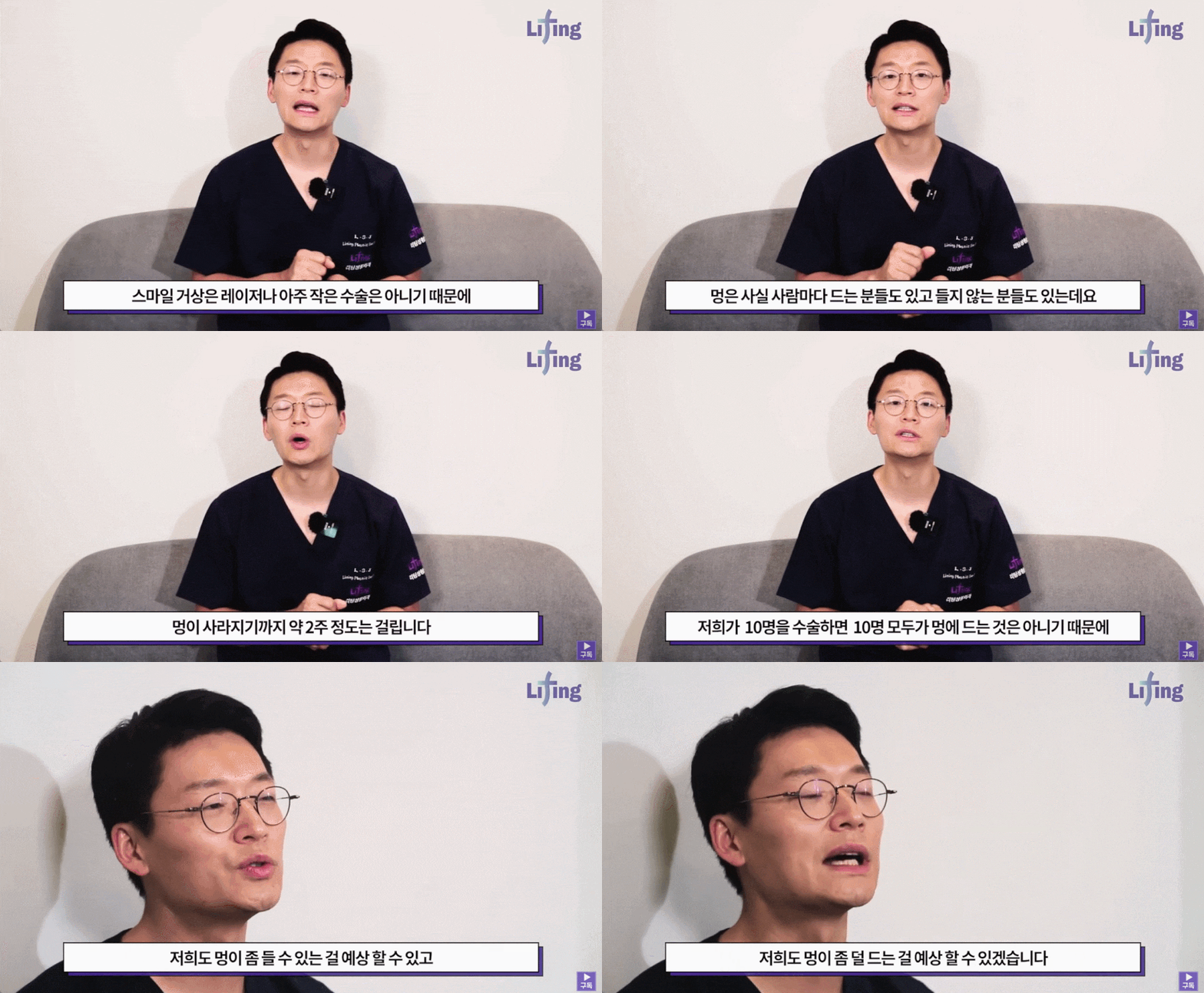
Many people worry that swelling or scars may appear after a lift.
The wider the dissection area, the larger the area where swelling occurs.
In the case of the Smile Lift, only the key areas where sagging occurs are partially dissected, so postoperative pain is relatively less and the range of swelling can be reduced.
Also, because the incision is made along the hairline, you can worry less about scarring.
That said, even if scars or swelling are minimal, aftercare is no less important.
During the recovery period, strenuous activity or exercise should be avoided, and the wound area should be kept clean.
For a few days, you should also be careful to keep water out of the wound area, and alcohol and smoking should be avoided because they interfere with recovery.
After about 2 weeks, the swelling subsides to some extent, and return to daily life is possible.
A place that provides aftercare as well
There are many nerves in the face, and blood vessels and facial muscles are concentrated in this small area as well.
Also, if proper care is not provided, you may experience discomfort due to infection, so lifting should be performed at a place with extensive experience.
At our clinic, we focus on lifting and have performed many surgeries.
In addition, we provide one-on-one support from consultation to surgery and aftercare.
We also offer various procedures depending on the stage of aging, so if you are considering the Smile Lift, please visit us for an examination.
Become younger tomorrow than you are today!
Facelift Q&A — let’s put this to rest once and for all!