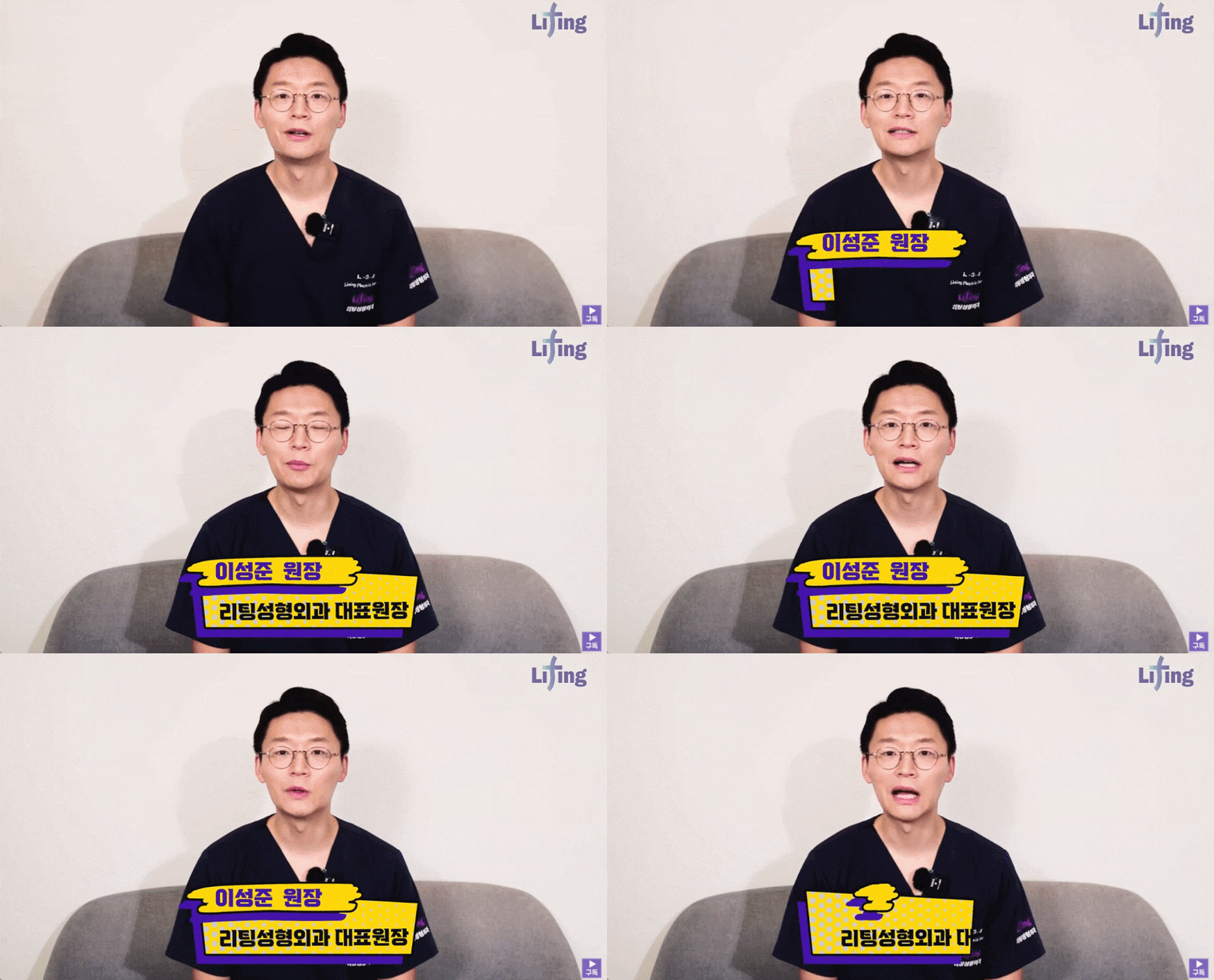
Hello, I’m Lee Seong-jun, Chief Director of the Seoul branch of Reting Plastic Surgery.
The act of lifting or tightening the overall face that has sagged, loosened, and developed wrinkles is referred to as lifting or facelift surgery.
In the past, this was not categorized separately and was simply called facelift surgery, and it was applied at the discretion of the medical staff according to each individual’s facial aging condition.
Because details in the process, such as the extent of dissection or the direction in which the fascia is pulled, were all left to each medical professional, the results inevitably varied as well.
Based on our awareness of this issue, we have divided facelift surgery into several types and carry them out accordingly.
Today, I’d like to introduce the SMAS facelift, which is at the center of the various lifting procedures performed at our clinic.
What Is a SMAS Facelift?
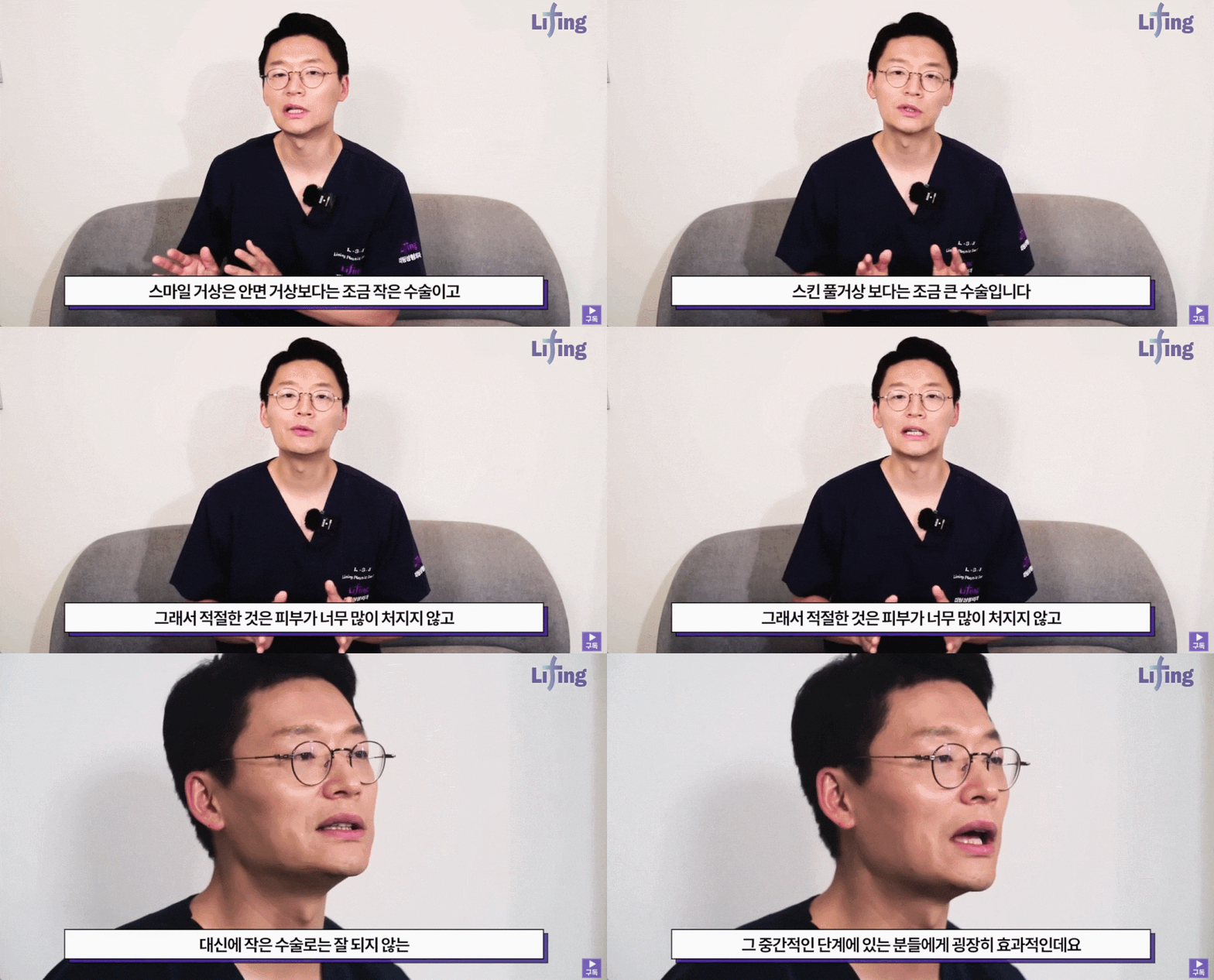
Because it sits in the middle of lifting surgeries, it can be considered the best method, allowing for the greatest amount of tightening and skin removal.
A Smile lift is a slightly smaller procedure than a facelift and is effective for people whose skin has not sagged too much, but who are at that intermediate stage where a smaller procedure alone is not sufficient.
It can be said to be the most effective surgery for those whose degree of sagging is appropriate for this procedure.
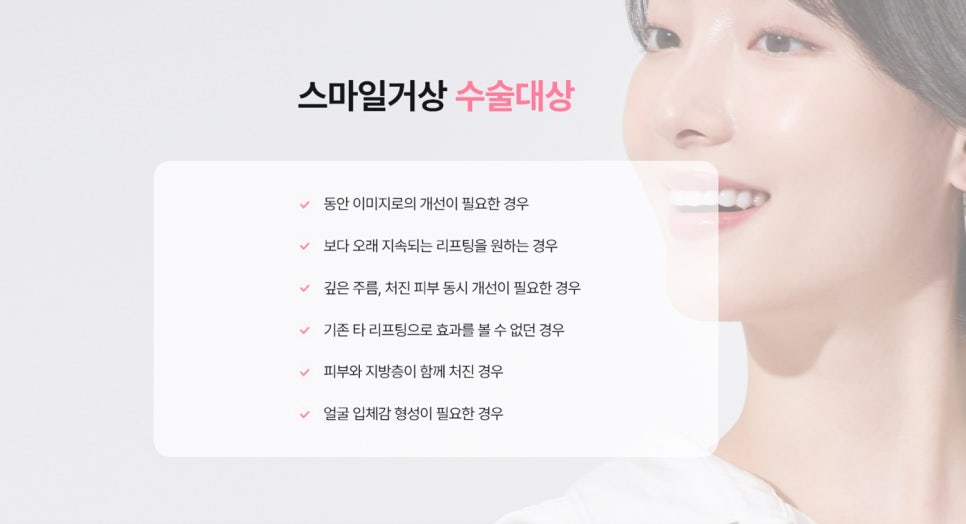
Who Is a Smile Lift For?
✔️ People who need improvement for a more youthful appearance
✔️ People who want longer-lasting lifting results
✔️ People who need simultaneous improvement of deep wrinkles and sagging skin
✔️ People who did not see results with other existing lifting procedures
✔️ People whose skin and fat layer have both sagged
✔️ People who need more facial definition
Through the volume repositioning of our Smile lift, you can achieve an effect as if you had undergone fat grafting and be reborn with a more lively, youthful appearance.
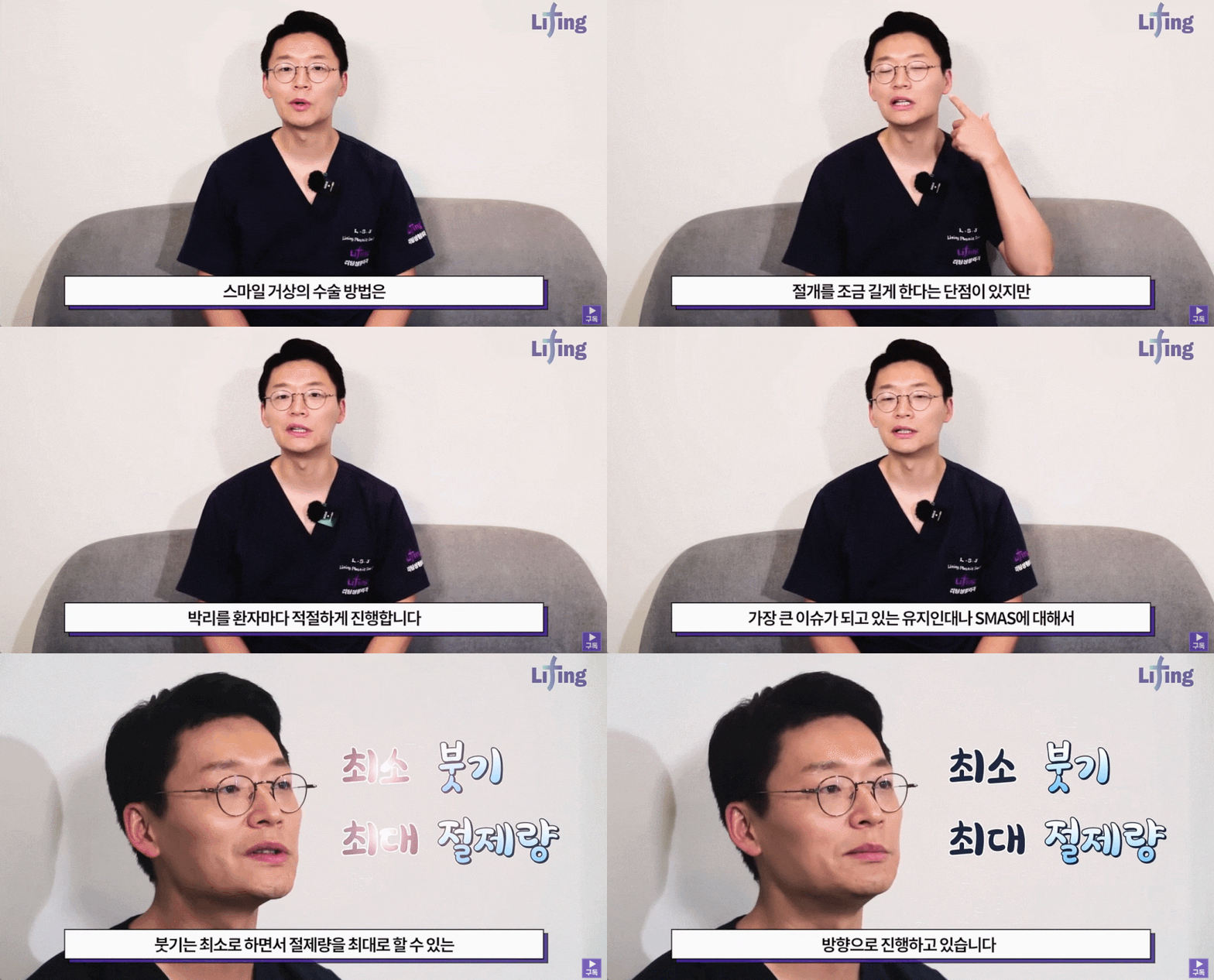
Surgical Method of the Smile Lift
At first glance, a SMAS facelift may not seem very different from a traditional facelift.
The fact that the incision is made by designing incision lines inside the hairline and in front of the ears is the same, but the major difference is that only part of the retaining ligaments supporting the fascial layer is dissected.
After pulling and fixing the fascial layer, the sagging tissue is removed and the skin-muscle layer is secured.
Once the sagging skin and tissue are removed, a double suture is performed to reduce the burden of scarring, and the procedure is completed.
In addition, by partially dissecting the key fascial layer, improvements in bruising, swelling, and scar formation are enhanced, along with better results for hollowed cheeks, sagging cheeks, nasolabial folds, mouth lines, and a double chin.
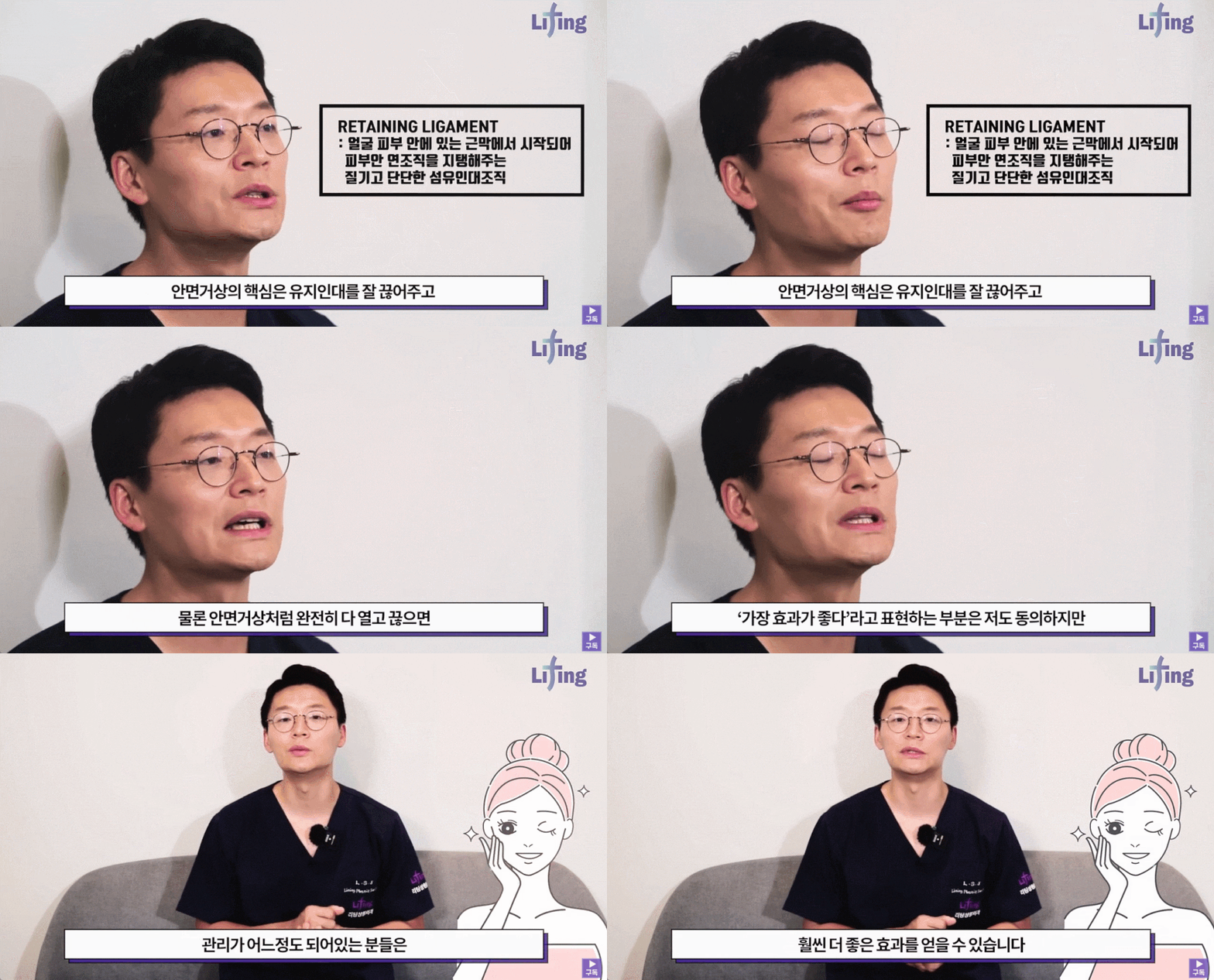
Advantages of the Smile Lift
The most notable advantage of partially dissecting the key fascial layer is that it reduces swelling while increasing stability.
It can lower the degree of swelling and bruising that rises sharply when moving from a skin-only lift to a facelift.
At the same time, many people prefer it because it provides stronger results that last longer than a skin-only lift.
Although a facelift can deliver more powerful results, there are many cases where that level of correction is not necessary.
Recently, more people have been maintaining their skin regularly and undergoing lifting procedures preventively, so demand for the Smile lift is increasing.
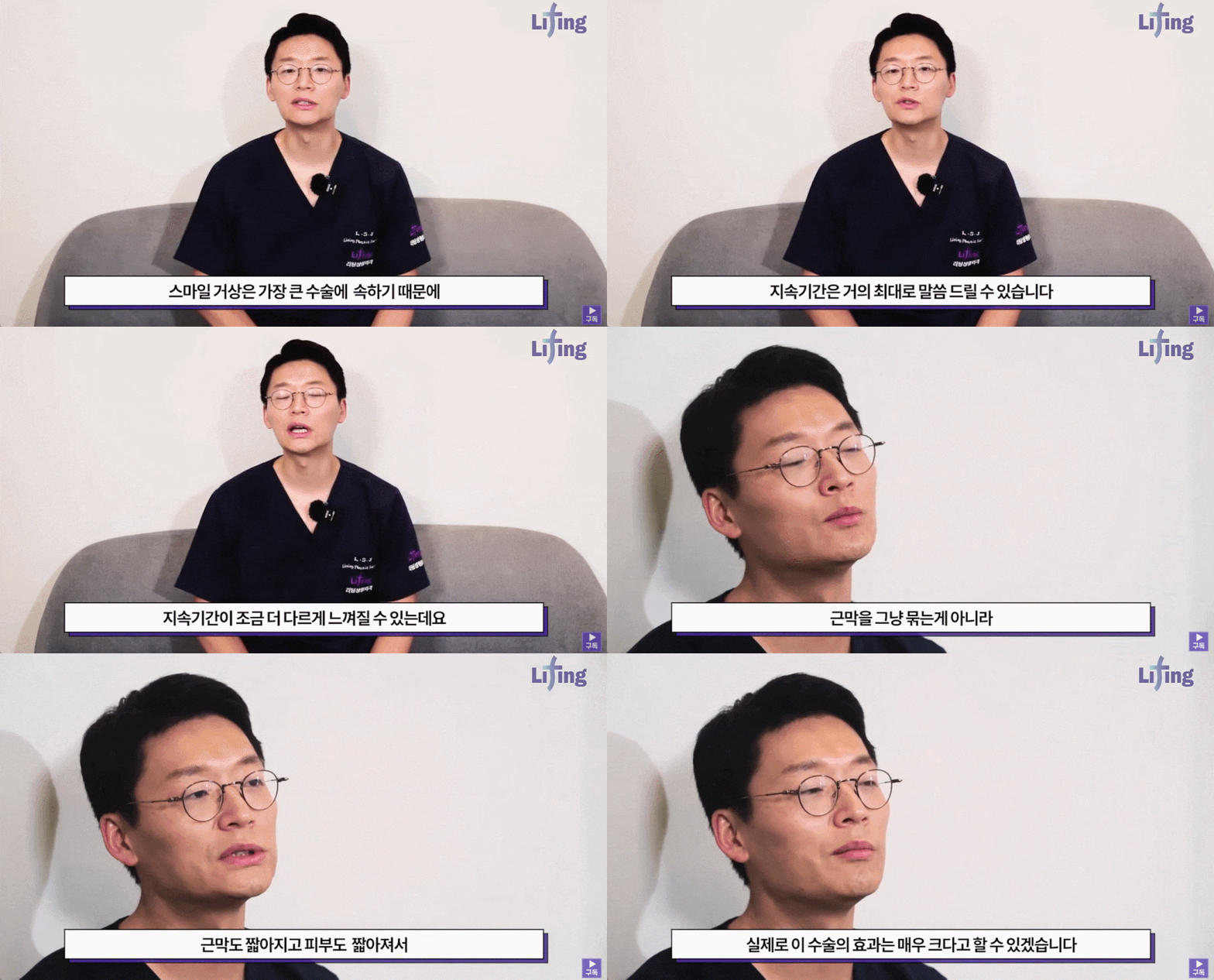
Procedure and Duration of Results
One of the questions many people have is how much pain is involved during the procedure.
In the case of lifting procedures that pull the face upward, general anesthesia is not necessary because the airway does not need to be secured during the process, so sedation anesthesia is used.
If the procedure is done under sedation anesthesia, you naturally will not feel pain during the lifting itself, and the pain afterward is not severe either.
The entire procedure takes about 2 hours and 30 minutes, and returning to daily life requires about 2 weeks.
Because the skin is removed and the fascia is also cut and secured to some extent, the results tend to last a relatively long time, around 5 years.
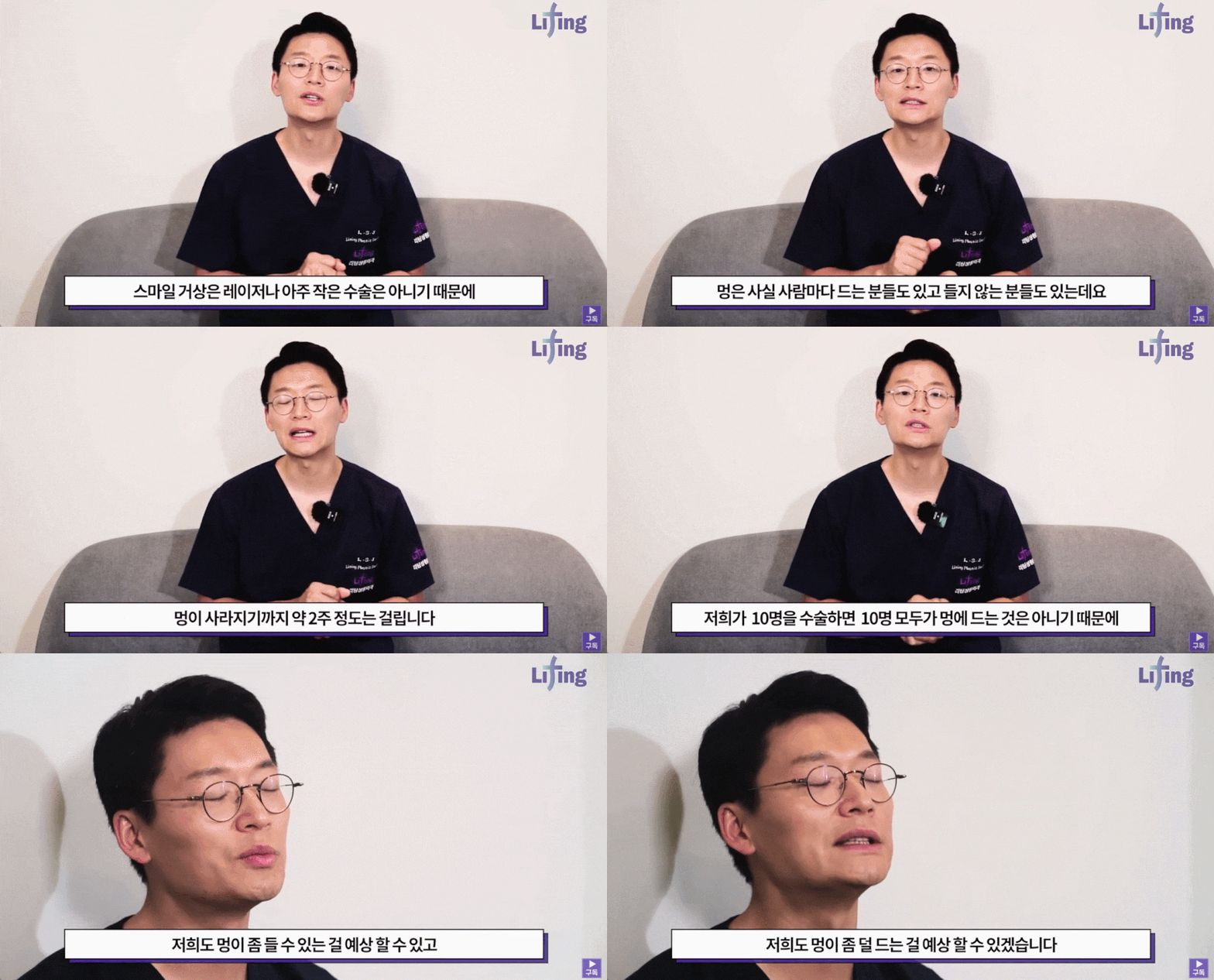
Bruising and Scarring
Unlike laser lifting, this is an invasive method based on incisions, so some healing time is needed.
Some people develop bruising and some do not, but once intramuscular bleeding occurs, it takes about 2 weeks for it to disappear.
However, it is not the case that this happens to everyone, and it is possible to predict whether bruising will occur based on your usual constitution.
In the case of scars, because incisions are made, marks may remain along the incision line, but scars behind the ears or inside the hair are hardly noticeable.
Marks that appear in front of the ears may be visible, so to reduce the likelihood of them becoming scars, our clinic provides guidance for management with scar injections.
A Place That Performs a More Specialized Approach
If you consistently manage your skin with non-surgical methods such as laser lifting or thread lifting, you can delay the time when the skin begins to sag.
However, the limitations of non-surgical methods are clear, and because time cannot be stopped, many people eventually consider a facelift.
In the past, there was only one type of facelift, so there were often no options and people felt burdened.
At our clinic, we center on the SMAS facelift and classify procedures into three types to reduce the burden and help patients find the method that is most suitable for them.
If you are considering lifting, please do not worry alone; seek help from medical professionals with extensive medical knowledge.
Become younger tomorrow than you were yesterday!
SMAS lifting? It is not something just anyone can do