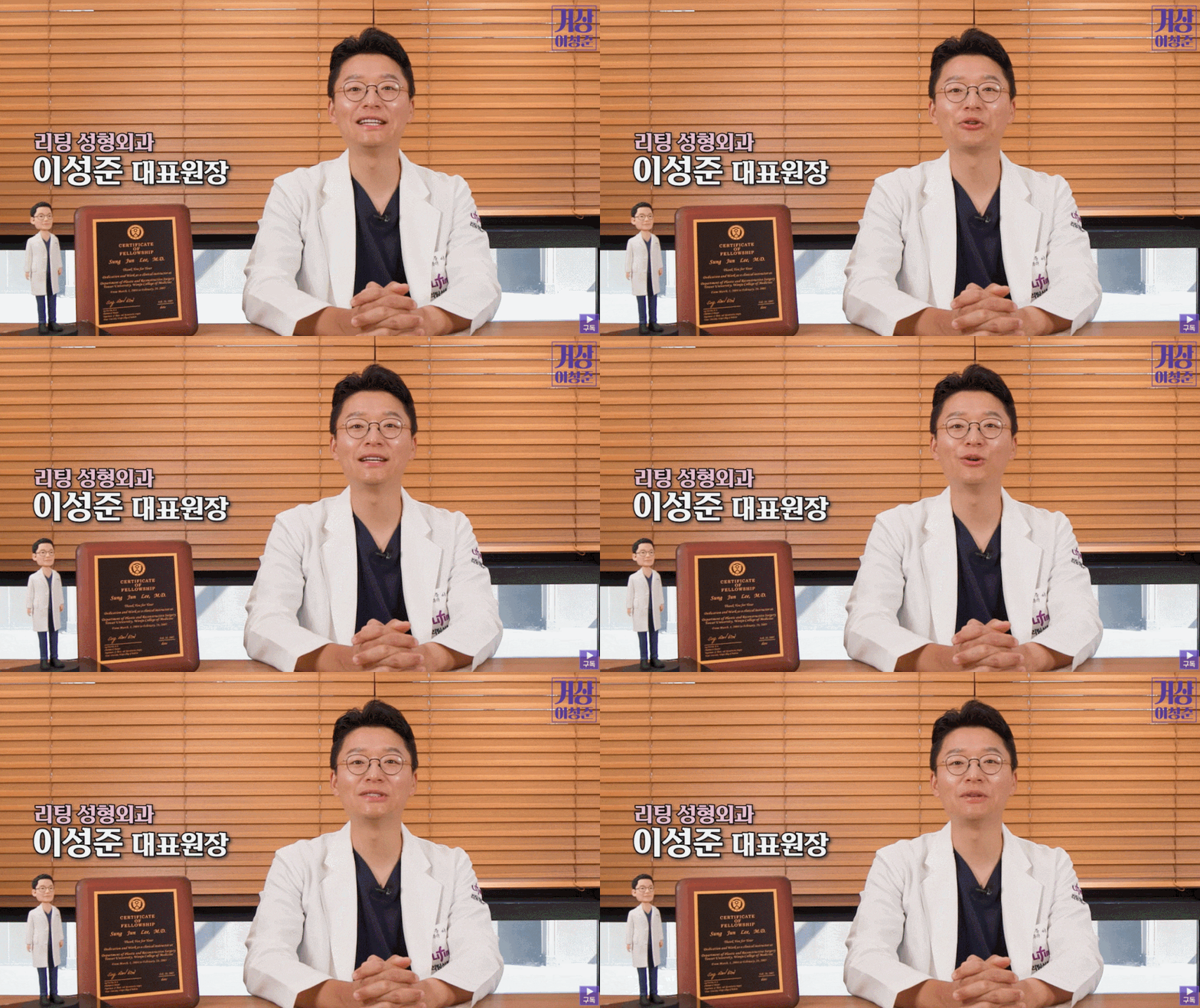
Hello, I’m Lee Seong-jun, the chief director of Re:ting Plastic Surgery Seoul Branch.
As the year has turned, many people have become more concerned about aging.
In particular, if you have entered your 50s, you may notice that wrinkles gradually deepen and the skin starts to sag.
Because of that, some people try treatments such as applying moisturizing products for wrinkle improvement or getting massages.
However, since these efforts do not lead to noticeable changes, some begin looking into lifting treatments after feeling the limits of self-care.
Today, let’s look at methods that can be combined with Apgujeong facelift surgery to help improve aging concerns in people in their 50s and older.
Why aging becomes noticeable in your 50s
In humans, aging begins in the 20s.
However, in the 20s, there are not many visible signs of aging, aside from baby fat gradually disappearing or fine lines forming slightly.
But as skin elasticity gradually decreases and exposure to ultraviolet rays continues, skin aging progresses, and by the 30s, wrinkles begin to appear in earnest.
As people get older, the skin retains less moisture and collagen production slows down.
As a result, once you are over 50, signs of aging become more pronounced, and wrinkles deepen on the forehead and around the mouth, so age-specific care is needed.
What causes a tired-looking face?
A face that looks older is caused by wrinkles and sagging skin.
First, sagging skin is related to a protein called collagen.
Collagen is a protein found not only in skin, but also in bones, muscles, tendons, and ligaments, and it helps maintain body structure and elasticity.
However, as aging progresses and collagen production slows, skin elasticity decreases, and eventually the skin can no longer withstand muscle movement, leading to wrinkles.
Next, sagging can also occur because of fat.
The fibrous tissue inside fat can loosen and fail to support the weight, causing it to droop.
Finally, swelling can also lead to sagging.
Swelling occurs when moisture accumulates between fat layers, and this moisture causes the tissue to hang downward.
Therefore, it is important to determine through a precise examination what is causing the aging process and to receive personalized care.
Facelift surgery that lifts the key areas
Apgujeong facelift surgery is an operation that smooths and secures skin that has sagged and wrinkled due to aging.
It is a method often considered by people in their 50s and older, and it can be an option for those whose wrinkles did not improve well with non-surgical methods.
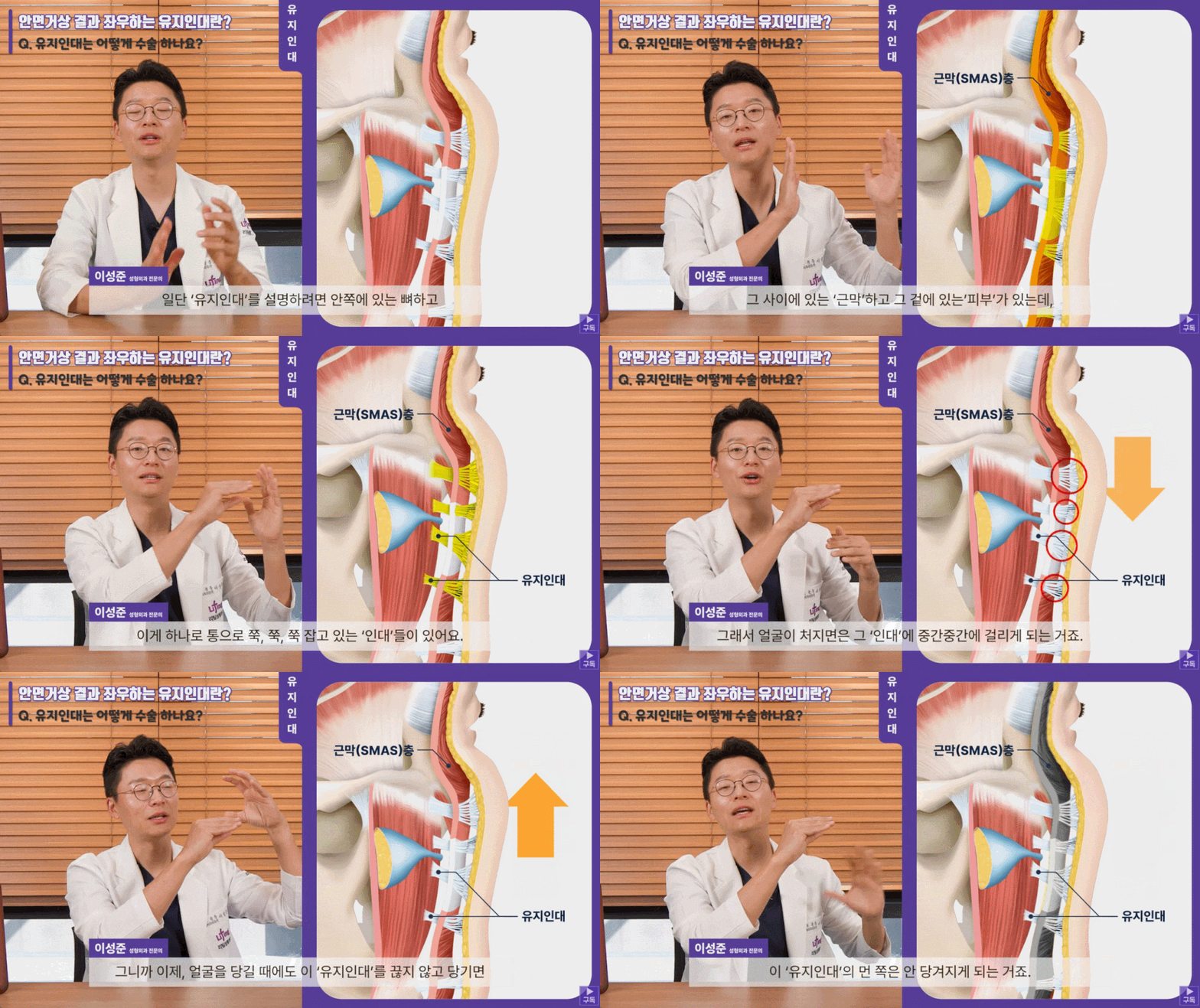
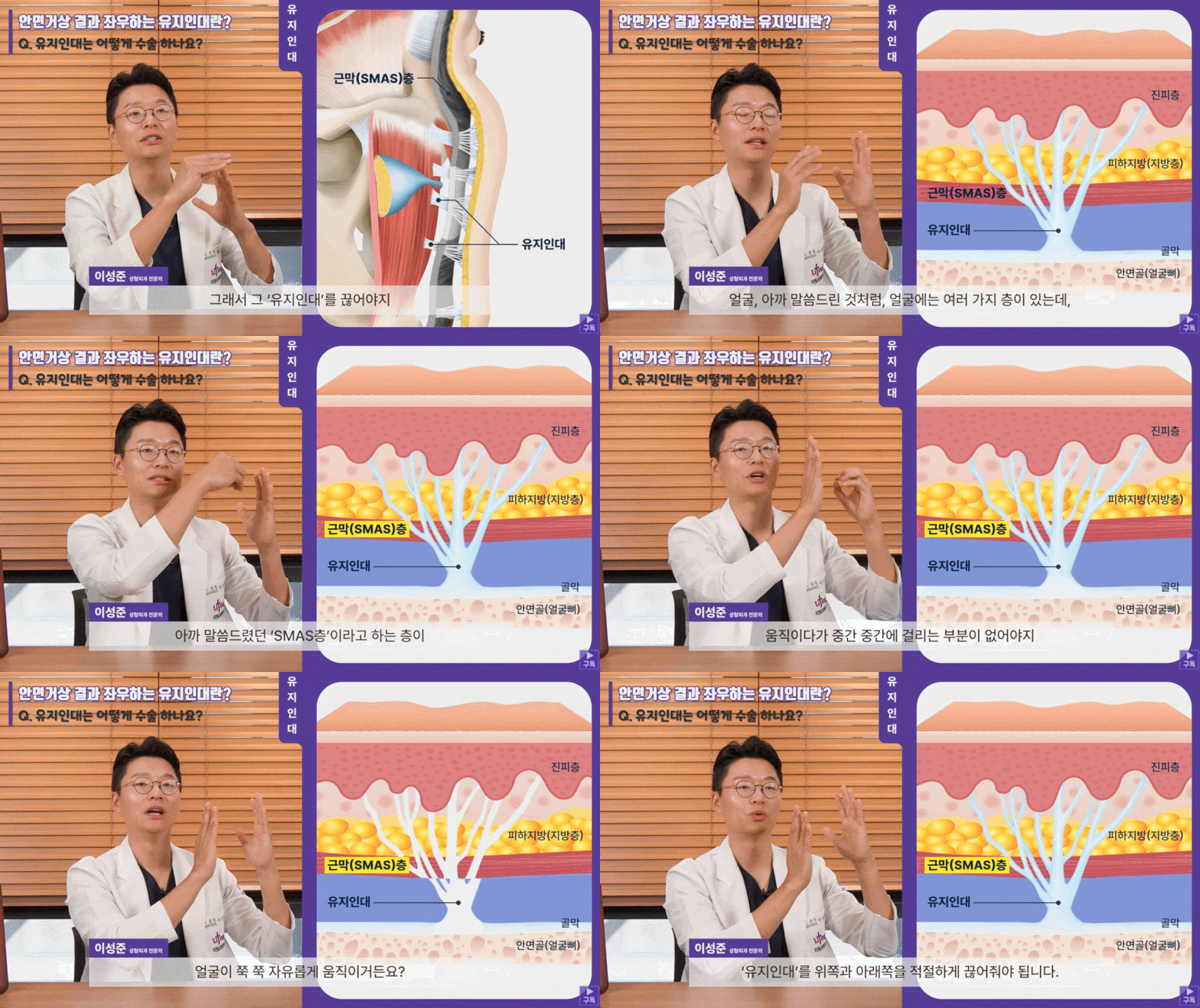
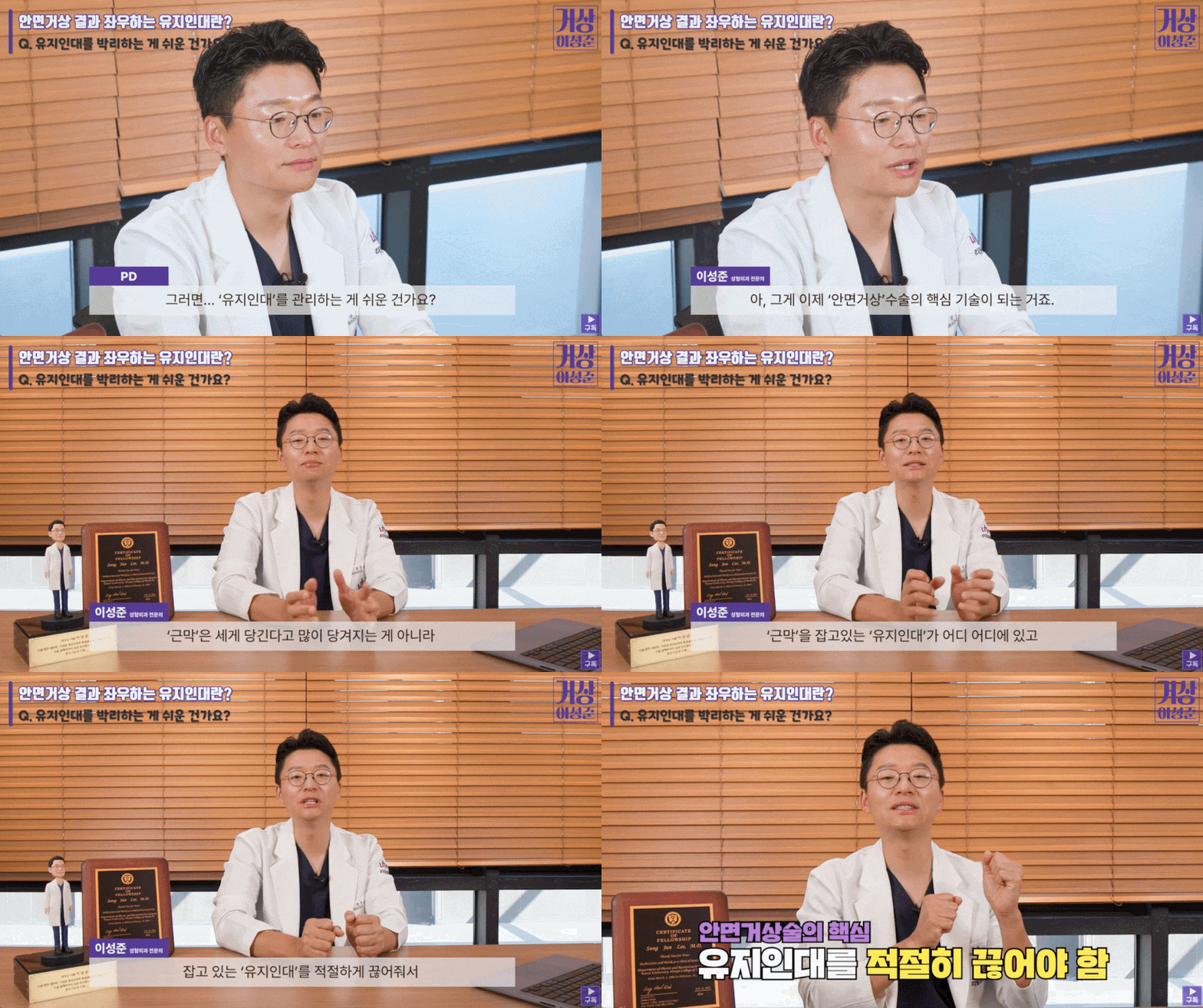
The surgery is performed by making an incision inside the hairline, then cutting the internal fascial layer, removing the retaining ligaments, and pulling and securing the fascial layer to finish.
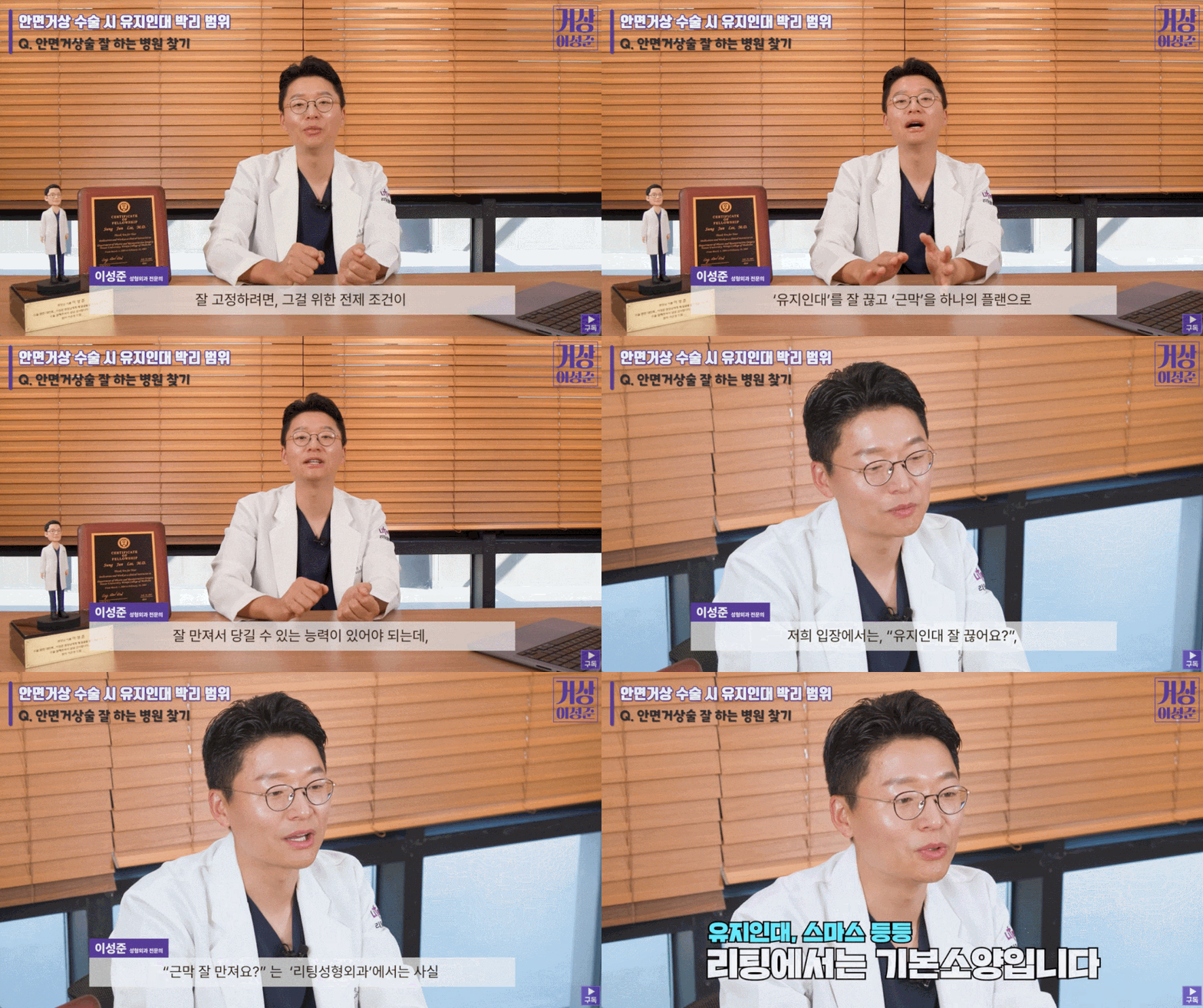
The important point here is precisely separating the fascial layer.
If only part of the fat layer is separated, the amount of bleeding increases and swelling lasts longer, leading to a longer recovery period.
Also, if the retaining ligaments that support the center of the skin become stretched, the entire face may look saggy.
However, separating too many retaining ligaments can instead reduce the force that supports the skin and may cause bleeding and swelling.
Because the inside of the face contains many tissues mixed together in small areas, such as blood vessels and tendons, it is important to have the technique to precisely separate and lift only the necessary parts.
If you want a natural lift
Many people worry that scars may remain after surgery or that bleeding and swelling may last for a long time.
However, at our clinic, which has performed Apgujeong facelift surgery for many years, we help with care so that scars do not remain.
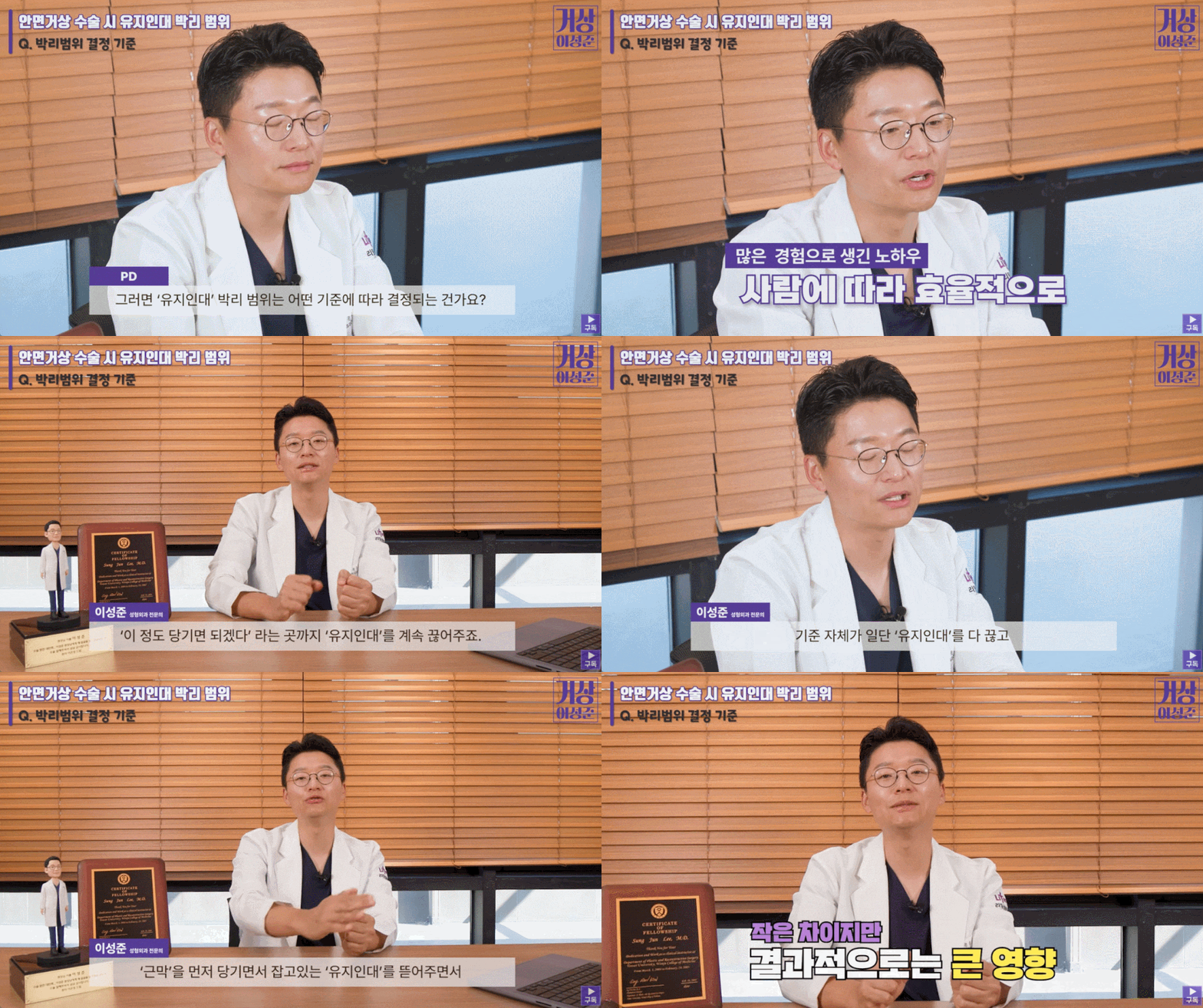
First, the fascial layer is precisely separated.
Fascia is a thin, multilayered membrane, and if it is separated incorrectly, swelling may last longer.
Second, the retaining ligaments are removed in one step.
If removal is not done properly, tissue damage increases and bleeding may continue for a long time.
Third, the incision is made along the hairline and finished with double suturing, so the scar is less noticeable.
If facelift surgery feels like too much
At our clinic, you can receive a variety of lifting treatments in addition to facelift surgery.
If your sagging or wrinkles are not severe and you feel uncomfortable with Apgujeong facelift surgery, which requires a long incision along the hairline, you may consider mini lifting.
Mini lifting is performed by making an incision of about 2 cm inside the scalp above the ear, and it can tighten sagging cheeks, nasolabial folds, and the overall facial line.
This is a method that can be used when sagging is not severe enough to require a facelift, or when a short recovery time is desired.
What procedures can be combined with facelift surgery?
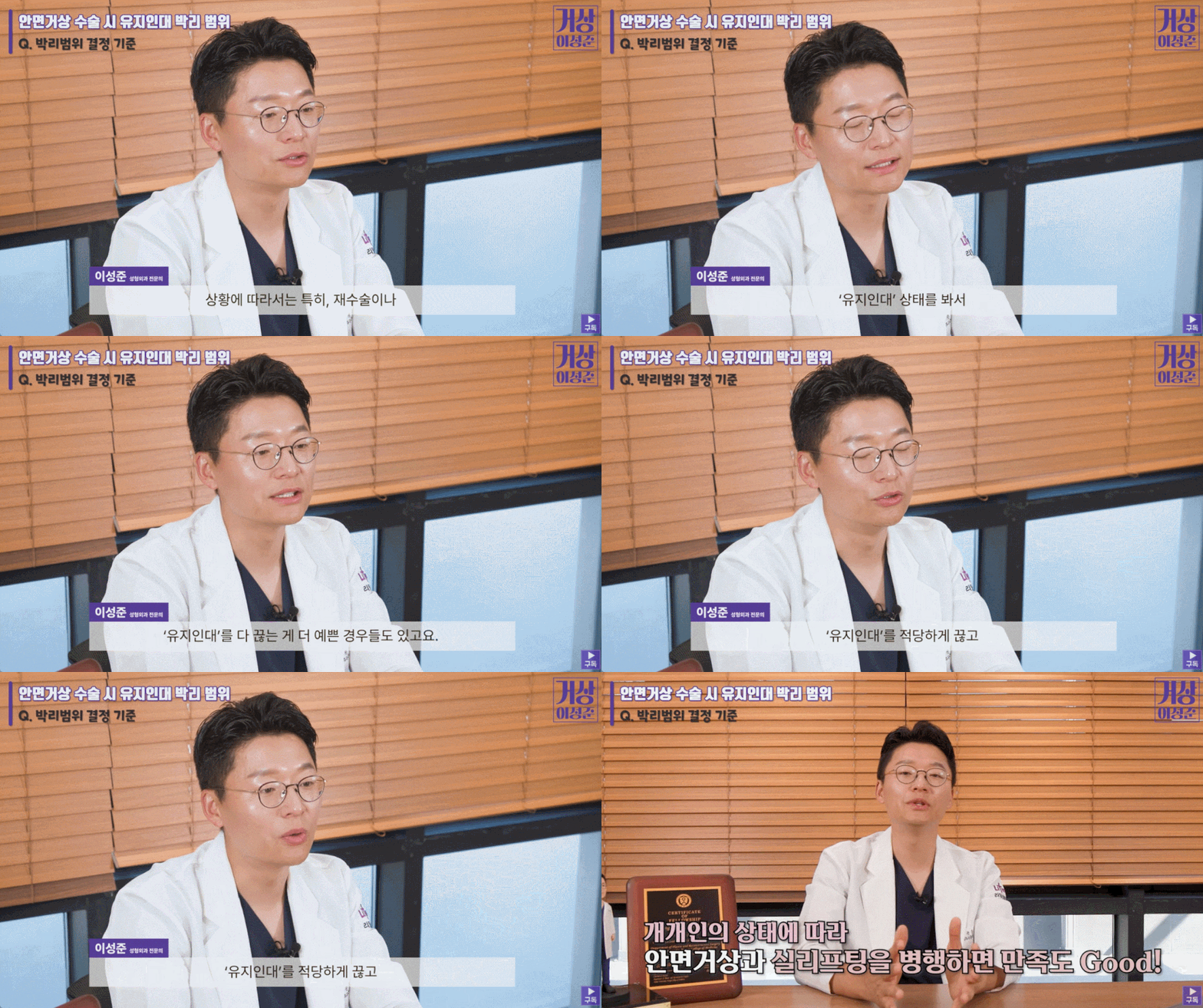
Methods that can be combined with Apgujeong facelift surgery include thread-based methods, laser, and ultrasound techniques.
Thread lifting is a method that inserts medical threads without an incision to pull up loosened areas.
It can be used when noninvasive methods such as laser or ultrasound have made it difficult to feel any noticeable change.
At our clinic, thread lifting uses threads to double-fix both the dermal layer and the fascial layer, allowing you to feel a noticeable change.
In addition, fat grafting, liposuction, and skin care treatments are also available.
A place that provides systematic care
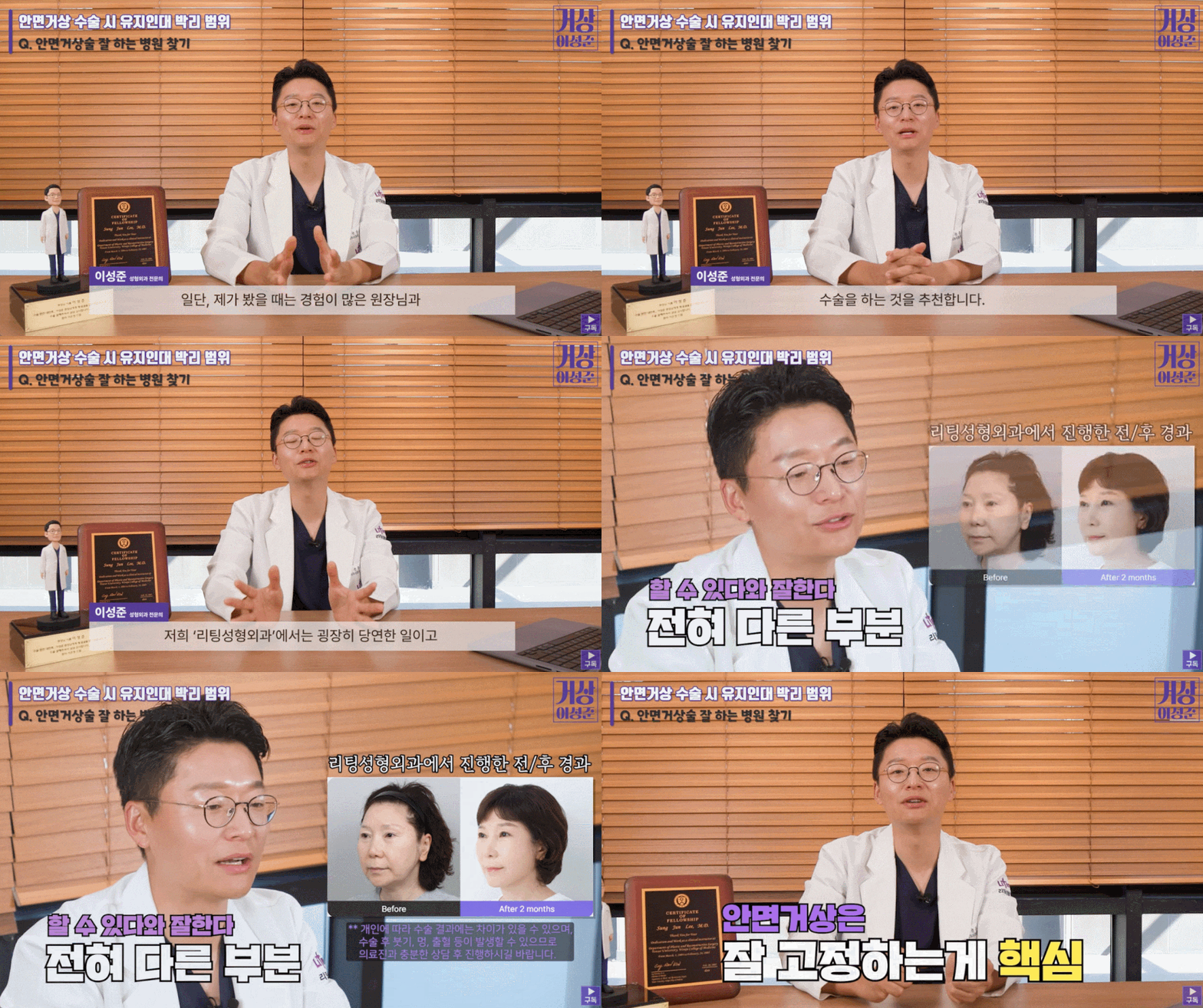
At our clinic, we have long been focused on lifting while considering aging over many years.
Lifting is a general term for pulling and securing stretched skin.
However, at our clinic, not all lifting is performed the same way; instead, it is divided into the upper face, midface, and lower face.
Depending on the degree of aging, you can receive Apgujeong facelift surgery, mini lifting, or non-surgical lifting.
So if you are struggling with wrinkles and sagging, we hope you will visit our clinic, where individualized and systematic care is possible.
Become younger tomorrow than you are today!
👇 If you want to know more about mini lifting 👇