Hello, I’m Director Lee Seong-jun of LITING Plastic Surgery Seoul Branch.
In the flow of time, the small changes that we all have felt at least once in the mirror.
When you open your eyes in the morning and face skin that once seemed radiant, but now shows deeper wrinkles and less elasticity, you may have found yourself missing the youth you had lost somewhere in your heart.
These changes may be a natural phenomenon for anyone, but at the same time, they can gradually shake even the confidence that resides deep within.
Are you perhaps standing in front of the mirror now, quietly asking yourself?
“Can I return to the bright appearance I once had?” “Can I believe that the day will come when the traces of time are erased and I am reborn?”
This is exactly where lifting procedures take on a meaning that goes beyond simple appearance improvement.
They become a doorway to a new beginning that can wash away accumulated fatigue and worry in an instant and help you regain confidence and vitality once again.
Many people hesitate about lifting procedures despite having these concerns.
You may have various questions such as, “Will it look unnatural after the procedure or surgery?”, “How long will the recovery period take?”, and “How long will the effects last?”
Today, I’d like to answer these questions and take a detailed look at one of the lifting surgeries, “facelift.”
Now, shall we start with the questions you ask most often?

Q1. What exactly is a facelift?
What kind of effects can be expected?
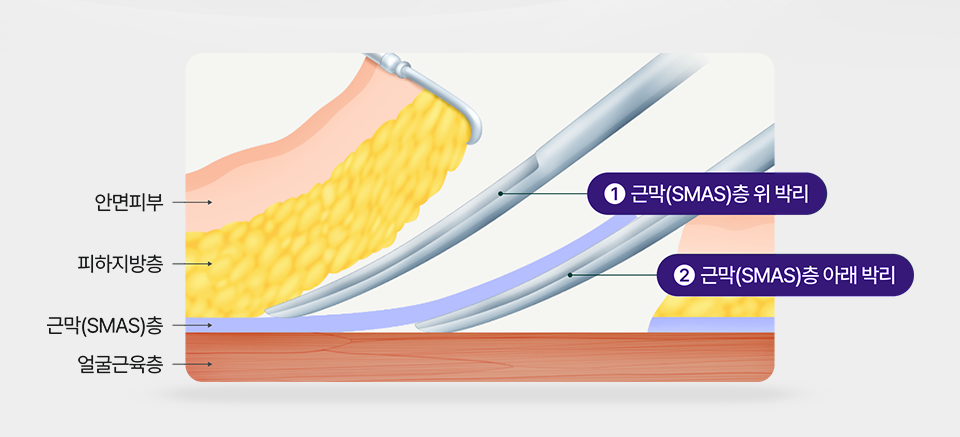
A facelift is not simply about pulling the skin; it also lifts the SMAS layer together, providing a natural and long-lasting effect.
The main effects include improving wrinkles on the forehead and around the eyes, correcting sagging cheeks, improving the jawline,
and reducing neck wrinkles.
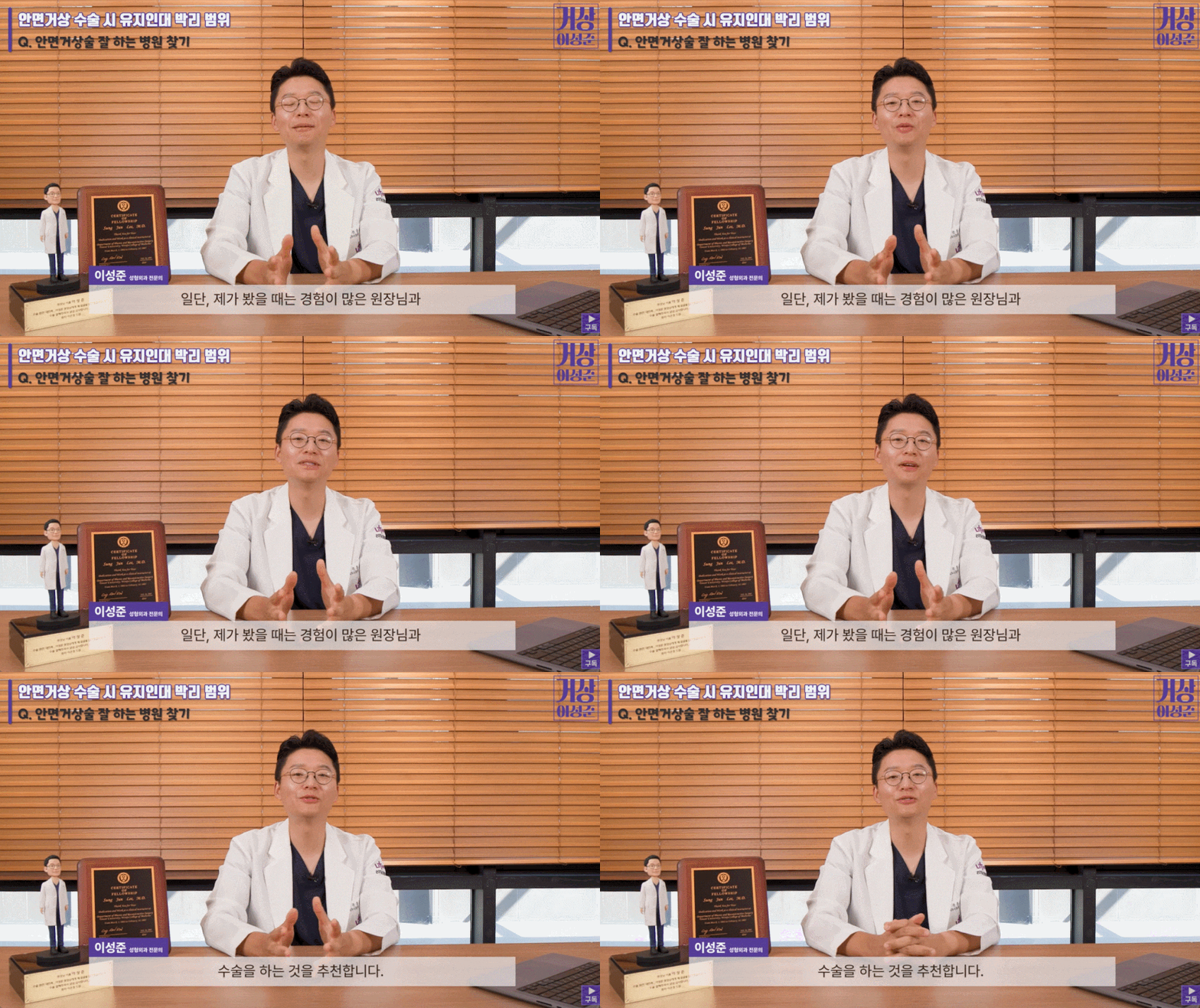
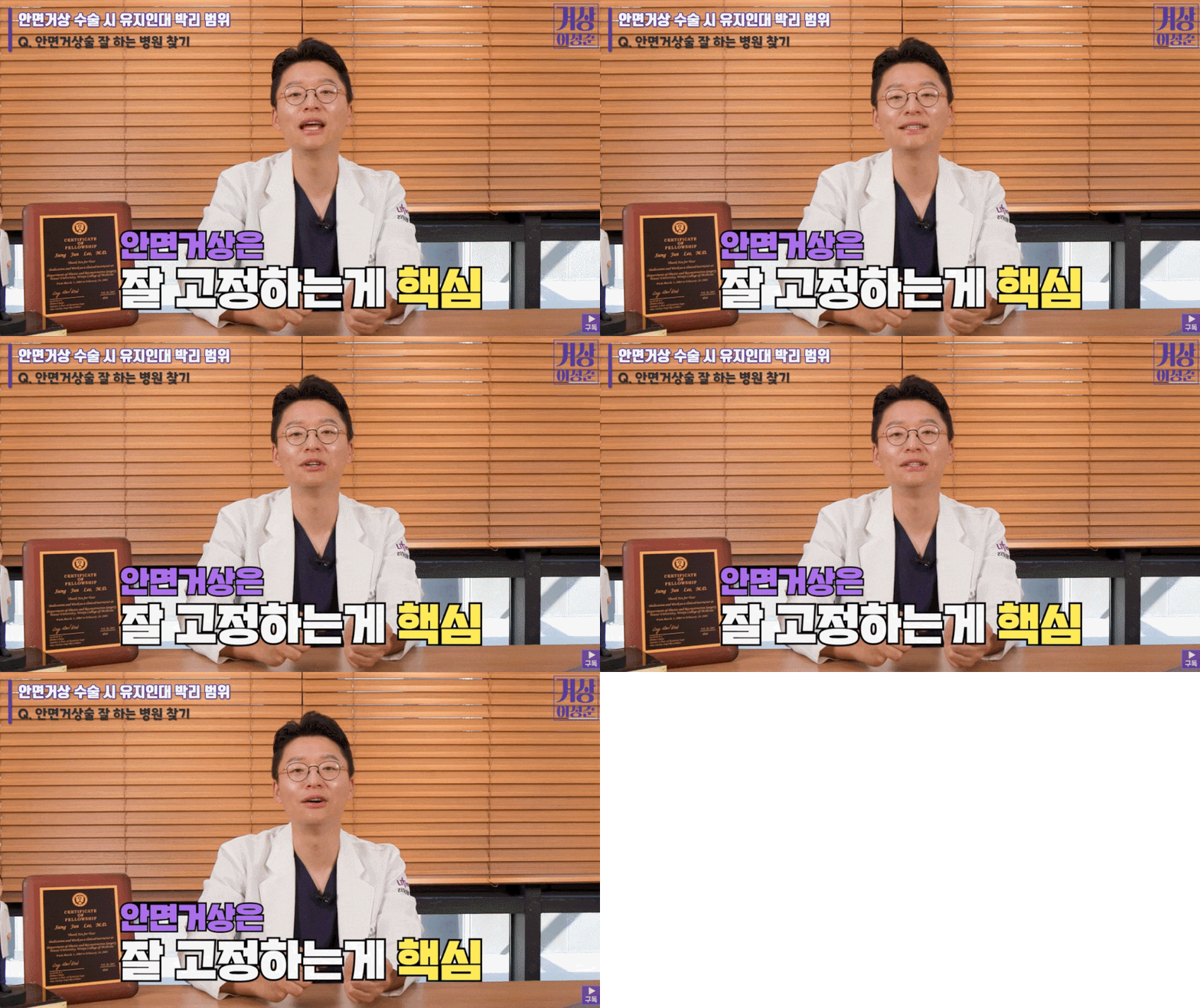
The key to a facelift is handling the SMAS layer.
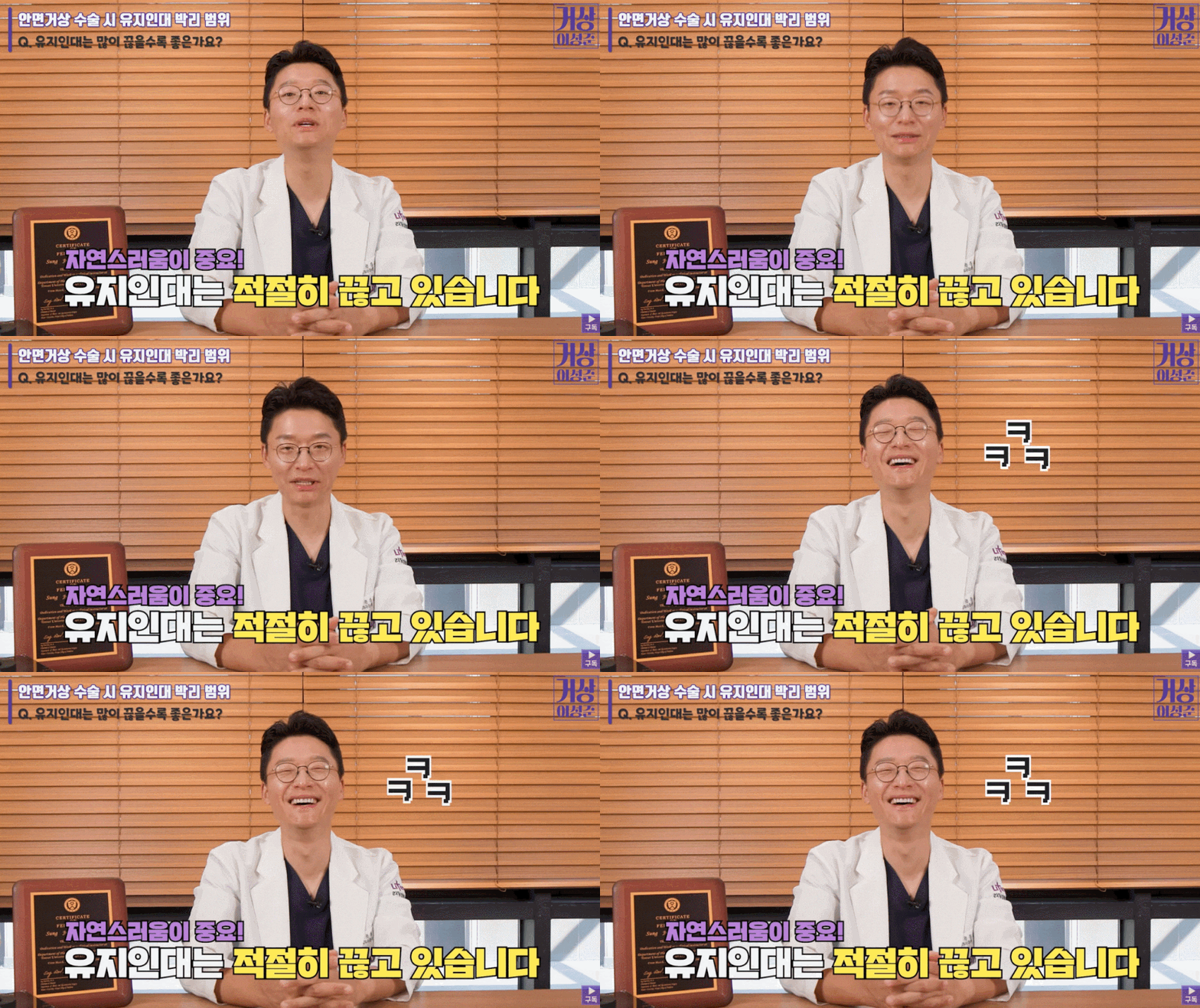
People often think that the more dissection is done, the better the lifting effect, but the key is understanding the characteristics of the SMAS layer, which consists of several thin layers with fibers oriented in one direction, and pulling in the direction that matches those fibers.
Dissection is the most important process in SMAS and retaining ligament separation, and it refers to the process of separating the skin tissue from the muscle layer.
(It is easy to think of it as a medical term used in a meaning similar to excision or removal^^)
The SMAS is the fascia layer between the facial muscles and the skin, and by lifting this layer together, a more natural and long-lasting effect can be achieved.
Since a lifting effect can be experienced only when the wrinkled muscle layer is pulled and the remaining muscle layer is removed, the technique and know-how of the medical staff are important.
Q2. How long is the recovery period after a facelift? Will it interfere with daily life?
The recovery period after a facelift varies from person to person, but it generally takes about 2–3 weeks.
Immediately after surgery, swelling and bruising may be present, but these gradually decrease.
Most patients can resume light daily activities after one week, and after two weeks, they can wear makeup and go out.
For the first few days after surgery, you will wear a compression bandage on your face, which helps reduce swelling and protect the surgical area.
You will also be prescribed pain medication to manage pain at the surgical site.
During the recovery period, it is advisable to avoid excessive physical activity or facial movement.
It also helps to keep your head slightly elevated while sleeping to reduce swelling.
However, recovery speed may differ depending on the individual, so it is important to avoid overexertion and follow the medical staff’s instructions carefully.
Q3. How long do facelift results last? Is there anything special I need to pay attention to in order to maintain them?
The effects of a facelift vary from person to person, but generally last about 5–10 years.
However, this can vary depending on factors such as the surgical technique, the condition of the individual’s skin, and lifestyle habits.
To maintain the results for a long time, several precautions should be followed.
First, sun protection is very important.
Sunlight is a major cause of skin aging, so be sure to apply sunscreen when going बाहर.
Second, quitting smoking is essential.
Smoking interferes with collagen production in the skin, so quitting is important to maintain the results of surgery.
Also, it is advisable to stay well hydrated and maintain a healthy diet.
Water is essential for maintaining skin elasticity, and eating fruits and vegetables rich in antioxidants helps skin health.
Q4. What are the differences between a facelift and other lifting procedures? In what cases should a facelift be chosen?
The biggest difference between a facelift and other lifting procedures is the approach and the duration of the effect.
Non-surgical lifting procedures such as thread lifting and Ulthera work on the skin surface, have a short recovery period, and can show immediate effects.
However, the duration of the effect is relatively short, and there are limitations for severe skin sagging or wrinkles.
On the other hand, a facelift is a surgical method that can address the underlying problem by reaching deep layers beneath the skin.
In particular, because the SMAS layer is lifted together, a more natural and longer-lasting effect can be achieved.
A facelift is especially effective in the following cases.
When there is moderate or greater skin sagging, when neck wrinkles are severe, when facial contours have significantly collapsed, or when satisfactory results have not been achieved with non-surgical lifting.
Q5. Is there a possibility of unnatural results after a facelift? How can natural results be achieved?
Most cases of unnatural results after a facelift are due to excessive pulling or inappropriate surgical technique.
For example, if only the skin is pulled too much, the face may look too tight or facial expressions may become unnatural.
To achieve natural results, a customized surgical plan that considers the individual’s facial structure and features is necessary.
Since every face is different, an individualized approach rather than a one-size-fits-all method is important.
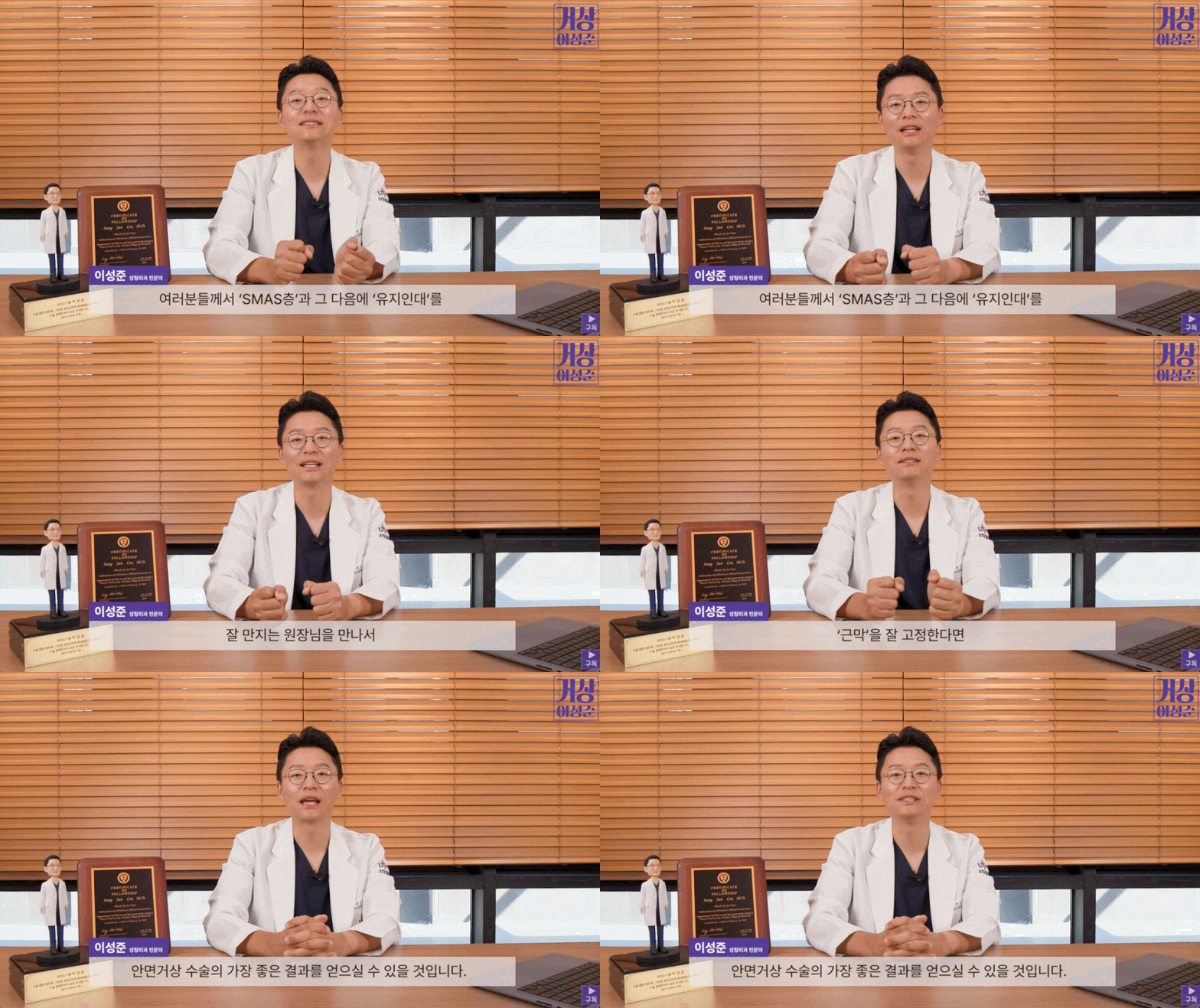
Next, it is important to lift the SMAS layer together.
This provides a more natural and longer-lasting effect than pulling only the skin.
Also, the appropriate degree of tension must be maintained.
Excessive tension can lead to unnatural results, so the judgment of experienced medical staff is important.
I hope today’s article has helped answer some of your questions about facelifts.
If you have any questions about the surgical process, recovery period, or how to achieve natural results, please feel free to leave a comment!
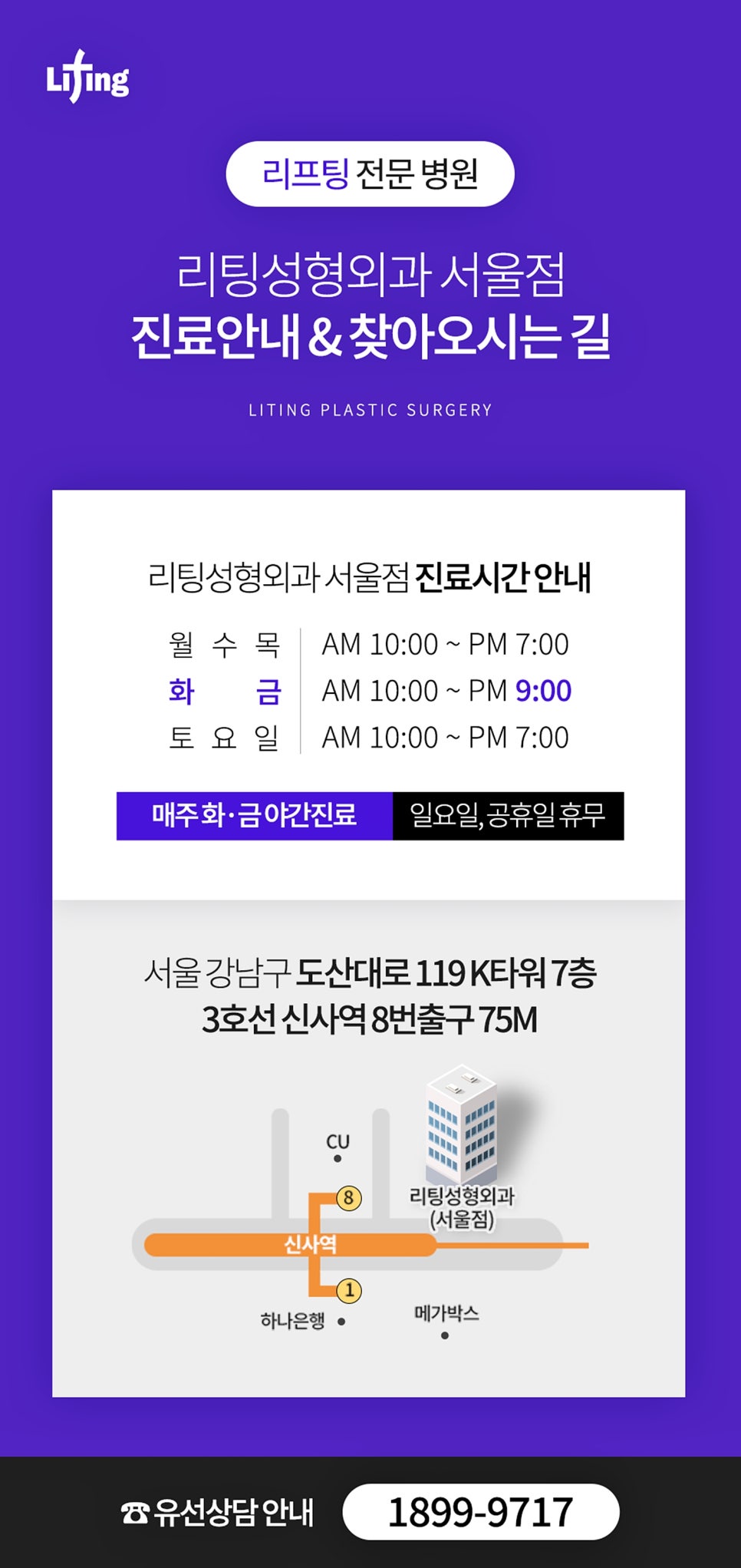
LITING Plastic Surgery Seoul Branch Consultation Information











Facelift price in your 40s: what if you’re considering the maintenance period?
Facelift price in your 40s: what if you’re considering the maintenance period?
Facelift price in your 40s: what if you’re considering the maintenance period?
Facelift price in your 40s: what if you’re considering the maintenance period?
Facelift price in your 40s: what if you’re considering the maintenance period?