Hello.
I am Director Lee Seong-jun of Reting Plastic Surgery Seoul Branch.
Recently, when I listen to conversations with patients in the consultation room,
I feel that more and more people are visiting the clinic for slightly different reasons than before.
I often hear people say that after raising children and taking care of their families,
they have finally come to look back at the ‘me’ who was always put last.
Work life has become a little more settled,
and only now, amid the flow of life,
have they found ‘my own time.’

(This image was created with AI to help understanding.)
In the past, plastic surgery was seen as
something to create a change ‘for others to see.’
These days, however,
there is a much stronger atmosphere of accepting it as
‘a natural choice for myself.’
That change in perception is significant,
and I often feel in the consultation room just how much
times have changed.
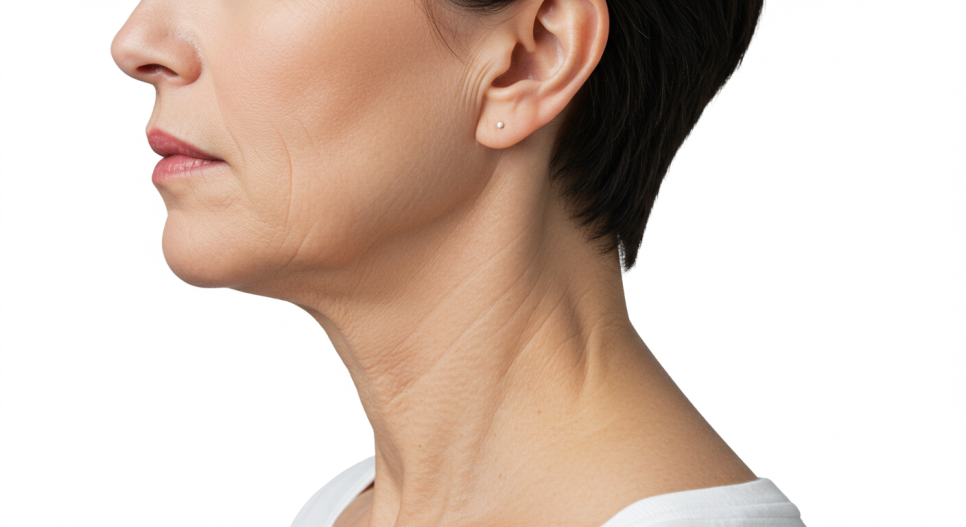
(This image was created with AI to help understanding.)
Now that there is time to care for yourself,
and life has become more relaxed,
if the face in the mirror no longer looks the way it used to,
it is only natural to think,
‘Could I maybe restore it a little closer
to how it was before?’
With this shift in the times,
interest in facelifts has recently increased.
It is no longer a surgery that only people in special cases undergo;
many now accept it as a natural part of everyday life.
Today, I would like to talk in more detail about what this facelift surgery is,
how it is performed,
and also about the facelift price, surgical methods,
and improvements and effects,
which many people are curious about.
Facelift surgery,
it is not just about pulling the skin.
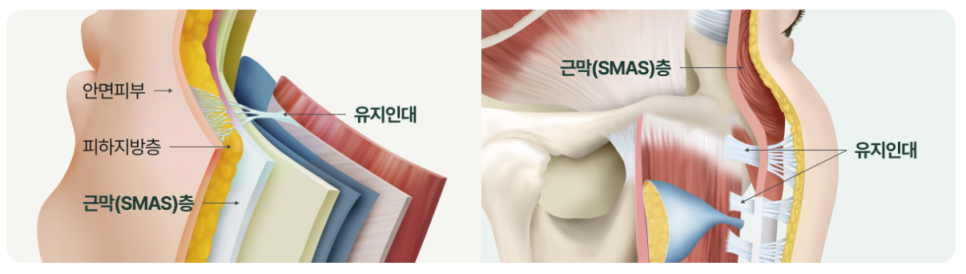
Many people think of facelift surgery as simply a procedure that pulls the skin upward.
But in reality, it is a much more complex and delicate surgery.
The most important structure responsible for the face’s firmness is the SMAS layer.
This SMAS layer is also called the fascia,
and it lies deeper than the skin,
playing an important role in the overall contour and elasticity of the face.

(This image was created with AI to help understanding.)
As we age,
this layer is affected by gravity and begins to sag downward,
and as a result, changes appear across the overall facial line,
such as sagging cheeks, nasolabial folds,
jowls, and a weakened jawline.
The facelift surgery performed at Sinsa Station Reting
approaches the SMAS layer, pulls it, and firmly secures it,
so it is not simply a surface tightening procedure,
but a surgery that improves the underlying structure.
Incision location,
it is not all the same.
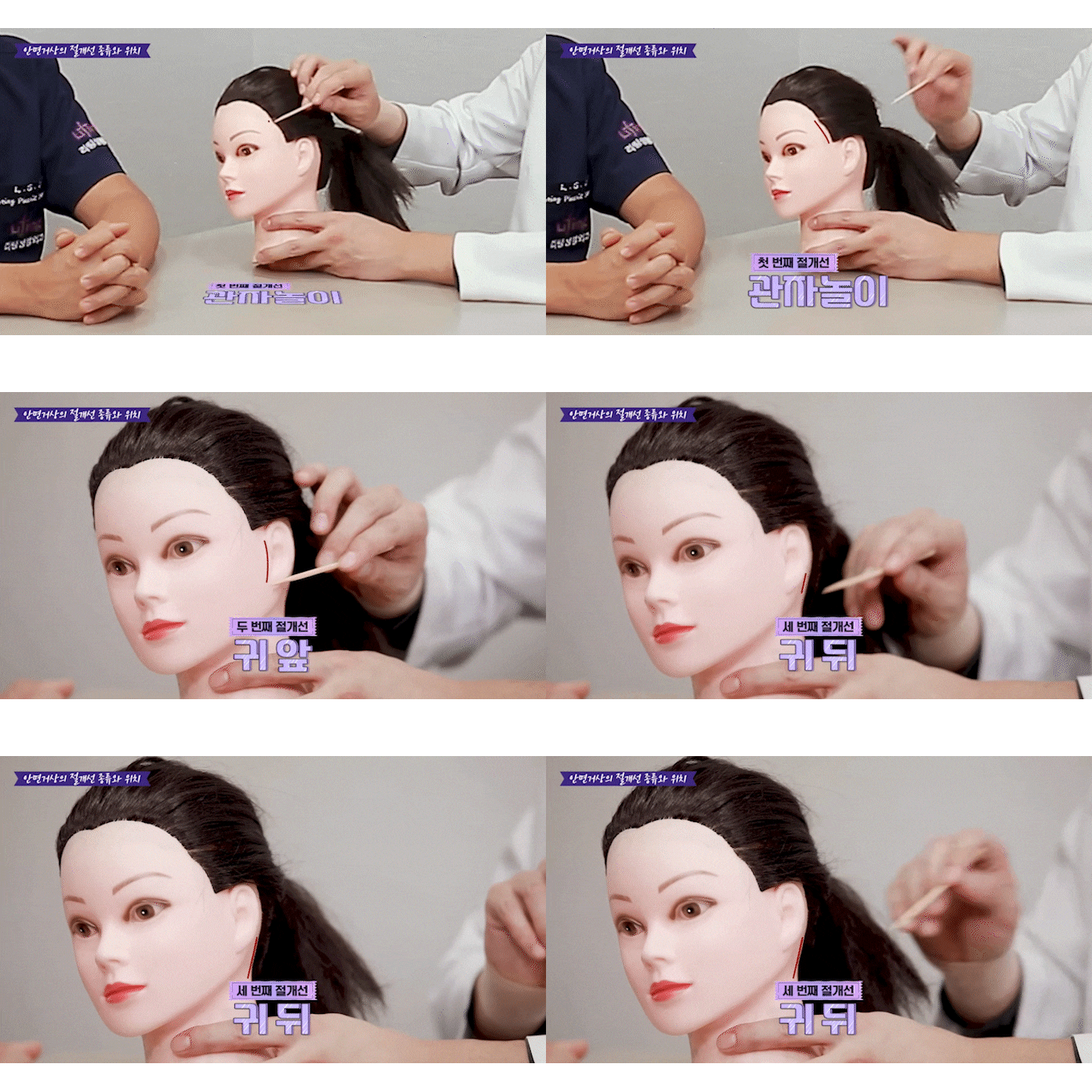
One of the biggest concerns many people have when considering surgery
is the incision line.
People worry about whether scars will remain,
whether hair will fall out,
or whether the area around the ears will look unnatural.
In fact, there are several types of incision lines used in facelift surgery.
| 1. Temple incision |
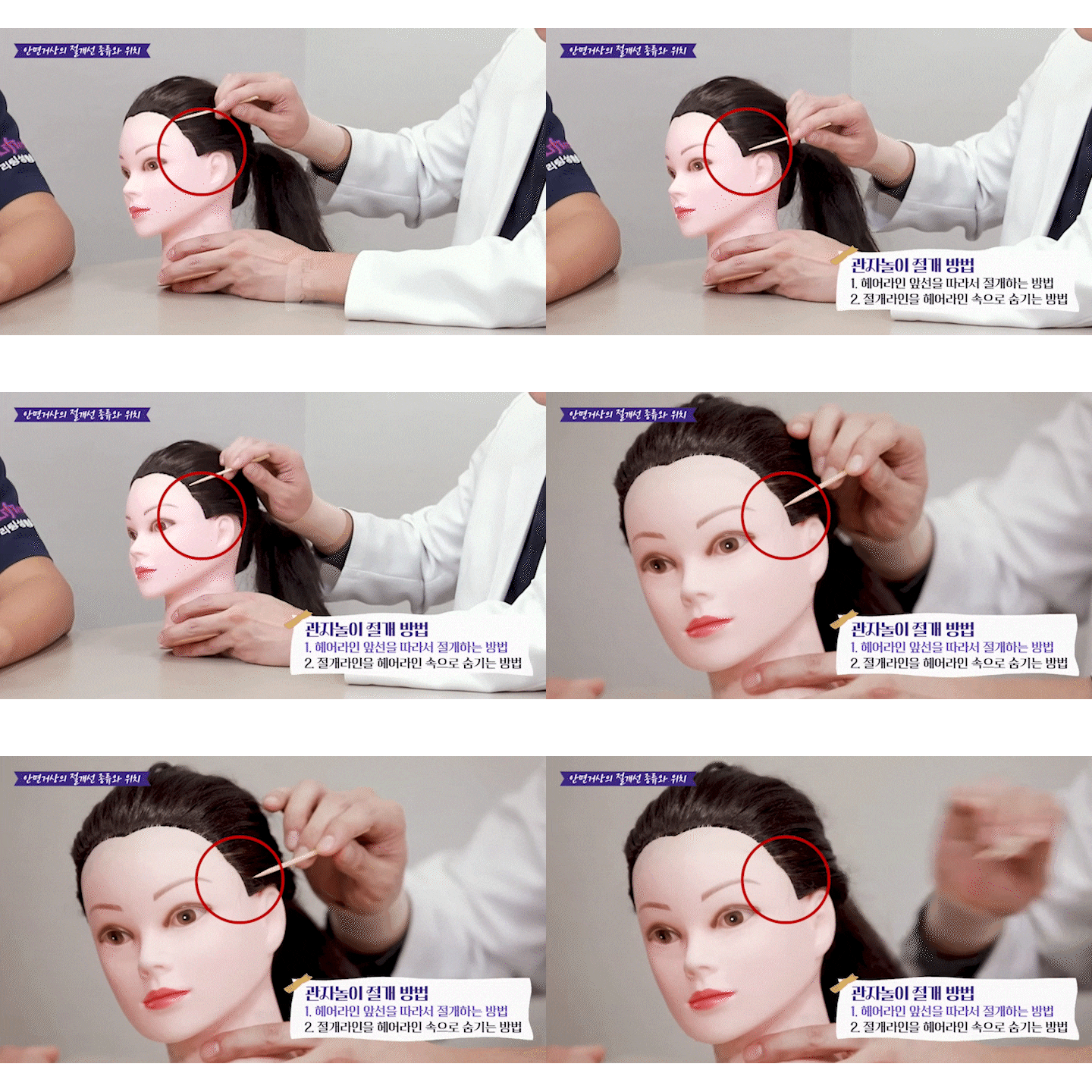
This method makes an incision outside or inside the hair-bearing area.
If the incision is made outside the hairline, the scar may be slightly more visible,
but the direction of lifting is more natural.
| 2. Incision in front of the ear |
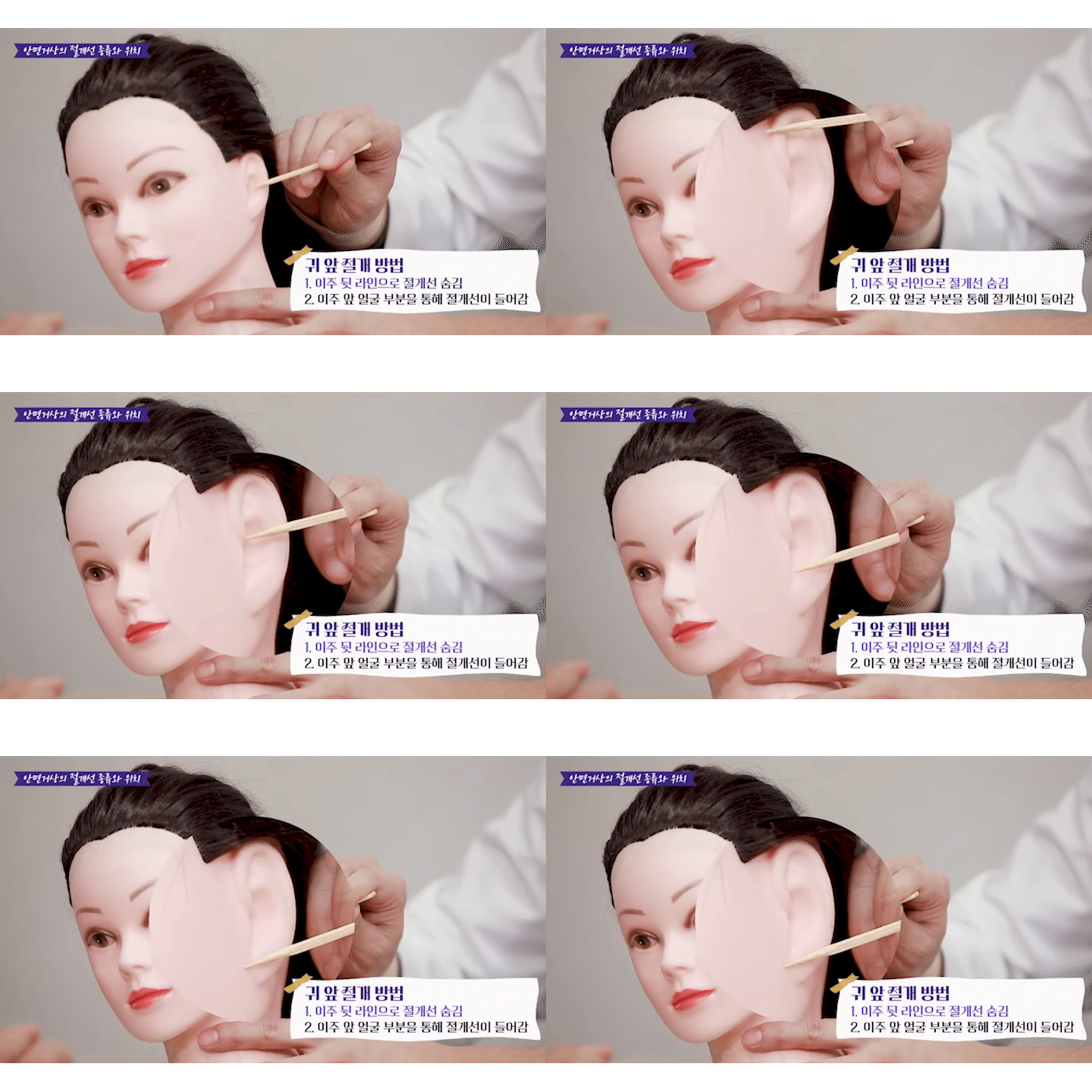
This is a method of making an incision along the front of the auricle,
and it can be made either in front of or behind the cartilage called the tragus.
An incision in front of the tragus allows the ear opening to remain naturally maintained for cosmetic purposes,
but a scar may remain slightly in front of the ear,
and although a scar made behind the tragus is not easily visible,
the shape of the ear may change when it is pulled, so caution is needed.
| 3. Incision behind the ear |
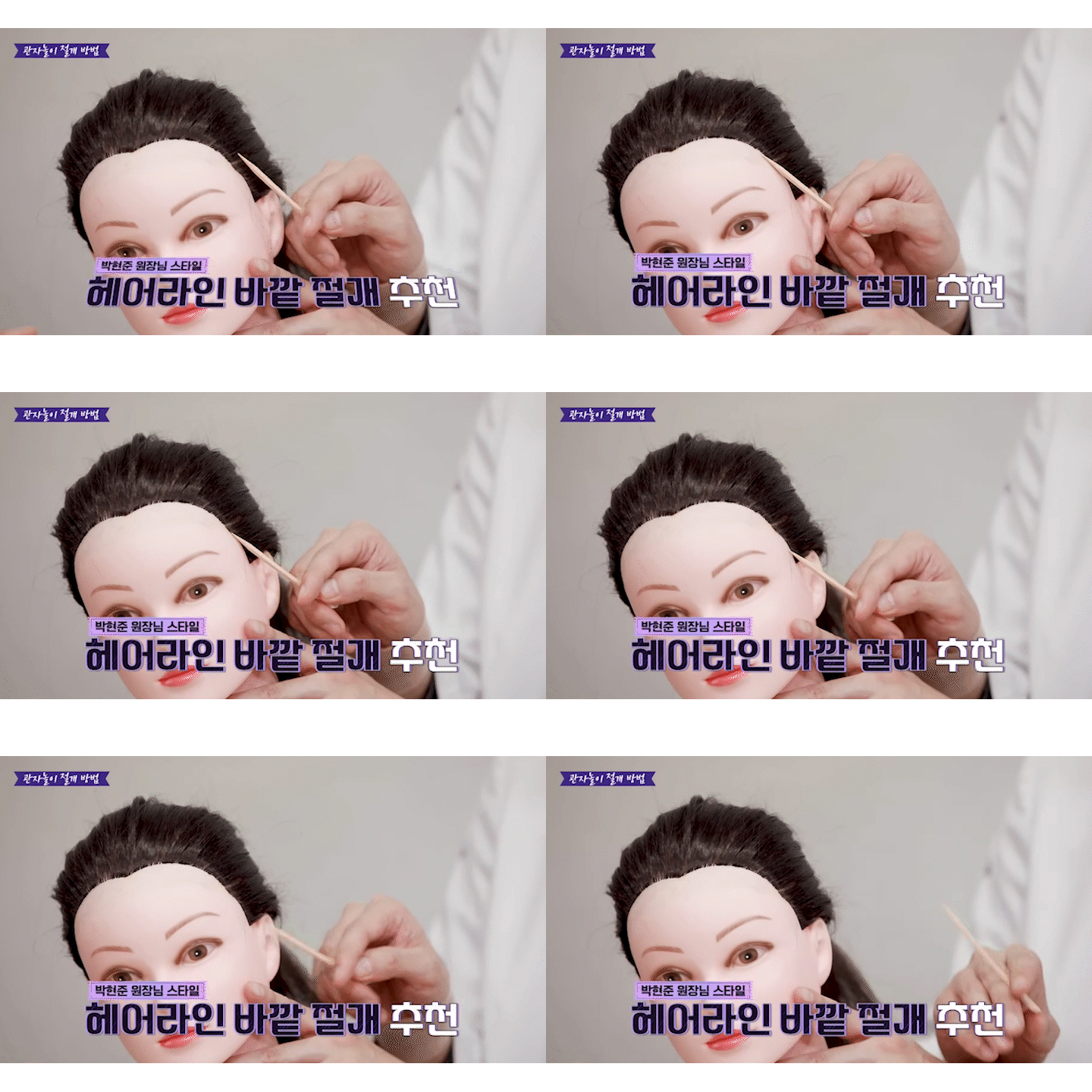
In most cases,
this incision is commonly included.
It is especially important when pulling in a V-line shape that connects down to the neck.
All of these incision methods must be customized according to each person’s facial structure, hair distribution,
and skin condition.
That is why a precise consultation before surgery is more important than anything else.
Facelift price,
why is there such a difference?
Many people are curious about the facelift price and search online a lot,
but in reality, you can see that the price range varies widely,
from the 3 million KRW range to the 20 million KRW range.
The reason for the large price difference is not simply the hospital’s reputation.
The cost can vary depending on the depth and precision of the surgery,
such as the surgical method, incision range,
SMAS layer fixation method,
whether retaining ligaments are released,
suturing technique, and the postoperative recovery management system.
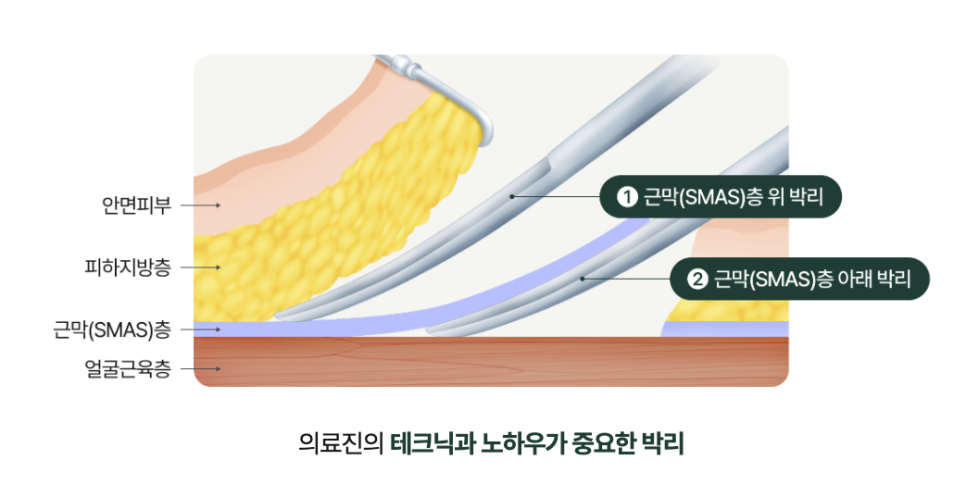
You need the skill to properly understand the SMAS layer,
pull it accurately along its direction,
and then suture it.
This work requires considerable experience
and delicacy.
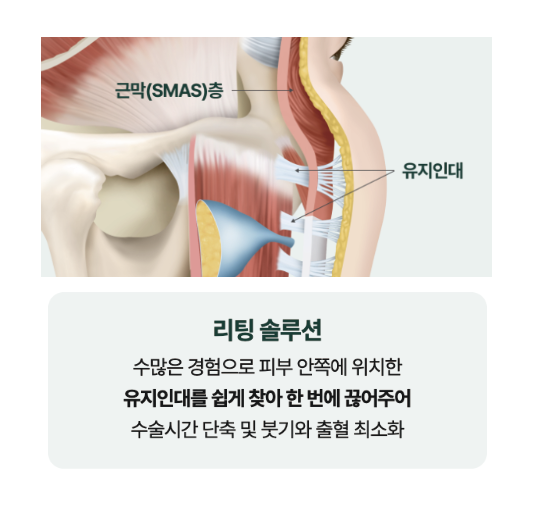
Also, if there is a technique to ‘cut the retaining ligaments precisely in one go,’
the surgery time can be shortened,
and bleeding and swelling may be relatively reduced.
In other words, rather than simply comparing prices,
| ✔ How well the first surgery can produce results suited to my face |
|---|
| ✔ What incision location and method are best suited to me |
| ✔ How the recovery process is managed after surgery |
it is much more important to consider these factors comprehensively.
It is better to take a more open approach from the start and look at everything as a whole.
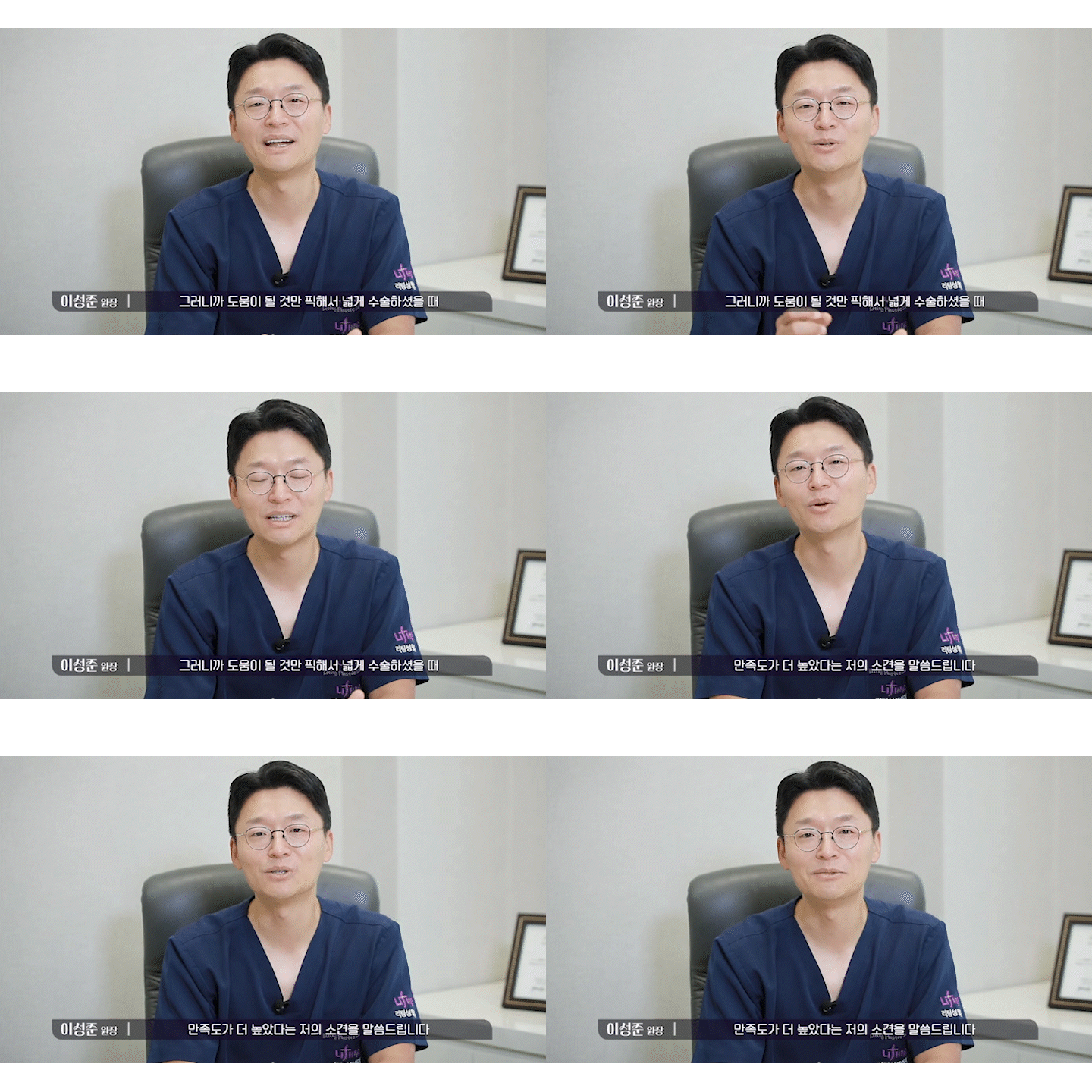
When discussing facelifts, many people initially say,
“No, it’s not that bad for me.
Just a little on the face...”
But once they recover after surgery and look in the mirror,
they often express regret, saying,
“Maybe I should have done the neck at the same time then...”
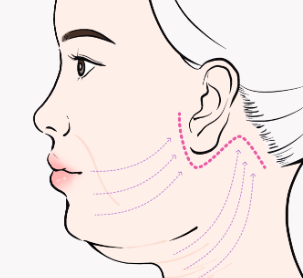
Especially when overall sagging is noticeable,
planning the surgery as a full lift, including a neck lift,
can lead to a much more natural and harmonious result.
So when you first have a consultation,
rather than setting limits for yourself in advance,
I recommend looking at the entire face together with a more open mind.
At Sinsa Station Reting, this is how it is done.
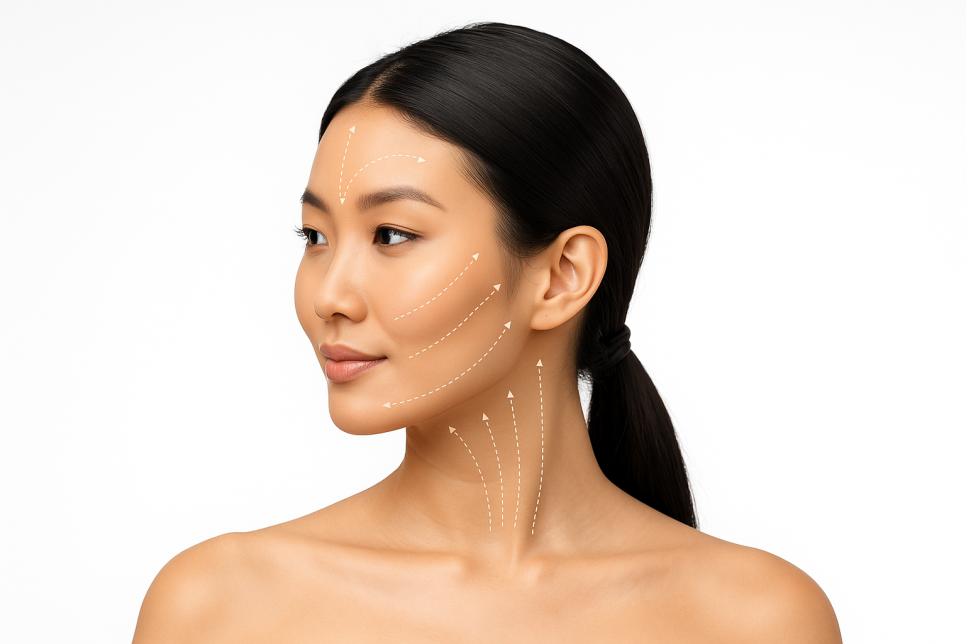
(This image was created with AI to help understanding.)
At Sinsa Station Reting, through preoperative consultation,
we consider all of the following:
✔ Skin thickness and elasticity
✔ The location of the SMAS layer
✔ Facial contour and hairline
✔ Presence of any existing scars
and then design a customized incision method.
During surgery, we try to reduce damage to the retaining ligaments as much as possible,
pull the fascia layer sufficiently to induce a natural lifting effect,
and close the incision area with double-layer suturing
to help minimize scarring.
Surgery is important to do well,
but it is even more important that it is the right fit.
I think facelift surgery is a process that connects the time I have already lived with the time I will live ahead.
So please do not decide too hastily,
and be sure to receive a direct consultation from a specialist
to find the method that is right for you.
I hope you become more naturally youthful tomorrow than today,
and today more than yesterday.
This was Director Lee Seong-jun of Seoul Reting Plastic Surgery.
This article is content intended to provide general information about facelift surgery.
Whether to actually undergo surgery should be decided according to each individual’s health condition and purpose,
and should be determined through consultation with a medical professional.
If you would like more detailed information,
please check the link below on YouTube for further details.
https://youtu.be/BZ6kldV4h2o?si=0f8qwtDd6HF3c_i1