Hello,
I’m Director Lee Seong-joon of Leeteing Plastic Surgery Seoul Branch.
There is something I hear
several times a day in the clinic.
“Doctor,
I want to get a facelift...
but will it leave a scar?”
That question contains worry, hesitation,
and very cautious expectations
all at once.

(This image was created with AI to help with understanding.)
I completely understand that feeling.
If I were the one having surgery,
I would also carefully consider
the possibility of a scar
on such a sensitive area as the face.
In today’s post,
for those who are carrying such concerns
and are searching for
‘Sinsa Station Plastic Surgery’ or
‘facelift scar’,
as a specialist,
and also as a person,
I would like to speak to you carefully.
Why the face sags as we age
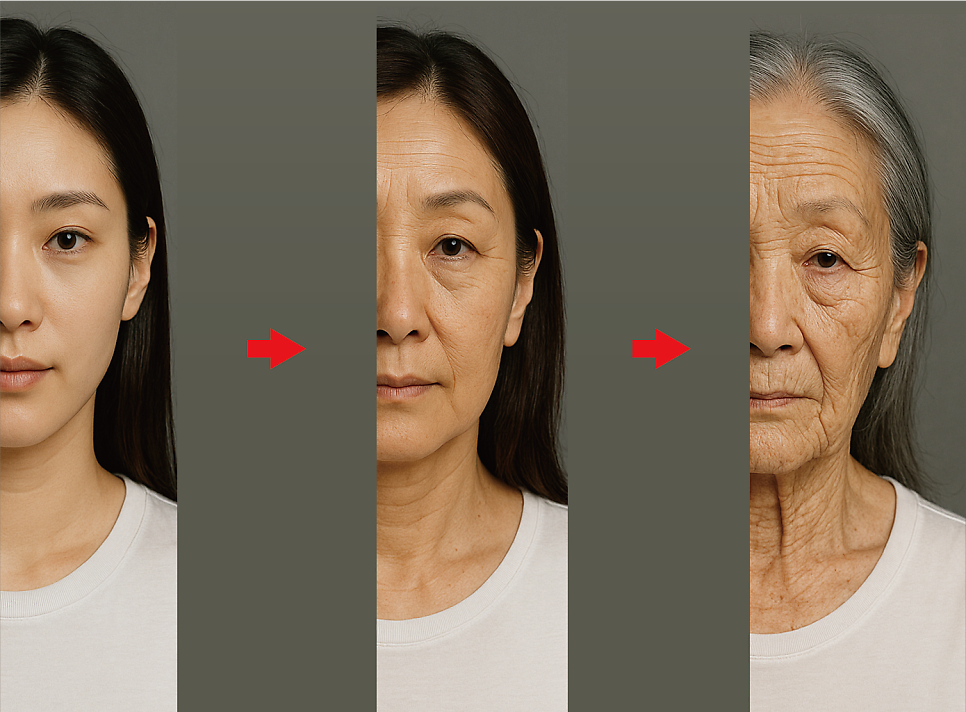
(This image was created with AI to help with understanding.)
The changes that appear on the face over time.
Cheeks drooping downward,
a softened jawline,
and deep wrinkles along the corners of the mouth
are not simply
problems with the skin alone.
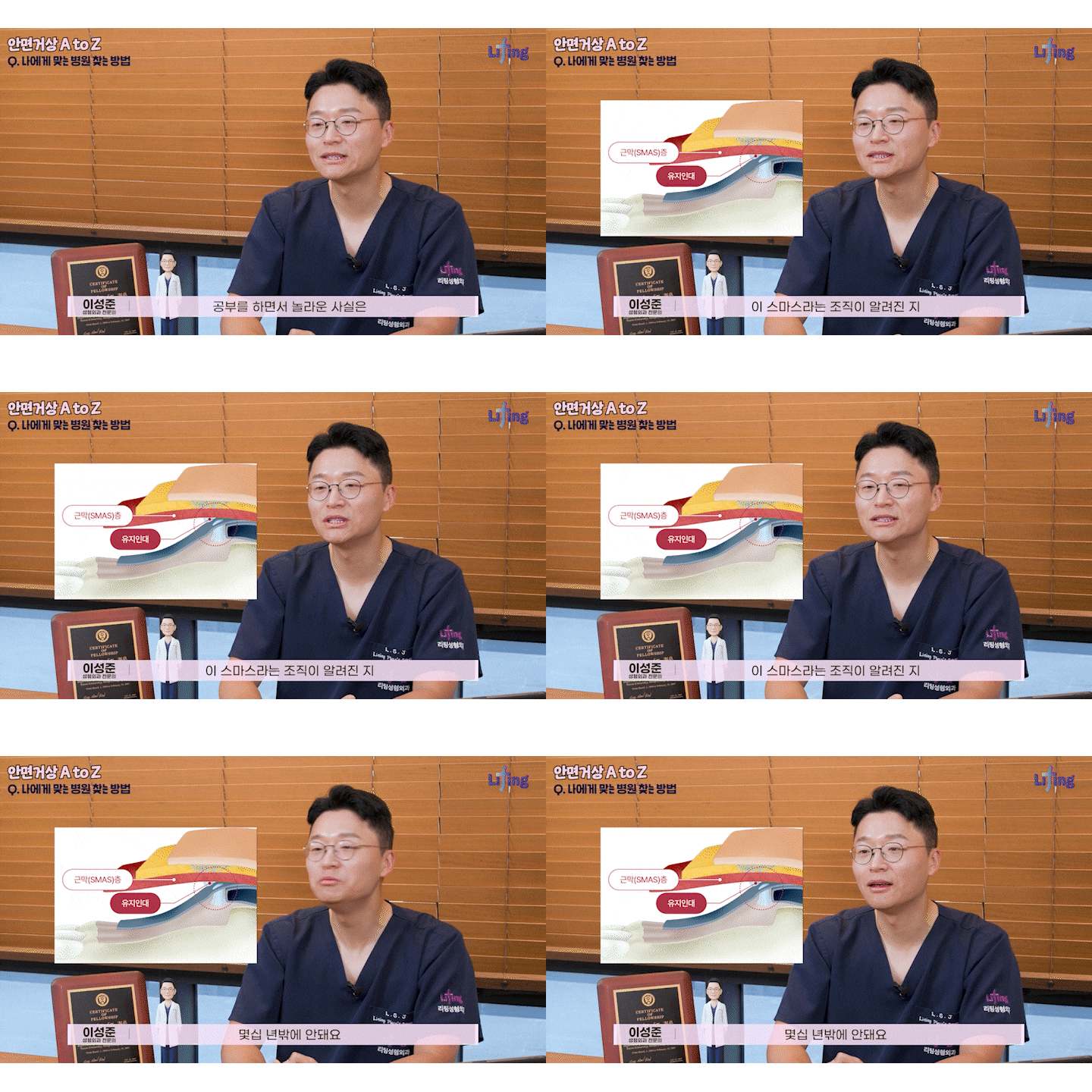
Anatomically, beneath the skin of the face,
there is a thin, strong fascial layer
called the SMAS layer.
This layer governs major facial movements
and is also a key structure
that supports the skin.
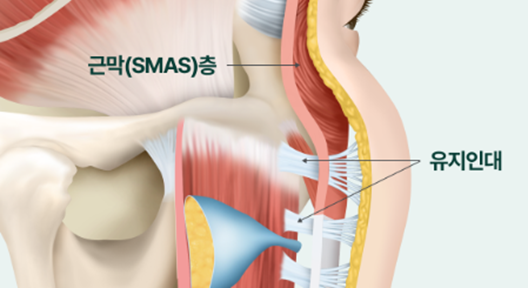
The problem is that when this SMAS layer
and the retaining ligaments around it
gradually sag under the force of gravity,
what we see on the outside
feels like ‘the skin has loosened.’
In the end, a facelift is a process of
finding the answer to
‘where and how should this fascial layer,
including the SMAS layer, be lifted?’
A surgical strategy, not just a simple pull
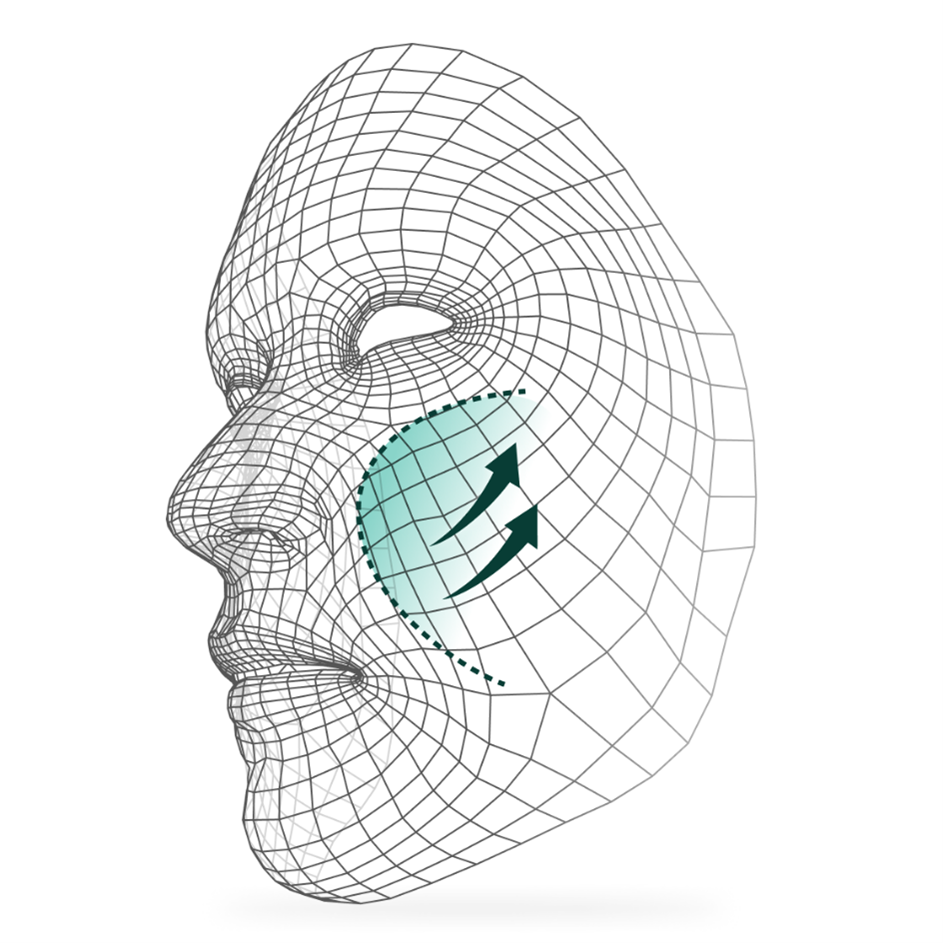
Many people think of a facelift
simply as ‘a surgery that pulls the skin,’
but what is actually important is
‘how the structures beneath the skin are adjusted.’
If only the skin is lightly pulled and fixed,
there may be a temporary change,
but after some time,
there are many cases where it returns
to how it was before.
That is why the core of the surgery depends on
how much and by what method the SMAS layer
is handled.
At Leeteing Plastic Surgery near Sinsa Station,
we do not simply focus on pulling.
Instead, we carefully diagnose each person’s
anatomical structure and aging condition
and plan the surgery to match
the direction and depth required by each face.
For those who ask a lot about facelift scars,
the second most common question is
about nasolabial folds.
How much can a facelift improve nasolabial folds?
To put it simply,
it depends on the person.
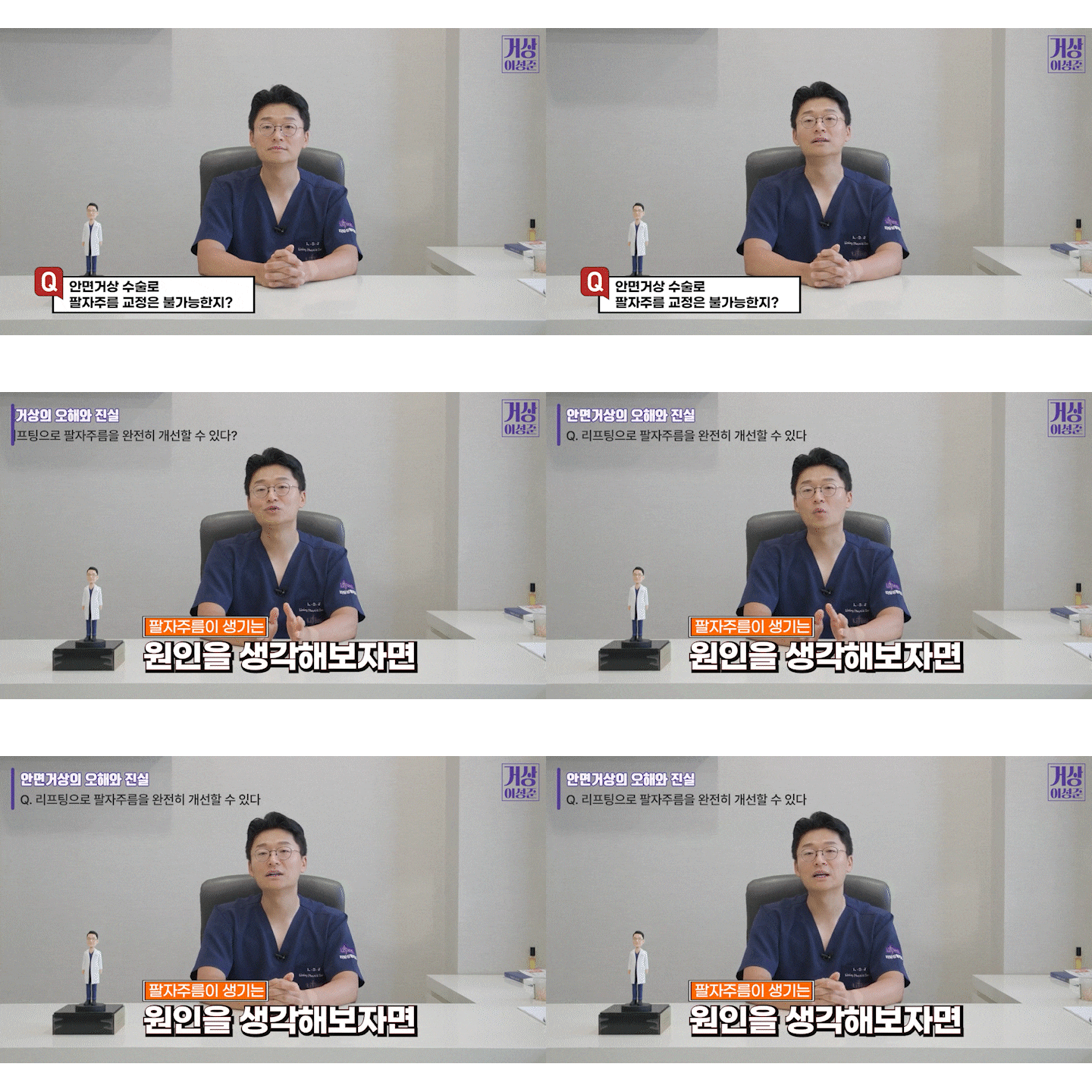
The reasons nasolabial folds form are not all the same.
For example,
some people develop deeper nasolabial folds
because the face has sagged downward.
In such cases, lifting the drooping tissue
through a facelift can make
the folds noticeably softer.
On the other hand,
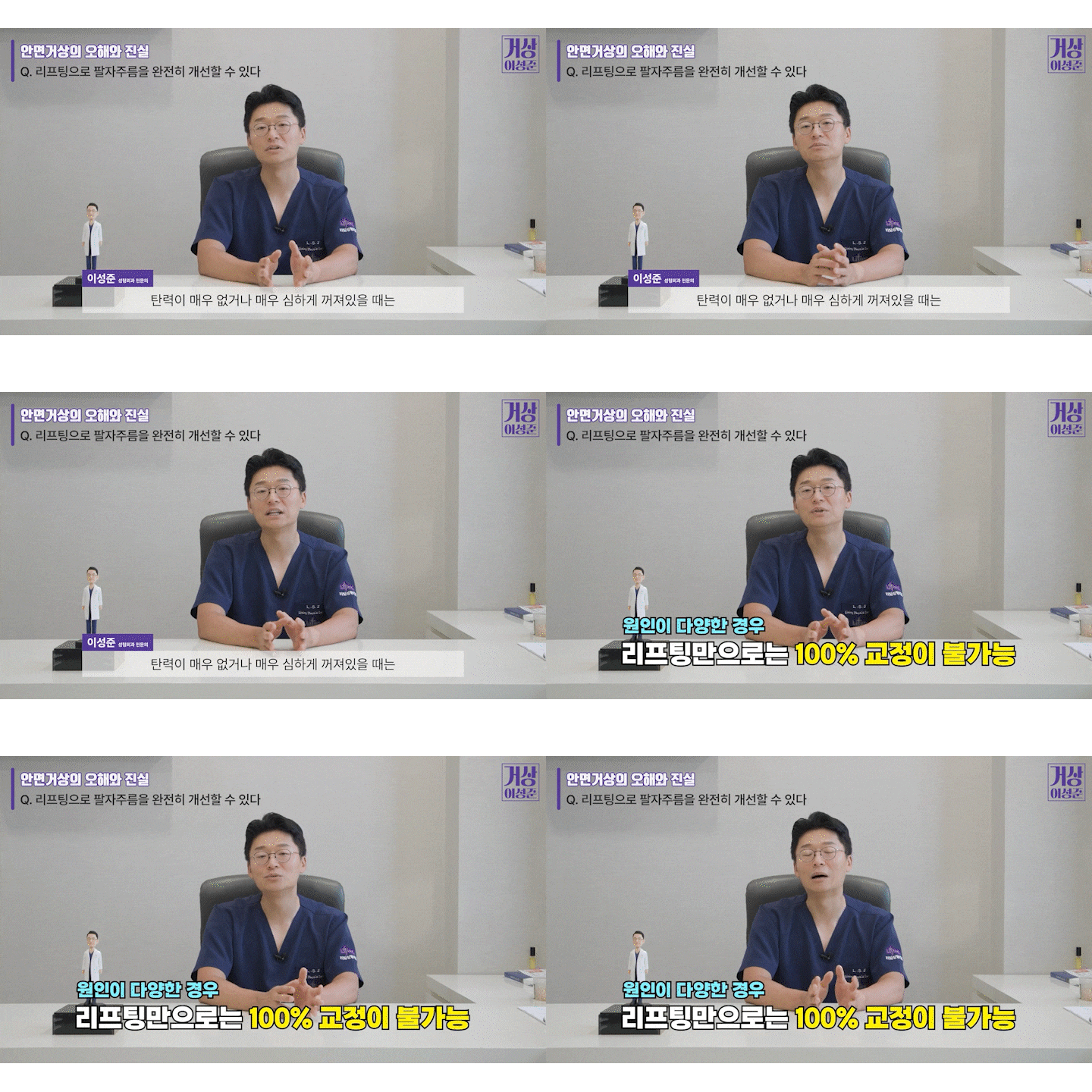
if hollowing, changes in skin thickness,
or skeletal factors play a larger role,
then a facelift alone may not produce
the degree of change you were expecting.
This does not mean the surgery was insufficient;
it is because the original cause of the wrinkle
was different.

And there is one more thing
many people overlook.
That is sagging in the neck area.
A facelift alone can tidy up the area above the jawline,
but if you want a neat result all the way from
the area below the jaw to the neck line,
in many cases,
a neck lift is also considered together.
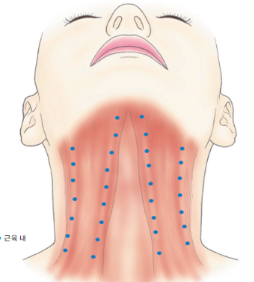
In particular, the area extending from
under the jaw to the neck
contains a muscle called the platysma,
which weakens and relaxes anatomically,
and as a result it can appear as vertical bands
or look like uneven wrinkles.
In such cases, combining a neck lift
with a facelift can help achieve
a more natural and harmonious look.
Lifting from the jawline to the neck all at once
is also a better choice than dividing it into
multiple procedures,
even from the standpoint of cost
and recovery.
Where is the incision made?
How should facelift scars be managed?
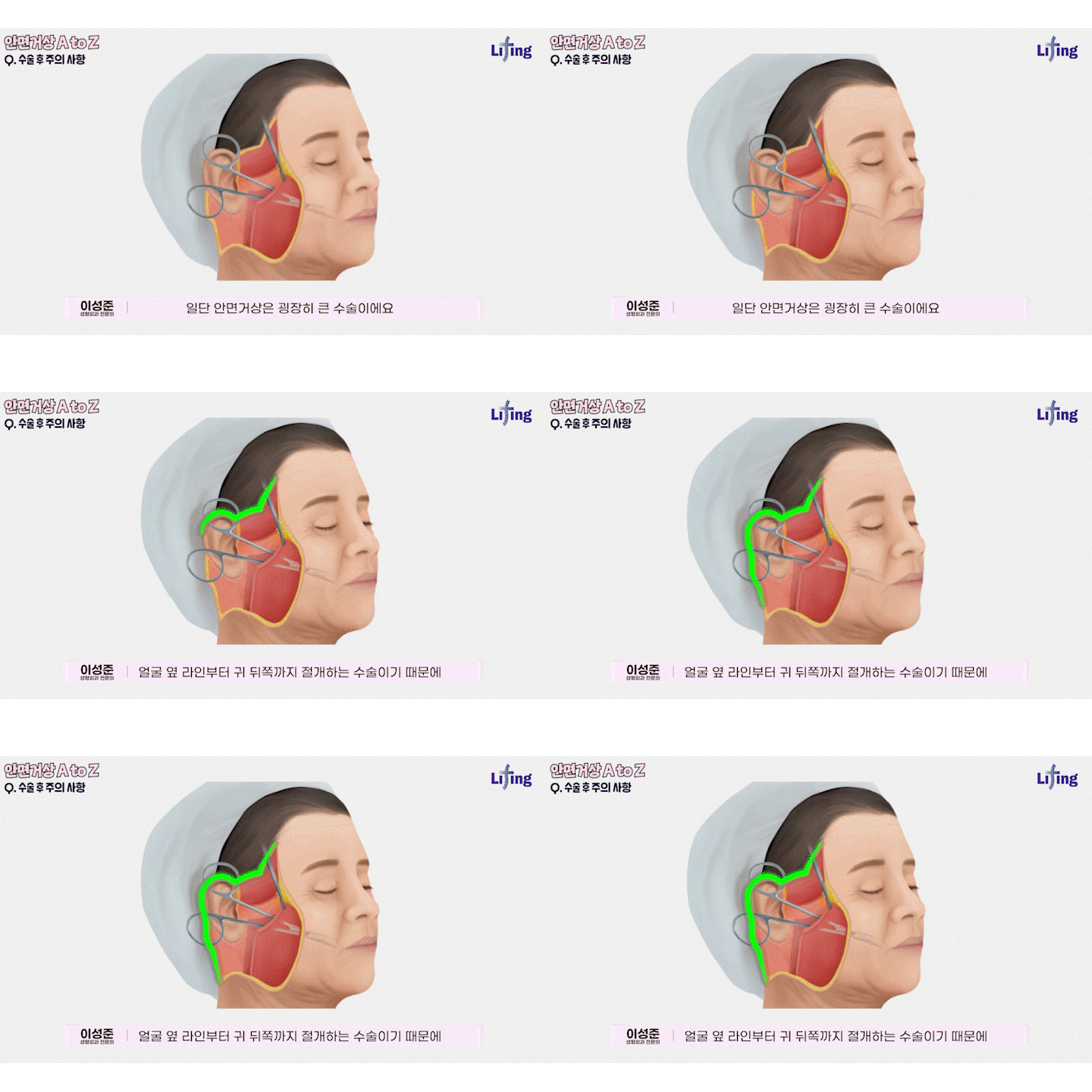
When people hear that an incision is involved,
the first concern that comes to mind is,
“How will the scar turn out?”
To that question, I will answer honestly.
In facelift surgery,
three incision lines are generally used.
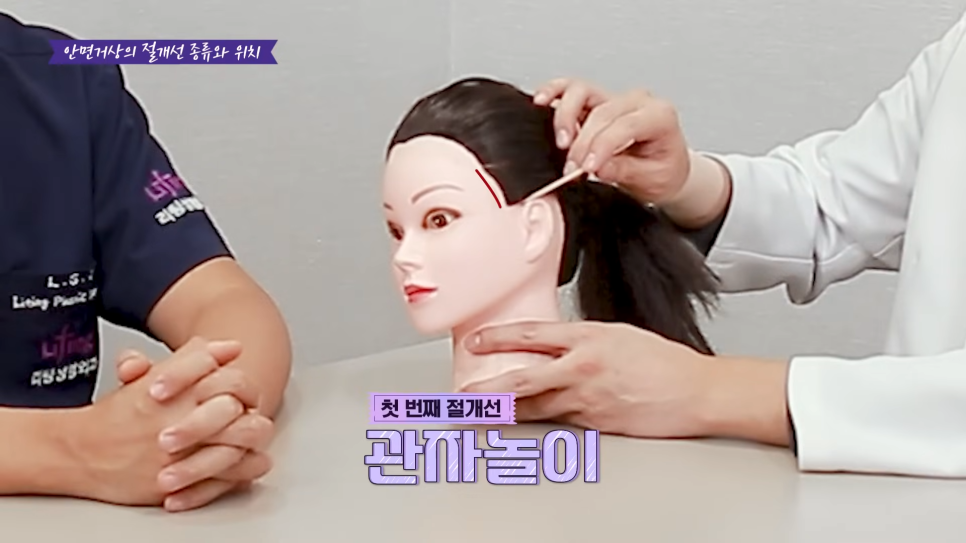
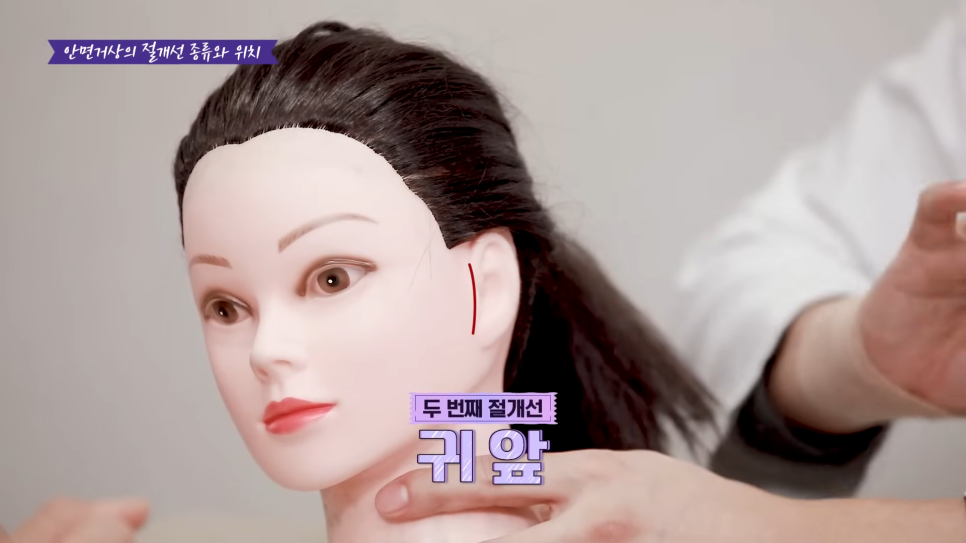
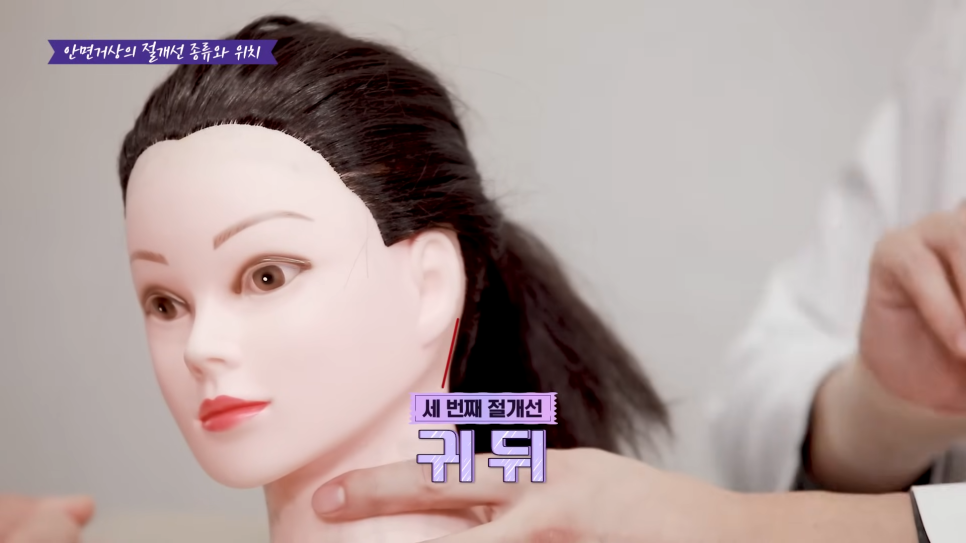
Previous image
Next image
| Temple incision line | An incision that starts inside the hairline and extends to the front of the ear |
|---|
| Front-of-ear incision line | An incision made along natural wrinkle lines to keep the scar as inconspicuous as possible |
| Behind-the-ear incision line | The part extending behind the ear is usually incised in a similar location |
Many people ask,
“Can the area in front of the ear
be kept out of sight?”
As time passes, the incision line naturally
blends into the skin folds,
and sometimes the facial wrinkles become
more noticeable instead.
Of course, depending on an individual’s skin type,
the direction of the wrinkles,
and the structure of the hairline,
the degree to which the incision line is visible
can differ.
That is why incision line design
is based on a ‘patient-tailored plan.’
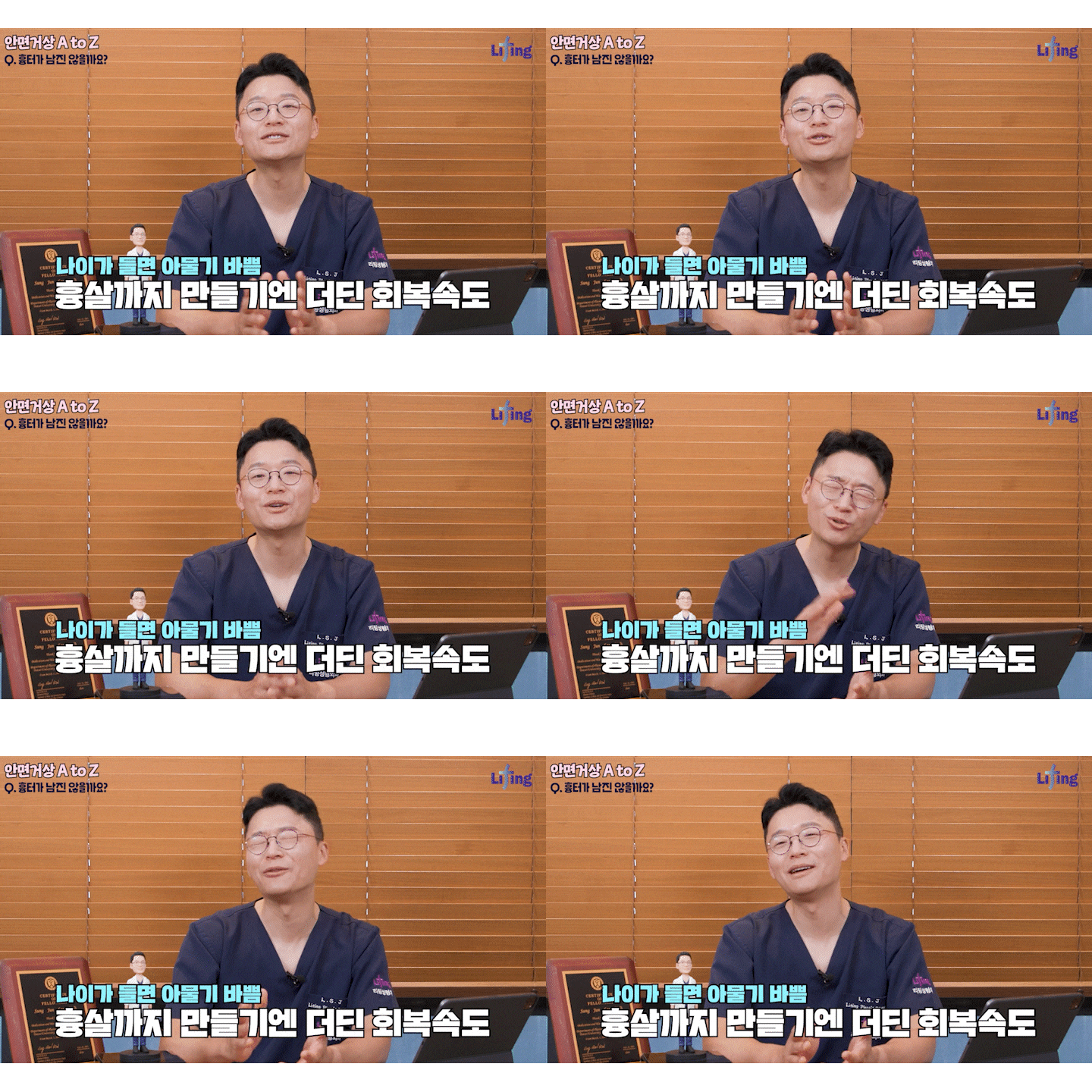
In fact, while proper scar care is certainly important,
the most important thing is
performing the surgery so that scars are not left.
To do that,
it is necessary to have the know-how to dissect
the fascia and release the retaining ligaments
while minimizing tissue damage.
A scar is ultimately the body’s own process
of healing itself, so if the right surgical solution
has been provided, then the recovery process,
although it may vary from person to person,
should naturally progress toward healing.
In the end, the key is choosing the solution
that suits you and performing the surgery
carefully with the appropriate incision method.
In that process, the choice is whether to lift
only the upper face,
only the lower face,
or to improve the neck together with the face
with cost-effectiveness and results in mind.
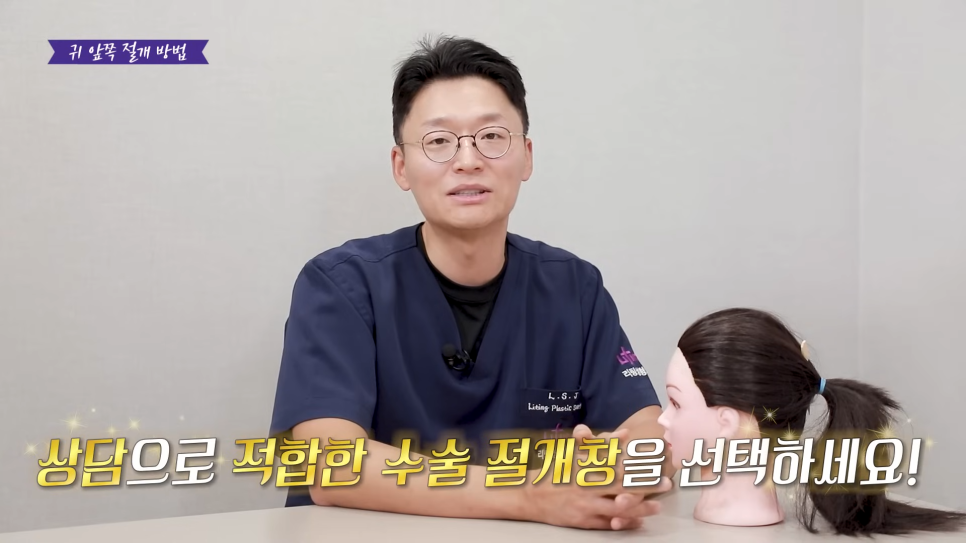
Surgery is ultimately a conversation with the face.
The role of the specialist is not to make the face I want,
but to find a method that allows my face
to follow naturally.
If you are very worried about scars,
please remember this.
What matters is
‘a sufficient consultation.’
If you are considering a facelift,
rather than focusing only on price or speed,
I recommend that you have a thorough consultation
with a medical team that can present
the right approach for your face.
The results of every surgery can vary depending on
an individual’s skin condition, age, and
anatomical structure,
and scar management is no different.
I hope you become more naturally youthful
tomorrow than today,
and today than yesterday.
This was Director Lee Seong-joon
of Seoul Leeteing Plastic Surgery.
This post is content intended to provide
general information about facelift scars.
Whether to actually undergo surgery should be decided
based on the individual’s health condition and purpose,
and should be determined through consultation
with a qualified medical professional.
If you would like more details,
please check the YouTube link below
for more information.
https://youtu.be/tqBrIqGV6UM?si=WSAXvdgAlUBepayv