Hello.
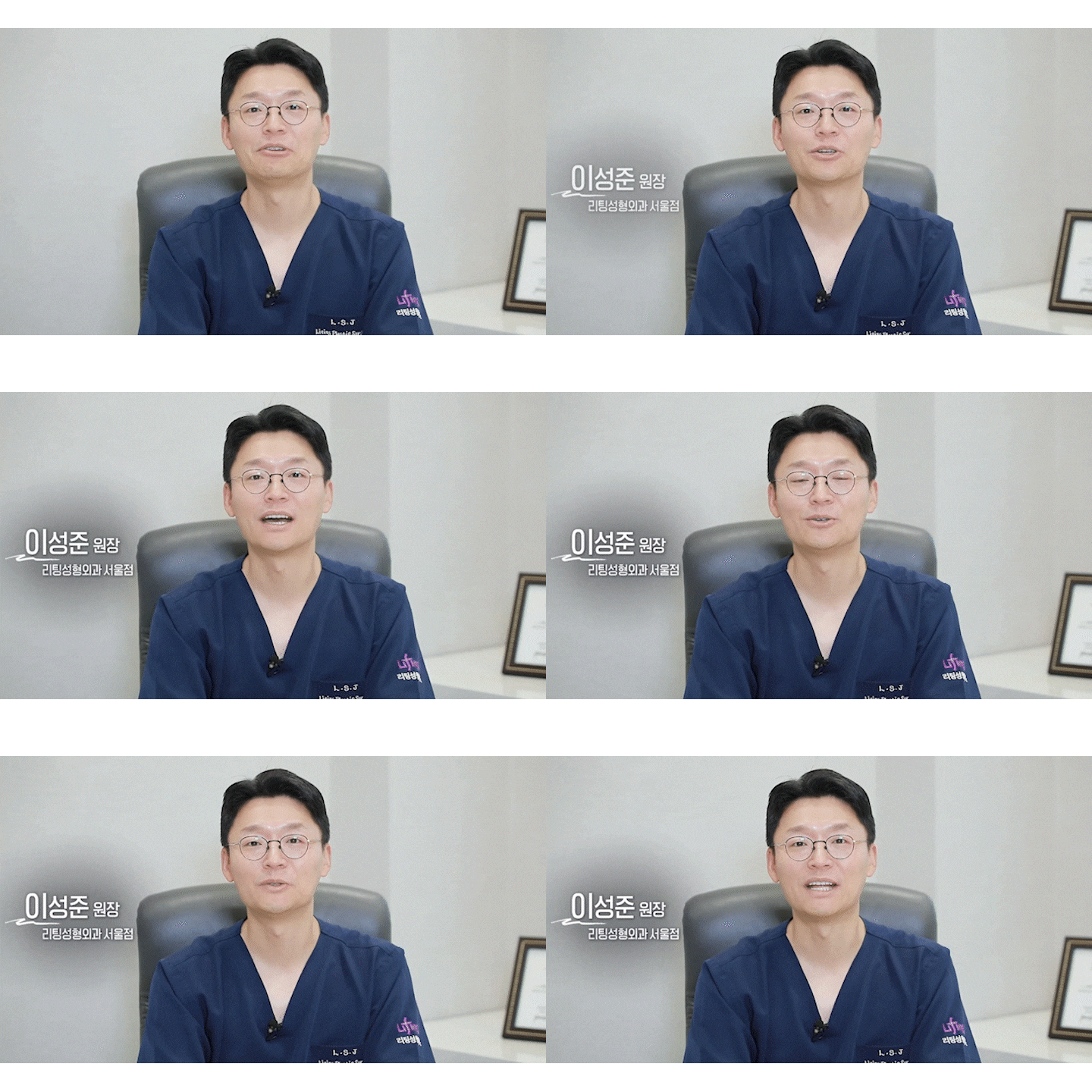
I am Director Lee Seong-joon of Ritting Plastic Surgery Seoul Branch.

When you look in the mirror, it somehow
feels like your eyes have gotten smaller...
Even though you did your makeup carefully in the morning,
by the afternoon it feels like it is lifting and falling apart.
Is all of this just in your head?
When your eyes start to feel heavier than before,
and your eyebrows seem to keep drooping downward,
you may often brush it off by thinking,
“I must be tired.”
But that change,
may not be caused simply by fatigue.
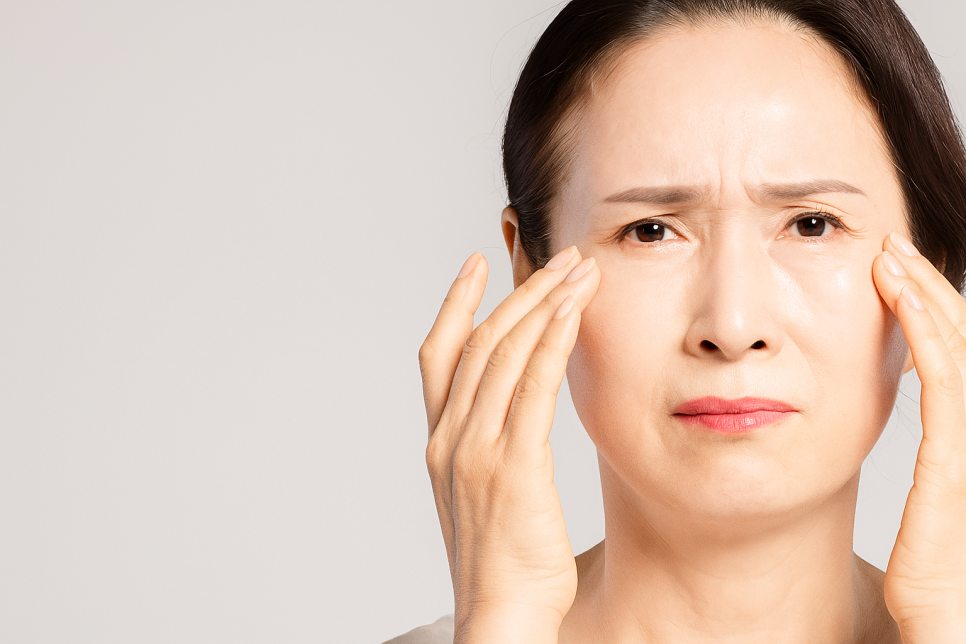
In reality,
even a slight drooping of the forehead
can affect the area around the eyes,
causing these changes.
Today, for those of you who are concerned about
“drooping eyelid lifting,” I will carefully explain
“forehead thread lifting,” which should be considered together,
from the principles to who it is for and how the procedure is performed.
Are the eyes drooping, or is the forehead drooping?
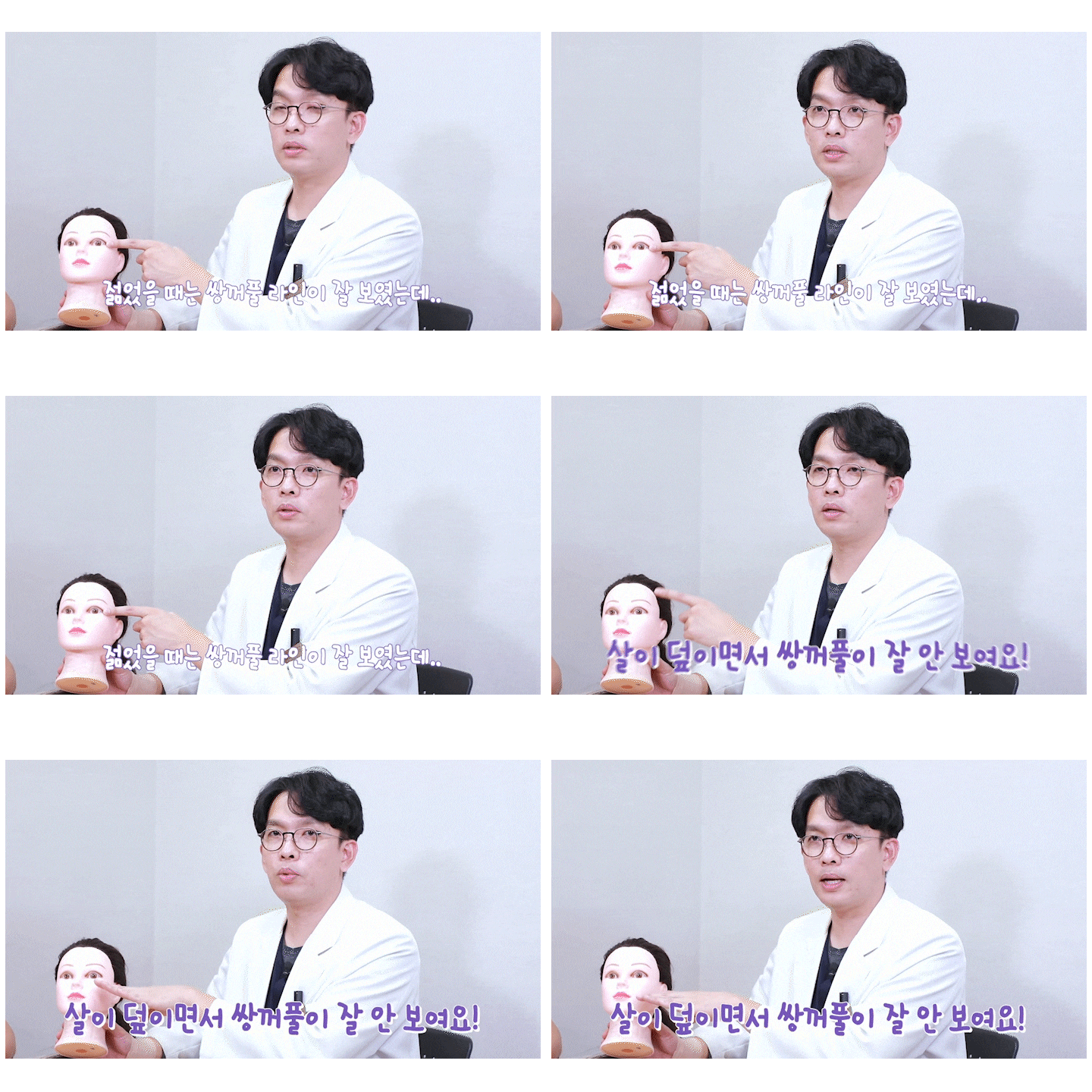
When your eyelids feel as if they are heavily sagging,
it is difficult to simply conclude that the problem is only around the eyes.
Especially if you have developed a habit of using your forehead muscles to open your eyes,
there is a high possibility that this is a structural change related to both the forehead and the eyes.
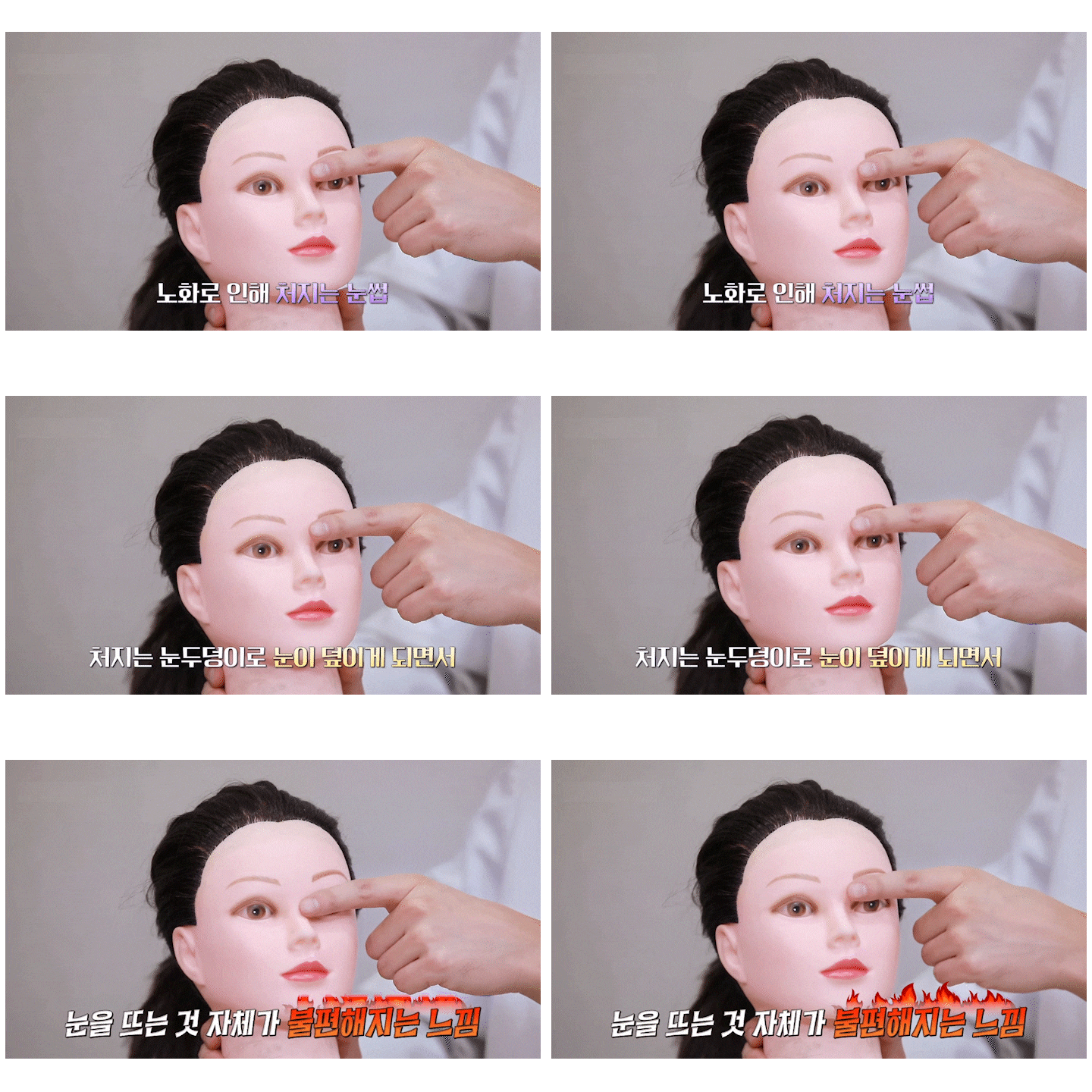
When the forehead sags,
the eyebrows naturally move downward,
and the eyelid skin below them also becomes compressed.
When this happens,
your eyes can look cramped,
and you may even feel as if your field of vision is being blocked.
Therefore, when you feel that your eyes have gotten smaller
or that your eyelids have become heavier,
you should consider not only drooping eyelid lifting,
but also
forehead thread lifting.
What is forehead thread lifting?
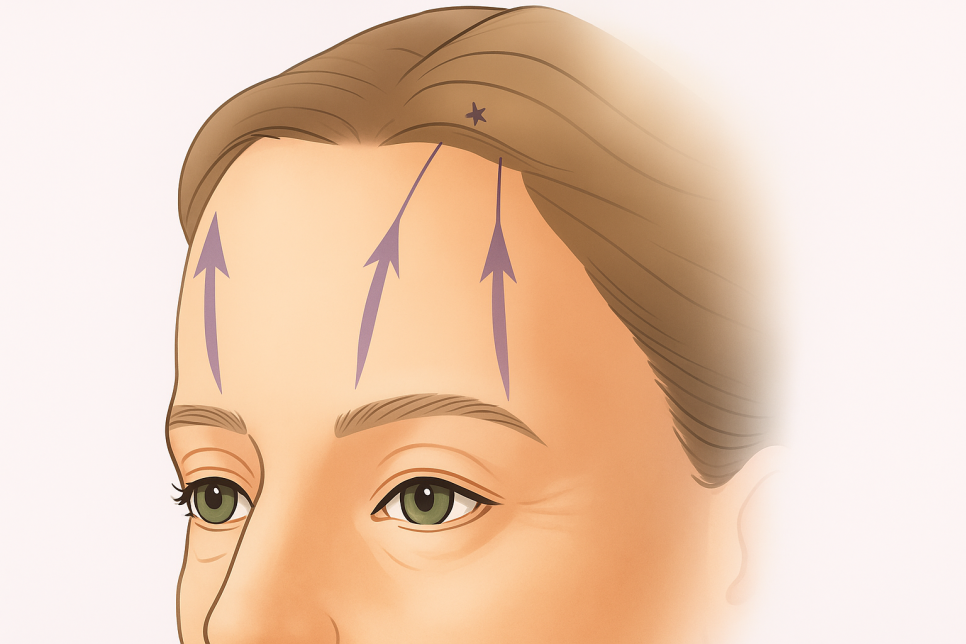
Forehead thread lifting is
a non-incisional lifting procedure that uses special threads
without making an incision,
to pull up the skin and soft tissue of the forehead
in an upward direction.
The principle of thread lifting is
to use threads to lift sagging tissue
in the direction opposite to gravity.
You can think of it as using medical threads that are harmless to the human body
and capable of pulling tissue.
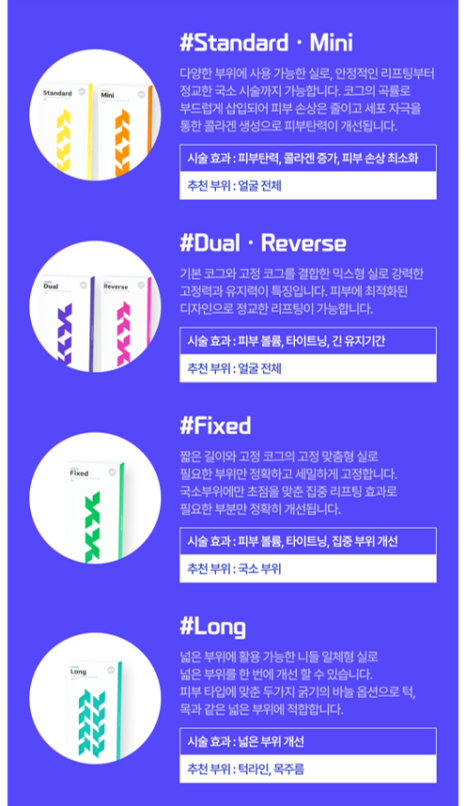
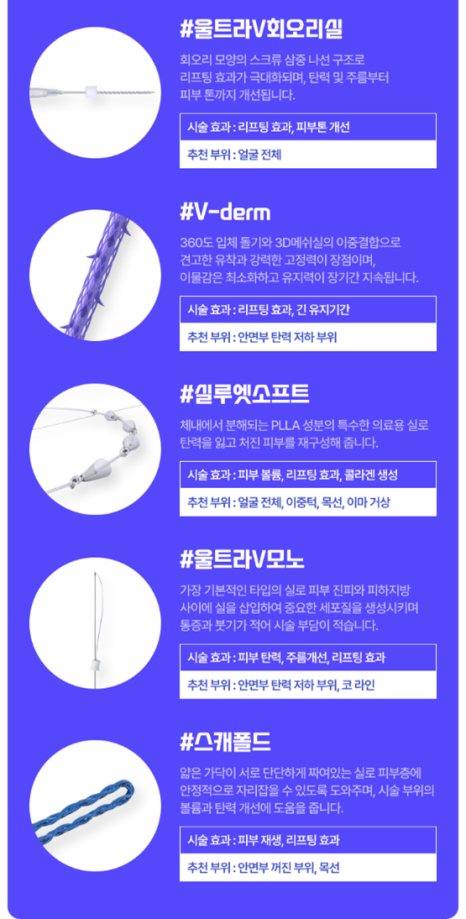
There are several types of threads used in the procedure,
and they are designed to be fixed in a certain direction,
so they lift not only the dermal layer of the skin
but also the SMAS layer (the fascial layer) at the same time.
The procedure can be performed with the appropriate thread
based on each individual’s goals.
As time passes after the procedure,
the inserted thread naturally comes into close contact
with the skin tissue.

This is sometimes described as “adhesion,”
and it refers to the process in which the thread interlocks well with the tissue
and settles into place.
The word adhesion may sound unfamiliar,
but not all adhesions are bad,
and when they occur stably in the proper location,
they can help keep the skin from sagging easily.
That is why
where the thread is inserted and in what direction it is placed
are important.
This also varies depending on an individual’s skin condition,
the movement of facial muscles, and lifestyle habits.
Who needs forehead thread lifting?
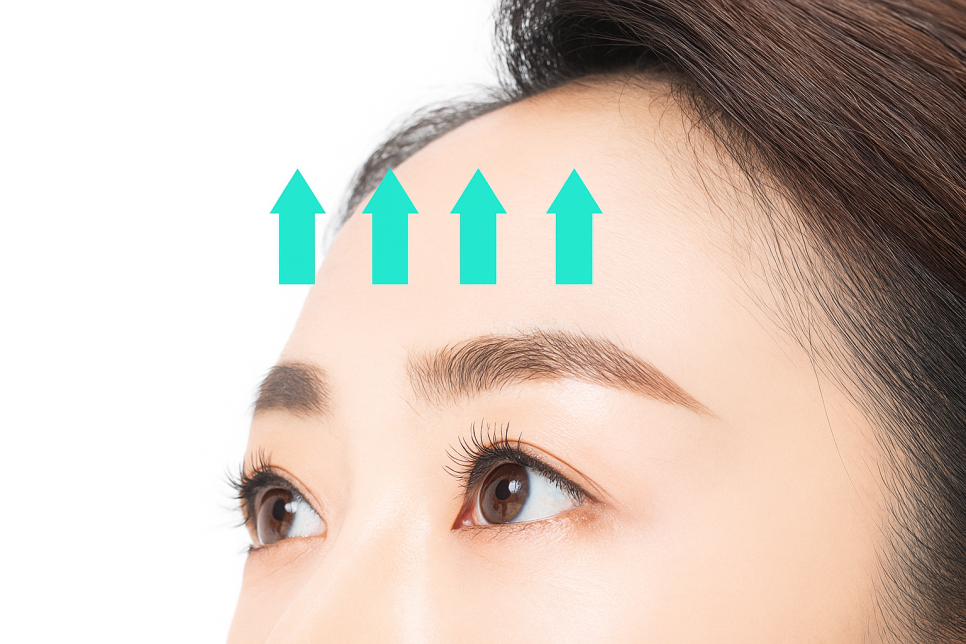
| ✔️ When the eyebrows have dropped and seem to cover the eyelids, or the eyes have started to look smaller |
|---|
| ✔️ When you have developed the habit of raising your forehead often because the eyelids feel heavily pressed down |
| ✔️ When deep forehead wrinkles have taken hold and makeup does not sit as well as before |
| ✔️ When you have experienced your eyes feeling more cramped after Botox treatment |
| ✔️ When you received a consultation for drooping eyelid lifting but were told there were no significant structural changes |
In this way, forehead thread lifting is
suitable when the changes in the eyes
are caused by forehead sagging.
How is the procedure performed?
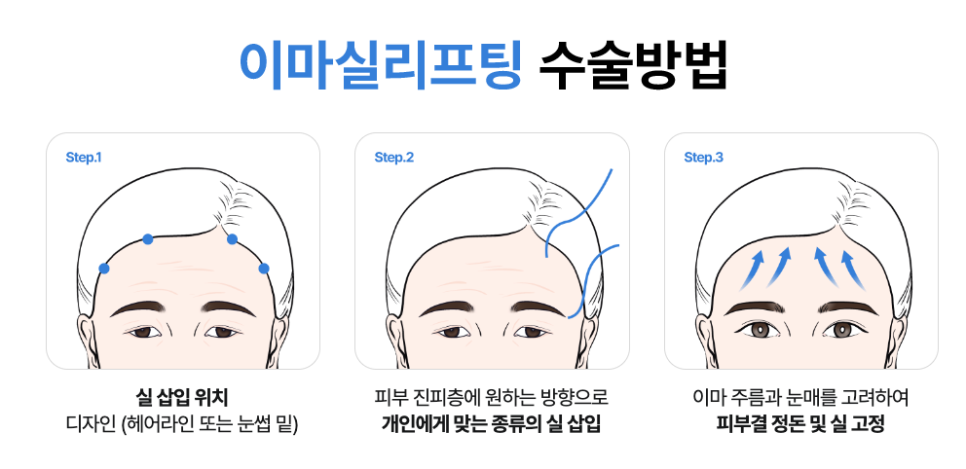
1️⃣ Precise diagnosis and design
The positions of the forehead, eyebrows, and eyelids are assessed,
and the lifting direction and thread insertion points are determined.
2️⃣ Anesthesia
The procedure is performed under local anesthesia
or sedation anesthesia.
3️⃣ Thread insertion
The thread is inserted through the hairline area,
and the skin and SMAS layer are pulled in the desired direction.
4️⃣ Fixation
After the thread is firmly fixed,
the natural line is checked.
5️⃣ Recovery
Immediately after the procedure, swelling or a pulling sensation may occur,
and the recovery speed may vary depending on the individual’s condition.
The type of thread, insertion depth, direction,
and fixation method all vary
depending on each person’s anatomical structure,
so it is essential to proceed only after sufficient consultation.
Thread lifting alone may not be enough.
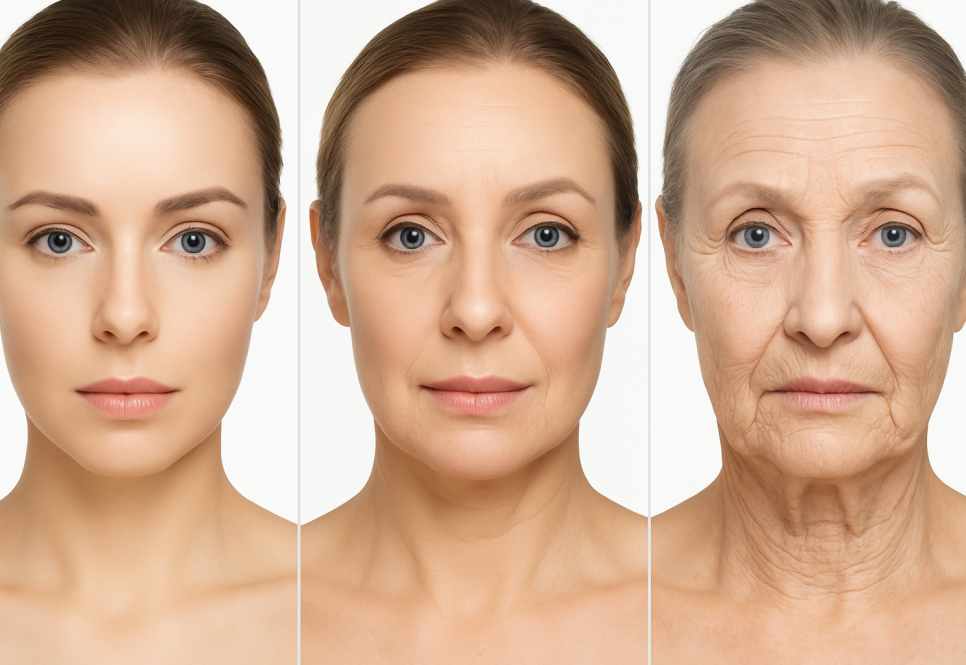
Forehead thread lifting is
suitable when sagging is mild to moderate.
However,
if the skin has loosened significantly,
or if deep folded wrinkles have formed on the forehead,
thread lifting alone may make it difficult to feel fully satisfied.
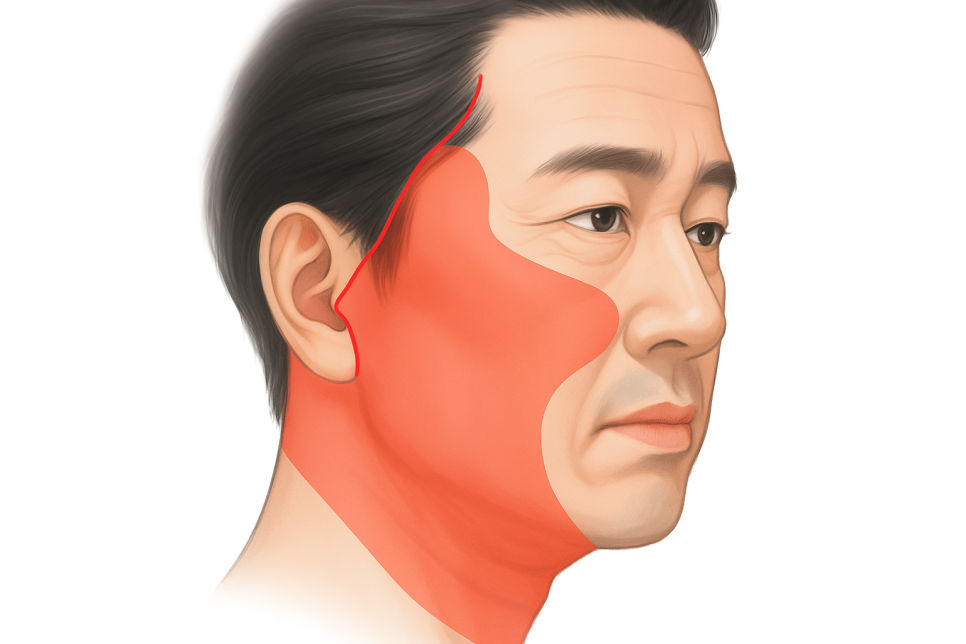
In such cases,
a traditional facelift surgery may be considered.
A facelift involves making an incision in the skin
and separating and lifting the skin and SMAS layer,
which allows more direct adjustment of skin overlap,
deep wrinkles, and overall changes in the facial contour.
Cases in which facelift surgery may be appropriate
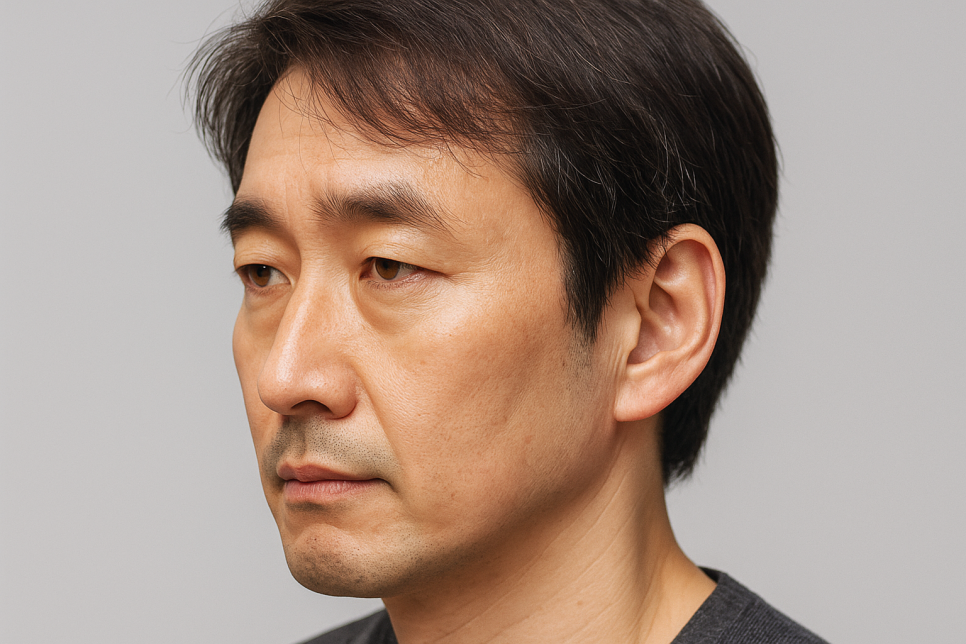
| ☑️ When the forehead skin is generally loose and the feeling that it covers the eyelids is severe |
|---|
| ☑️ When makeup often clumps and folded wrinkles do not fade |
| ☑️ When elasticity loss is severe, especially in the mid-to-late 40s or older |
| ☑️ When you have not experienced satisfactory results despite several procedures already |
In such cases,
if only the forehead area is lifted,
wrinkles or sagging in other areas may become relatively more noticeable,
so some people later end up considering lifting surgery for other areas again.

Considering this,
planning the necessary areas together according to the individual
and performing the surgery all at once
can be helpful when making a surgical plan.
However, since this is a surgical procedure,
an incision and recovery period are necessary,
and sufficient preoperative diagnosis and consultation
with an experienced medical team are absolutely required.
Consider drooping eyelid lifting together

As mentioned earlier,
if your eyes have become smaller and you look tired,
the cause may be drooping of the eyes themselves,
or it may be drooping of the forehead.
Forehead thread lifting is
suitable for physically adjusting changes caused by reduced forehead elasticity,
while drooping eyelid lifting is
a method that focuses on adjusting the eyelid tissue itself when it has descended.
The two methods do not replace or compete with each other,
but can be used together or complementarily
depending on the structure of the face.
For tomorrow, and for the day after tomorrow
My eyes feel increasingly heavy.
My eye shape does not look the same as before in photos.
If this is how you feel,
rather than simply thinking that “my eyes have drooped,”
it may be worth wondering once,
“Could this change have started from the forehead?”
Forehead thread lifting and drooping eyelid lifting
have different beginnings, but the goal is the same.
It is to restore your face’s original impression
to something lighter and more comfortable.
Ritting Plastic Surgery carefully analyzes each individual’s
facial structure and skin condition,
and then provides guidance on the procedure or surgery that is needed.
Rather than thinking, “Everyone else is doing it, so should I?”
please take enough time to consider
what choice is most necessary for your face right now.
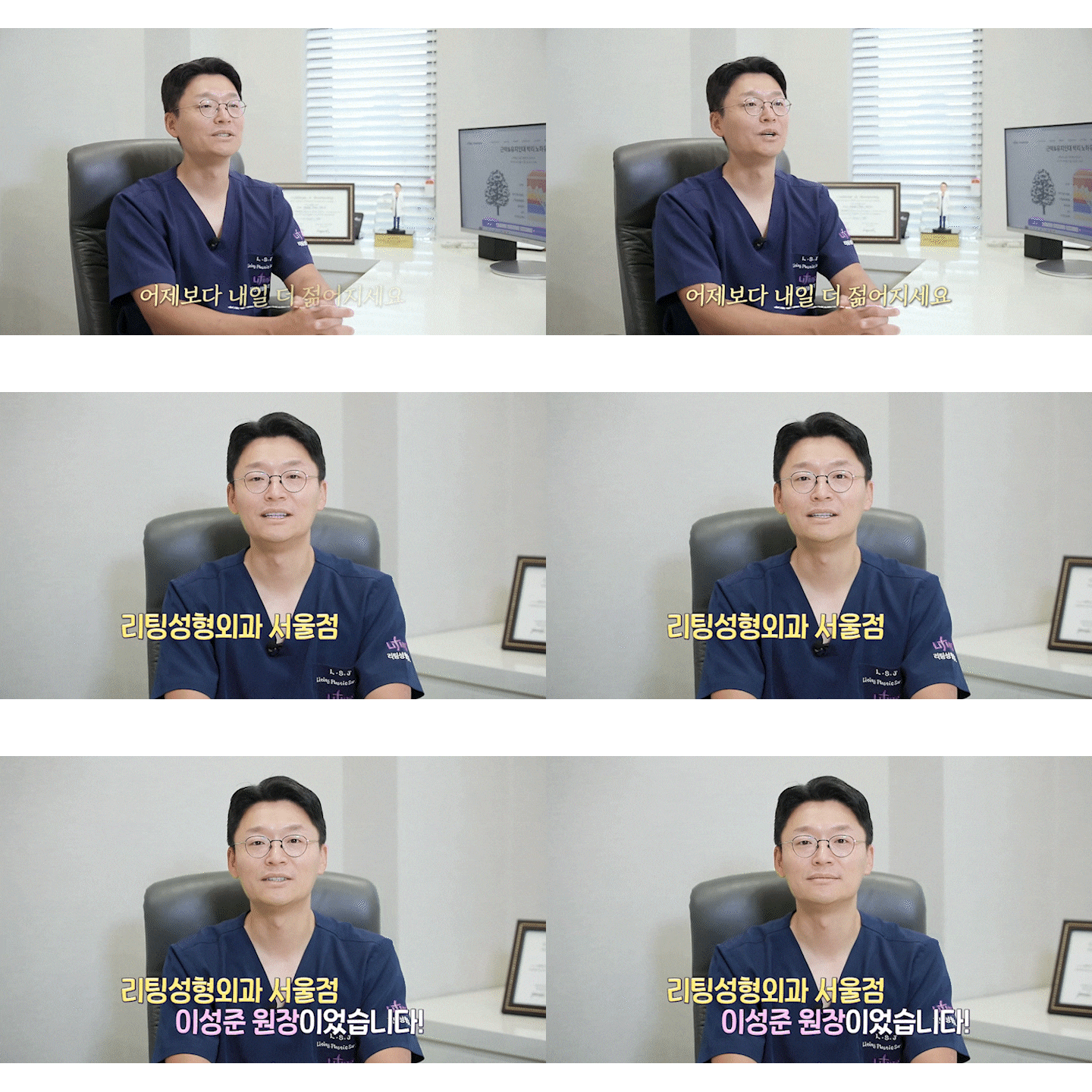
I hope you become more naturally youthful
with each day that passes, more than yesterday,
and tomorrow more than today.
This was Director Lee Seong-joon of Seoul Ritting Plastic Surgery.
This article is content intended to provide general information
about forehead thread lifting surgery.
Whether to actually undergo the surgery
should be decided according to the individual’s health condition and purpose,
and should be determined through consultation with a medical professional.
If you would like more details,
please check the more detailed information at the YouTube link below.
https://youtu.be/7ls2acPlZyg?si=qdDaRex1j_tYKSde