Hello.
I am Director Lee Seong-jun of LeetIng Plastic Surgery Seoul Branch.
Recently, while seeing patients of various age groups in the clinic,
I have noticed something.
Many more people are
worrying about changes in the lower face.
☑️ Feeling like the cheeks are gradually sagging
☑️ The jawline looks blurred
☑️ The nasolabial folds are becoming deeper
When these changes become noticeable in the mirror,
everyone naturally starts to worry,
but in fact, these are
natural changes that happen to anyone,
depending on age and lifestyle habits.
Recently, at this stage,
more and more people are considering
“lifting.”

In particular, there has been a sharp increase in people searching for
‘mini lifting reviews.’
Because it can reduce the burden relatively well
with a short recovery period and small incisions,
it is drawing attention.
Mini lifting
allows you to refine the facial line
while maintaining a natural appearance.

Also, searches like ‘Sinsa Station lifting’
📍 including a specific area name
are common,
because in areas with many clinics,
many people want to compare several surgical methods directly.
Today, based on this trend,
I will talk about the features and differences between mini lifting reviews
and Sinsa Station lifting,
as well as what to consider when choosing a surgical method.
The basic principle of Sinsa Station lifting
Before looking at mini lifting reviews,
it is important to first understand
how lifting works.
Lifting is not something that can last long
if it simply pulls only the skin surface.
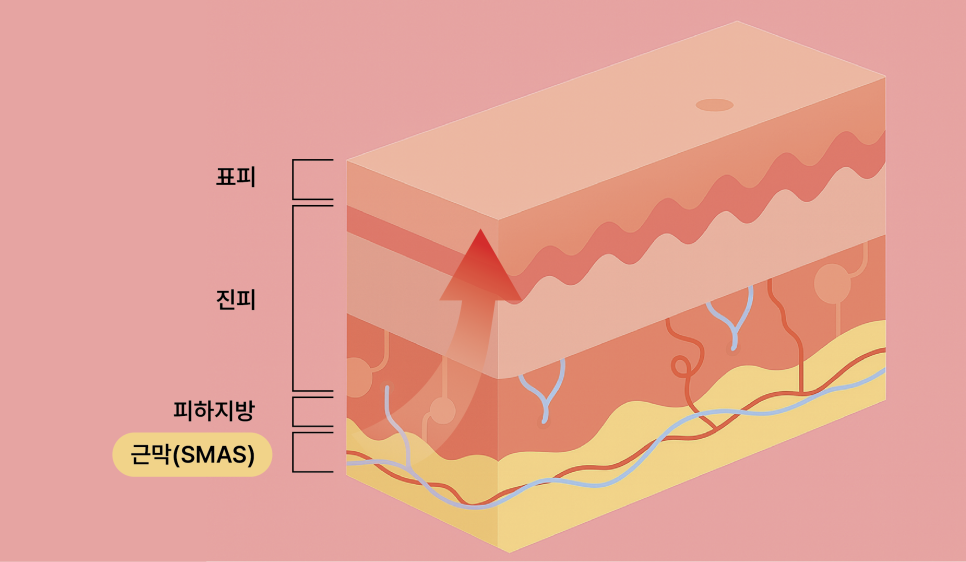
Beneath the skin is a fascial layer called the SMAS layer,
and this layer is responsible for structural support of the face
between the facial muscles and the skin.
As we age,
the SMAS layer also sags,
so simply pulling the skin is not enough
to expect a sufficient improvement.
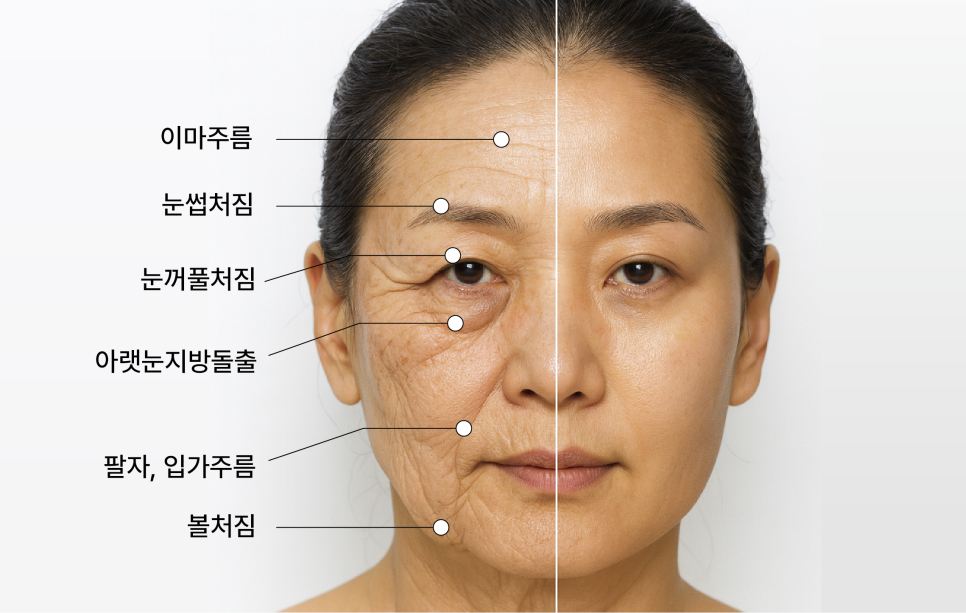
Lifting surgery includes the process of pulling and fixing this SMAS layer,
and it helps address skin elasticity and facial contour at the same time.
Representative methods include
mini lifting, smile lifting,
and a full facelift.
All three deal with the SMAS layer,
but because the incision range, direction,
and target area are different,
the most suitable method may vary
depending on an individual’s facial structure, skin elasticity,
and the area they want improved.
What is mini lifting?
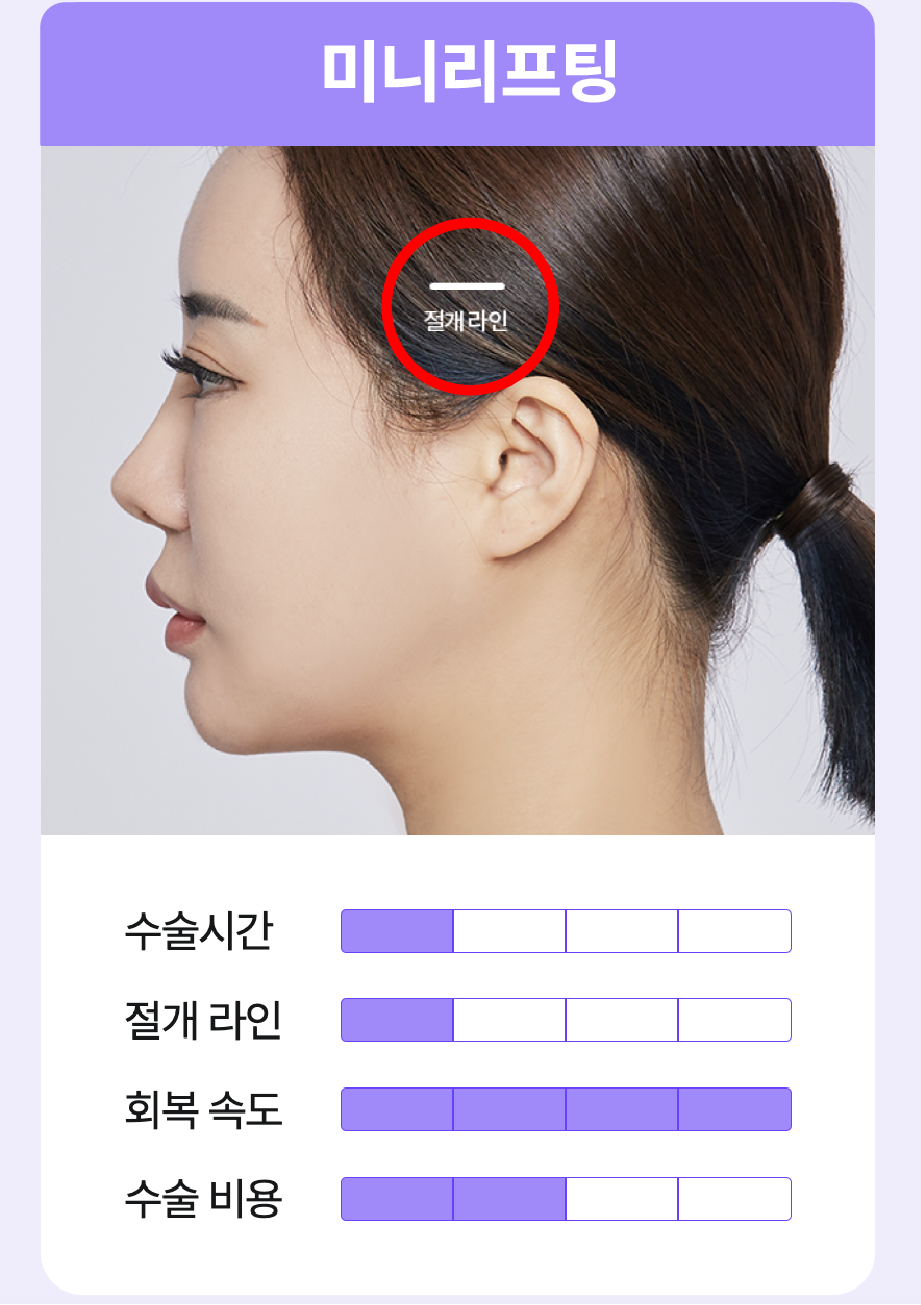
Mini lifting is also called a “partial facelift,”
and its incision range is relatively small.
It is usually performed by making a 1–2 cm incision
in a less noticeable area, such as in front of the ear or within the hairline,
and then pulling and fixing the skin and SMAS layer.
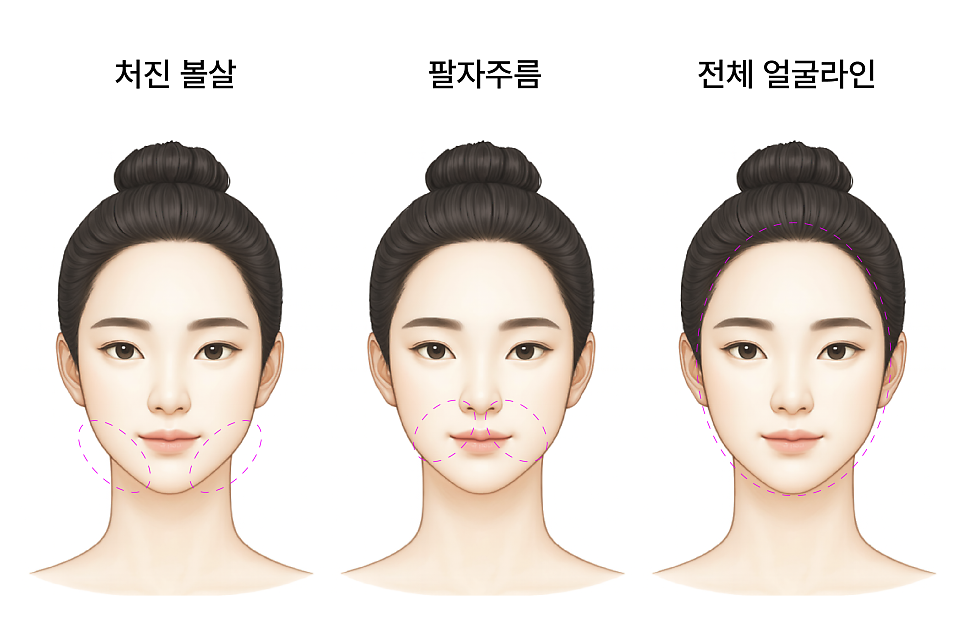
Mini lifting is mainly considered
when improving mild sagging in the lower face,
and the typical target areas are
the jawline, cheeks, and nasolabial area.
Because the incision range is not large,
the recovery burden may be relatively lower,
but the results, recovery speed, and satisfaction can differ
depending on the individual’s skin condition, lifestyle habits,
and recovery ability.
Smile lifting — an expanded version of mini lifting?
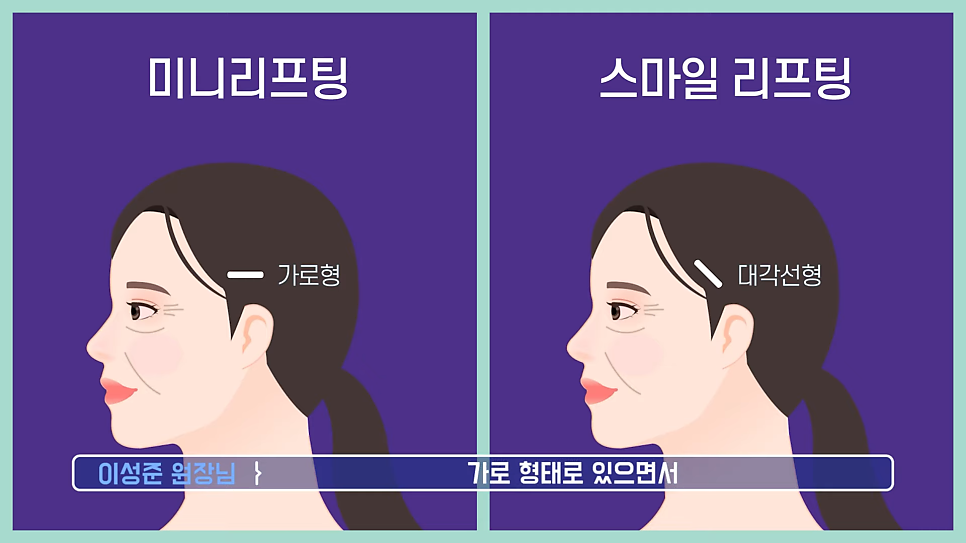
Smile lifting is a method that builds on mini lifting,
with the incision designed diagonally.
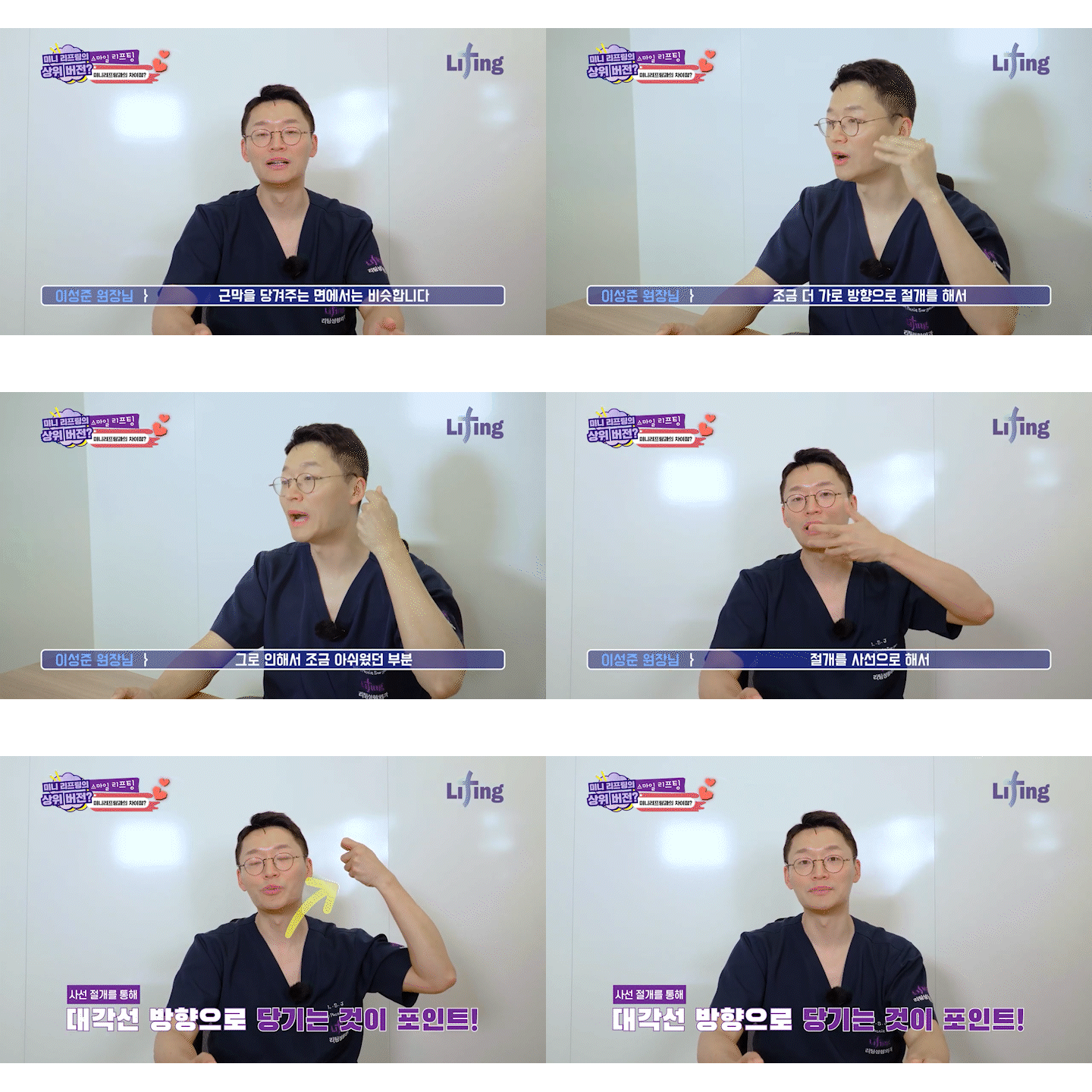
Because it is pulled diagonally,
it can address not only the lower face
but also the mid-face, including the cheekbones, nasolabial area, and eye area.
It is a surgery discussed during consultations
when there are pronounced nasolabial folds,
sagging cheeks below the cheekbones,
or reduced elasticity around the eyes.
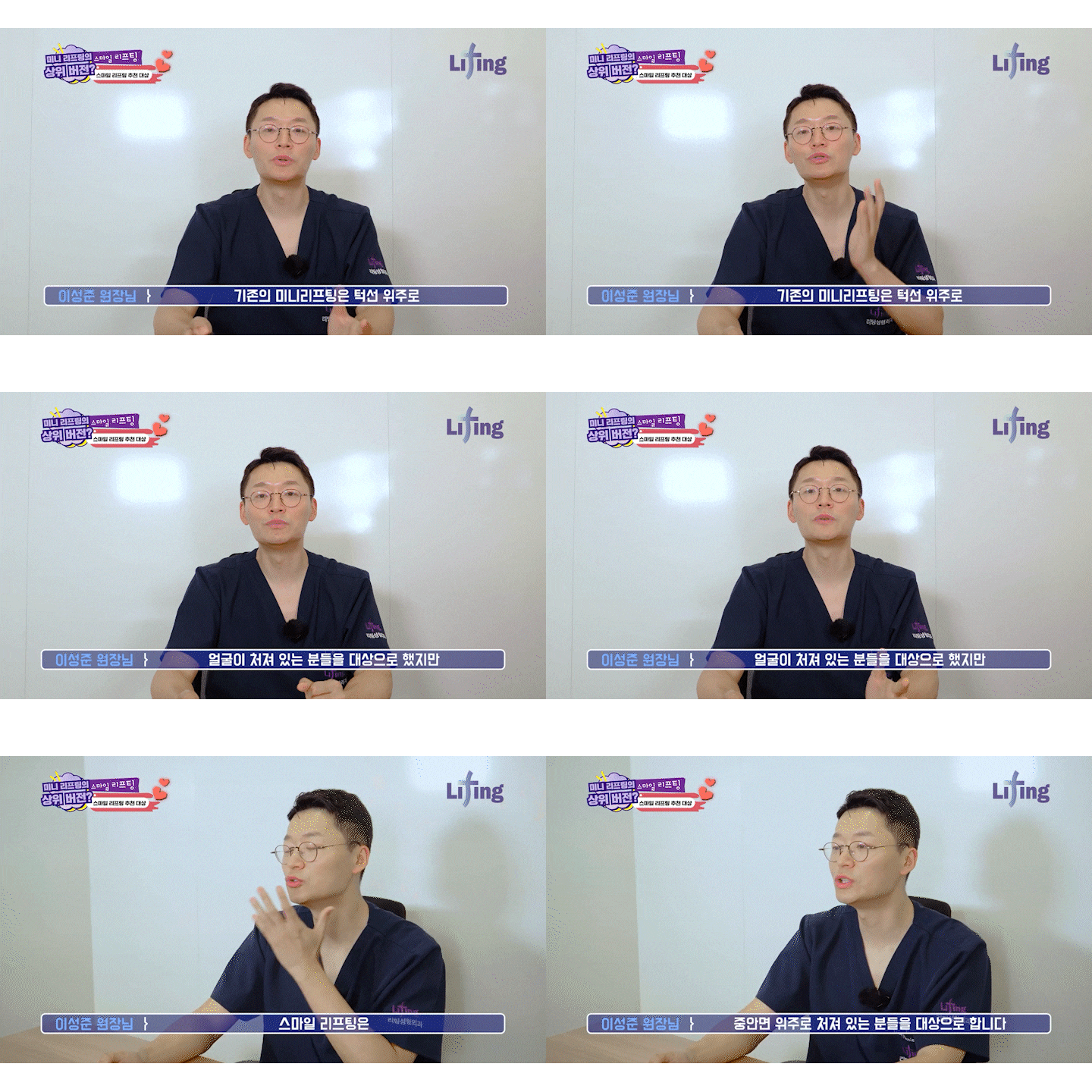
As with mini lifting,
the degree of change and satisfaction varies from person to person.
Therefore, which method is more suitable should be determined
through a medical professional’s diagnosis and consultation.
5 pre-procedure checklist items✔️
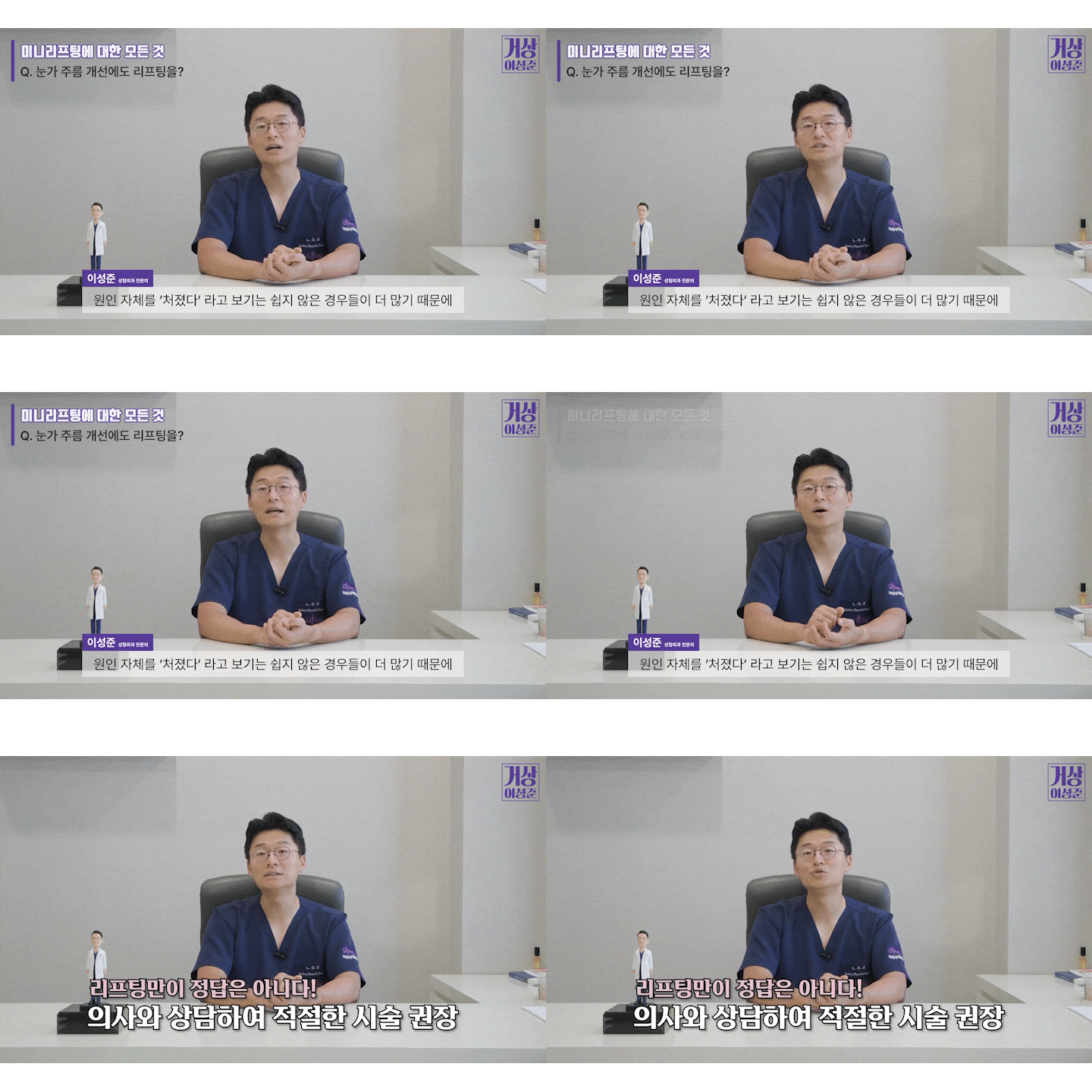
When considering lifting,
checking the following items in advance
can be very helpful in deciding the surgical method and extent.
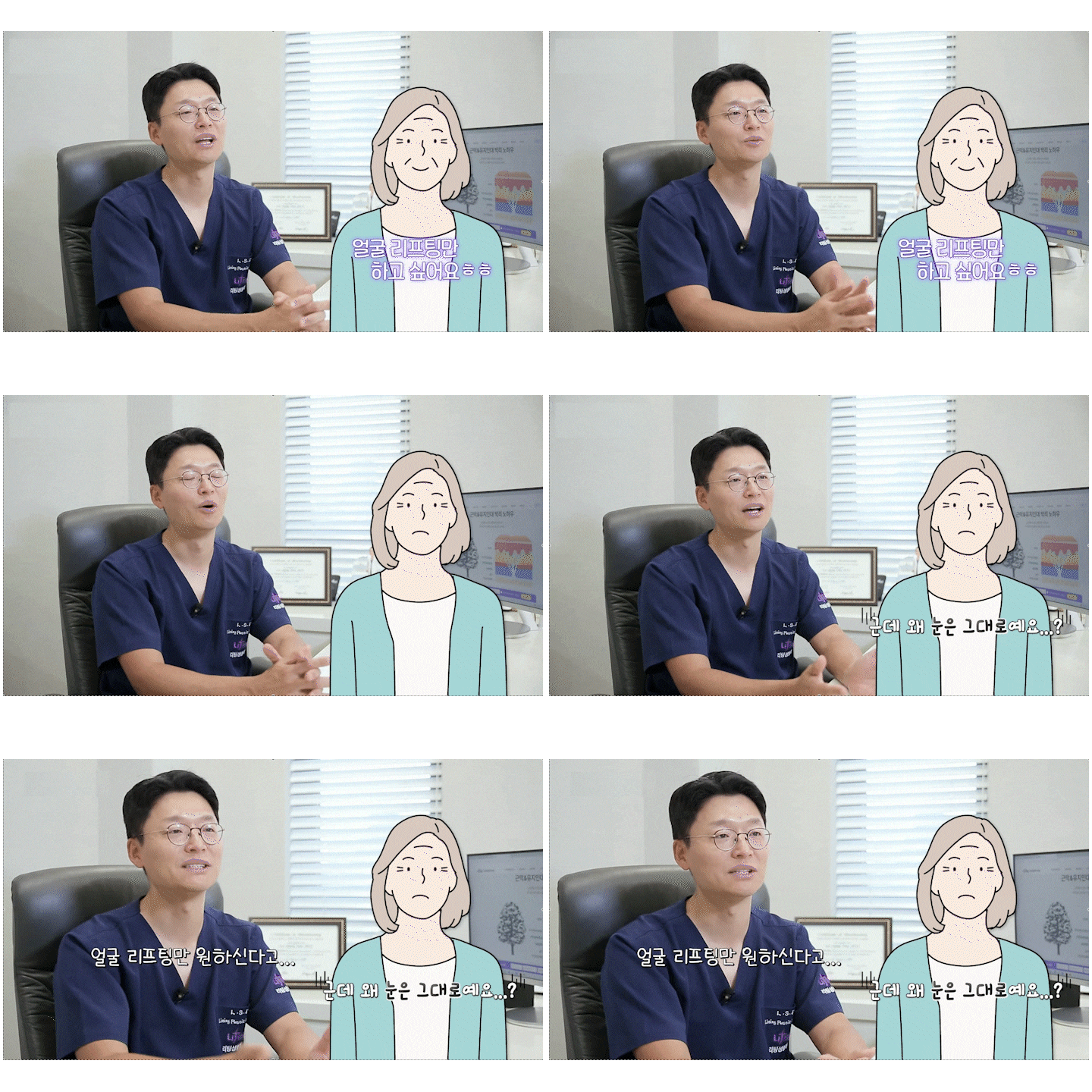
| ✔️ Facial structure analysis |
|---|
| Identify the areas you want to improve, |
| such as the jawline, cheeks, nasolabial area, or eye area. |
| ✔️ Skin elasticity and thickness |
| The surgical method may vary depending on skin condition. |
| ✔️ Health status |
| Overall health and recovery ability are also important factors. |
| ✔️ Record the consultation details |
| Note the incision location and range, procedure method, |
| expected recovery period, and scar management methods. |
| ✔️ Aftercare plan |
| Prepare in advance for the care needed during recovery, |
| such as swelling and scar care. |
Finding the right Sinsa Station lifting for me
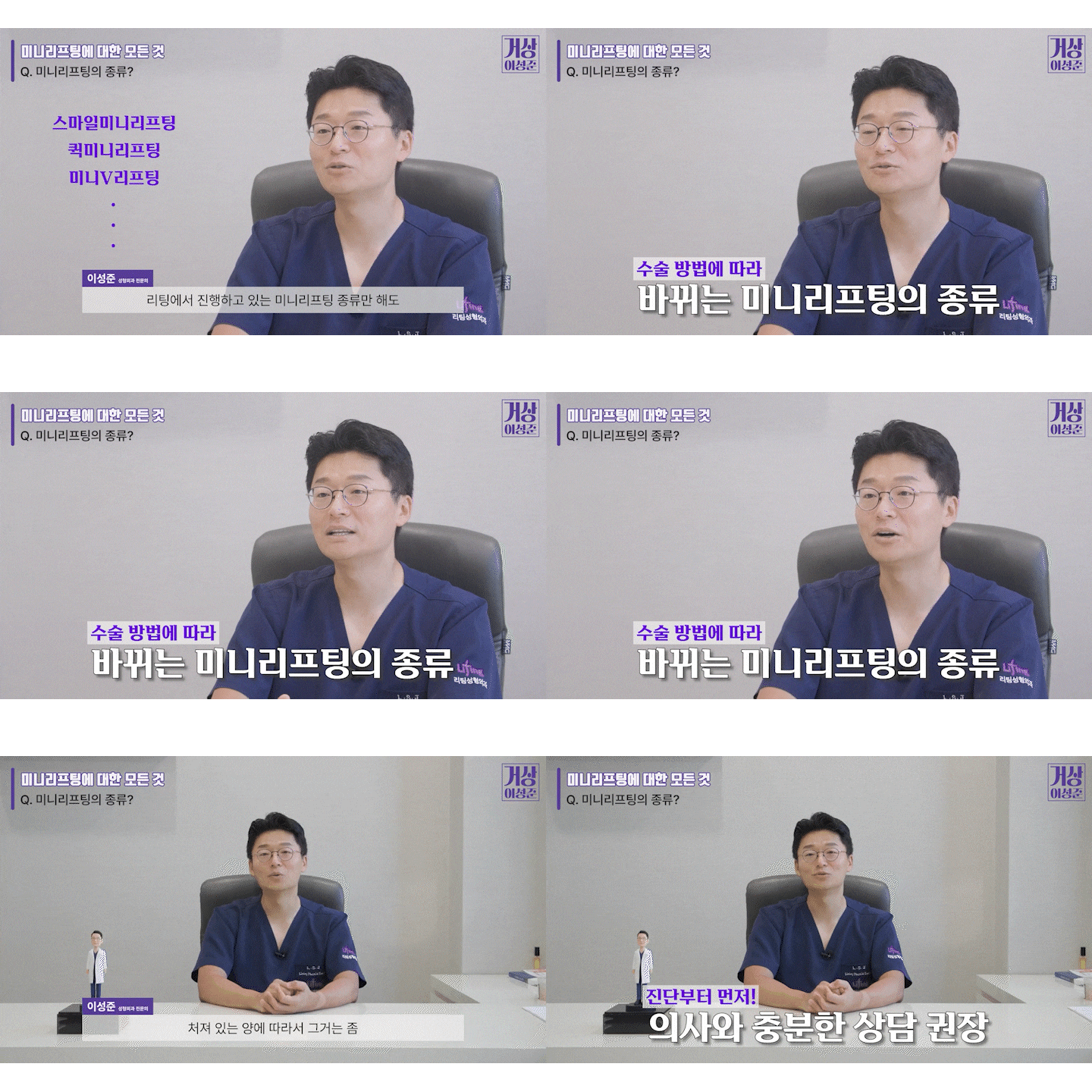
Lifting procedures include mini lifting,
smile lifting, and a full facelift.
Because each method differs in incision range, target area,
and recovery process,
it is important to find the method that fits your own facial structure, lifestyle pattern,
and desired range of change,
rather than choosing based on price or trend.
Referring to mini lifting reviews can be helpful,
but they are not experiences that apply equally to everyone,
and the results and satisfaction can vary greatly from person to person.
That is why
it is advisable to make a decision only after 충분한 consultation and diagnosis.
Lifting can be thought of not simply as a surgery that changes appearance,
but as part of the process of caring for oneself.
If a small change leads to confidence,
and that confidence makes each day a little more comfortable,
then the reason for considering lifting can be a meaningful choice in itself.
Thank you for reading.
I hope you become more naturally youthful today than yesterday,
and tomorrow more than today.
This was Lee Seong-jun,
Director of Seoul LeetIng Plastic Surgery.
This post is
content intended to provide general information
about mini lifting reviews.
Whether to actually undergo surgery should be decided
according to the individual’s health condition and purpose,
and should be determined through consultation with a medical professional.
If you would like more details,
please check the YouTube link below
for more detailed information.
https://youtube.com/shorts/r__4AJfB51E?si=oGten9uO8sxJAtvb