
Hello.
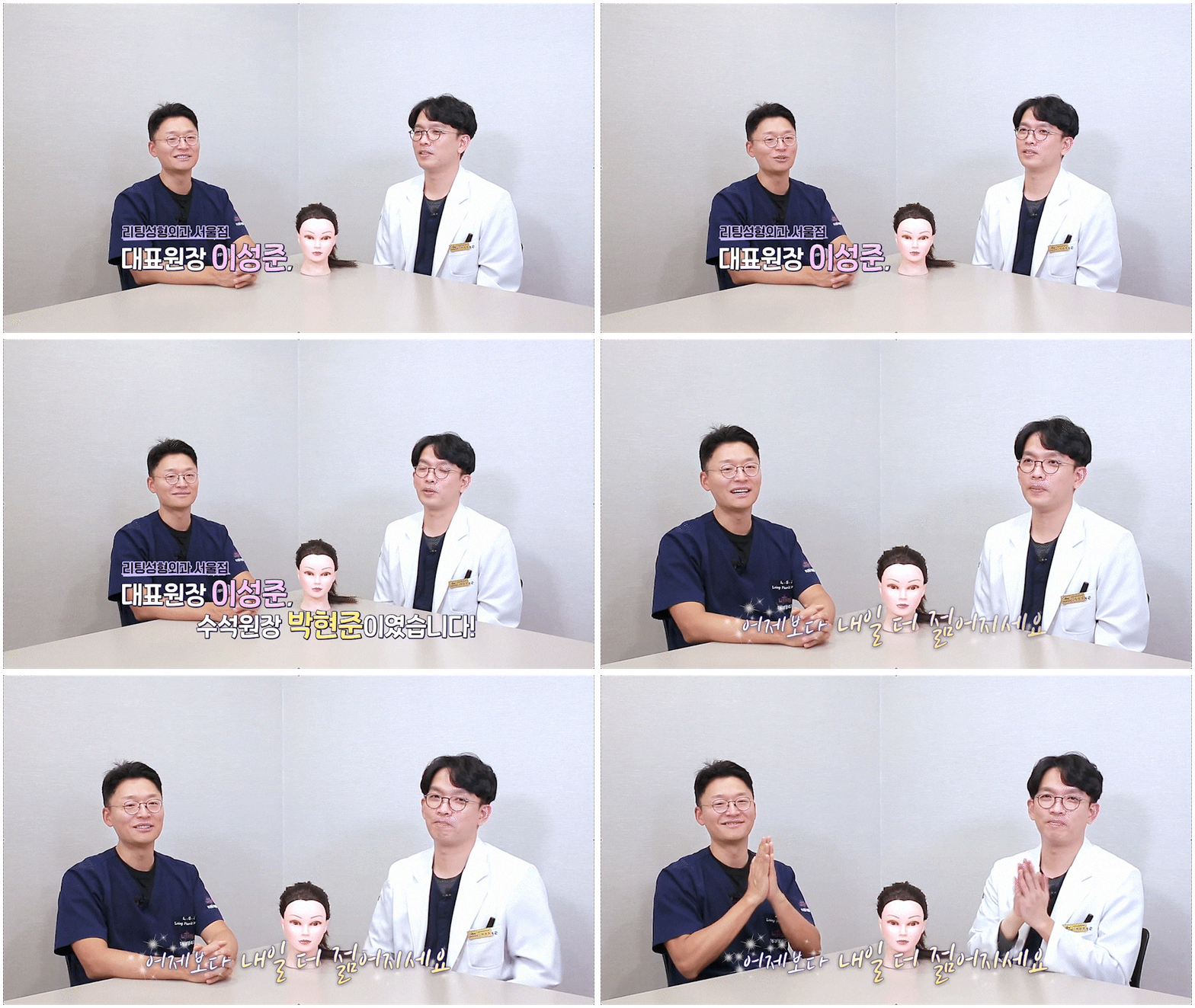
I’m Director Lee Seong-jun of Reating Plastic Surgery Seoul Branch.
When autumn arrives, the air changes.
During the day, it is still warm,
but the wind that blows in the morning and evening
becomes gradually colder and the air feels clearer.
Even the way the changing season
feels against the skin becomes different.
Thick clothing naturally
covers the body,
but the face cannot be hidden.
Reddened cheeks in the cold morning and evening wind,
every expression revealed when smiling or frowning,
Even the jawline and cheekbone contour
are exposed one by one,
so attention naturally gathers on the face.
That is why between autumn and winter,
more people come in for lifting consultations,
saying, “Should I tidy up my lines a little this year?”
For those who want a short but meaningful
change,
it can also be a good time to
check the changes in the facial line.

Especially for busy office workers or people
with active lifestyles who visit the Nonhyeon Station Plastic Surgery clinic,
it is difficult to wait through a long recovery period.
Because of that, interest in Nonhyeon Mini Lifting,
which allows for minimal incision and quick recovery,
is steadily increasing.
The fact that natural changes can be experienced
within a short recovery period
is considered a major advantage.
Today,
we will take a detailed look at
the differences between thread lifting and mini lifting,
as well as the expanded version,
Smile Mini Lifting.
We hope to help you understand
what features each method has,
and which choice may be right
for your face.
| 📢 Table of Contents |
|---|
| 1. Thread lifting and mini lifting: what’s the difference?2. The principles and process of mini lifting3. Smile Mini Lifting, an expanded version of mini lifting4. When is mini lifting needed?5. What is the standard for choosing lifting at Nonhyeon Station Plastic Surgery?6. Lifting is not about reversing time, but about harmony |
- Thread lifting and mini lifting: what’s the difference?

When conducting lifting consultations,
one of the questions we hear most often is
“What's the difference between thread lifting
and mini lifting?”
Both procedures
have the same goal of improving sagging,
but there are differences in the depth and method
of the approach.
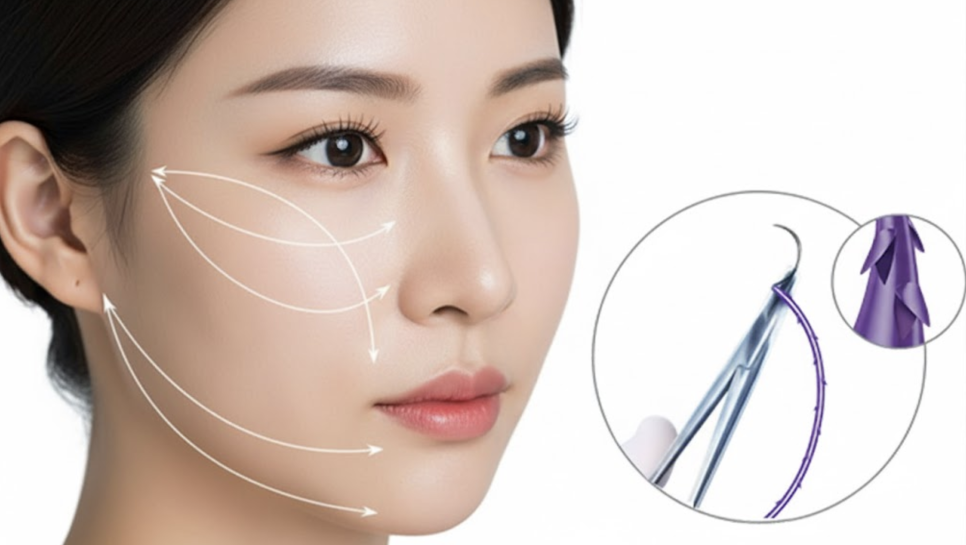
Thread lifting literally refers to
a procedure that inserts threads to pull the skin upward.
It does not require an incision and recovery is relatively quick.
It works by inserting threads into the dermal layer
of the skin to lift stretched skin,
but it is not a surgery that directly fixes
the SMAS layer beneath the skin.
Because of these characteristics, it is mainly considered
in the stage where there is mild sagging or
an early decline in elasticity.

On the other hand, mini lifting is a surgical method
that directly fixes the SMAS layer,
while reducing the incision range compared to a full facelift.
By accessing a layer deeper than the skin surface,
it addresses the structural cause of facial sagging,
which makes it possible to more stably refine contours
and restore natural lines.
In other words, if thread lifting focuses on
simple sagging improvement and quick recovery,
mini lifting can be understood as a method that
makes more fundamental lifting possible by considering
the anatomical structure.
There is a question that often comes up among people
who have had thread lifting multiple times.
That is,
“After thread lifting, wouldn’t it be difficult
to undergo mini lifting later?”
To begin with the conclusion,
having had thread lifting does not mean
mini lifting is impossible.
However, the surgical approach may vary depending on
the previous thread placement site, number of threads,
and the condition of tissue response.
For example, if too many threads were inserted,
or if they were placed in an inappropriate layer,
it may be necessary to adjust the dissection range
or the fixation direction.
In other words, surgery is not restricted,
but
careful planning that takes the history of prior procedures
into account is important.
Therefore, when receiving thread lifting,
it is important that the procedure is performed with
the appropriate number of threads and proper depth,
and when later transitioning to mini lifting,
a consultation that thoroughly evaluates the skin condition
is also necessary.
- The principles and process of mini lifting
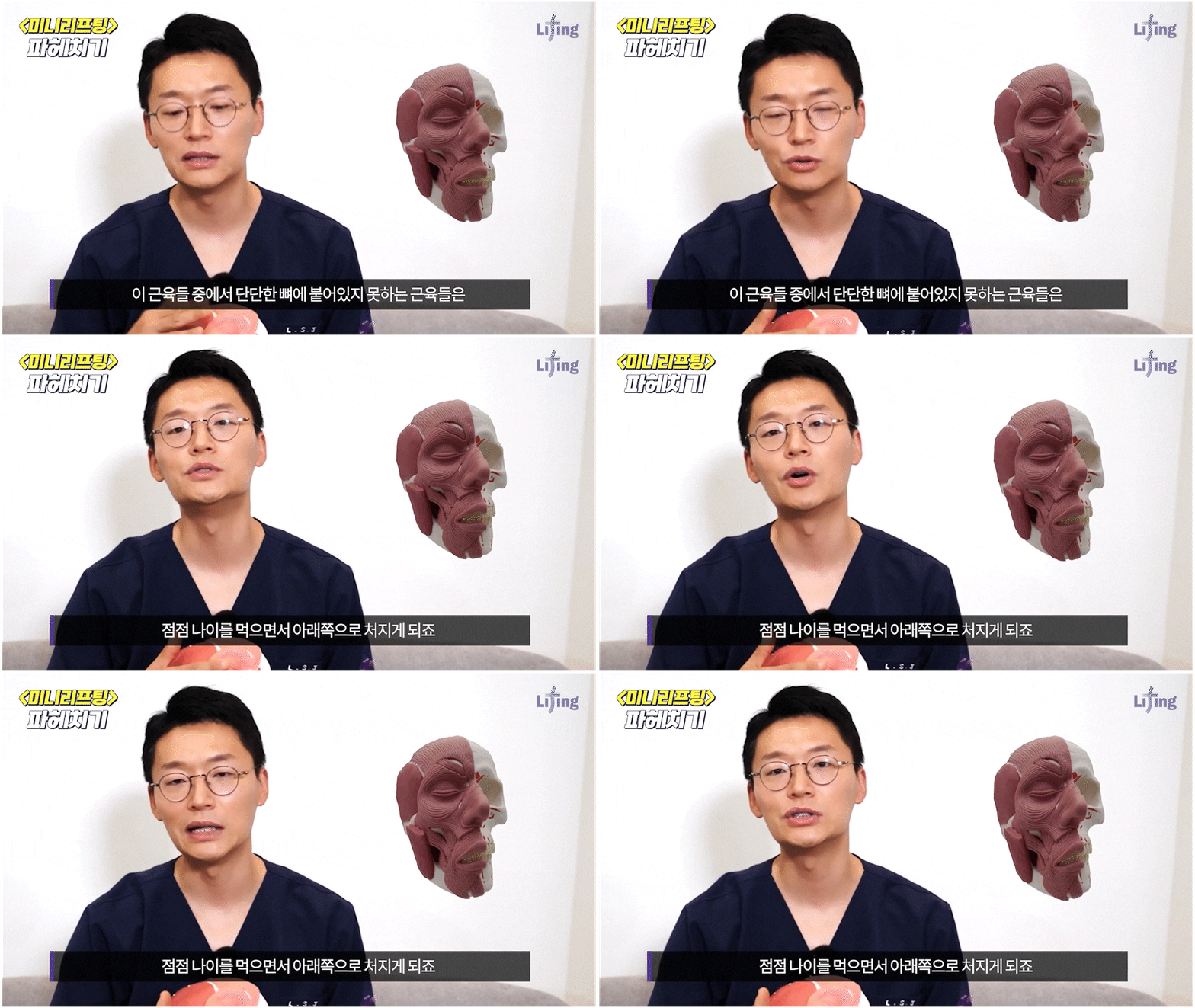
Nonhyeon Mini Lifting is a lifting surgery that pulls
both the skin and the SMAS layer together,
and it is characterized by minimizing the incision range
to reduce recovery burden.
The core of the surgery lies in the
SMAS layer, the fascial layer.
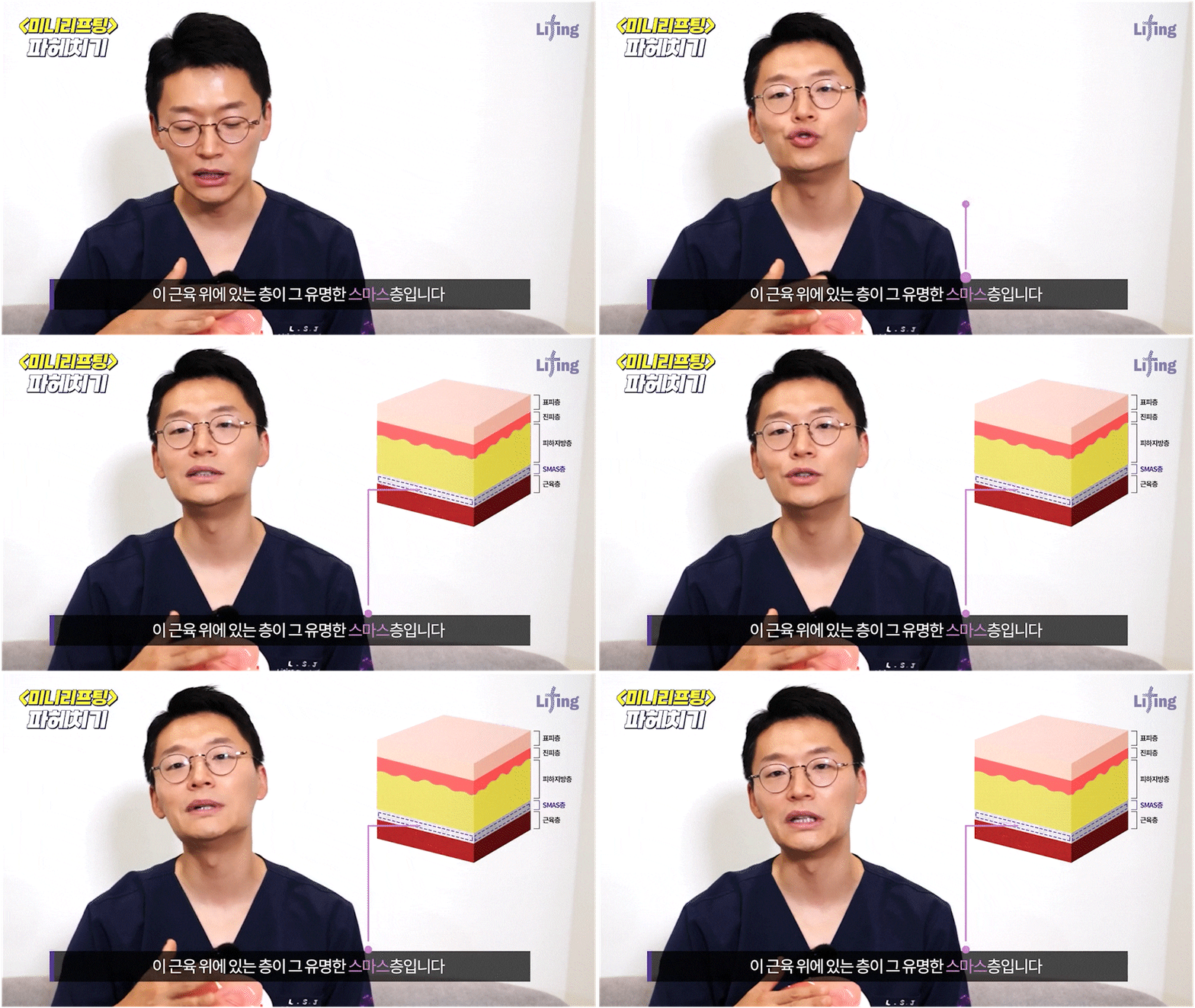
The SMAS layer is a thin membrane that supports
the facial muscles,
and as time passes,
it begins to sag before the skin does.
Therefore, to address the root cause of facial sagging,
it is important to secure this layer as well.
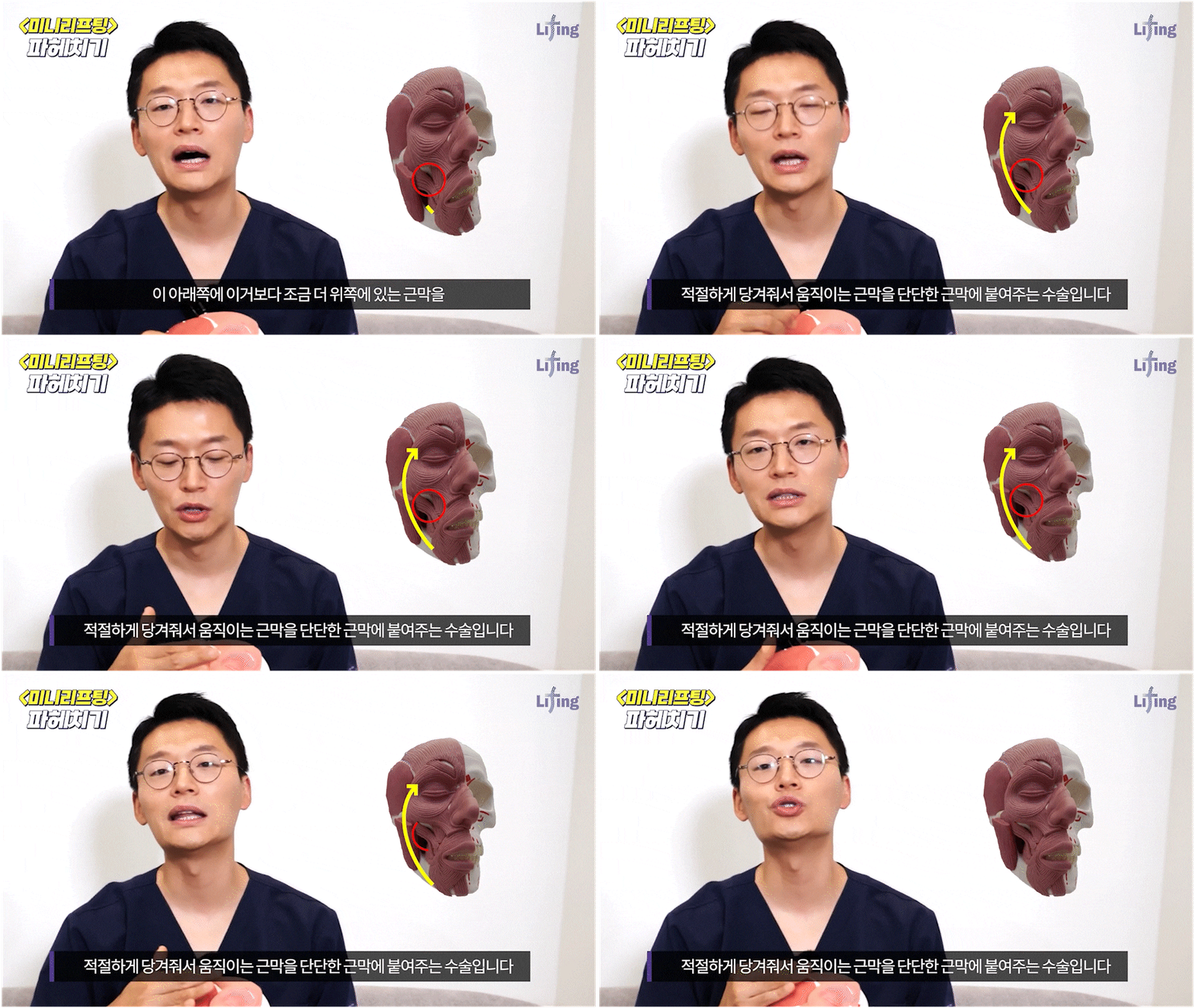
Unlike a method that only pulls the skin,
fixing the SMAS layer as well helps the facial contour
to appear more naturally refined,
and the anti-sagging effect may last for a relatively longer time.
Of course, the degree to which it is felt can vary depending on
individual skin elasticity, tissue condition,
and age group,
and it is necessary to have a thorough consultation with a specialist
before surgery to confirm the method and expectations
that suit you.
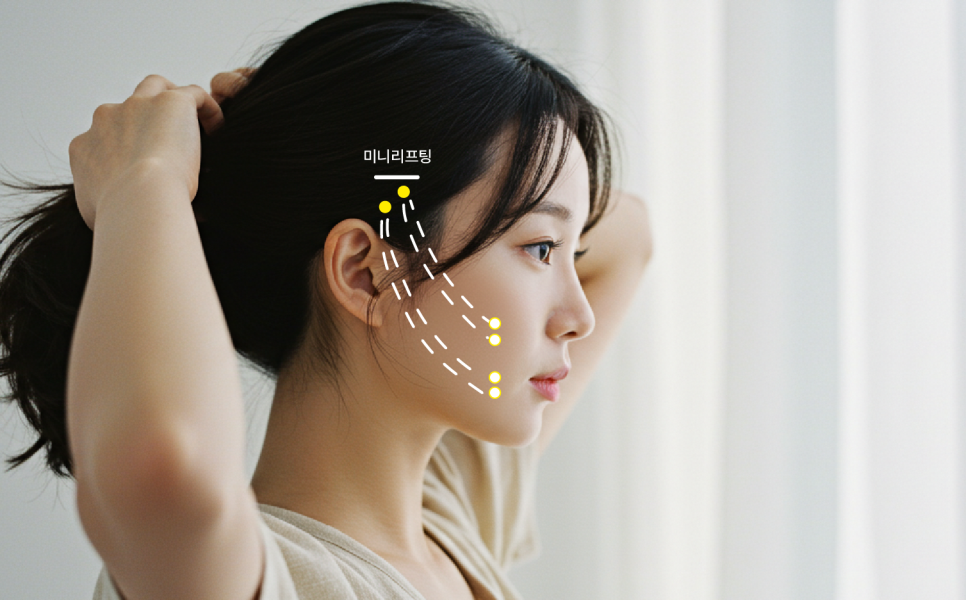
The surgery is performed through a small incision of less than about 2 cm
in the sideburn area,
and the incision is designed to be placed inside
the hairline so that it is not noticeable externally.
The recovery process and results may vary depending on
an individual’s skin condition, constitution, and lifestyle,
but in general, Nonhyeon Mini Lifting tends to place
a relatively light burden on recovery.
Most patients are able to continue daily life
within a relatively short period after surgery,
and because of the minimally invasive approach and
the inconspicuous incision location,
natural recovery can be expected.
Since the same pattern does not appear in everyone,
there may be differences in the course and in when the effects
are felt depending on skin thickness and elasticity,
recovery speed, and lifestyle.
Therefore, individualized care is needed during
postoperative management and recovery.
- Smile Mini Lifting, an expanded version of mini lifting
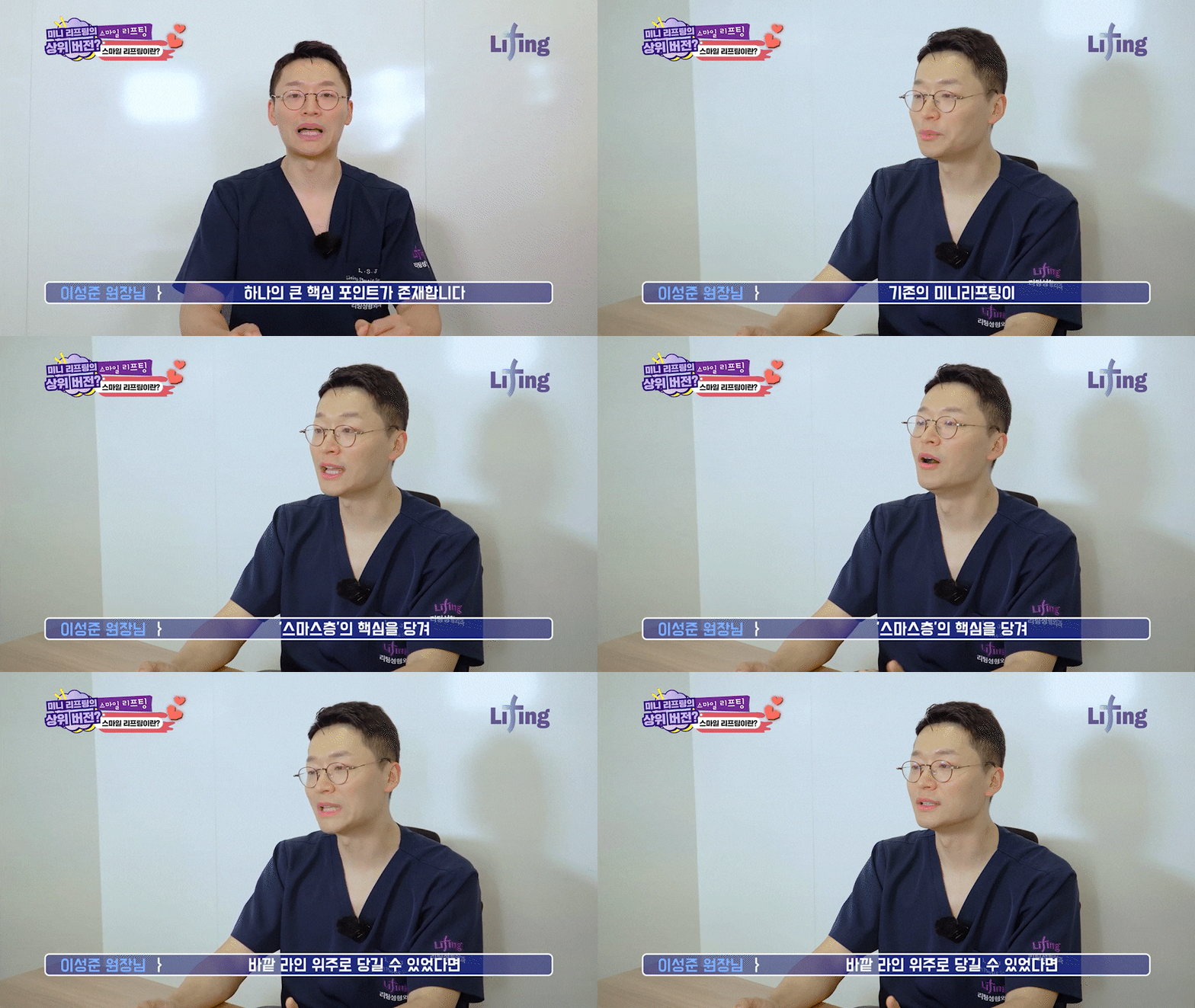
If mini lifting is a surgery that addresses sagging centered on
the overall facial line, such as cheek fat and nasolabial folds,
Smile Mini Lifting is an expanded lifting procedure that
pulls up the midface as well.
The midface includes various areas such as the nasolabial folds,
cheekbones, fine wrinkles around the eyes, and the jawline,
and it can be seen as an approach that considers the balance of
the entire facial line rather than simply improving the lower face.

Smile Mini Lifting has a similar incision range to mini lifting,
but it is designed so that the direction of the threads is diagonal,
allowing the lifting effect to extend to the central face area.
This design makes it possible to naturally refine the line
even when sagging or volume loss occurs in the midface.
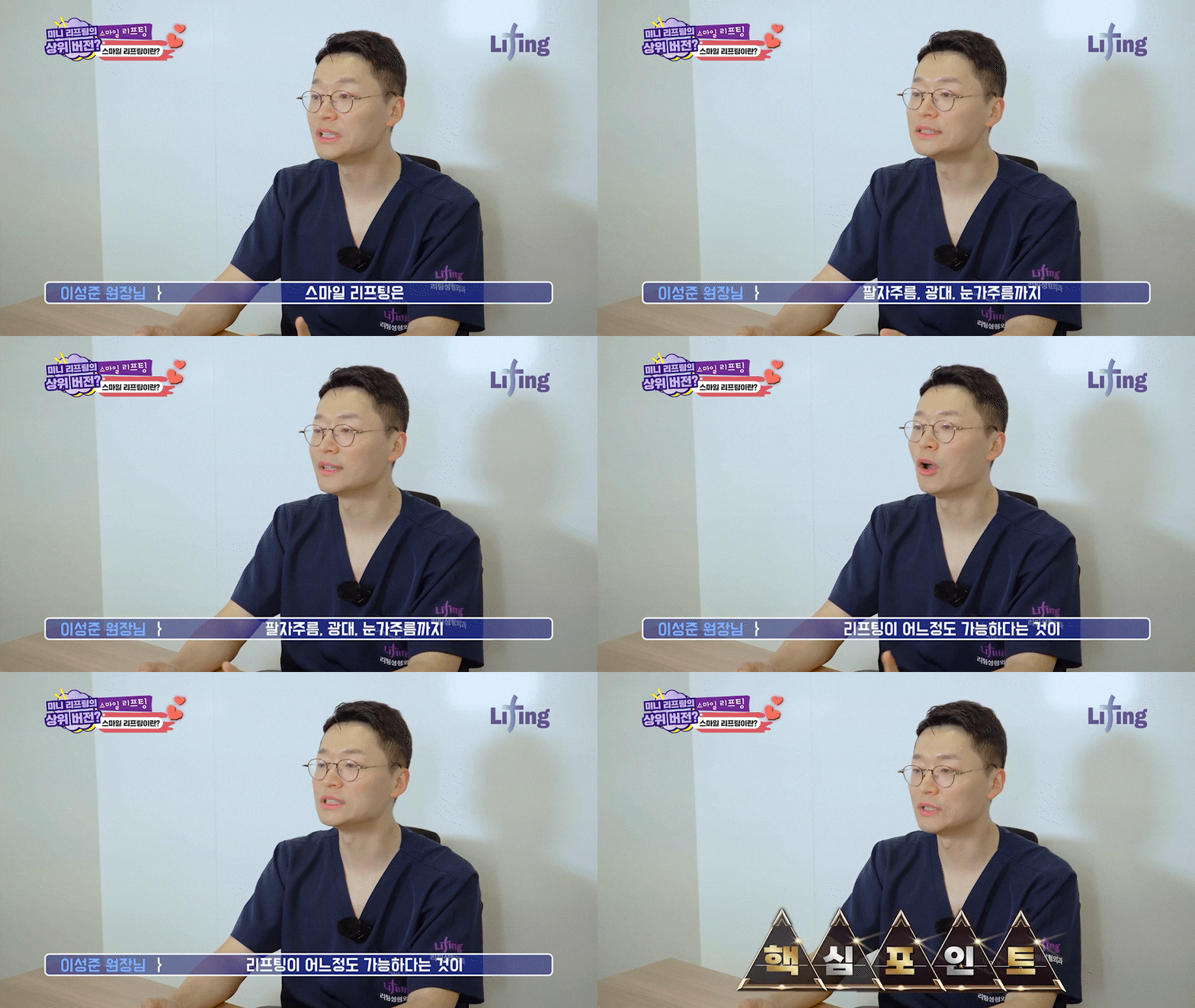
In other words, it is suitable not only for sagging of the lower face
(jawline), but also for people who have changes in the midface,
such as deeper nasolabial folds and reduced volume around the cheekbones.
Especially when facial balance is disrupted and the person looks tired
or appears older,
Smile Mini Lifting can help improve the overall facial line
in a harmonious way.
This method differentiates itself from conventional mini lifting
in that it allows for a precise approach that considers
expression and volume as well as natural contour restoration.
- When is mini lifting needed?

The point at which lifting should be considered is not simply
determined by age.
Rather, like the time when the seasons change and coats become thicker,
there are moments when the body is naturally hidden
but the face becomes more noticeable,
and changes are felt more clearly.
When you notice that your jawline in the mirror is becoming blurred,
or that your nasolabial folds are gradually deepening,
you may begin to think,
“My expression seems different from before,”
and start considering lifting.
These changes may not be due simply to aging,
but may be natural signals reflecting changes in facial structure
and skin elasticity.
In other words, lifting is not a choice made according to age,
but a process of reading the signals your face is sending
and responding appropriately.
Paying attention to small signs such as a blurred facial line
or changed expressions becomes an important point in time
for achieving a more natural and balanced change.
- What is the standard for choosing lifting at Nonhyeon Station Plastic Surgery?
The starting point for lifting is not simply choosing a procedure,
but beginning with an accurate diagnosis.
The causes of facial sagging can largely be divided into three categories.
1️⃣ Decreased skin elasticity
2️⃣ Sagging of the SMAS layer
3️⃣ Volume loss
The appropriate method varies depending on
which factor is the main problem,
and the direction of choosing a procedure or surgery also changes.
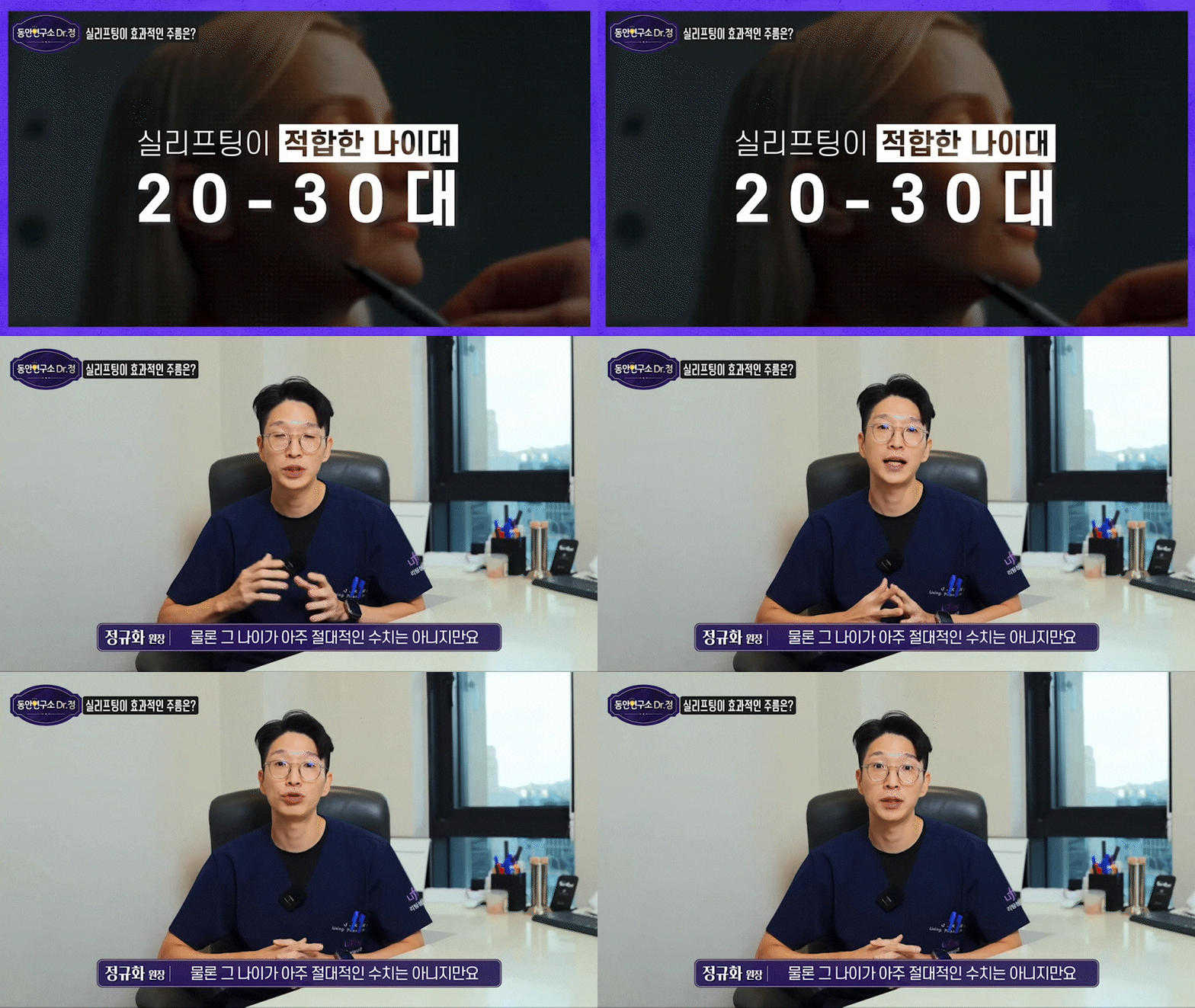
For example, if the problem is sagging centered on the skin,
a thread lifting procedure that does not require an incision may be suitable.
On the other hand, if sagging has extended to the SMAS layer
or structural changes are present,
a method that considers the facial anatomical structure,
such as mini lifting at Nonhyeon Station Plastic Surgery,
may be necessary.
In other words, rather than simply thinking,
“I should get lifting,”
it is most important to first check and understand
“what is causing my facial sagging.”
Through this, it becomes possible to establish a customized lifting plan
that matches each person’s characteristics and goals.
- Lifting is not about reversing time, but about harmony
Lifting is not simply about
“changing the face,”
but about
“restoring naturalness.”
Nonhyeon Mini Lifting focuses not on pursuing excessive change,
but on restoring balance and harmony within the current facial line.
Thread lifting, mini lifting, and facelifts are each
steps that preserve this “harmony and balance” in their own way,
and whichever method is chosen, the most important thing is
to understand the structure and rhythm of one’s own face.
Through this,
it is essential to ensure that changes appear naturally
while the overall balance of the face is not disrupted.
Now, as the season changes,
the moment you calmly look at your facial line in the mirror
becomes the starting point for beginning lifting
in the most natural and safe way.
Simply by paying attention to even small changes,
the process of restoring the overall contour and balance of the face
begins naturally.
In other words, it is important to remember that lifting is
not about creating dramatic change,
but about carefully regaining balance while preserving harmony
with the original facial structure.
I hope you become more naturally youthful
today than yesterday,
and tomorrow than today.
I was Director Lee Seong-jun of Seoul Reating Plastic Surgery.
This article is
content intended to provide general information about
Nonhyeon Mini Lifting surgery.
Whether surgery is actually performed should be decided according to
each individual’s health condition and purpose,
and please make your decision after consultation with a medical professional.
If you would like more details,
please check the more detailed information at the YouTube link below.
https://youtube.com/shorts/Hg7Xhb7-GeM?si=2Ey3lWfY9y68WhFX