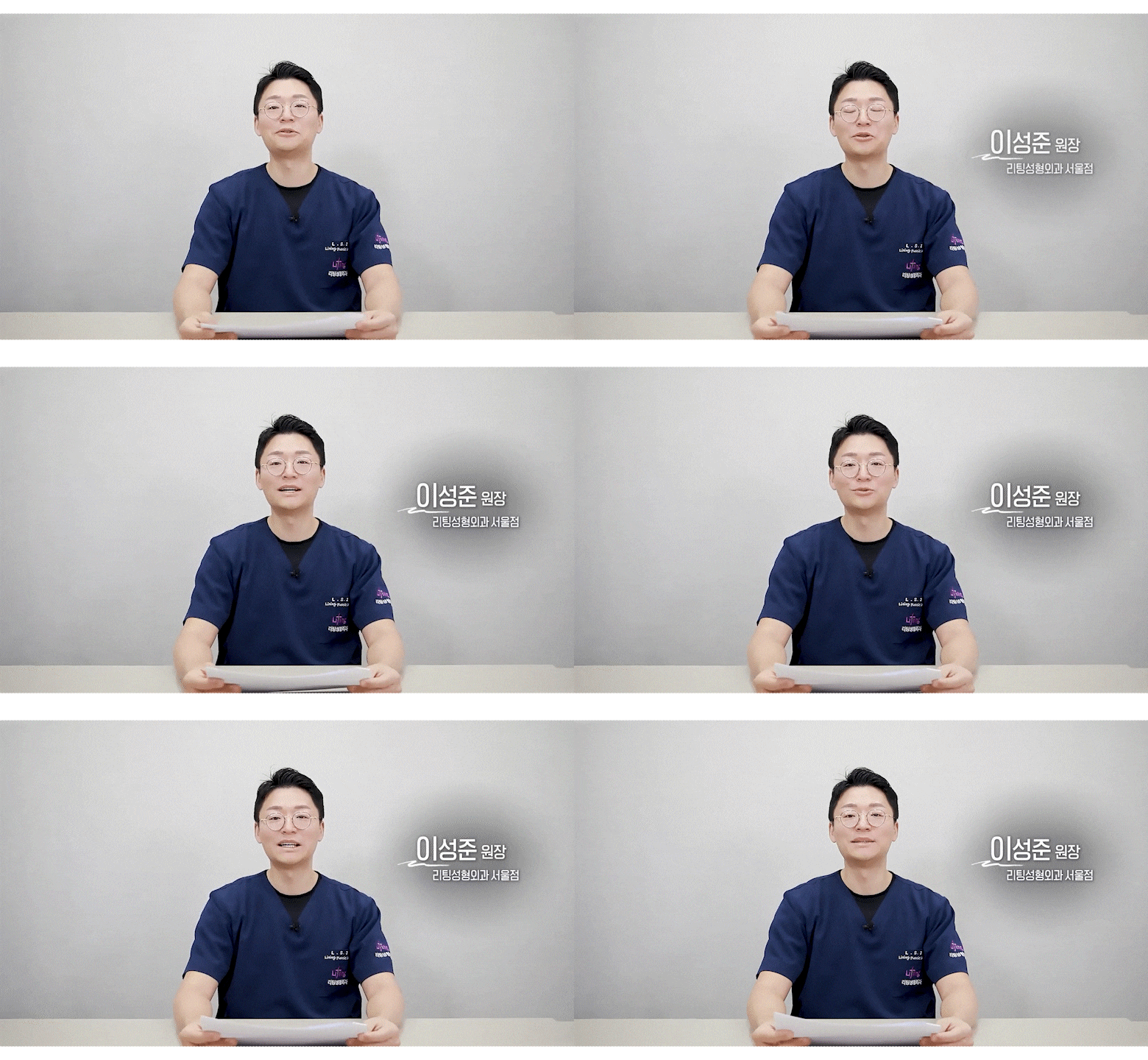
Hello.
I’m Director Lee Seong-jun of Rita Plastic Surgery Seoul Branch.
As the end of the year approaches, people
give themselves a gift
as a reward for a year’s hard work.
Over the past few years,
this trend of “reward consumption”
has changed noticeably.
In the past, consumption focused mainly on
external purchases such as luxury bags or travel,
but now the direction has shifted toward
care for “myself,”
especially facial contouring or lifting procedures.

The reason is not simply a change
in appearance.
Rather, it is because the desire to feel
more comfortable with one’s own face
every time one looks in the mirror
has grown stronger.
With this psychological motivation,
interest has recently increased in soft-tissue-focused procedures
such as buccal fat removal and facial contouring surgery.
This interest is leading people toward
choosing a path that seeks
“natural refinement” rather than excessive change.
In the end, changes to the face are
less about “creating something new”
and more about
restoring a harmonious balance by
reorganizing a disrupted line.
Today, let’s look specifically at
how that balance can be designed.
| 📙 Table of Contents |
|---|
| 1. Facial contours are made of ‘soft tissue,’ not bone2. Mini contouring: an approach that addresses structure without incisions3. Three-step mini contouring design tailored to face shape4. The approach of buccal fat removal and mini contouring5. Differences from facial contouring surgery6. The key to facial impression is ‘harmony’ |
- Facial contours are made of 'soft tissue,' not bone
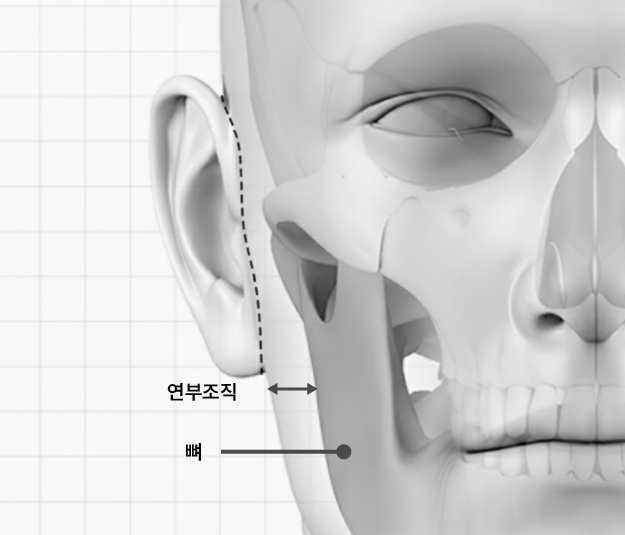
The factors that determine the shape of the face
are more varied than you might think.
Not only visible structures such as the cheekbones,
jawline, and double chin,
but also the fat layer,
SMAS layer,
and ligaments beneath them subtly determine the facial line.
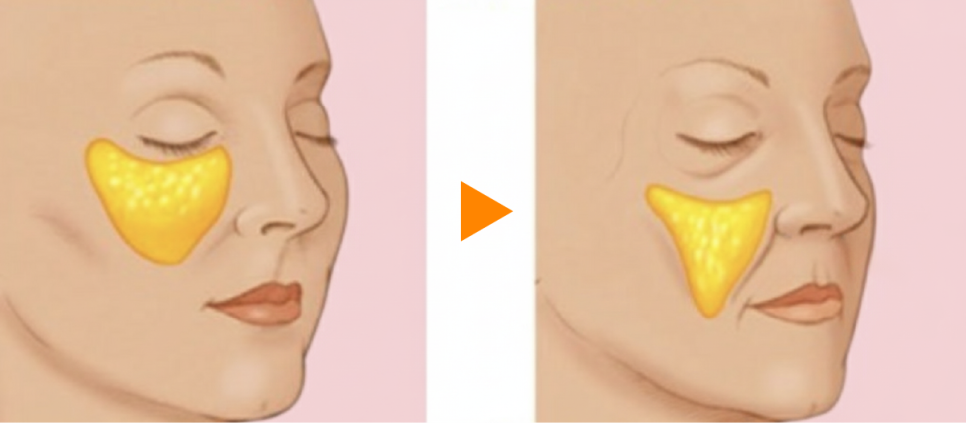
The reason buccal fat removal is meaningful here is that
the deep fat layer in the cheeks affects
the volume of the lower face.
If there is too much fat in this area,
it can make the tissue beside the lips appear to sag,
and the area below the mouth may look heavily dropped.
Therefore, depending on a person’s facial shape,
adjusting or refining that fat may be considered.
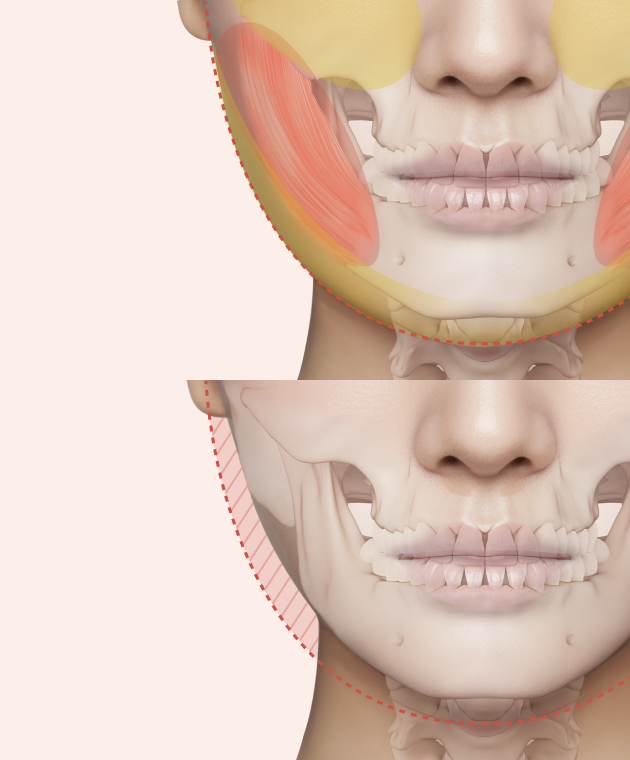
This kind of soft-tissue adjustment is not simply about
“removing” fat,
but can be seen as a process of
looking at the overall facial structure
and reorganizing the position and flow between tissues.
At this point, even without shaving bone,
the impression of the facial line can change.
This approach can be distinguished from bone-focused surgery
such as facial contouring surgery,
and can be described as a soft-tissue-centered surgical method.
- Mini contouring: an approach that addresses structure without incisions

Mini contouring was designed as
“refining facial structure without incisions.”
The core idea is a structure-centered approach that considers
the balance of three layers:
the SMAS, fat, and soft tissue,
without addressing the bone.
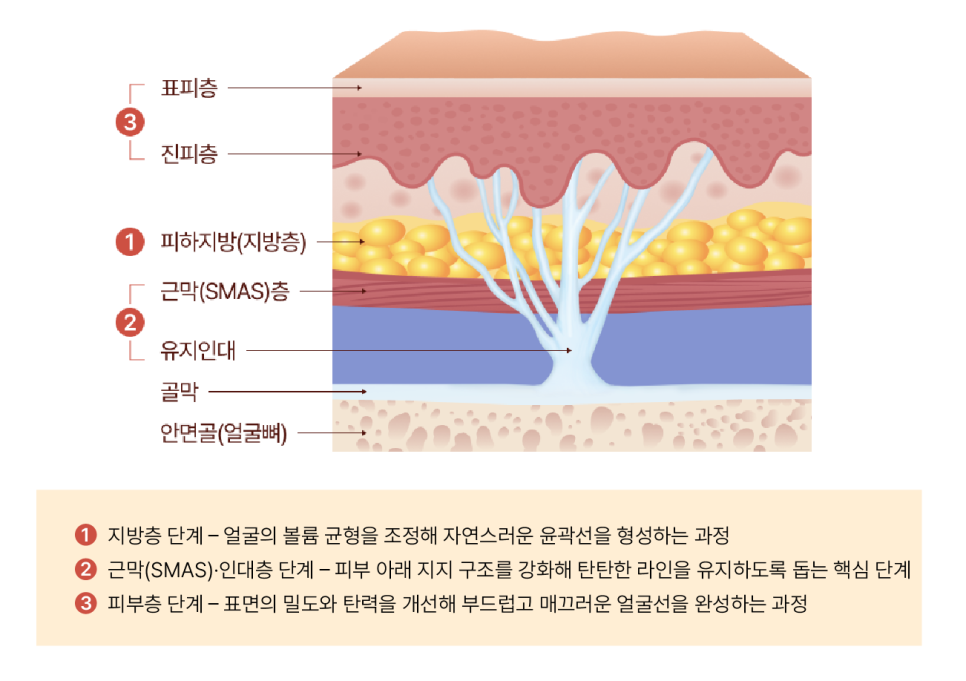
This surgery is divided into three flows:
① adjusting the volume of the fat layer,
② fixing and repositioning the SMAS layer,
③ improving the elasticity of the skin surface.
In other words, it is a method that understands
the interaction of the different layers that make up the face
and refines each layer accordingly.
Unlike fat removal or thread lifting,
this approach differs in that it is designed
based on the structure of the tissues that make up the face.
This concept of addressing facial structure
layer by layer
can be designed step by step according to
an individual’s face shape.
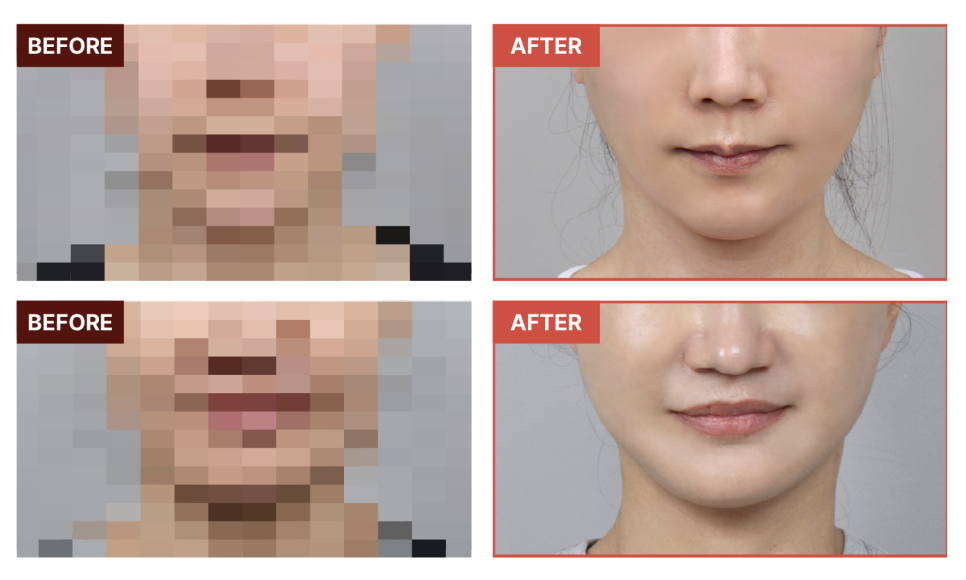
※ The patients above are clients who had surgery at Rita, and we inform you that the photos are used with consent.
※ The above cases may vary in results depending on each individual’s condition, and the recovery process and degree of change may differ from person to person.
Also, because it is designed not to place a large burden on recovery,
it is known to allow a relatively faster return to daily life
than lifting surgery.
However, recovery speed and swelling may vary
depending on the individual’s constitution and lifestyle habits.
- Three-step mini contouring design tailored to face shape
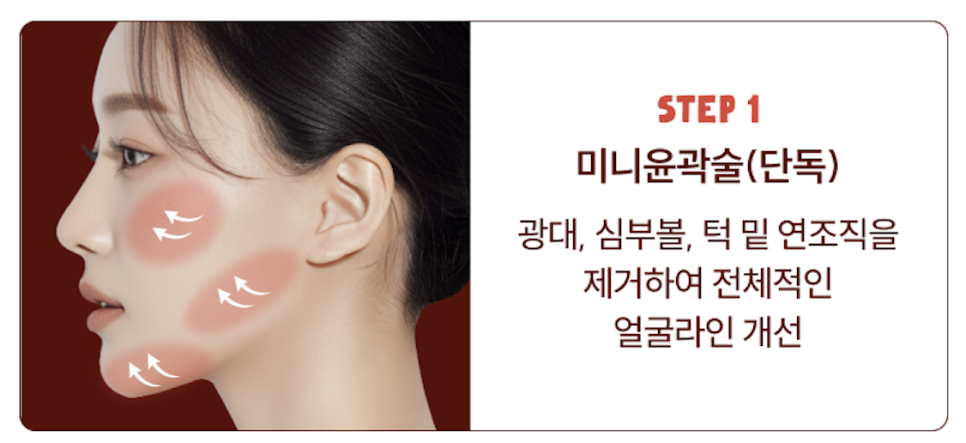
Step 1. Mini contouring (standalone)
Improves the overall facial line by removing soft tissue from the cheekbones,
buccal fat, and under the chin
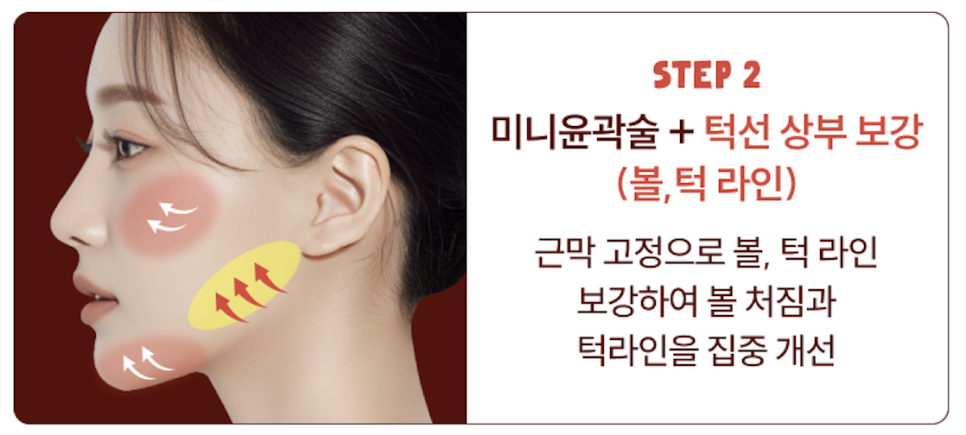
Step 2. Mini contouring + upper jawline reinforcement
Reinforces the cheeks and jawline with SMAS fixation
to focus on improving sagging cheeks and the jawline
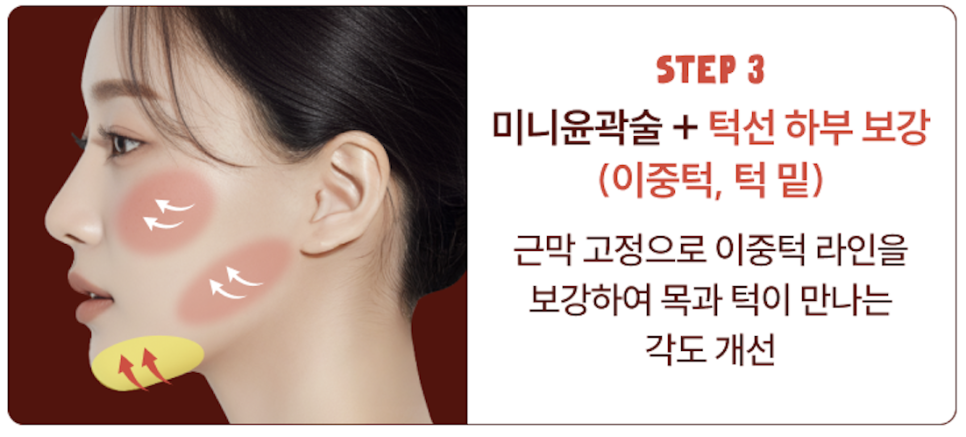
Step 3. Mini contouring + lower jawline reinforcement
Reinforces the double chin line with SMAS fixation
to improve the angle where the neck and jaw meet
This process is a concept of redesigning
the soft tissue that creates the three-dimensional flow of the face
without bone resection,
and whether each step is applied, or how strongly it is applied,
is determined differently depending on
the person’s facial structure and tissue elasticity.
In this process of designing facial contours step by step,
if lower-face volume adjustment is needed,
buccal fat removal may also be considered.
- The approach of buccal fat removal and mini contouring
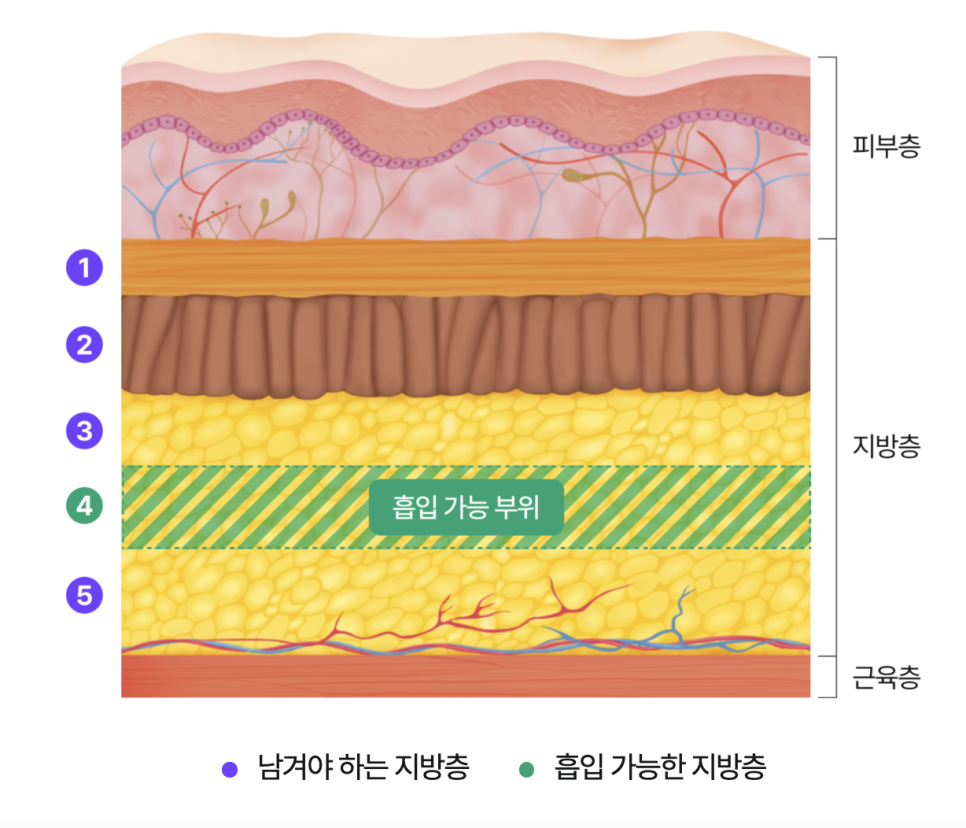
Buccal fat removal is a procedure that addresses
the fat layer in the lower face,
while mini contouring is an approach that reorganizes
the soft tissue and SMAS structure above it.
Because these approaches address different layers,
they may be considered together if needed.
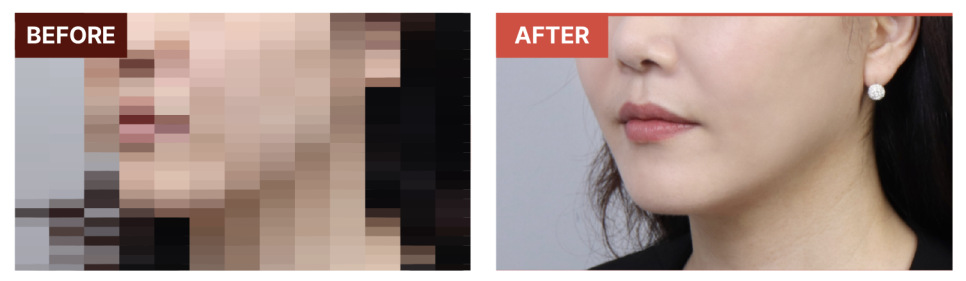
※ The patients above are clients who had surgery at Rita, and we inform you that the photos are used with consent.
※ The above cases may vary in results depending on each individual’s condition, and the recovery process and degree of change may differ from person to person.
For example, if the cheeks are overly developed
and the jawline looks unclear,
the sequence of refining the buccal fat
and then stabilizing the SMAS layer with mini contouring
may be considered.
This kind of step-by-step approach prioritizes natural harmony
over results.
It is designed as a process of understanding
the face’s original structure
and adjusting the three-dimensional flow accordingly.
This soft-tissue-centered approach
goes through a process different from the existing
bone-centered contour surgery approach.
- Differences from facial contouring surgery
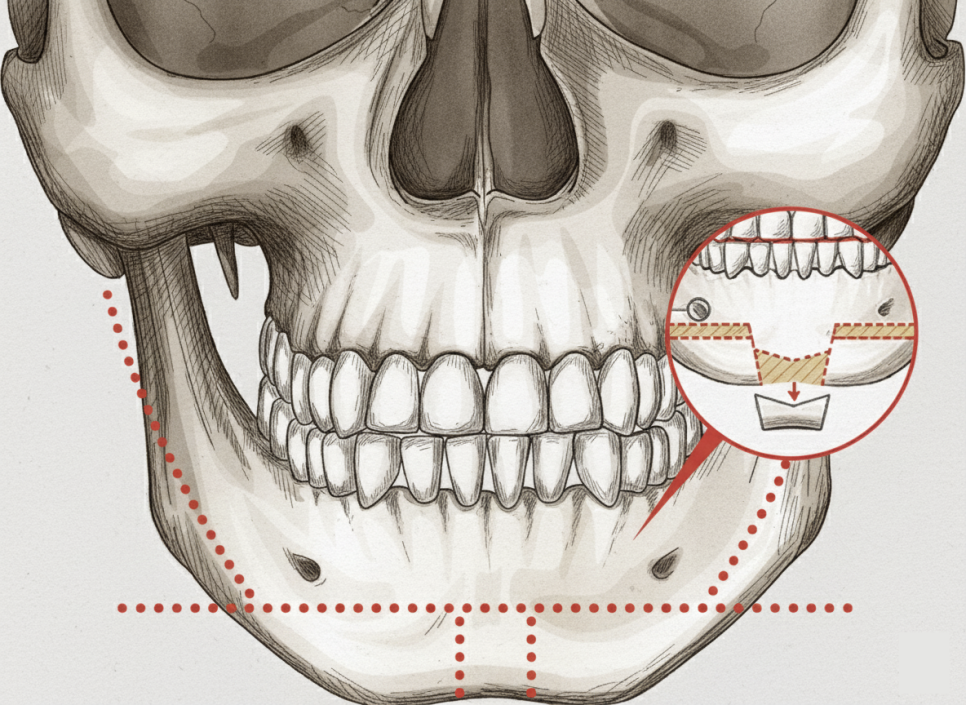
Facial contouring surgery is a surgical procedure
that directly addresses the shape of the bone.
In contrast, mini contouring
approaches the soft tissue without cutting bone.
In other words, the two methods have different purposes.
One changes the structural bone frame,
while the other rearranges the soft tissue above it
to create a natural flow in the facial contour.

Also, among those who have already had
facial contouring surgery,
if soft-tissue sagging becomes noticeable over time,
mini contouring may be considered as a supplement.
Here too, the direction of the design changes
depending on the individual’s tissue condition
and elasticity,
and the appropriate judgment is determined through consultation with a specialist.
Although the approaches are different,
both surgeries are ultimately connected in that
they aim for a harmonious facial impression.
- The key to facial impression is 'harmony'
When many people think of contour surgery,
they picture “shaving.”
But the recent approach to mini contouring
is being designed to be closer to “refining”
than to “removing.”
The impression of the face changes less from what is taken away,
and more from how the position and relationship
of each tissue are reorganized.
Mini contouring is differentiated precisely in this respect.
Rather than bone resection,
it is a structure-centered method that considers
three layers together:
the SMAS, fat, and soft tissue.
If facial contouring surgery deals with
the large frame of the face,
mini contouring is closer to coordinating
the structure that surrounds it.
Both approaches are among the many ways
to create a harmonious facial impression,
and the criteria for choosing them may differ
depending on each person’s situation.
I hope you become more naturally youthful
tomorrow than today,
and today than yesterday.
This was Director Lee Seong-jun
of Seoul Rita Plastic Surgery.
This post is
content intended to provide general information
about facial contouring surgery.
Whether surgery is actually performed
should be determined according to the individual’s health condition
and purpose,
and should be judged through consultation with a medical professional.
If you would like more details,
please check the YouTube link below
for more detailed information.
https://youtube.com/shorts/52u18Q1wouU?si=iGWttaicqLIwsNkj