In general, East Asians often have a lower nasal bridge and a broader nasal tip than Westerners.
Because the nose is located at the center of the face, a person’s impression can change depending on the height of the bridge and the shape of the nose.
In particular, when the tip of the nose is round and wide, it can give a cramped or somewhat rough impression,
so many people become interested in the nostril area in hopes of improving a spread-out nasal tip into a more refined shape.
Nostril reduction surgery is performed by removing part of the skin and suturing it together according to how spread out both alae are.
Through this, the visible area of the nostrils can be reduced, and the broad shape of the alae may appear neater.
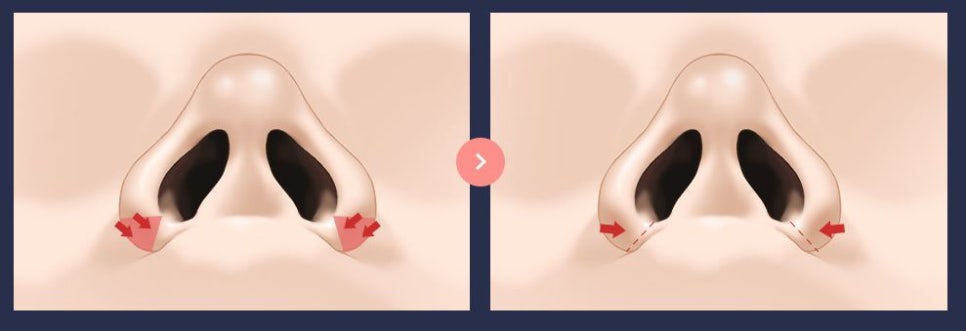
*Nostril reduction method: Depending on the thickness and degree of spread of the nostrils, the skin is excised and sutured together.
Source: Source: TS Plastic Surgery website
However, nostril reduction can be difficult to reverse once performed, so a careful decision is needed.
Even during the actual surgery, there are many aspects that need to be carefully considered.
Today, for those considering nostril reduction (alar reduction), I would like to explain the reasons why this surgery should not be decided too hastily and the main factors to consider during surgery.
First. Nostril reduction surgery is not
effective for everyone.
Because nostril reduction surgery works by removing skin to bring the nostrils together,
there may be limits to improvement with this surgery alone.
Also, depending on the case, nostril reduction may make the nasal tip appear more refined,
but in other cases it can instead lead to an awkward overall balance or an unsatisfactory result.
So in what cases is nostril reduction especially worth considering?
In general, when the nostrils are wide and the visible area of the nostrils is large,
nostril reduction can make the nasal tip appear neater, which tends to result in relatively high satisfaction.
However, it is important to decide whether to proceed with surgery by considering the person’s nose shape, skin thickness, and overall facial proportions together.
<Before/after nostril reduction>
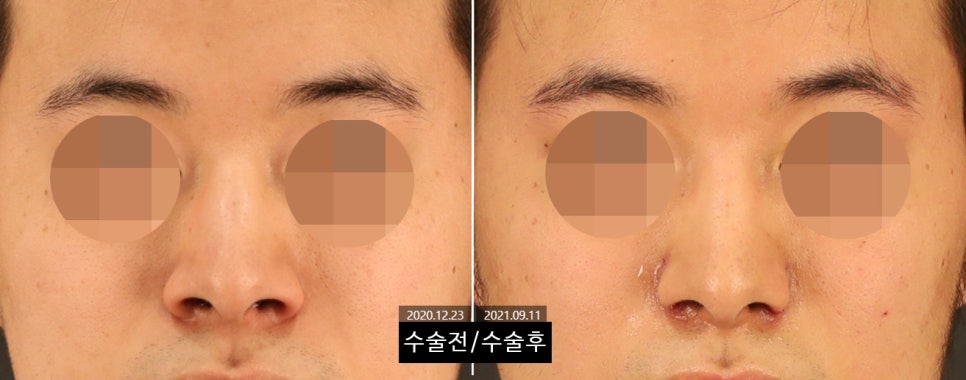
Nostril reduction performed (9 months after surgery)
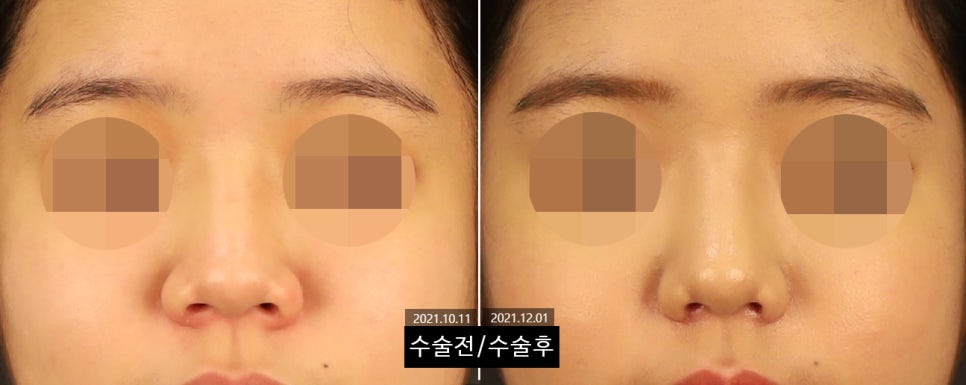
Nostril reduction performed (2 months after surgery)
As real examples showing this, there are cases where only nostril reduction was performed on its own.
Even without separate bridge or nasal tip surgery, you can see that the nasal tip impression changes more clearly due to the change in the nostrils.
However, if the alae are thick but the nostrils are small,
performing nostril reduction may make the nostrils even smaller and throw off the overall proportion of the nasal tip.
Also, if the nasal tip is originally thick and only the nostrils are reduced,
the nose may actually appear more blunt or look like a bulbous nose, which can feel different from the image you wanted.
Therefore, it is important not to look at the nostrils alone, but to consider harmony with the nasal tip as well.
Second.
Once the skin is excised and sutured,
it is not easy to reverse.
Because once skin has been removed, it is difficult to return to its original state,
a sufficient consultation and careful judgment before surgery are necessary.
If surgery is performed carelessly, it can lead to undesirable results,
so it should only be considered in cases where nostril reduction is appropriate,
and even then, it is important to proceed in a planned manner within a reasonable scope.
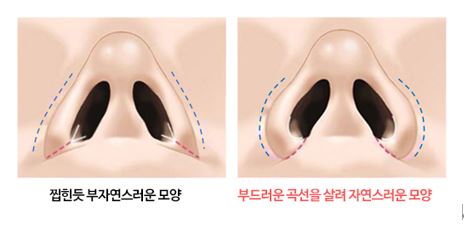
Source: TS Plastic Surgery website
Third. Design is a very important factor in surgery.
If only simple excision is performed without fully considering the curve of the alae,
the outer edges of the nostrils may appear unnatural,
so a design that preserves the original curves of the alae and nostrils as much as possible is important.
Then are there any methods other than nostril reduction to improve a nose tip that appears spread out or wide nostrils?
Just because the nasal tip looks round and wide does not mean nostril reduction is the only solution.
Depending on the type of bulbous nose, various approaches are possible, and in some cases, nasal tip surgery or overall balance adjustment
can be used to improve the nostrils so they appear less prominent.
- Cartilage repositioning, cartilage tying (without nostril reduction)
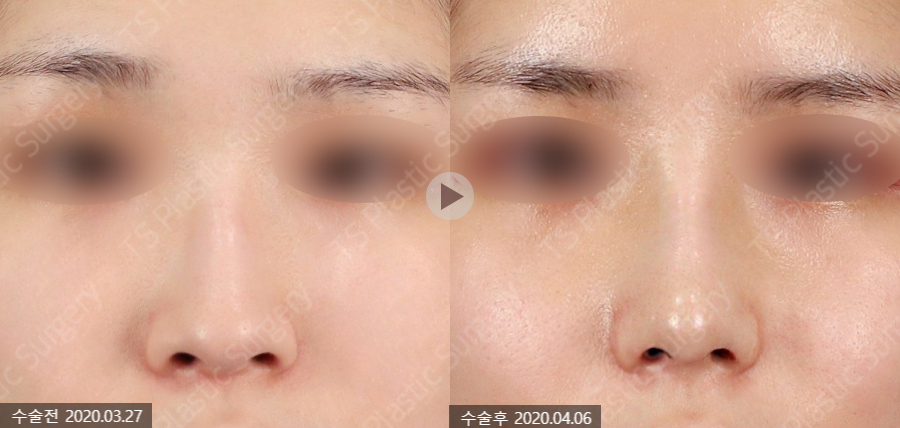
Bridge + nasal tip, hump nose, septal extension, cartilage repositioning, cartilage tying, bulbous nose (10 days after surgery)
For example, in a case like the one above where the nasal tip is low and appears spread out,
the nostrils can be made to look slimmer by bringing the nasal tip together and slightly lifting it.
This approach may help improve the appearance of spread-out nostrils in some cases.
- Lowering the columella
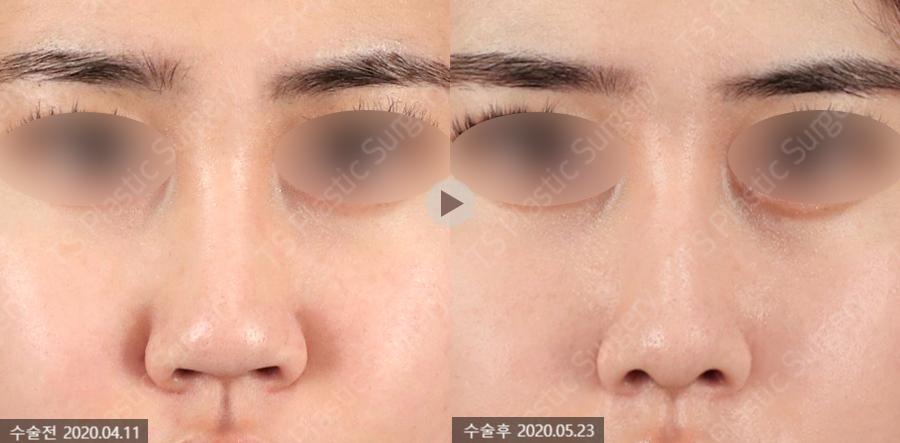
Bridge + nasal tip, septal extension, cartilage repositioning, cartilage tying, inferior turbinate, cat nose surgery, hump nose (1 month 2 weeks after surgery)
Also, when the columella appears sunken, the nose may look more spread out than it really is.
In such cases, a surgical approach that lowers the columella position (columella lowering)
can be considered to define the nostril line in a more three-dimensional way.
This may help lessen the impression that the alae are spread out.
- Nostril correction
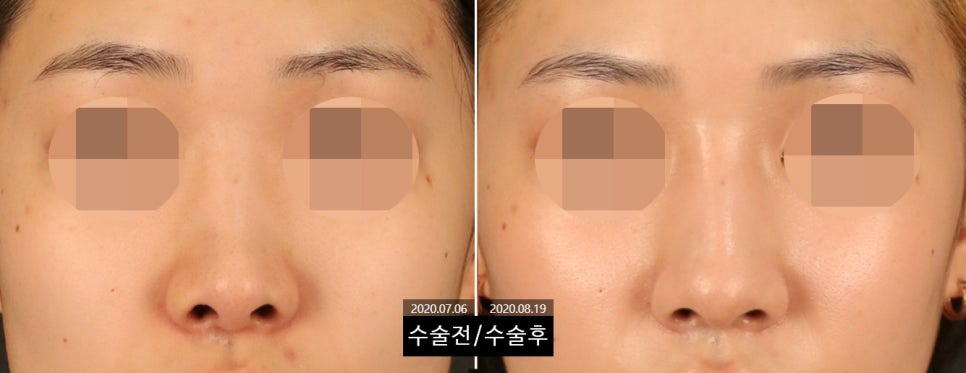
Bulbous nose + cartilage repositioning + cartilage tying + nostril correction (1 month 2 weeks after surgery)
As in the case above, if nostril exposure appears severe, it may be perceived as an upturned nose depending on the overall proportions.
In such cases, surgical approaches that adjust the nostril position (nostril lowering) or upturned nose correction may help reduce the degree of nostril exposure.
- Removal of soft tissue from the nasal tip, cartilage tying
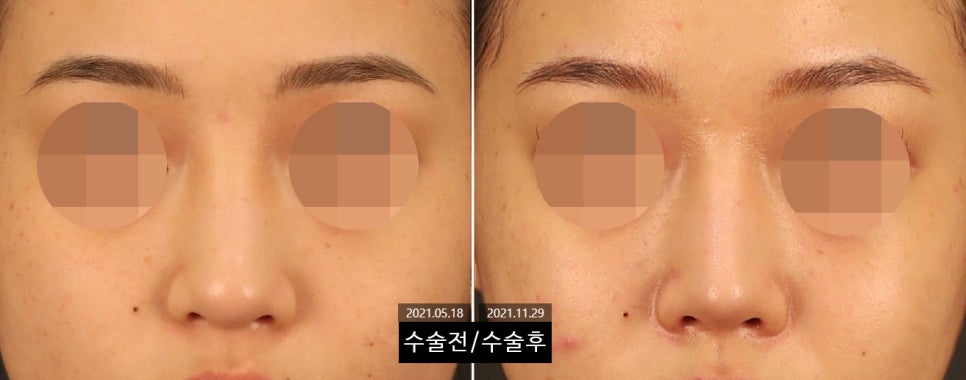
Bridge + nasal tip + soft tissue removal + cartilage tying (6 months 2 weeks after surgery)
Sometimes, the concern is not that the nostrils are actually large, but that the nasal tip is thick in a bulbous-nose shape, yet nostril reduction is still being considered.
In such cases, reducing the size of both alae through nostril reduction alone
may make the nasal tip appear relatively more prominent or make the overall balance feel awkward.
Therefore, when there is excessive soft tissue at the nasal tip, some of it may be adjusted,
or methods such as tying the nasal tip cartilage can be used to reduce volume and improve harmony.
Recently, as more people have been concerned about a blunt and wide-looking nasal tip,
interest in nostril reduction surgery has gradually increased as well.
However, having a bulbous nose does not necessarily mean nostril reduction is needed,
and because improvement may be possible with other methods depending on the nose shape and characteristics,
it is important before surgery to create an appropriate surgical plan for yourself through sufficient consultation with a board-certified plastic surgeon.
Also, because each person’s nasal structure, skin thickness, and the degree of nostril spread are all different,
nostril reduction also requires a customized approach suited to the individual’s nose type rather than a one-size-fits-all method.
If you are currently considering nostril reduction, I recommend receiving a careful diagnosis of various factors such as excess tissue in the alae, asymmetry, and nostril size,
and carefully evaluating the extent of excision, the location, and the suturing method.
※ Because side effects such as inflammation, bleeding, and nerve damage may occur depending on the individual, sufficient consultation with medical staff is necessary before surgery.
These are example images to help with understanding.