Rhinoplasty is considered by many people just as often as double eyelid surgery.
In fact, there are more things to decide before surgery than with double eyelid surgery.
What kind of nasal line you want, what materials to use, how to adjust the angle, and so on.
There are many details that the patient and medical team must carefully decide through 충분한 consultation.
Today, among the materials used in rhinoplasty,
we will look at natural rhinoplasty, which uses autologous tissue to create a natural nasal line.
Generally, rhinoplasty can be divided into surgery focused on the nasal bridge and the nasal tip.
The nasal bridge, or the dorsum of the nose, is made of bone and cartilage and serves as a fixed structure that supports the nose.
On the other hand, the nasal tip is the most protruding part of the face,
and depending on its shape and height, the overall facial image can change significantly.
For this reason, tip surgery can be said to be an important part that determines satisfaction with rhinoplasty.
To raise the nasal tip and keep it stable, a new nasal tip support column is needed.
The material used for this purpose is septal cartilage.
Septal cartilage
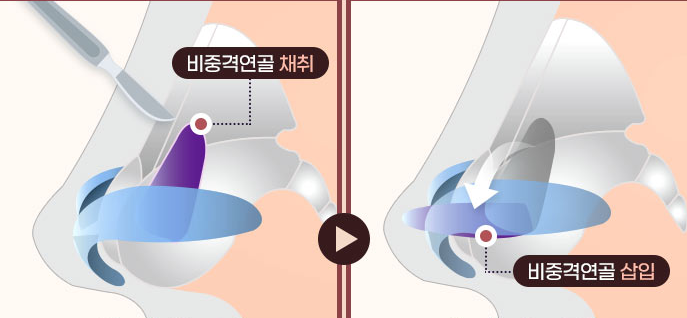
Source: TS Plastic Surgery website
The septum is a structure located at the center of the nose that divides the nostrils into left and right.
It is mainly made of cartilage, and part of this septal cartilage can be harvested
and used as a support column for the nasal tip. It is used to raise or lengthen the nasal tip.
If the septum is large and strong enough, it can be the most ideal material for tip surgery.
However, in many cases among East Asians, the amount of septal cartilage is insufficient to stably support the nasal tip, or the cartilage may be weak.
In such cases, other autologous cartilage such as ear cartilage may be used together to reinforce the nasal tip.
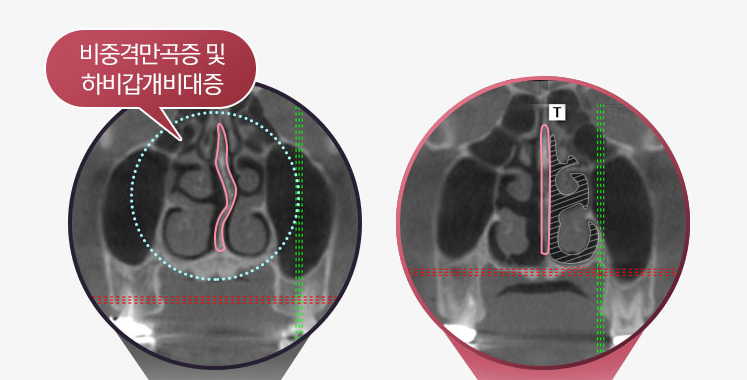
Source: TS Plastic Surgery website
In addition, there may be cases accompanied by a deviated septum,
or inferior turbinate hypertrophy, which can be a cause of rhinitis symptoms.
In such cases, while harvesting septal cartilage, a corrective procedure to straighten the deviated septum is performed at the same time,
and if inferior turbinate reduction is also performed, it can help improve nasal congestion symptoms as well as the shape of the nose.
Ear cartilage
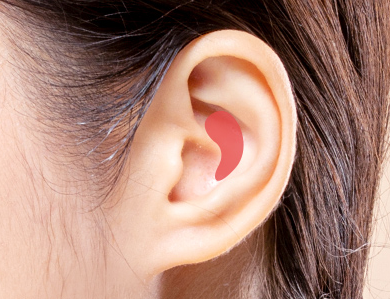
Source: TS Plastic Surgery website
Ear cartilage is soft and elastic, so although it is somewhat limited as a complete substitute for septal cartilage,
it is suitable as an auxiliary material in rhinoplasty.
When the amount of septal cartilage is not sufficient, ear cartilage can be used to increase support,
and it is also good for use when refining the nasal tip more naturally while extending it slightly.
If you prefer a natural-looking nasal line,
generally, septal cartilage and ear cartilage alone can be enough to achieve the desired height.
However, if you have had previous surgery or if the nose is short,
a combination of septal cartilage and ear cartilage alone may not be sufficient.
In such cases, autologous rib cartilage or donated rib cartilage can be used
to create a more sufficient support structure and proceed with surgery to achieve the desired nasal tip height.
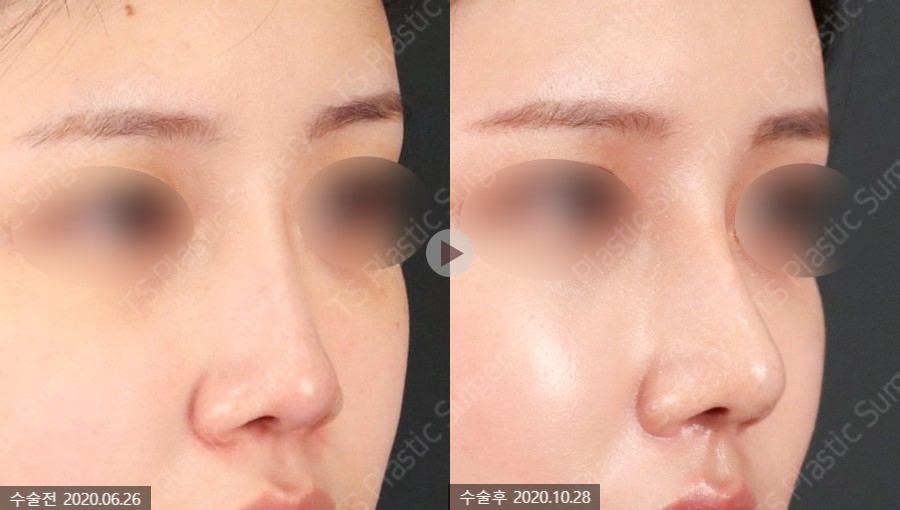 Revision rhinoplasty for a bulbous nose + septal extension + cartilage repositioning + cartilage binding performed (6 months after surgery, ear cartilage used)
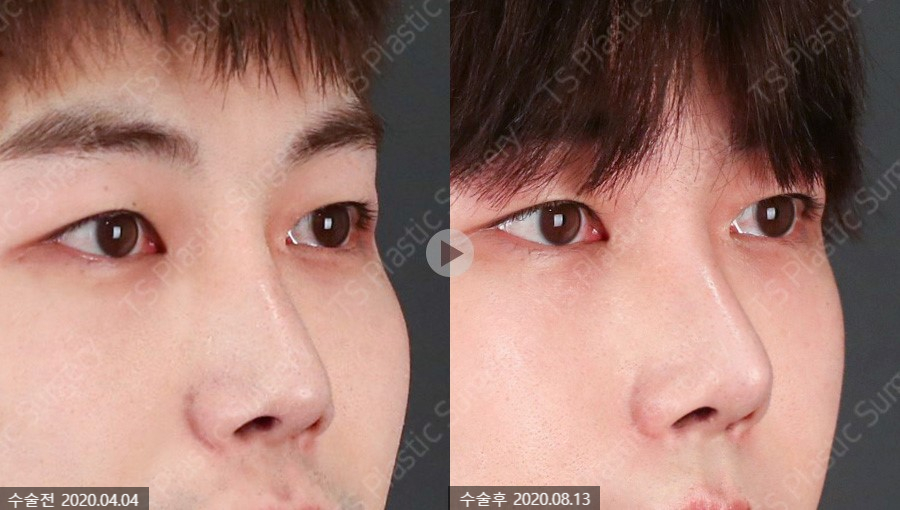 Revision rhinoplasty with cartilage repositioning + cartilage binding + septal extension + inferior turbinate surgery performed (4 months after surgery)
The nasal tip is a delicate area where even small differences can change the shape.
To take these subtle differences into account and complete a safe yet natural nasal line,
it is advisable to decide whether to proceed with surgery only after 충분한 consultation with medical staff who fully understand the anatomical structure of the nose and can plan and perform surgery according to the patient's individual characteristics.
※ Depending on the individual, side effects such as inflammation, bleeding, and nerve damage may occur, so sufficient consultation with the medical team before surgery is necessary.
These are example images provided to help understanding.