Today, I’ll talk about the symptoms of a nose becoming crooked after rhinoplasty, which can make the nostrils look asymmetric and the nose overall appear deviated.
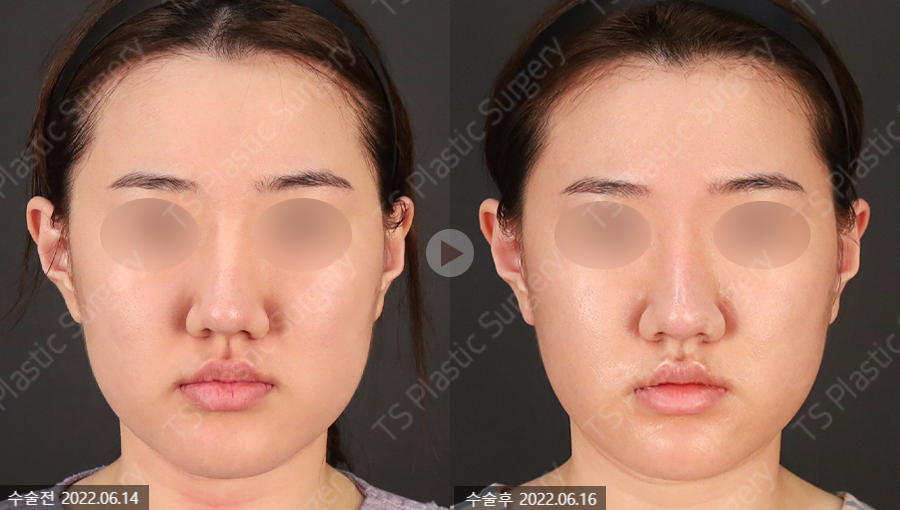
Correction performed for post-rhinoplasty deviation (2 days after surgery)
After nose surgery, this kind of crooked-nose symptom can sometimes appear.
It is especially likely to occur when the tip of the nose is raised excessively while the skin tension is strong.
Causes of a Crooked Nose After Rhinoplasty
When raising the nasal tip during nose surgery, septal extension grafting is mainly performed.
This is a method of carving out the septal cartilage located inside the nose to support the tip or extend the length of the nose.
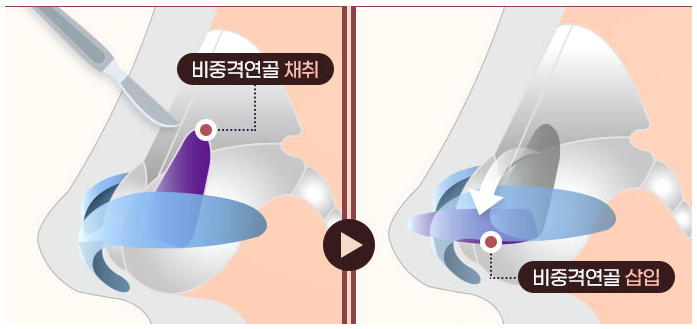
Source: TS Plastic Surgery website
Large, straight septal cartilage is a very useful material in nasal tip surgery,
and I have introduced it several times through the blog before.
However, unfortunately, in many East Asians, the septal cartilage is not well developed.
As a result, the harvested septal cartilage may be too small or too thin, making sufficient extension difficult.
If too much cartilage is removed at this time, the remaining cartilage structure may weaken, causing the septum to deviate.
Also, even if the septal cartilage is safely harvested and the surgery is performed with a firm structure,
a crooked nasal tip can still develop over time.
This happens because strong skin tension prevents the firmly supported septum from holding its position,
or because repeated pressure transmitted to the nasal tip during daily life accumulates, gradually causing the extended and supported columella to bend.
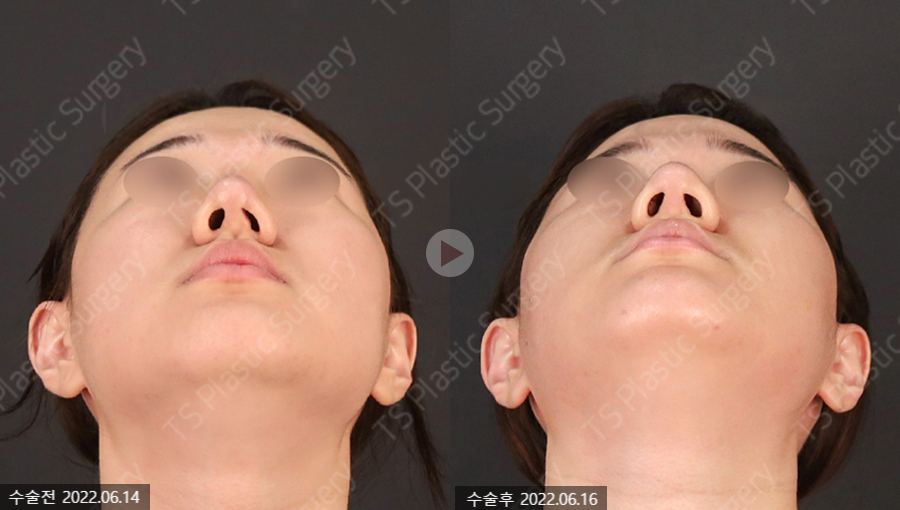
Correction performed for post-rhinoplasty deviation (2 days after surgery)
Improvement Method
In cases where the septum has deviated after rhinoplasty, there are cases that can be simply corrected without an incision.
The correction is done by strengthening the nasal tip support structure,
and it can be improved with a relatively simple procedure that takes about 30 minutes, by approaching from inside the nose without an incision and without changing the side profile or the height of the nose.
However, not all crooked-nose cases can be corrected using a non-incisional method.
It is necessary to visit the clinic and receive a consultation for an accurate diagnosis.
For a definite improvement, revision surgery through an open incision may be more appropriate.
However, if correction is possible without an incision, no additional recovery period is needed,
and because correction can be done in a relatively short time,
it can be considered a way to reduce the burden of surgery.
How to Avoid Needing Revision Surgery If Your Nose Becomes Crooked After Rhinoplasty
There are a few things to keep in mind to prevent the nose from becoming crooked.
First, it is important to accurately understand your own nasal condition before surgery.
In particular, it is necessary to check whether there is a deviated septum.
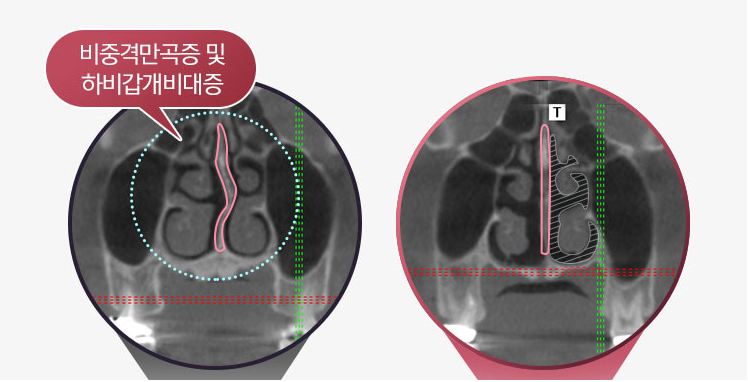
Source: TS Plastic Surgery
In some cases, the septum is already deviated before surgery,
and even if it is corrected during the procedure, some curvature may remain.
When the nose is low, a deviation that was not noticeable may become more obvious after the bridge or tip is raised following surgery.
Therefore, before revision surgery, it is advisable to precisely check the condition of the septum through a CT scan.
It is also important to consider the condition of the remaining septal cartilage and the skin tension.
If the septal cartilage is weak or the skin tension is strong and the nasal tip is raised excessively,
it may seem fine immediately after surgery, but over time a septal deviation may appear.
As with all cosmetic surgeries, clearly understanding your current condition is the first priority for a satisfactory result.
Before surgery, it is best to have a CT scan and have a thorough consultation with the medical team, then establish a customized surgical plan that fits your individual condition. The point
※ Depending on the individual, side effects such as inflammation, bleeding, and nerve damage may occur, so sufficient consultation with the medical team before surgery is necessary.