During summer and winter vacations, many students visit the clinic for double eyelid surgery.
Not only college students, but as the age group undergoing cosmetic surgery has been gradually getting younger, an increasing number of middle and high school students are also considering consultation and surgery during their vacation.
Because double eyelid surgery is often thought of as simple and decided on within a short period of time,
the process sometimes moves forward without enough time for careful consideration and consultation before surgery.
This can become a cause of revision surgery, so extra caution is needed.
Today, to help prevent eye revision surgery, I will point out several things to consider when planning your first double eyelid surgery.
- Incision vs. non-incision: things to consider when choosing a double eyelid surgery method
Double eyelid surgery methods can be broadly divided into incision and non-incision methods (natural adhesion, buried suture method).
When deciding on a surgical method, various factors such as skin thickness, the degree of skin sagging, and the amount of fat and muscle must be considered together, so it is advisable to make the decision only after 충분한 consultation with the medical staff.
Sometimes, some people ask for only a non-incision method during consultation,
because they often think incision methods look unnatural or leave scars, making it obvious that surgery was done.
However, whether the result looks natural after double eyelid surgery depends much more on the surgical design and the skill of the medical staff than on the difference between incision and non-incision methods.
Even if the surgery is performed with an incision method, natural results without scars can be expected if delicate design and skilled surgical technique support it.
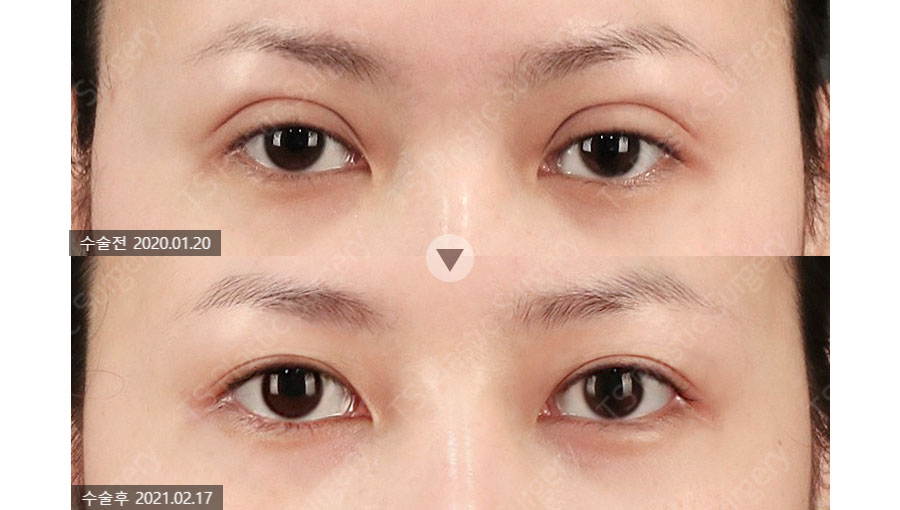 Revision eye surgery (two-line correction, sausage-eye improvement) + ptosis correction + dual canthoplasty performed (1 year after surgery)
- Choosing the surgery method and design according to skin thickness
Because skin thickness varies from person to person, the double eyelid surgery method and design will also differ accordingly.
If the skin is thin, the fold area of the double eyelid line can form naturally, creating a softer overall impression. On the other hand, if the skin is thick, setting the double eyelid line too high may look somewhat awkward or unnatural.
In particular, when the skin is thick, considering an incision method rather than a non-incision method may offer more stable results.
As such, skin thickness is one of the factors that directly affects the surgical method and design,
so it is important to have a thorough consultation with the medical staff and receive an accurate evaluation before surgery.
- Distinguishing pseudoptosis from true ptosis
Pseudoptosis literally means "false ptosis."
From the outside, it may look as though the eyelids are drooping and give a sleepy impression,
but the strength of the muscle that opens the eyes is actually normal.
In such cases, because the cause is sagging skin, separate ptosis correction may not be necessary.
On the other hand, true ptosis is a condition in which the muscle that opens the eyes is weak, so the eyelids cannot be lifted sufficiently.
In this case, correction including ptosis correction may be needed, so an accurate diagnosis before surgery is necessary.
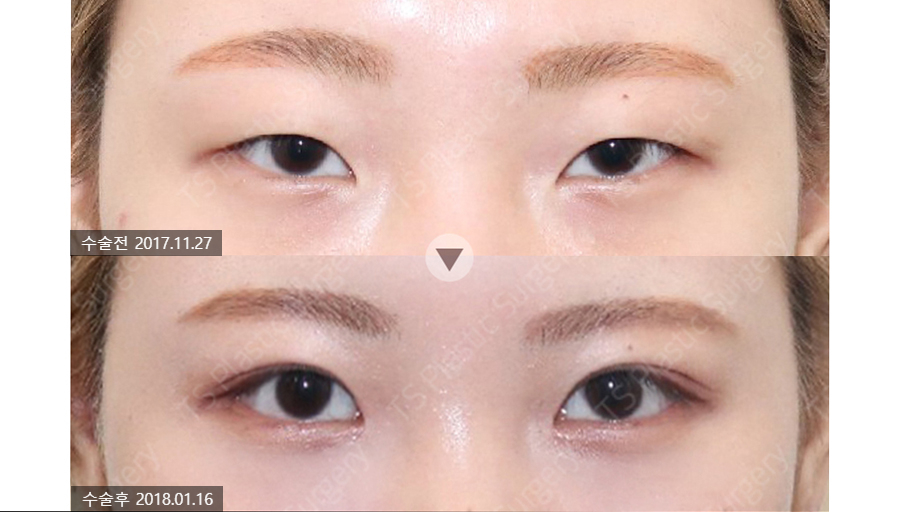 Natural adhesion + epicanthoplasty performed (2 months after surgery)
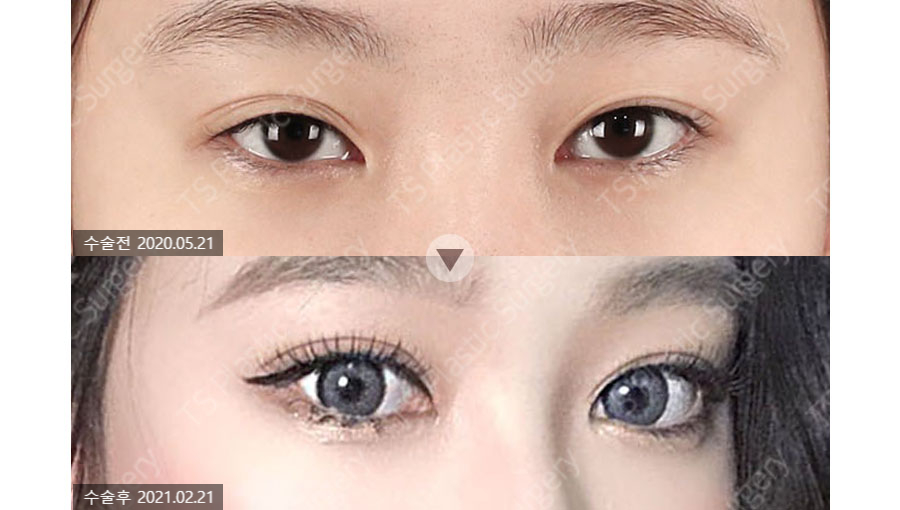 Revision eye surgery (natural adhesion) performed (9 months after surgery)
Both patients underwent only double eyelid surgery using the natural adhesion method and canthoplasty without separate ptosis correction,
and the sleepy-looking impression caused by the eyes being covered by skin before surgery was improved.
If you are wondering whether you have ptosis symptoms, you can check for pseudoptosis in a simple way.
When looking in a mirror and gently lifting your eyebrows a little naturally, if the size of your eyes changes, it may be pseudoptosis.
Conversely, if there is little to no change in eye size, true ptosis may be suspected.
However, this method is only a simple self-check, and a specialist’s diagnosis is absolutely necessary for a more accurate judgment.
Before surgery, it is important to thoroughly consult with the medical staff and accurately understand your condition.
- Measuring the distance between the eyes and eyebrows
Depending on the distance between the eyes and the eyebrows, you can judge whether the height of the double eyelid line suits you.
When designing the double eyelid line, if the distance between the eyebrows and the double eyelid line is about 4 to 5 times the thickness of the double eyelid, it can be considered a harmonious proportion.
On the other hand, if the distance between the eyes and eyebrows is narrow but the double eyelid is designed too thick,
it may look unnatural and give a somewhat sharp impression.
Therefore, it is important to design a double eyelid line that matches each person's eye structure.
- Checking whether the eyes are protruding
If the eyes are protruding, designing the double eyelid line too thick may emphasize the protruding impression even more.
Therefore, it is necessary to check before surgery whether your eyes are protruding.
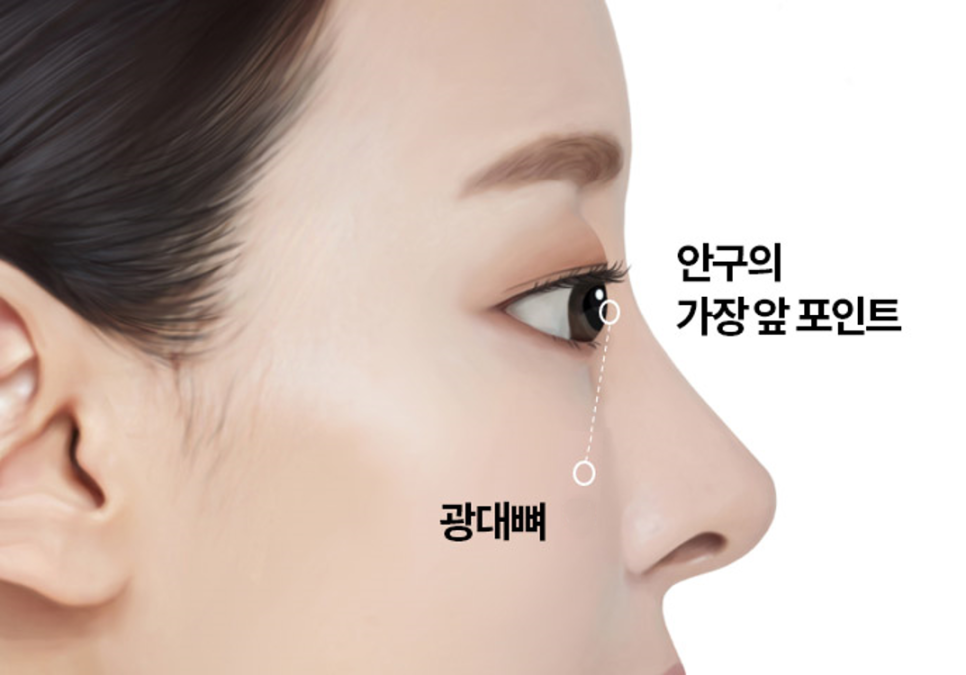 Source: TS Plastic Surgery website
A simple self-check method is to place a ruler or pen against the cheekbone and see whether it touches the eyeball.
If the eyeball touches it, the eyes can be considered protruding.
In the case of protruding eyes, choosing a flashy out-line or a high double eyelid line may make the eyes look even more protruding, so caution is needed.
At such times, considering a relatively low double eyelid line and a natural in-out line may be helpful.
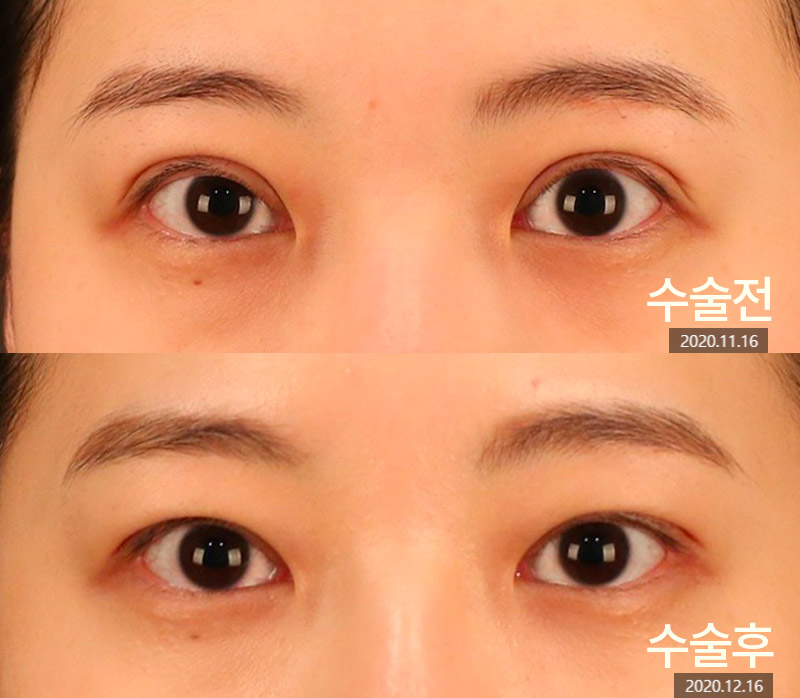 Revision eye surgery + ptosis correction (asymmetry) performed (1 month after surgery)
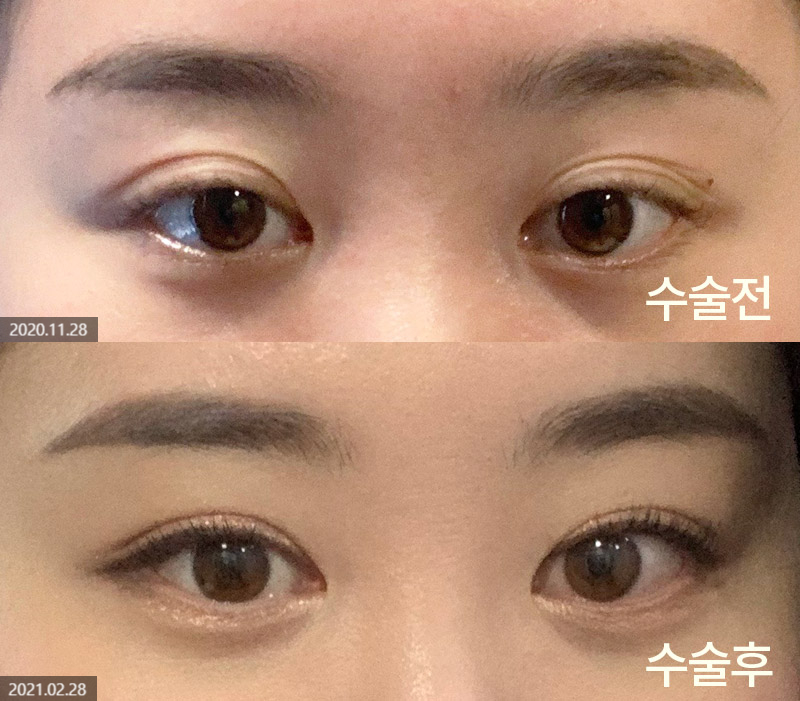 Revision eye surgery + upper eyelid fat repositioning performed (3 months after surgery)
As double eyelid surgery has become more popular, more and more people are simply following trendy eye shapes and undergoing surgery.
However, it is important to accurately understand your own eye structure and characteristics.
This can increase satisfaction after surgery and help prevent unnecessary revision eye surgery.
In particular, as more younger patients, such as middle and high school students, consider surgery,
to avoid repeated revision surgery due to dissatisfaction after the procedure,
it is necessary to comprehensively review factors such as line design, whether ptosis correction is needed, the degree of eye protrusion, skin thickness, and the distance between the eyes and eyebrows.
If you establish a plan that suits your individual eye condition through thorough consultation before surgery,
you can expect a more satisfying result.
※ Depending on the individual, side effects such as inflammation, bleeding, and nerve damage may occur, so thorough consultation with the medical staff is necessary before surgery.