When people think of contouring surgery, they often imagine cheekbone reduction, square jaw reduction, and chin surgery.
However, there is one area that is difficult to improve with contouring surgery: the forehead line.
A forehead line commonly called an “M-shaped forehead” or an angular forehead can make the face look larger than it actually is. Since such a forehead line is difficult to improve with contouring surgery alone, people who want a slimmer and softer face shape sometimes also consider hairline correction through hair transplantation.
In the past, large and distinct facial features were considered the standard of beauty. Recently, however, small, round face shapes have become the beauty standard, and more people are paying attention to the overall harmony of the face. In line with this trend, interest in hairline correction alongside contouring surgery is steadily increasing.
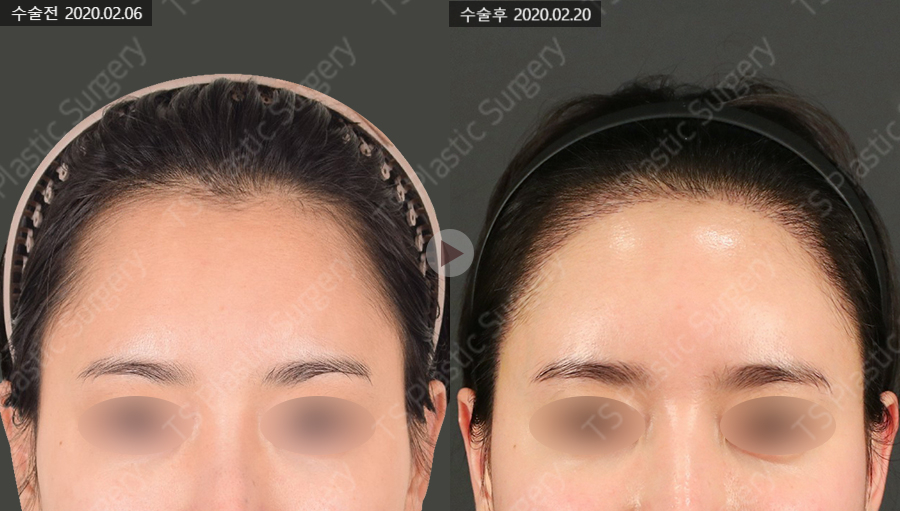
Hair transplantation in progress (2 weeks after surgery)
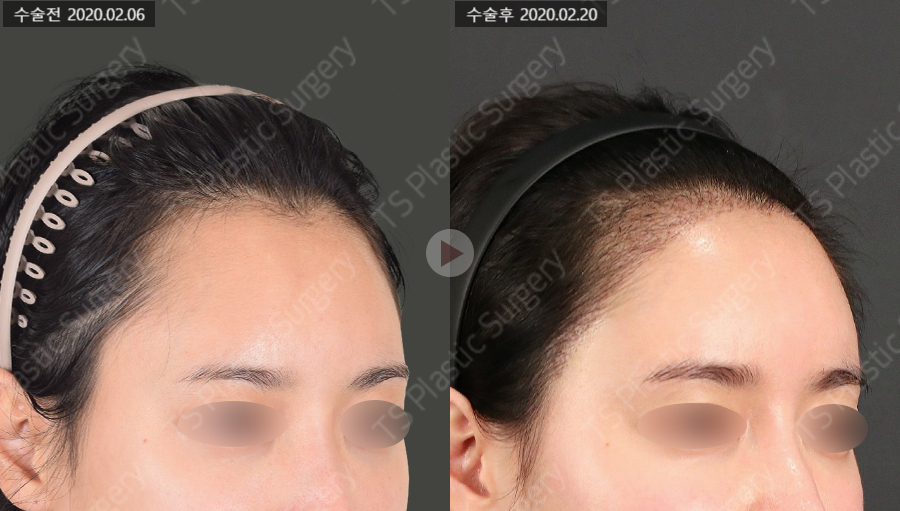
Hair transplantation in progress (2 weeks after surgery)
Hair transplantation for hairline correction is performed by harvesting your own hair from the back of the head and transplanting it to the hairline area.
Hair can differ somewhat in thickness, color, direction, and other characteristics depending on where it grows. Therefore, for a natural hairline correction, it is important to transplant hair while fully considering these characteristics.
In particular, if thick hair is used in the hairline area during transplantation, it may look unnatural. So if fine hairs or thin hairs are selected and placed toward the front, with thicker hairs positioned further back, a more natural and fuller result can be expected.
This kind of delicate design and transplantation process can be said to be the key point that enhances the naturalness and completeness of hair transplantation.
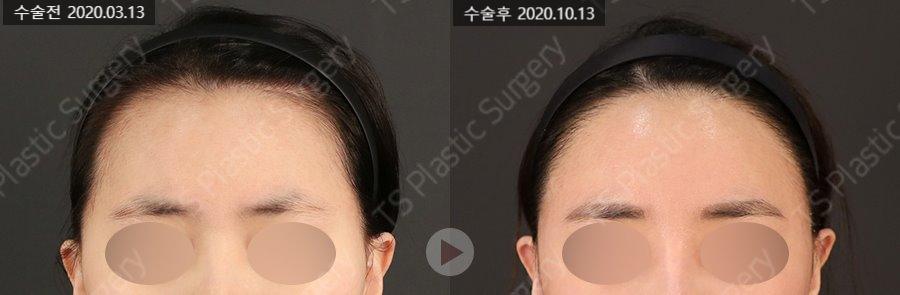
Cheekbone reduction + hair transplantation in progress (6 months after surgery)
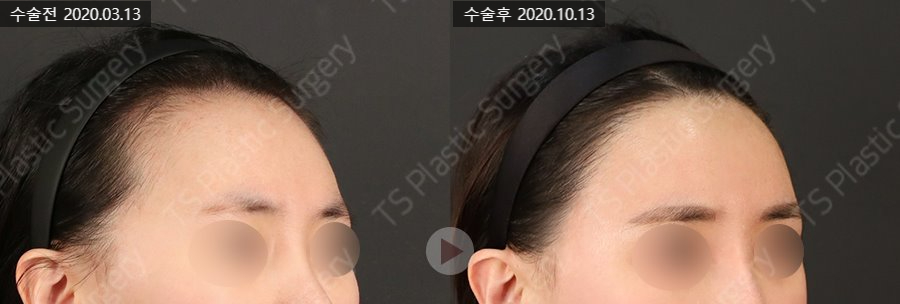
Cheekbone reduction + hair transplantation in progress (6 months after surgery)
If the forehead is wide or the side of the face is wide, lowering the hairline appropriately through hairline correction and narrowing the side lines can reduce the face length and area, which may make the face appear smaller. Such changes can create the impression that the face shape has been further improved, almost as if contouring surgery had been performed.
However, as with any surgery, if the hairline is lowered too much or too much is transplanted to the sideburn area without sufficiently considering the overall proportions of the face, it can create an awkward appearance. Therefore, it is important to establish the hair transplantation design and surgical plan while considering the overall contour proportions of the face.
The hairline is not simply the boundary where hair begins; it is one of the important elements that shapes the facial outline. It is advisable to have surgery only after sufficient consultation with an experienced medical team that can design the hairline in harmony with the facial contour.
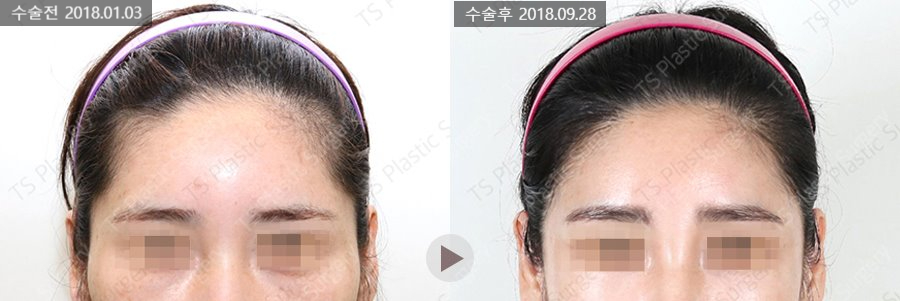
Square jaw surgery + cheekbone reduction + hair transplantation in progress (8 months after surgery)
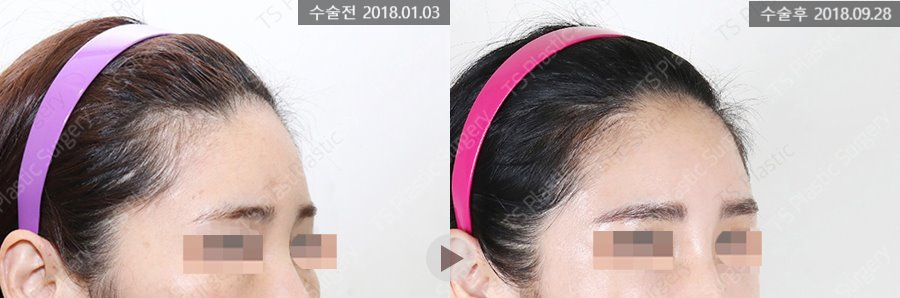
Square jaw surgery + cheekbone reduction + hair transplantation in progress (8 months after surgery)
Hair transplantation methods can largely be divided into the incision method and the non-incision method.
The non-incision method does not involve an incision site, so there is almost no visible scarring and recovery tends to be faster. However, it is necessary to consider that damage may occur during follicle harvesting, and the survival rate may be relatively lower.
On the other hand, the incision method has the advantage of a lower follicle damage rate and a relatively higher survival rate. However, because an incision site is created, a certain period of recovery and care is required, and postoperative scar management also needs attention.
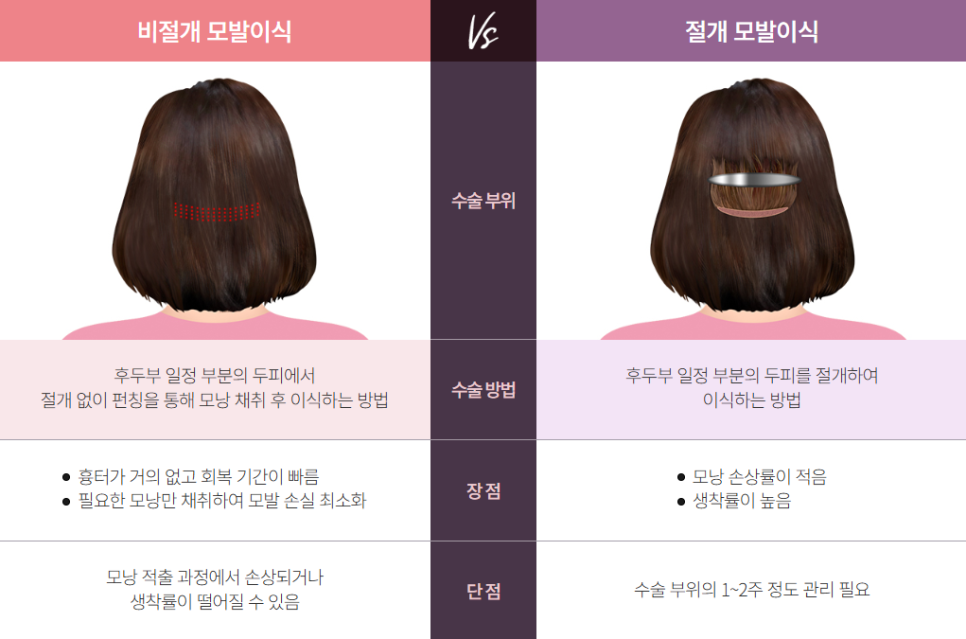
Source: TS Plastic Surgery website
It is difficult to say definitively which is better between the incision method and the non-incision method.
Since each method has its own advantages and disadvantages, it is advisable to choose the method that is right for you through 충분한 상담 with the medical team.
Hair transplantation is performed by manually harvesting, storing, and transplanting each individual hair strand one by one. As mentioned earlier, each hair has different characteristics such as length, thickness, and direction, so if these factors are not carefully considered during transplantation, it is difficult to expect a natural and satisfying result.
Also, just as facial contouring, eye surgery, and nose surgery are designed with the face’s proportions and overall impression in mind, hairline correction through hair transplantation also requires a process that takes the facial contour into account. It is important to fill in what is lacking while reflecting the individual’s existing hairline characteristics, and to do so, it helps to choose a medical team that can look at the face as a whole and consider harmony.
※ Depending on the individual, side effects such as inflammation, bleeding, and nerve damage may occur, so sufficient consultation with the medical team before surgery is necessary.