Many people who are preparing for contouring surgery such as zygomatic reduction surgery or square jaw surgery, or who have already had surgery, worry about sagging such as cheek sagging or facial tissue sagging.
These sagging changes can vary depending not only on skin elasticity, age, and each person’s constitutional characteristics, but also on the surgical method.
In fact, sagging is one of the natural signs of aging that appears as we get older, even if we do not undergo contouring surgery.
Therefore, it is true that if contouring surgery is performed at a relatively young age, sagging tends to be less noticeable. However, that does not mean you should rush into surgery too early; it is advisable to consider contouring surgery after the age of 18, when bone growth is complete.
Then, if you are older, does sagging necessarily occur?
It cannot be said that this is always the case. Because there are differences depending on a person’s skin elasticity, care status, constitution, surgical method, and other factors, age alone does not mean sagging will definitely occur.
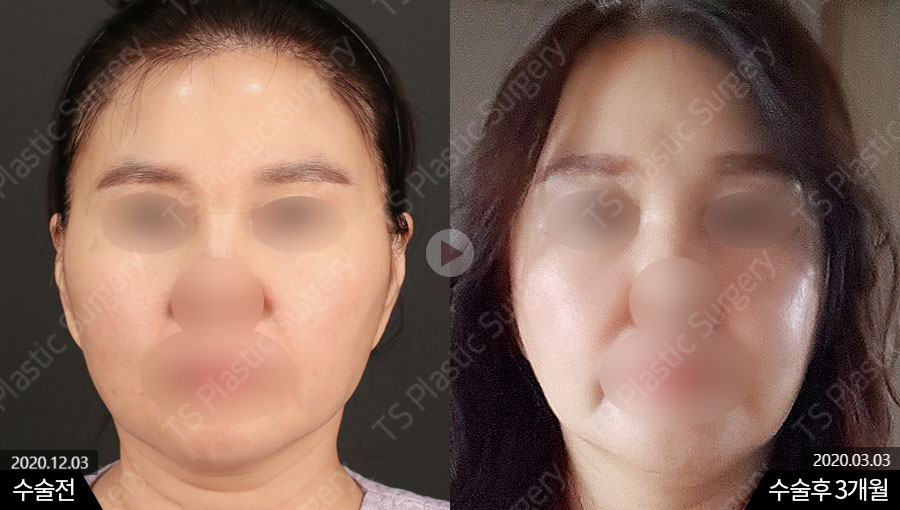
Zygomatic reduction surgery in progress (3 months after surgery)
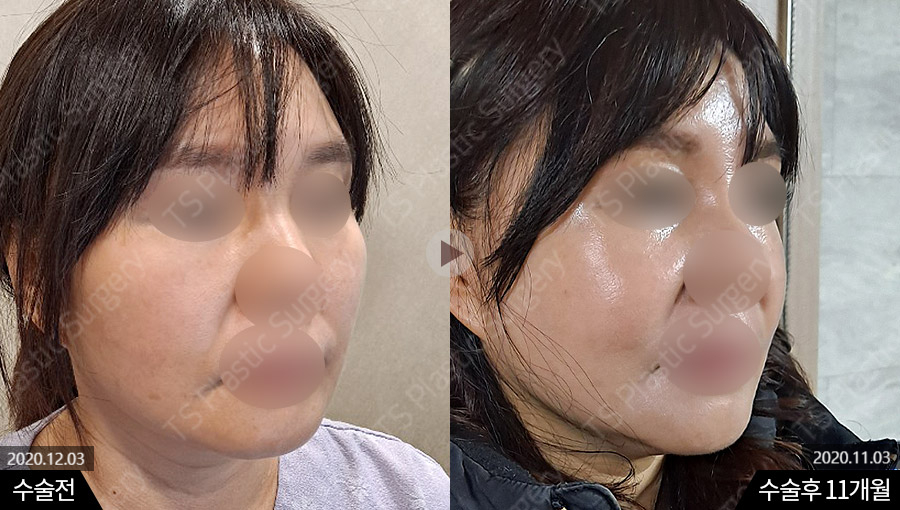
Zygomatic reduction surgery in progress (11 months after surgery)
A patient in their 50s underwent contouring surgery, and there was a case in which skin sagging after surgery was almost not noticeable. As such, this is something that can be sufficiently overcome depending on how the surgical method is applied.
This is exactly why the surgeon’s experience and know-how are important in facial contouring surgery.
That is because the degree of cheek sagging or skin sagging that may appear after contouring surgery can vary depending on the surgical method.
When customized surgery is performed based on sufficient clinical experience and advanced technique, it helps minimize discomfort after surgery.
Areas where there is a lot of concern about cheek sagging – zygomatic reduction
- Relationship between the MMP area and sagging
The main cause of sagging after contouring surgery is the process of separating the bone and skin.
In particular, the most prominent part of the cheekbone is called the 'MMP'. This MMP area is where the bone and soft tissue are attached most strongly.
If this area is separated during surgery, the chance of cheek sagging is relatively higher.
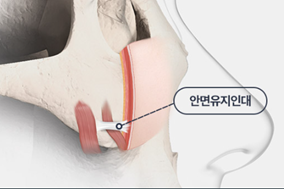
Source: TS Plastic Surgery website
Therefore, in zygomatic reduction surgery, it is very important to plan how to minimize or safely perform dissection of the MMP area.
When performed by experienced medical staff, unnecessary dissection can be reduced and soft tissue damage can be minimized, lowering the risk of cheek sagging after surgery.
- Double fixation
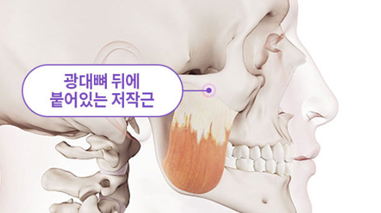
Source: TS Plastic Surgery website
The cheekbone is connected to the chewing muscles used when we eat.
If the cheekbone is not properly fixed after surgery, repeated movement of the chewing muscles can gradually cause the fixed cheekbone to separate, leading to nonunion. This also increases the likelihood of cheek sagging after surgery.
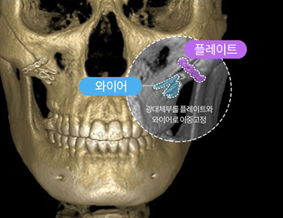
Source: TS Plastic Surgery website
For that reason, secure fixation is essential in zygomatic reduction surgery above all else,
and by using a 'double fixation' method that combines wire and plate during surgery, the cheekbone is allowed to settle stably.
This helps keep the surgical area from separating even with movement of the chewing muscles, preventing nonunion or cheek sagging that may occur after surgery.
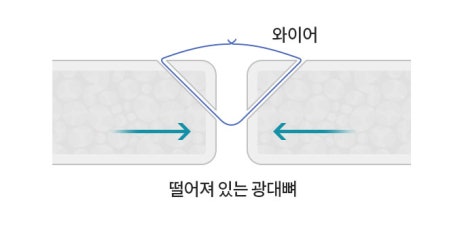
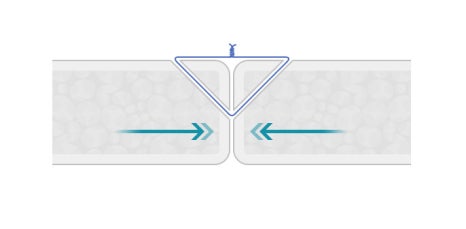
Source: TS Plastic Surgery website
Square jaw and skin sagging
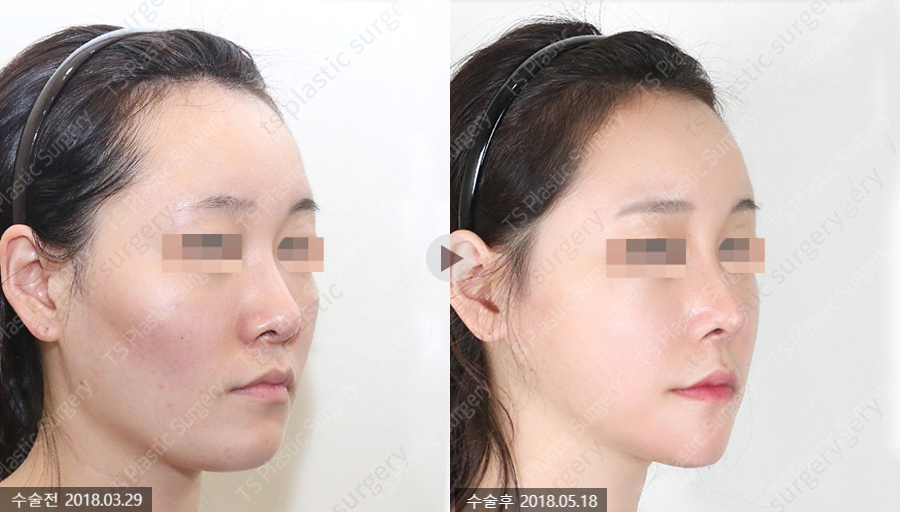
Nose surgery + square jaw + chin surgery and lifting procedure performed (2 months after surgery)
Square jaw surgery involves separating the skin and bone and removing bone, so skin sagging can occur as a result.
However, such skin sagging can be managed with simple procedures after surgery, and it can be improved through methods such as thread lifting or laser lifting. Therefore, skin sagging caused by square jaw surgery does not need to be a major concern.
Sagging after chin surgery
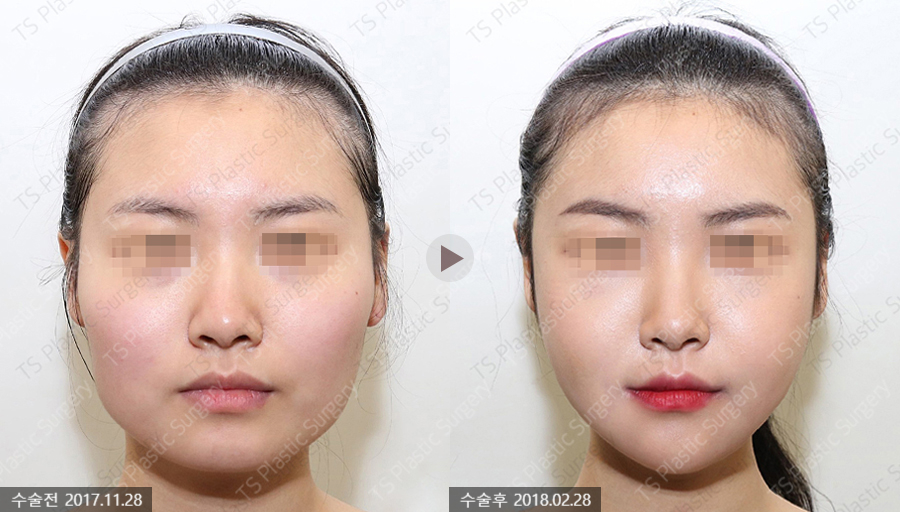
Square jaw surgery + zygomatic reduction surgery in progress (3 months after surgery)
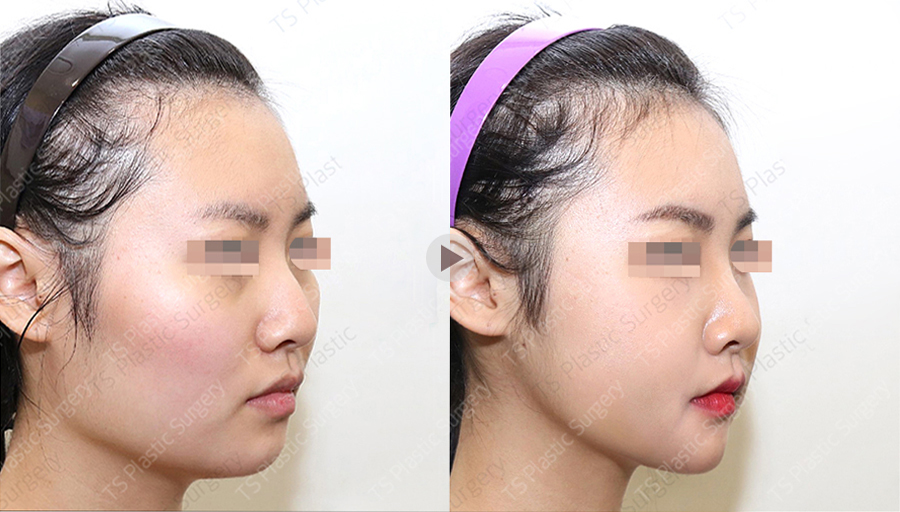
Square jaw surgery + zygomatic reduction surgery in progress (3 months after surgery)
When bone volume is reduced through chin surgery, the soft tissue above it, such as muscle or fat, remains.
As this soft tissue sags downward, skin sagging may appear.
To prevent this kind of sagging, if there is a large amount of remaining muscle during surgery, the periosteum is pulled and fixed; if there is a lot of fat, liposuction is performed as well. In addition, if there is concern about sagging because a lot of skin remains, it can be improved through lifting procedures.
Because these points are fully considered during the surgical process, there is no need to worry excessively.
Facial contouring surgery is a procedure with major changes, so many people are interested in it, but at the same time they are also concerned about side effects.
In the past, there were cases where people considered even a facelift after cheek surgery due to cheek sagging, but now, as surgical methods have advanced, these issues can be sufficiently overcome.
In particular, the fat or skin sagging caused by square jaw or chin surgery is relatively minor compared with the cheek sagging that appeared after cheek surgery in the past, and it can be improved through procedures.
The more bone is reduced in contouring surgery, the greater the amount of remaining soft tissue, which can increase the likelihood of sagging.
However, because each person differs in skin elasticity and the condition of their soft tissue, sagging is not a major issue when skin elasticity is sufficient. Even if elasticity is somewhat lacking, surgery is performed with a strategy that takes this into account and minimizes tissue damage.
In the end, a careful preoperative diagnosis and an appropriate surgical plan can reduce the possibility of side effects such as sagging and lead to more satisfying facial contouring surgery results.
※ Depending on the individual, side effects such as inflammation, bleeding, and nerve damage may occur, so sufficient consultation with the medical staff before surgery is necessary.