Excessively protruding cheekbones can create contours in the face and give the impression of a wider face. Cheekbone reduction surgery is performed to reduce protruding cheekbones while considering facial balance. It maintains the volume of the front cheekbones while moving the side cheekbones at a 45-degree angle, helping create a more natural and softer facial shape from the front.
Cases Effective for Cheekbone Reduction Surgery
- When the cheekbones appear much more prominent than the temples and jaw
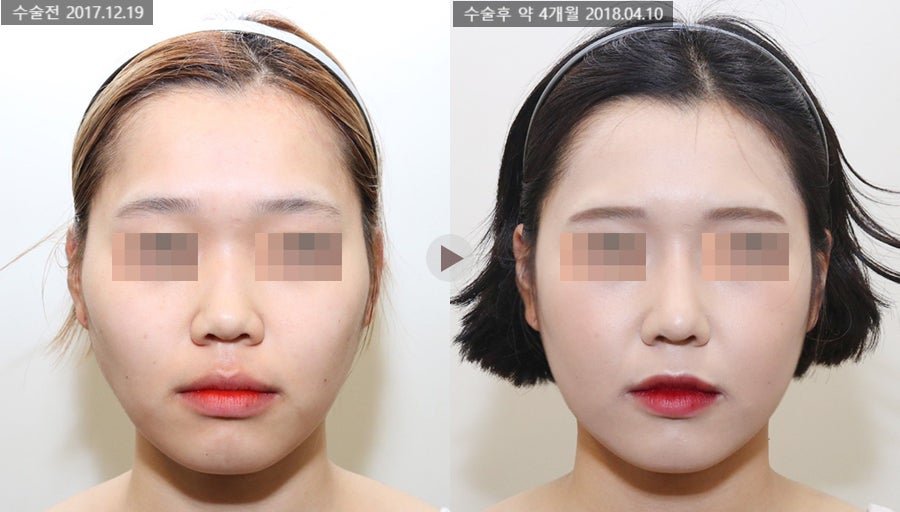
Eye surgery, nose surgery, cheekbone reduction surgery performed
In this patient’s case, when viewed from the front, the cheekbones appear relatively more protruding than the temples and jaw, which can make the face look uneven. In such cases, surgery can help change the impression from the front, and after surgery, the face may appear softer and smoother.
- When the cheekbones protrude from a 45-degree angle
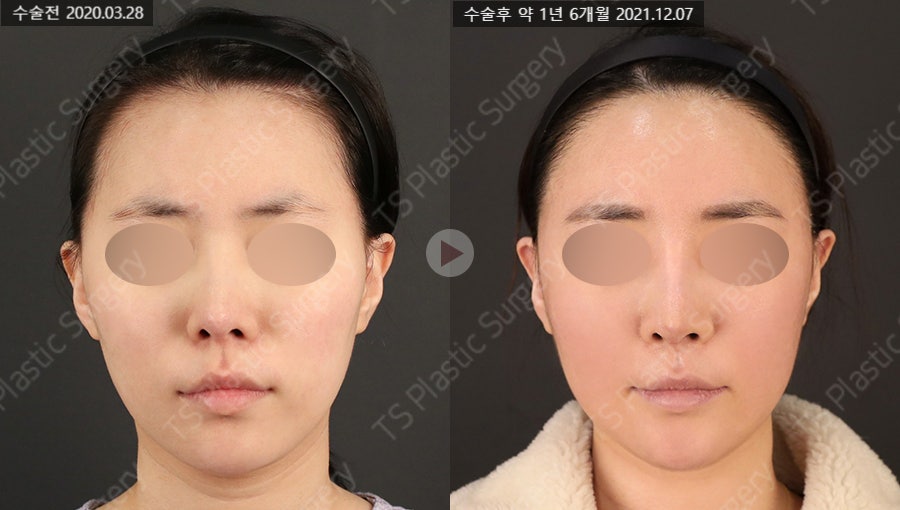
Eye surgery, nose surgery, cheekbone reduction, hair transplant surgery performed
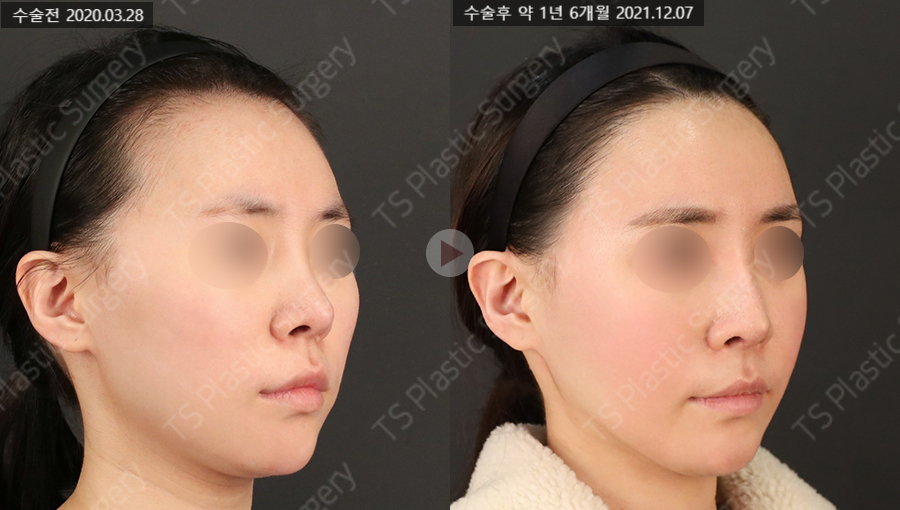
Eye surgery, nose surgery, cheekbone reduction, hair transplant surgery performed
This patient does not show prominent cheekbone protrusion from the front, but from a 45-degree angle, the cheekbones appear relatively prominent. When the cheekbones are more developed in this direction, the overall impression may seem somewhat strong or sharp. Surgery may help create a softer, more refined impression, and satisfaction after surgery may be high.
When people talk about facial contouring surgery, they usually think of the so-called three contouring procedures: square jaw surgery, chin surgery, and cheekbone reduction surgery.
However, even if all three procedures are not performed,
depending on the individual’s facial shape, cheekbone reduction surgery alone may be enough to achieve noticeable improvement.
Important Fixation During Cheekbone Reduction Surgery
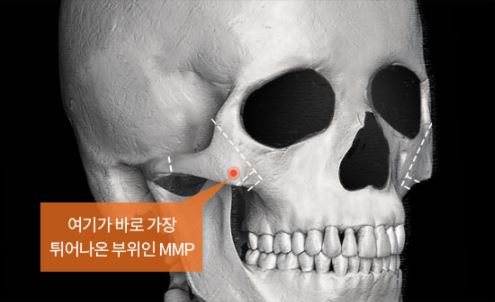
Source: TS Plastic Surgery website
Cheekbone reduction surgery is a procedure in which the cheekbone arch is cut as shown in the image and then fixed in the correct position. If the fixation is not accurate and secure, complications such as nonunion or sagging cheeks can occur, so fixation is one of the most important factors in cheekbone reduction surgery.
There are methods that do not emphasize fixation in order to reduce surgery time or speed up recovery, but such methods may make it difficult to expect sufficient improvement and may carry a relatively higher risk of nonunion, so caution is needed.
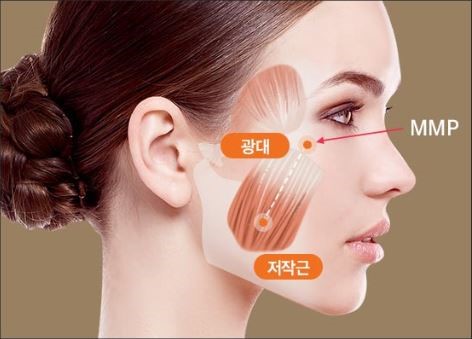
Source: TS Plastic Surgery website
As shown in the figure, strong muscles called the masseter muscles are attached to the cheekbones, and these muscles are mainly used when chewing food. If the cut cheekbones are not properly fixed during cheekbone reduction surgery, the force from movements such as chewing and speaking can pull the cheekbones downward. Repeated force of this kind can gradually move the cheekbones downward, creating a gap between the bones and causing nonunion.
Nonunion
If nonunion occurs, symptoms such as clicking sounds in the jaw joint, stiffness, or a tingling sensation may appear. In addition, as the cheekbones that did not fuse properly and the surrounding tissue gradually sag, cheek sagging may occur, and in severe cases, it can lead to a sunken or hollow appearance of the skin.
Double fixation using plates and wires for firm fixation
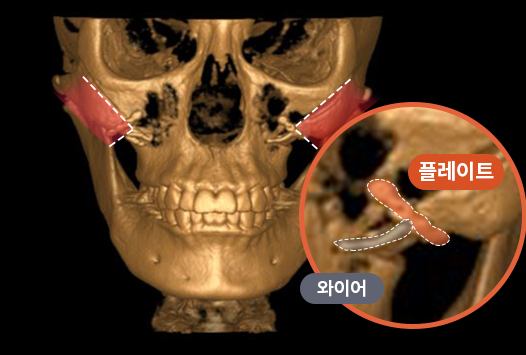
Source: TS Plastic Surgery website
To prevent nonunion, secure fixation during surgery is very important. It is not just about fixing the bone firmly; the key is to fix the cheekbones in the correct position. If the cheekbones are precisely fixed in place so they do not move downward even against the pulling force of the muscles, the risk of nonunion can be significantly reduced.
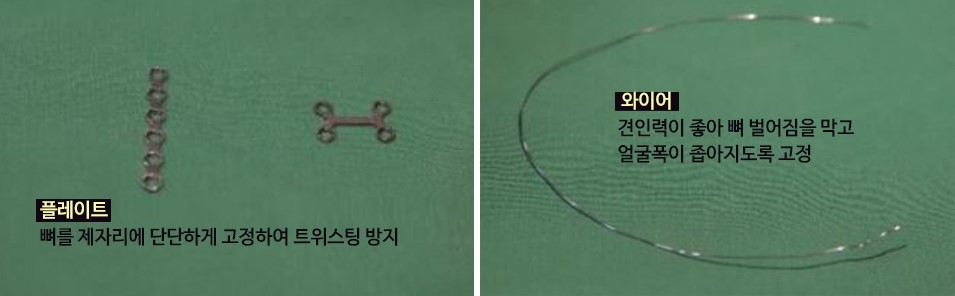
Source: TS Plastic Surgery website
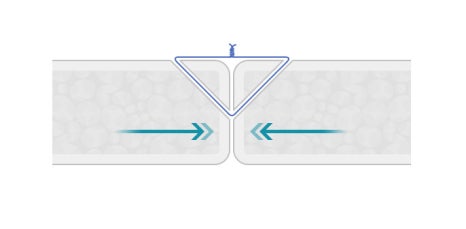
To fix the cheekbones more securely, a double fixation method using both plates and wires is applied.
The plate helps firmly secure the bone in place and prevent twisting of the bone,
and the wire, with its strong traction, helps prevent the bones from separating while also helping reduce the width of the face.
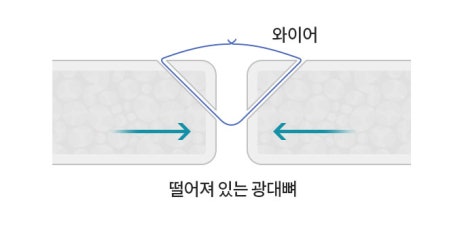
Source: TS Plastic Surgery website
This double fixation method not only lowers the risk of nonunion but also effectively prevents the bones from separating, helping enhance the effect of cheekbone reduction. In addition, because of the firm fixation, mouth opening and closing movements are naturally encouraged, which can also help speed up recovery.
Is it okay to keep the fixation device in the body?
The plate used in cheekbone reduction surgery is made of titanium, a material that is safe for the human body. It is widely used in general surgical procedures, so there is no need for major concern. Some people want the plate to not show on CT scans, but about one year after surgery, bone fusion is usually stable, so pin removal surgery can be considered after that.
In facial contouring surgery, and especially in cheekbone reduction surgery, the surgical method and fixation method may differ depending on the medical team. This is also related to the surgeon’s surgical experience and skill. Since the outcome, including safety and reduction effect, may vary depending on the method used, it is important to consult with a medical team that has extensive medical and anatomical knowledge and sufficient surgical experience before deciding on surgery.
Also, when choosing a hospital, we recommend carefully checking whether there is a systematic response plan for possible postoperative complications such as nonunion, and whether responsible management and care are provided after surgery, before making your decision.
※ Depending on the individual, complications such as inflammation, bleeding, and nerve injury may occur, so sufficient consultation with the medical team before surgery is necessary.