Rhinoplasty is one of the most commonly performed procedures, along with blepharoplasty. The nose is located at the center of the face, so changes in height or the angle of the tip can make the overall impression or atmosphere look different.
As rhinoplasty has become more popular, the number of revision cases has also increased. The main reason for revision is dissatisfaction with results that differ from the expected shape, but in some cases, revision may be needed due to functional problems such as nasal congestion or discomfort while breathing, or due to reactions such as inflammation or capsular contracture.
Side effects caused by inflammation or capsular contracture are not highly common, but if they are left untreated after symptoms appear, they can worsen. This may lead to changes in the shape of the nose or functional discomfort, so it is something that should be carefully considered before surgery.
The nose is an important organ that plays not only an aesthetic role but also functional roles such as breathing and smell. Therefore, it is most important to consider functional safety during surgery, and after surgery as well, management is needed to prevent inflammation or tissue reactions.
Contracture Symptoms
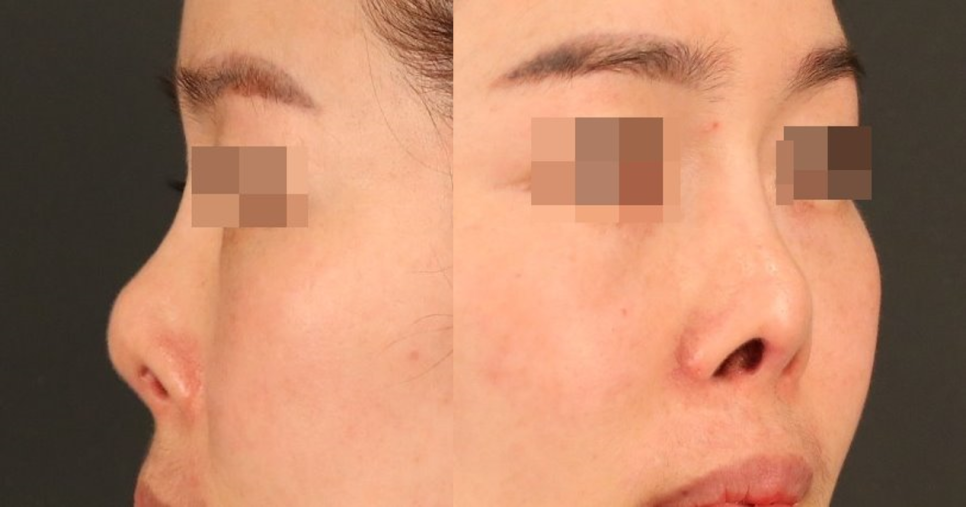
TS Plastic Surgery - Revision rhinoplasty for a short nose + contracture release before surgery 2020.10.27
Contracture symptoms are one of the reactions that can appear after rhinoplasty, and refer to the phenomenon in which the tissue at the surgical site contracts and pulls on the skin.
As the skin contracts, the nose may look shorter or the tip may be pulled upward, resulting in a deformity.
When contracture symptoms occur, you may feel a pulling or tightening sensation in the nose, and as the condition progresses, changes in nose shape along with more visible nostrils may appear. Also, if the nose becomes hard or movement is restricted, contracture may be suspected.
If these symptoms appear, it is important to receive the necessary care through an accurate diagnosis.
Causes of a Contracted Nose
The causes of a contracted nose are very diverse, and it usually develops not from a single factor but from a combination of several causes.
Among them, one of the main causes is recurrent inflammatory reactions after surgery.
Silicone implants used to raise the bridge of the nose are recognized as foreign substances when inserted into the body, which triggers an immune response. In this process, a thin layer forms around the silicone, called a 'capsule'. The capsule itself is part of a normal immune response and naturally appears as the implant settles into the body.
However, if the implant becomes infected or if a person has an allergic reaction due to individual constitutional factors, persistent inflammation can occur, and this repeated inflammation can lead to contracture symptoms.
Ideally, the capsule should form stably with a certain thickness and firmness, but this process varies depending on an individual's immune response and is difficult to fully control through surgery.
During surgery, to minimize these risk factors, implants are thoroughly sterilized and disinfected before use, and emphasis is placed on cleanliness, including strict prevention of external contamination during the operation. Maintaining the cleanliness of the operating room is also an important management factor.
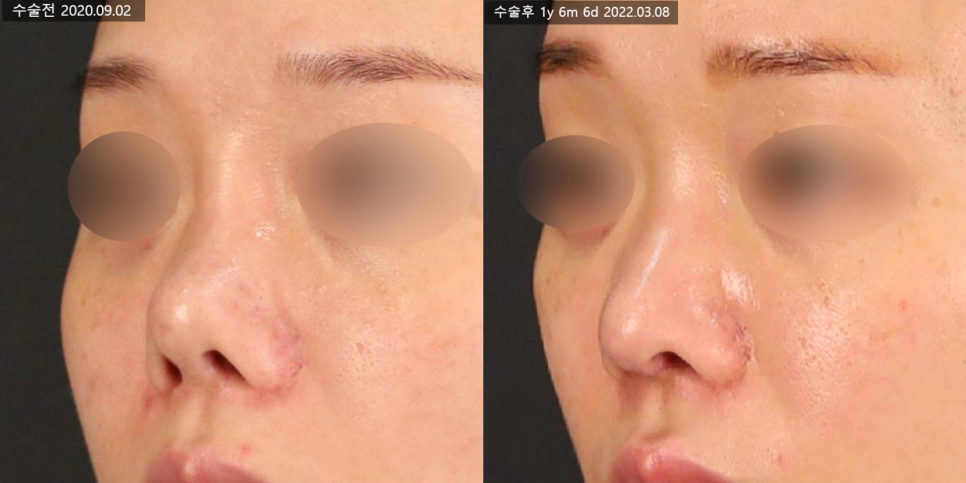
TS Plastic Surgery - Revision rhinoplasty for a short nose + contracture release
Revision Surgery for a Contracted Nose
If a contracted nose has occurred in the early stage due to inflammation, the first option considered is to reduce the inflammation through medication.
If the inflammation subsides with medication and the contracture no longer progresses, it may be possible to manage the condition without surgery.
However, if contracture has already progressed and the tissue has been damaged, natural recovery is difficult, so surgical treatment is necessary.
A contracted nose is a condition in which the tissue has been damaged and deformed, so the surgical difficulty is relatively high. Therefore, softening the hardened tissue as much as possible before surgery can have a positive effect on the outcome.
The inside of a contracted nose contains thickened scar tissue (capsule), and the first step is to remove the silicone implant and sufficiently release the adherent scar tissue. In addition, a step that adequately stretches the contracted skin and soft tissue is important.
Because these processes require skilled technique and surgical expertise, choosing an experienced medical team may help achieve a more satisfactory result.
In particular, for revision surgery for a contracted nose, the use of autologous tissue such as ear cartilage, rib cartilage, or autologous dermis is preferred over artificial implants. Autologous tissue adapts well within the body and may help relatively reduce the risk of inflammation or contracture.
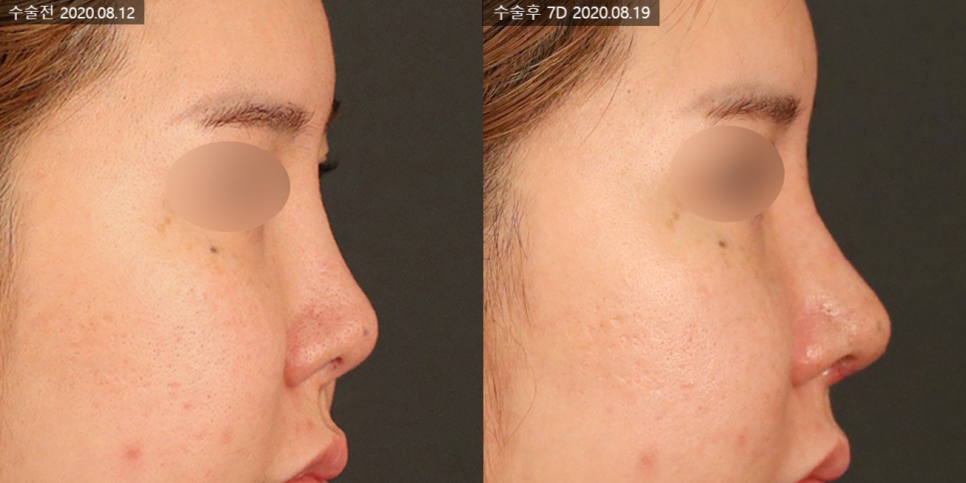
TS Plastic Surgery - Revision rhinoplasty for a short nose + contracture release
Revision Rhinoplasty Without Implants
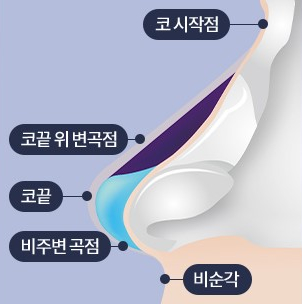
Source: TS Plastic Surgery website
In cases of revision surgery due to a contracted nose, many patients have already had experience using septal cartilage or ear cartilage, and the internal tissue may also be damaged due to inflammation. In such cases, cadaveric rib cartilage or autologous rib cartilage may be used as needed when planning surgery.
Many patients undergoing revision surgery for a contracted nose have previously experienced inflammation or contracture caused by implants, so some prefer implant-free surgery.
However, there are still cases where the method using implants is chosen, and revision surgery for a contracted nose using implants is also possible. Therefore, it is important to determine the most suitable method for yourself through sufficient consultation and examination before surgery.
When choosing a surgical method, it is helpful to comprehensively consider the current tissue condition, available materials, and the expected results through detailed consultation with the medical team.
※ Depending on the individual, side effects such as inflammation, bleeding, and nerve damage may occur, so sufficient consultation with the medical team is necessary before surgery.