When considering eye plastic surgery, it is necessary to make a comprehensive diagnosis based on several factors in order to understand the patient’s eye condition. It is important to understand the double eyelid line the patient wants or the areas they hope to improve, but a thorough analysis of the eye’s structural characteristics is even more helpful for a more careful surgical plan.
To do this, we carefully review various factors during consultation, including the strength of eyelid opening, skin thickness, the tissues around the eyelids such as muscles and fat, the skeletal structure of the brow bone and cheekbone, and whether there is asymmetry. Through this diagnostic process, we establish a surgical plan tailored more closely to each individual’s characteristics.
The “sunken eyes” introduced today are also one of the eye shapes a patient may have, and they are cases that require more consideration during surgery. Let’s take a look at why sunken eyes require caution in surgery and what methods can be considered during the procedure. Sunken eyes, as mentioned here, are one of the characteristics a patient may have, and they are sometimes classified as a more difficult case for surgery. Let’s find out why that is and how the surgery can be done well.
Characteristics of Sunken Eyes
Sunken eyes are the opposite of protruding eyes, with the eyeball positioned inward, and several characteristic features can be observed.
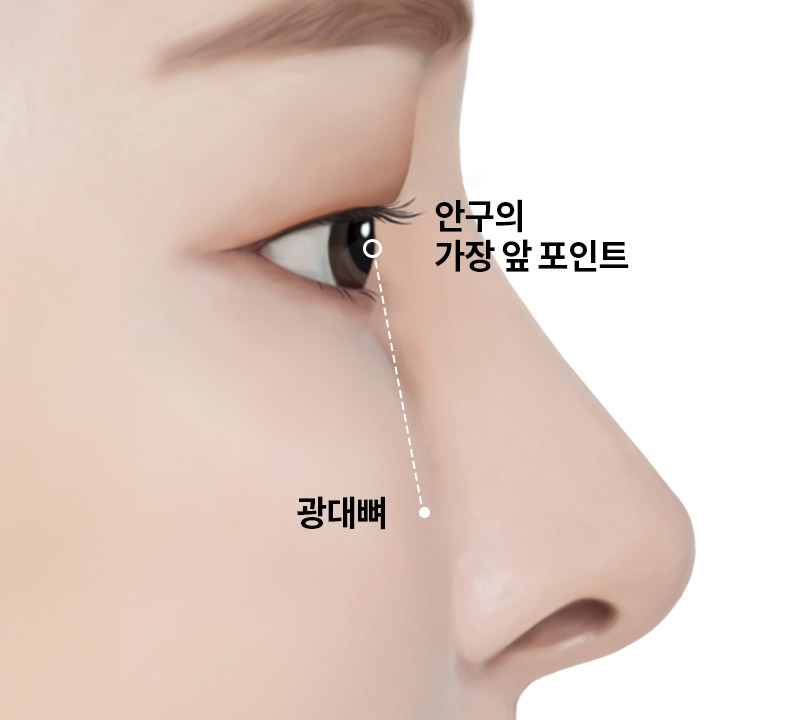
Source: TS Plastic Surgery website
- Puffy-looking area above the eyes
The space between the brow bone and the eyes is often relatively narrow, and tissues such as skin, muscle, and fat gather in this area, which can make the area above the eyes look puffy. In this case, the cause of the puffiness is not only fat; the degree of protrusion of the orbital bone and the structural characteristics of the soft tissues often act together. Therefore, in such cases, improvement may be limited if only fat is removed on its own, so a more precise diagnosis and surgical plan are needed.
- The pupils may appear relatively covered
If the soft tissue located between the brow and the eyes is well developed and has volume, the upper part of the pupil may appear shaded. This can create the impression that less of the pupil is exposed, but it is a different form from insufficient eyelid-opening muscle function. In some cases, the eyelid may also press on the eyelashes, so careful evaluation is necessary.
- The eye shape may appear relatively small
If the eyeball is set inward, not only the vertical length of the eye but also the horizontal length may appear relatively short. The appropriate horizontal length of the eye is generally assessed at about one-fifth of the face width, but if a lot of the area is covered by skin due to the sunken eye structure, the eye shape may appear relatively narrow. In such cases, diagnosis should be made while considering the tissues around the eyes and the skeletal structure together.
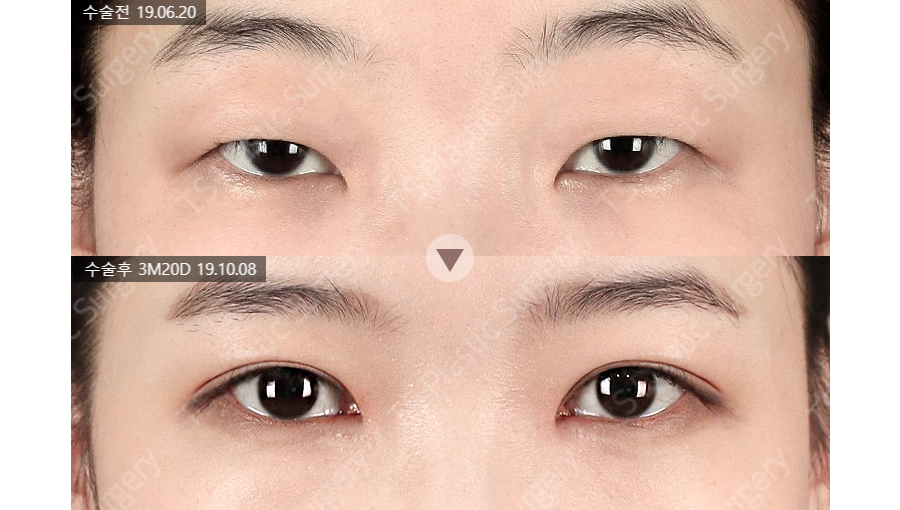
TS Plastic Surgery - Incisional double eyelid surgery + incisional eyelid correction + epicanthoplasty performed
Eye Plastic Surgery for Sunken Eyes
- A natural in-out line rather than an inline or outline
In the case of sunken eyes, the actual surgical result tends to have a lower line height than the planned double eyelid line. This is because the line often decreases by about 30–40% compared with the surgical plan due to the influence of surrounding tissues such as the skin and brows. Therefore, it is helpful to set the line slightly higher from the beginning.
However, if the line is raised too much, the result may look unnatural, like a so-called “sausage” double eyelid. In particular, sunken eyes often have a short distance between the brow and the eye, so an outline shape is unsuitable in most cases. On the other hand, if the line is set too low and the surgery is performed as an inline, it may change over time into a hidden double eyelid.
For these reasons, a natural in-out line is often chosen in surgery for sunken eyes. An in-out line can take both the depth of the eye and a natural appearance into account, allowing for a smooth eye shape even after surgery.
- Incisional double eyelid surgery is more advantageous than the non-incisional method (buried suture)
In cases of sunken eyes, when the double eyelid line is created during consultation, it often does not form well or quickly loosens. This is because the tissue on the upper eyelid is thick, and if the non-incisional method is used, there is a high chance that the double eyelid will loosen over time.
Therefore, incisional double eyelid surgery is more advantageous. By removing unnecessary fat or skin appropriately through the incision method, a clearer and more stable double eyelid line can be created. However, caution is needed because excessive removal of skin or soft tissue can lead to unnatural results, such as inability to close the eyes properly or a double eyelid line that is too high.
In the end, this is a surgery in which the surgeon’s experience and delicacy are important, as they must fully understand the characteristics of sunken eyes and judge the appropriate extent of resection.
- Combined procedures such as canthoplasty or eyelid correction when needed
Sunken eyes can make the pupil appear covered, which may make the vertical length of the eye look shorter. In such cases, eyelid correction can be performed together to help open the eyes more clearly. On the other hand, if the horizontal length of the eye is short, canthoplasty may be considered to widen the eye shape. However, in the case of canthoplasty, it is necessary to carefully confirm in advance whether there is enough space to perform it at the inner and outer corners of the eyes. Eyelid correction should also be planned carefully so that overcorrection does not occur depending on the individual’s eye condition.
Therefore, whether to perform these combined procedures should be decided after sufficient review through preoperative diagnosis, as this can lead to more satisfactory results.
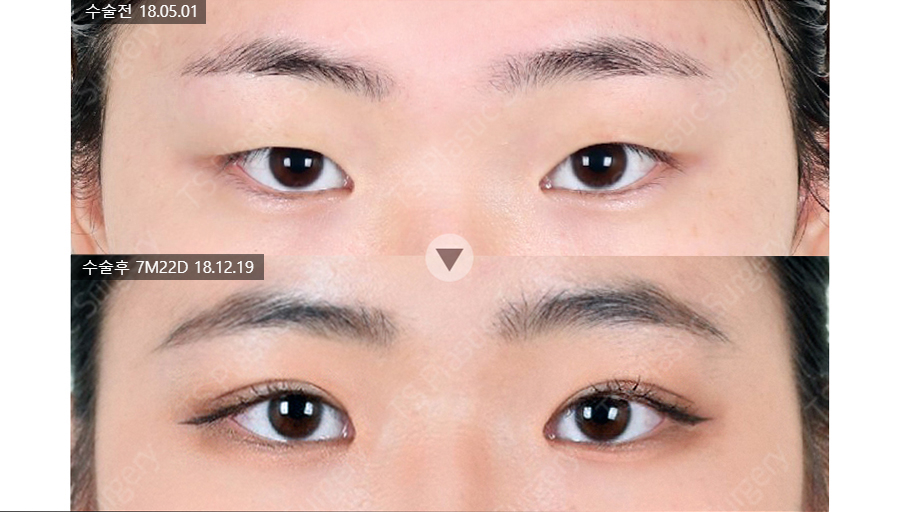
TS Plastic Surgery - Incisional double eyelid surgery + incisional eyelid correction performed
Sunken eyes are generally somewhat more difficult than protruding eyes when it comes to creating attractive eye shapes. However, if the structural characteristics of the eyes are fully understood and the surgical method is appropriately applied to the individual, the desired result can be achieved.
One important point to note is that even in one person, the degree of protrusion and tissue condition may differ between the two eyes. Even small differences between the left and right eyes can affect the postoperative result, so accurate preoperative diagnosis and a systematic surgical plan are essential.
Therefore, correction of sunken eyes can be said to depend on experienced medical staff carefully analyzing each individual’s eye condition and applying the appropriate surgical method.
※ Depending on the individual, side effects such as inflammation, bleeding, and nerve damage may occur, so sufficient consultation with medical staff before surgery is necessary.