When many people think of an ideal nose, they imagine a “high nose,”
but height alone does not complete the overall image.
This is because the length, angle, and shape of the nose change the harmony of the entire face.
A low or short nose can create a youthful impression, but it may feel less satisfying when you want a more refined look.
When the line is not smooth, as in the case of a hump nose or a bulbous nose,
many people want to improve the nose line.
However, some are unable to decide easily because they are uncomfortable with silicone implants or worried about side effects.

Source: TS Plastic Surgery website
Implants commonly used in rhinoplasty, such as silicone,
can cause a lot of concern because of the possibility of side effects.
Non-implant rhinoplasty does not use implants,
so it can reduce concerns about side effects such as inflammation or a foreign-body sensation.
It is gaining more attention recently as a way to naturally improve the nose line using the patient’s own tissue.
What is non-implant rhinoplasty?
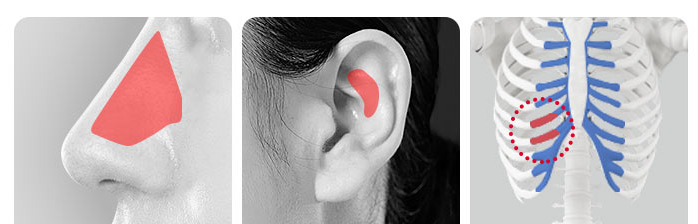
Source: TS Plastic Surgery website
Non-implant rhinoplasty is a surgery performed using the patient’s own tissue,
such as septal cartilage or ear cartilage.
Even without using an implant, it is possible to design the desired nose line,
such as a straight line, a soft straight line, or a semi-curved line.
Because it uses the patient’s own tissue, a more natural and safer result can be expected.
In what cases is it effective?
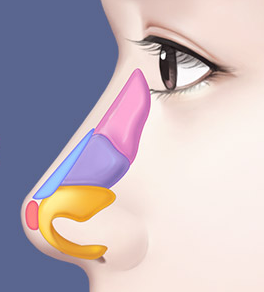
Source: TS Plastic Surgery website
When the bridge is present but the tip is drooping, or when there is a hump nose,
non-implant rhinoplasty can provide a greater level of improvement.
On the other hand, if the bridge is so low that it is barely noticeable,
surgery may be difficult, so consultation with medical staff is essential.
Because each person’s nasal structure and the amount of
autologous cartilage available differ, a detailed consultation and diagnosis are necessary.
Advantages of non-implant rhinoplasty
Source: TS Plastic Surgery website
Non-implant rhinoplasty does not use implants,
so the risk of complications such as visibility through the skin or contracture is relatively low.
It can also produce natural-looking results, which may reduce psychological 부담.
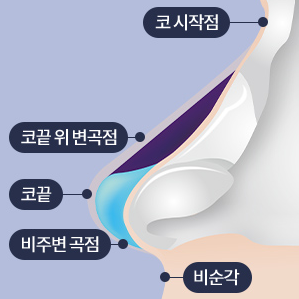
During surgery, the angles are carefully adjusted from the starting point of the nose to the tip, the columellar break point, and the nasolabial angle,
with the goal of improving the overall harmony of the face.
Non-implant rhinoplasty: why consultation is important
Because each person’s nasal condition and the scope of possible improvement are different,
a thorough consultation with medical staff is absolutely necessary.
To achieve a safe and satisfactory result, you must confirm through an accurate diagnosis whether this is the most suitable method for you.
We recommend discussing thoroughly through consultation whether surgery is possible and which method is appropriate.
If you have been hesitant about rhinoplasty because of concerns about implants,
non-implant rhinoplasty may be one option.
Since accurately understanding your nasal condition and the potential for improvement comes first,
please make your decision carefully after 충분한 consultation.
※ Depending on the individual, side effects such as inflammation, bleeding, and nerve damage may occur, so sufficient consultation with medical staff before surgery is necessary.
This is an example image provided to help understanding.