People have different appearances, and each person gives off a different atmosphere or impression.
Facial features are an important factor in determining one’s overall image, and facial shape also plays a role in shaping that impression.
Those who recognize this importance may already be managing their facial shape in various ways.
There are several methods for refining facial shape, such as manual therapy and massage,
but one drawback is that it can be difficult to see a clear difference.
For those who worry about their facial shape because of prominent cheekbones or a broad jaw, cheekbone reduction and facial contouring surgery may be worth considering.
However, because it is surgery that deals with bone, many people hesitate out of concern about side effects from cheekbone reduction.
Facial contouring surgery is broadly divided into three areas: the square jaw, chin tip, and cheekbones.
Among them, let’s take a look at cheekbone surgery, which often leads to sagging cheeks, as well as related side effects of cheekbone reduction and various other issues.
Side effects that may occur during cheekbone reduction surgery
Source: TS Plastic Surgery website
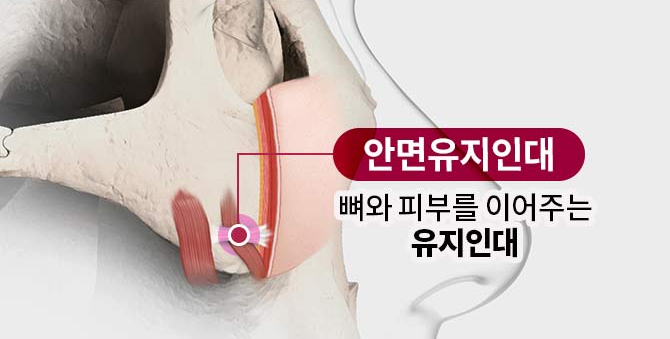
After cheekbone reduction surgery, nonunion can occur, where the cut bone does not properly heal together.
This may lead to visible side effects such as sagging cheeks and deeper nasolabial folds.
In addition, functional problems may occur, such as the cheekbone feeling unstable or making a sound.
However, not all cheekbone surgery patients experience these symptoms,
and depending on the surgical method, the likelihood of side effects and the degree of cheek sagging may differ.
Why the surgical method and the medical team’s know-how matter
Source: TS Plastic Surgery website
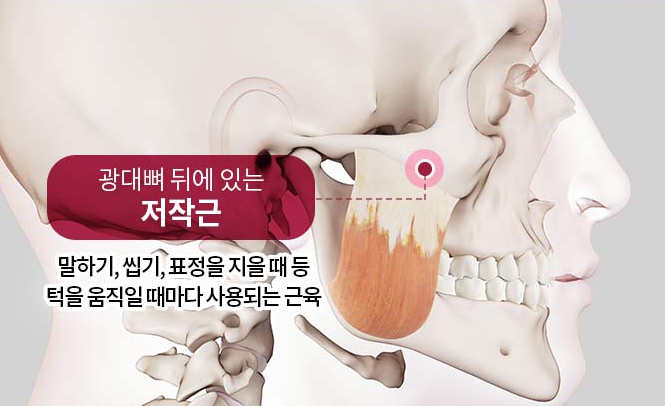
In cheekbone reduction and facial contouring surgery, the surgical method is important, and meeting an experienced medical team is even more important.
Because fixation methods and osteotomy methods differ by practitioner, it should be decided carefully through 충분한 consultation.
Some surgical methods use an L-shaped osteotomy technique, in which the procedure is performed without separating the skin and muscles during dissection inside the mouth.
By cutting the bone close to the eye area and folding it in along with the skin,
it is possible to maximize the cheekbone reduction effect while still achieving a natural result.
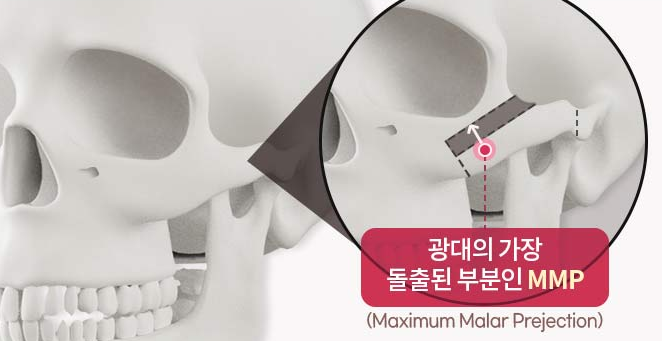
Natural reduction effect through MMP preservation
Source: TS Plastic Surgery website
Source: TS Plastic Surgery website
Because the rounded curve of the MMP area is not damaged during surgery,
it is possible to significantly reduce the cheekbone volume while maintaining a natural look.
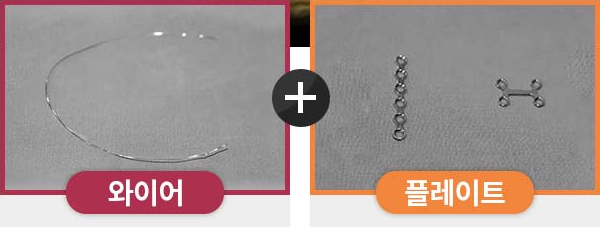
In addition, some methods use double fixation with plates that prevent the cheekbones from widening and wires that help bring the bones together,
which is intended to lower the chance of side effects.
Double fixation has the advantage of reducing the possibility of cheekbone reduction side effects,
but even with the same method, the outcome can vary depending on the medical team’s know-how,
so if you are considering facial contouring surgery, you should examine the details even more carefully.
Nerve protection and effective reduction during cheekbone reduction surgery
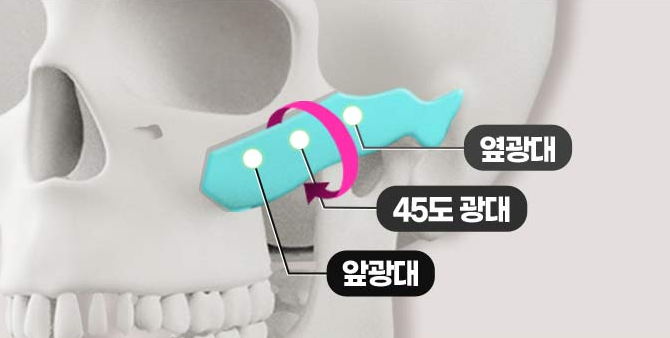
Source: TS Plastic Surgery website
In cheekbone reduction surgery, it is important to reduce volume without affecting the nerves.
The closer the 45-degree cheekbone is cut to the eye, the greater the amount of reduction,
so the key is to secure the amount of reduction by setting the starting point of the osteotomy higher.
Also, the L-shaped osteotomy method is a surgical approach that avoids the nerves while making a deep inward osteotomy,
and adjusts the angle to match the area of the front cheekbones.
Through this, the surgery can be performed at an appropriate angle according to the width of the cheekbones.
Why customized surgery for each person matters
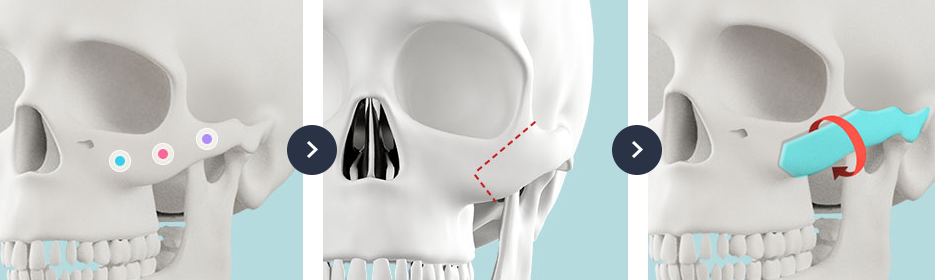
Source: TS Plastic Surgery website
Since the width of the cheekbones differs from person to person, the angle must be adjusted accordingly.
If the cheekbones are wide, the angle is adjusted inward to maximize the reduction effect,
but if they are not wide, balancing the 45-degree cheekbones with the front cheekbones is important.
Cheekbones are divided into the front cheekbone, 45-degree cheekbone, and side cheekbone, and because the angle adjusted for each person differs,
the medical team’s experience and know-how are very important.
Comparing surgical methods and making a careful choice is essential
Depending on whether the surgery is performed at an angle that does not affect the nerve line and whether fixation methods such as double fixation are applied,
the presence or absence of cheekbone reduction side effects may differ.
Therefore, it is recommended that you carefully compare the medical team’s experience and the surgical methods.
Because there are cases where functional problems occur after cheekbone reduction surgery or the results are insufficient, leading to revision surgery,
it is advisable to compare the medical team’s experience and review various surgical methods from the beginning.
※ Depending on the individual, side effects such as inflammation, bleeding, and nerve damage may occur, so sufficient consultation with the medical team before surgery is necessary.
Example image for understanding.