Zygoma reduction surgery is a procedure that improves facial contour by refining excessively prominent cheekbones.
If the cheekbones protrude significantly, the face may look broader or give off a stronger impression,
and this surgery can help balance the face by appropriately adjusting the cheekbones.
Because this surgery involves working with bone, sufficient preparation and consultation with a specialist are necessary
to minimize side effects.
This can help create a natural and harmonious facial contour.
Today, let’s look at the main features and precautions of zygoma reduction surgery.
Firm fixation with a double-fixation method
Source: TS Plastic Surgery website
One of the important parts of zygoma reduction surgery is the accurate fixation of the cheekbones.
After surgery, there may be cases where the cheekbones do not reattach properly in place, or fuse in the wrong position,
which are called nonunion and malunion.
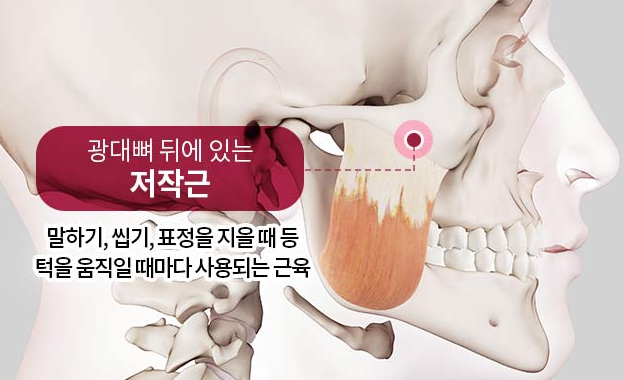
The reason fixation is important so that the osteotomized cheekbones can fuse properly is
that the cheekbones can be affected by the movement of the jaw muscles when speaking or chewing.
To prevent this, the cheekbones are fixed twice during surgery,
which helps prevent nonunion or malunion even with muscle movement and allows the surgery to be performed safely.
When surgery is performed in this way, more stable and natural results can be achieved.
Natural reduction effect through L-osteotomy
Source: TS Plastic Surgery website
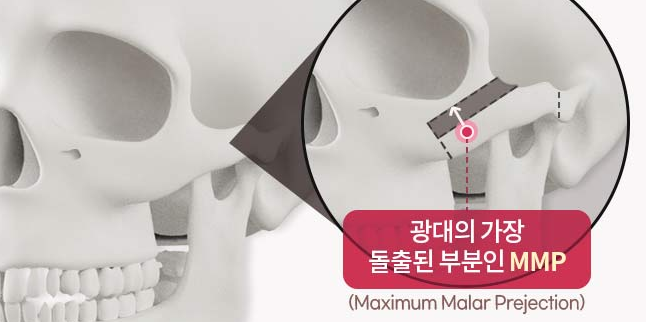
One of the structures that plays an important role in zygoma reduction surgery is the MMP point,
which is a retaining ligament that connects the skin, muscle, and bone in the midface area.
This ligament plays an important role in supporting facial shape and maintaining elasticity.
If the MMP retaining ligament is damaged during the process of cutting and moving the cheekbones,
the force supporting the facial tissue may weaken, which can cause cheek sagging after surgery.
Therefore, preserving the MMP retaining ligament during zygoma reduction surgery is very important for achieving natural results after surgery and preventing sagging.
By paying attention to preservation in this way, a more stable and natural facial contour can be maintained.
Advantages of the scalp incision method
Because the incision site is located inside the scalp after surgery, swelling and bruising are relatively reduced during recovery, allowing for quicker recovery.
Many patients can return to daily life in about a week.
Since the incision is made inside the scalp, no external scar is visible,
making this a favorable method for those who want natural-looking results.
Zygoma reduction surgery is an operation that works with bone, so a delicate approach that considers nerves, blood vessels, and retaining ligaments is necessary.
Through sufficient consultation with an experienced medical team, it is important to clearly understand the surgical process and results,
and to determine the optimal surgical method suited to each individual’s condition.
※ Depending on the individual, side effects such as inflammation, bleeding, and nerve damage may occur, so sufficient consultation with the medical team before surgery is necessary.
This is an example image provided to aid understanding.