Autologous costal cartilage is a patient’s own tissue, so the risk of side effects and inflammation is relatively low,
and it is known as a firm material that is effective for maintaining a defined nasal tip.
�
Because it can preserve the shape of the nasal tip for a long time without concern about inflammatory reactions or absorption,
more patients have recently been choosing autologous costal cartilage not only for revision rhinoplasty but also when considering their first nose surgery.
�
Today, let’s look at the characteristics of using autologous costal cartilage and the factors to consider.
�
Advantages of Autologous Costal Cartilage
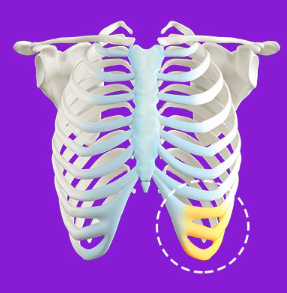
Autologous costal cartilage refers to cartilage harvested from one’s own ribs,
and rhinoplasty using autologous costal cartilage has several advantages, including long-term stability and natural-looking results.
�
Source: TS Plastic Surgery website
�
�
First, because autologous costal cartilage is the patient’s own tissue, the risk of rejection or infection is relatively low,
and it does not get absorbed or deformed over time, allowing the nose shape to be maintained stably.
It can produce natural-looking results, so the nose does not become unnaturally deformed over time.
�
Second, autologous costal cartilage provides an abundant amount of cartilage, making it useful for correcting problems that occurred in previous surgery,
and it is effective when replacing existing artificial materials.
It also integrates well with the existing nasal tissue, so over time it can settle into a more natural shape.
�
Third, autologous costal cartilage provides excellent durability, especially when serving as support for the nasal tip,
and it is often used as a material that can help achieve stable results in revision rhinoplasty.
Even when making precise adjustments to the shape of the nose or creating significant changes, autologous costal cartilage serves as a strong support structure,
and because its absorption rate is lower than that of other autologous cartilages such as ear cartilage, it helps maintain long-term volume.
How Autologous Costal Cartilage Is Harvested
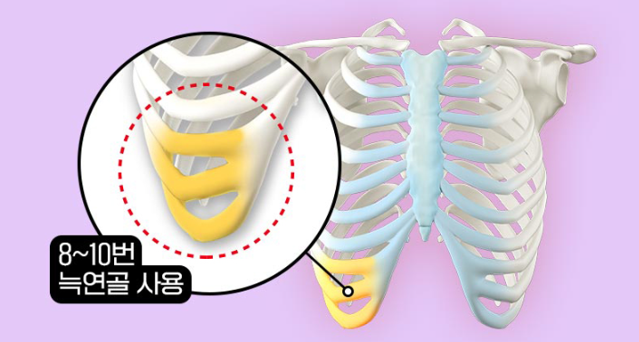
When using autologous costal cartilage, the area from which cartilage is usually harvested from the rib is
the 10th rib. This area has a sufficient amount of cartilage,
and its softness, combined with appropriate support, can help maintain a stable nose shape.
It is also commonly used because the scar after harvesting is in a location that is not easily noticeable.
�
Source: TS Plastic Surgery website
�
�
The harvesting process for autologous costal cartilage is a surgery that removes cartilage from the rib,
and it is performed very carefully so that nearby organs or tissues are not damaged.
�
To reduce the risk of pneumothorax, the 10th costal cartilage located on the lower part of the rib, farther from the lungs, is used.
Because the incision is made with enough space between the rib and the lungs,
the possibility of pneumothorax is very low.
Scar from Autologous Costal Cartilage Harvesting
When harvesting autologous costal cartilage, a minimal-incision method is used to reduce scarring
and to help the patient recover more quickly.
�
Through a small incision of about 2 cm, the required amount of cartilage can be safely harvested, reducing unnecessary tissue damage.
Because the incision is small, postoperative pain is less, recovery is faster, and the risk of infection or complications is also significantly lower.
When harvesting autologous costal cartilage, the procedure is performed very carefully so as not to damage important nerves and tissues near the ribs.
At a clinic with extensive experience, safe procedures and systematic care can
lead to natural-looking results.
�
�
※ Depending on the individual, side effects such as inflammation, bleeding, or nerve damage may occur, so sufficient consultation with the medical staff before surgery is necessary.
This is an example image provided to aid understanding.