Eye correction surgery is a very delicate and precise procedure, so to avoid overcorrection or unnatural results,
it is important to undergo it at a specialized clinic with extensive experience.
Because the eyes perform complex and important functions compared with other parts of the body, proper skill and experience are required.
That is why efforts are made to minimize side effects and achieve natural results after surgery.
Goals of Eye Correction Surgery
The goal of eye correction surgery is
to create the most natural and harmonious eye shape for each individual’s face.
The ideal eye shape may vary depending on each person’s features,
but when performing the procedure, factors such as the proportions and balance of the eyes, the amount of iris exposure, the double eyelid line, the outer corner of the eye and the eye contour line, symmetry, and naturalness
should be taken into consideration.
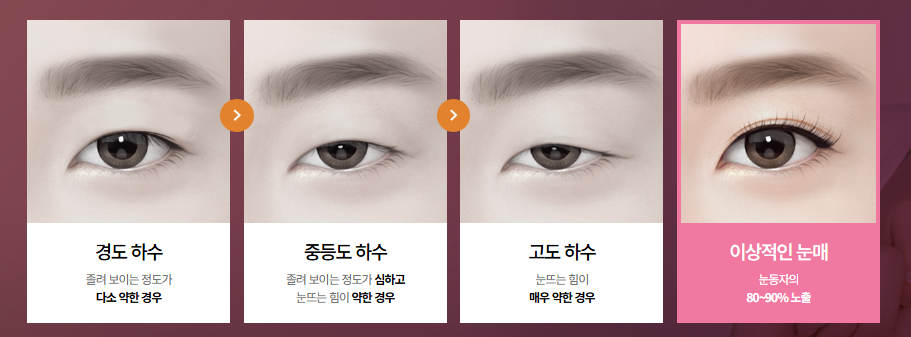 Source: TS Plastic Surgery website
Changes You Can Expect from Eye Correction Surgery
- Improvement in eye size and shape
Eye correction surgery can adjust the eyelids to improve the shape of the eyes,
creating a clearer and more refreshed impression.
As the shape of the eyes changes, the balance of the entire face can improve, and a more lively impression can be expected.
- Correction of eye asymmetry
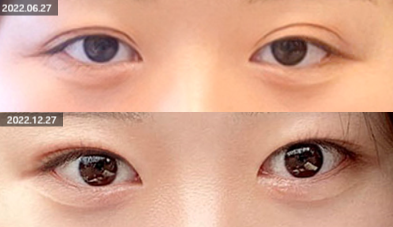 Revision eye surgery (incision) + incision eye correction, upper eye fat repositioning
Eye asymmetry is one of the issues many people worry about.
Through eye correction surgery, differences in the size or shape of the eyes on both sides can be adjusted,
allowing for a more symmetrical and natural eye shape.
In particular, it can help correct asymmetry of the eyelids.
- Adjustment of the double eyelid line
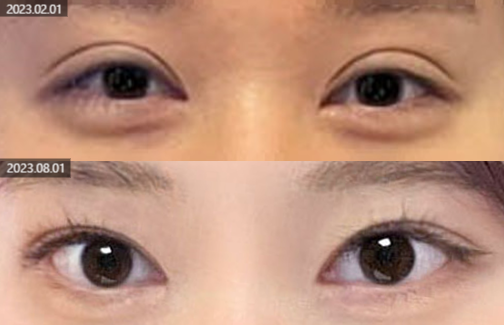 Revision eye surgery (incision) + incision eye correction, upper eye fat repositioning
Eye correction surgery can help adjust the shape or height of the double eyelids.
It forms a natural and balanced double eyelid line, and when the crease is shallow or thick,
it can be adjusted appropriately to make the eyes look cleaner and more defined.
As a result, the size of the eyes or a more distinctive eye shape can be improved.
Eye Correction Surgery Methods (Incision, Non-incision)
Eye correction surgery can be performed using either the incision method or the non-incision method,
and the most suitable method can be selected according to the patient’s eye condition and desired results.
Each method has its advantages and disadvantages, and the detailed surgical approach is adjusted according to each patient’s condition.
Each surgical method should be chosen appropriately based on the individual’s eye condition and desired results.
The surgery is performed while considering each patient’s eye size, shape, upper eyelid condition, and degree of eyelid sagging.
This individualized approach can help minimize side effects,
and can help form the most natural eye shape that suits the patient’s face.
Eye correction requires delicate technique,
and to prevent asymmetry, overcorrection, and unnatural results, experience with a wide range of cases is important.
Choosing an experienced medical team increases the likelihood of safer and more satisfactory results.
※ Depending on the individual, side effects such as inflammation, bleeding, and nerve damage may occur, so sufficient consultation with the medical staff before surgery is necessary.
This is an example image provided to help understanding.