When the double eyelid line is raised too high,
the upper eyelid can look swollen,
and the eyes may give an unnatural, sausage-like impression.
In many cases like this, simply removing the line or
adjusting the height of the double eyelid line alone makes it difficult to
restore a natural look.
At this point, one of the representative methods considered is
what is called the double-line technique.
What is the double-line technique?

Source: TS Plastic Surgery website
The double-line technique is a revision surgery method in which a new incision line is added below the existing double eyelid line to
reform the double eyelid line at the desired position.
Simply put, it can be understood as creating one more new path that was not used before
and redesigning the shape of the eyes.
Because it does not simply follow the existing incision line,
and instead creates a new fixation point,
it has the advantage of allowing correction to a new line.
In particular, it is used as an advanced corrective procedure that is effective when there is insufficient eyelid skin reserve or
when the structure is complex due to an existing incision scar.
Key points of the double-line technique
The key point of the double-line technique is
to first sufficiently release the adhesions in the inner eyelid caused by
previous surgery (a state in which tissues stick together or become hardened).
If the existing adhesions are not properly resolved,
even if a new double eyelid line is formed,
the lines may overlap or look unnatural, so
this step is more important than anything else.
After releasing the adhesions, a new line is set below the existing double eyelid line to recreate a natural and
stable double eyelid.
Difference between skin excision and the double-line technique
If there is enough eyelid skin, the existing double eyelid scar can be included using a skin excision method,
and the skin can be removed down to an appropriate double eyelid line position
to correct the line by lowering it.
However, in the case of double eyelid revision surgery, there is usually not enough extra skin left because of the previous surgery.
If the skin is not sufficient
and the excision method is not possible,
a double-line technique should be considered in which the eyelid tissues such as skin, muscle, and fat are dissected to
release the existing double eyelid adhesion and create a new line below it.
That is why, when planning sausage-eye correction or
revision surgery to lower the line,
the first step is to check the amount of extra eyelid skin
and choose the method that fits the current condition.
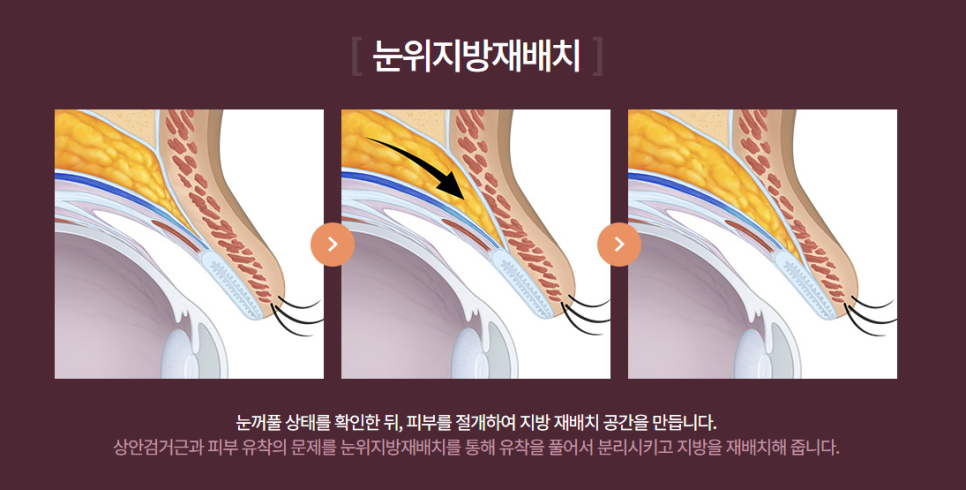
Scar and tissue thickness adjustment
Source: TS Plastic Surgery website
Revision surgery patients often come in with eyelids that are thick and congested,
or conversely, thin and tight.
In the double-line technique, it is necessary to appropriately remove scar tissue or
balance the eyelid thickness through upper eyelid fat repositioning surgery.
If not, the line may not become clearly defined,
or it may again look like sausage eyes.
Advantages and limitations of the double-line technique
Advantages
-
A new line can be created without using the existing line as is
-
Can be used even when there is insufficient skin
-
The range of line correction is relatively broad
Disadvantages
-
If skin damage is severe, scars may become more noticeable, so it should be performed together with a surgery that prevents scarring
-
It cannot be applied to every case, and the surgery is highly difficult
-
It must be performed by a specialist with extensive revision surgery experience
In closing
The double-line technique can be a meaningful solution for revision surgery patients who lack skin and tissue.
However, it is not a method that applies to all patients,
and it should be decided only after carefully checking the individual eye condition and tissue reserve.
Because each patient has different eye conditions and desired outcomes, it is important to determine the surgical method individually through consultation with a specialist
※ Depending on the individual, side effects such as inflammation, bleeding, and nerve damage may occur, so sufficient consultation with the medical staff is necessary before surgery.