The shape of the nose has a major effect on the overall impression of the face.
In particular, a hump nose refers to a nose with a protrusion in the middle part of the bridge,
making it look like an eagle’s beak,
and it can make a person look older than their actual age and create a stubborn impression,
so many patients consider correction.
However, not all hump noses are the same shape,
and osteotomy is not always necessary,
so a customized surgical plan tailored to each type is needed.
Main Types of Hump Nose
Hump noses can largely be divided into three types.
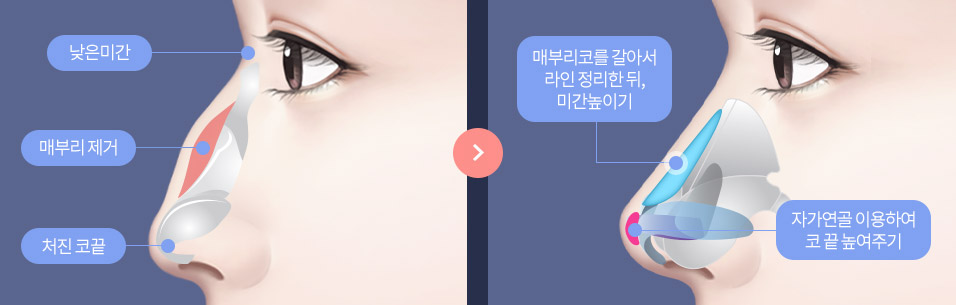
A hump nose with a low glabella and tip, but a prominent middle portion
Source: TS Plastic Surgery website
From the side view, the protrusion of the middle portion is pronounced,
and it is commonly called a “central protrusion” hump.
During correction, the protruding hump is filed down
to refine the line,
then implants are used to enhance the bridge and glabella,
and a drooping tip is lifted and shaped with cartilage
to create a more defined nose.
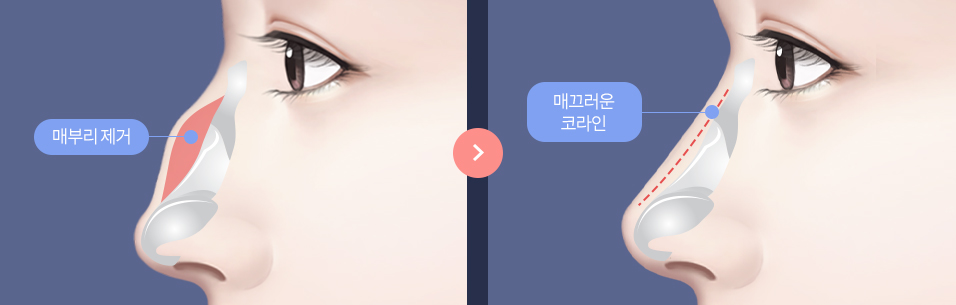
A hump nose where the entire nose is high and the central bone is also prominent
Source: TS Plastic Surgery website
This type is often seen in men
and often gives a strong impression.
In this case, along with hump removal,
the overall nasal line is designed into a straight line or a gentle curve
to harmonize with the facial contour.
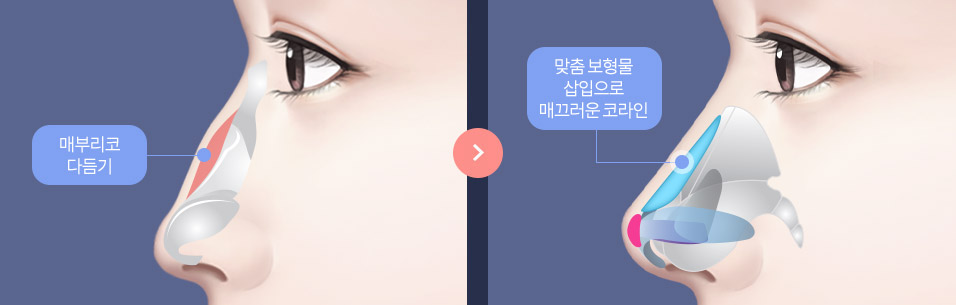
A case where the nose is overall low and the central bone is slightly protruding
Source: TS Plastic Surgery website
This is the type that women most commonly worry about,
and from the side it may not look smooth.
Rather than removing too much during correction,
the line is gently refined,
and depending on the need, implants or autologous tissue are used
to balance the overall shape.
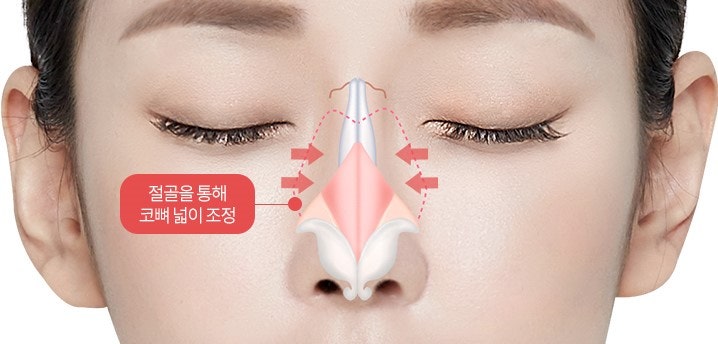
When Is Osteotomy Definitely Necessary?
Source: TS Plastic Surgery website
When correcting a hump nose, osteotomy often comes to mind,
but in fact, osteotomy is not essential for all hump nose surgeries.
Cases where osteotomy is recommended
① When the hump protrusion is large or the central nasal bone is wide,
making it difficult to adjust the line with simple filing alone
② When there is nasal bone asymmetry and the line needs to be balanced
③ When the overall nasal line needs to be readjusted while maintaining structural stability
Cases where osteotomy is optional or unnecessary
① When the hump protrusion is mild and the width of the nasal bone is moderate
② When a natural line can be achieved by precisely refining only the protruding hump area
In Closing
Correcting a hump nose is
not simply a surgery to remove the protrusion,
but a customized procedure that takes into account the overall nasal contour and facial proportions.
Osteotomy is not necessarily required for every patient,
and deciding whether it is needed after accurately evaluating the patient’s nasal structure and hump nose type
is the key to achieving the safest and most natural result.
Therefore, when planning hump nose surgery,
it is important to choose the surgical strategy that suits you best
through 충분한 consultation with a specialist.
※ Depending on the individual, side effects such as inflammation, bleeding, and nerve damage may occur, so sufficient consultation with medical staff before surgery is necessary.