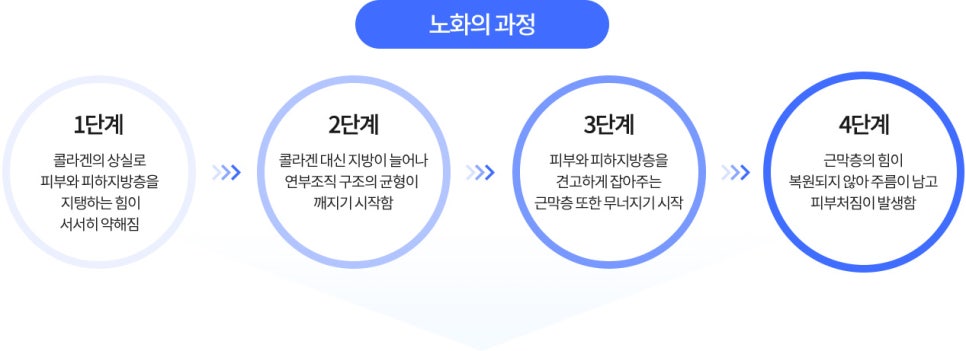
The appearance of sagging in the face does not happen simply because skin elasticity decreases.
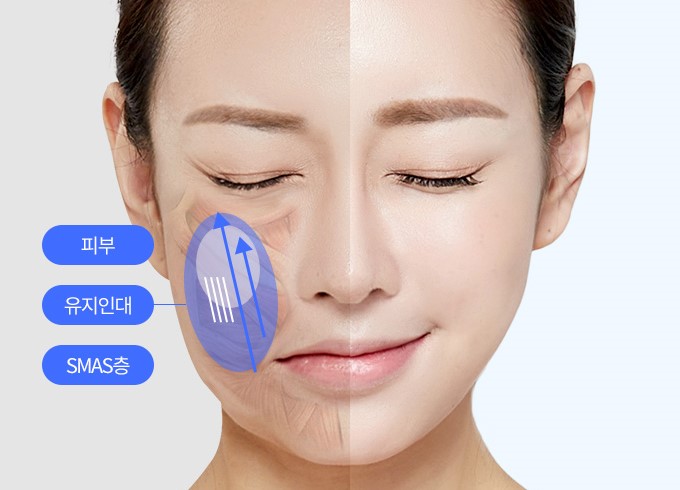
Beneath the skin is a thin membrane called the SMAS layer (the fascial layer), which serves as the face’s “support structure” by holding the facial muscles and skin together.
When we are young, this SMAS layer is firm, so the jawline looks defined. As we age, however, this layer sags downward, the jawline becomes less distinct, and nasolabial folds and sagging cheeks become more pronounced.
Why lifting only the skin does not last
Source: TS Plastic Surgery website
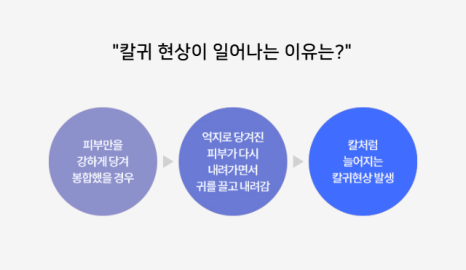
Procedures that pull only the skin visible from the outside can create a feeling of firmness in the short term, but if the supporting structure beneath the skin (the SMAS) remains unchanged, the effect is difficult to maintain for long.
That is why a facelift is a surgery that aims for structural change by directly lifting this SMAS layer.
Rather than forcefully pulling the outer skin, it restores the sagging structure to its original position, which makes the result much more natural and longer lasting.
That said, the same method is not suitable for everyone, and the approach should be tailored to each person’s condition.
This is how facelift surgery is performed

Source: TS Plastic Surgery website
The surgery is performed with an incision that runs from one ear to the other along the ear contour, allowing the operation to be done with a much shorter incision line.
The incision is dissected just above the SMAS layer, and to prevent pixie ear deformity, it is necessary to pull the skin and SMAS layer together to reduce skin tension.
In addition, to reduce distortion of the earlobe, the earlobe should be fixed to the fascia together with the skin when suturing.
Source: TS Plastic Surgery website
Also, during a facelift, if there are strong retaining ligaments firmly fixed around the cheekbone,
the sagging tissue in front of them is difficult to lift.
Therefore, to improve sagging in the midface and around the mouth, it is necessary to appropriately release the retaining ligaments in the cheekbone area.
The SMAS layer is close to the facial nerve, so the procedure should be performed by a specialist with delicate surgical experience.
If it is pulled too strongly, it can look artificial, and if the direction is off, facial expressions may appear unnatural, so this is a surgery that requires anatomical understanding and refined precision.
In closing
A facelift is not simply a surgery to remove wrinkles.
It is a process of restoring the facial structure that has collapsed over time back to its proper position.
If you are considering a facelift, it is necessary to determine the treatment direction that suits your individual condition through diagnosis and consultation.
※ Because side effects such as inflammation, bleeding, and nerve damage may occur depending on the individual, sufficient consultation with the medical staff is necessary before surgery.