A crooked nose is often thought of simply as a nose that leans to one side,
but in reality,
the approach can be completely different depending on where the deviation begins.
Even if the outside appearance looks similar,
the surgical method and even the stability of the result can vary greatly depending on
whether the problem starts in the bridge, the septum, or the tip.
What is a crooked nose?
A crooked nose refers to a nose whose bridge is bent or
a nose that is tilted to one side.
In many cases, patients with a crooked nose have not only an external deviation
but also a deviated septum,
so even if the line looks relatively straight,
a diagnosis of crooked nose is not uncommon due to internal structural imbalance.
Therefore, when correcting a crooked nose, both the cosmetic and functional aspects
must be improved at the same time.
Three representative types of crooked noses and
how to improve them
When the nasal bridge is bent
Source: TS Plastic Surgery website
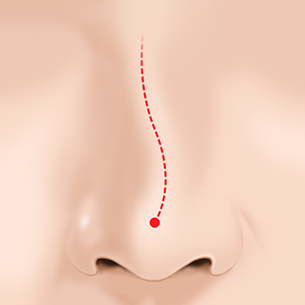
A bent nasal bridge is often caused by
congenital factors, trauma, asymmetry during growth,
or structural imbalance after a previous surgery,
such as incorrect insertion of an implant.
From the front, the bridge line may appear to bend into a C or S shape,
or it may give the impression of being偏 toward one side away from the facial midline.
How to improve it
Source: TS Plastic Surgery website
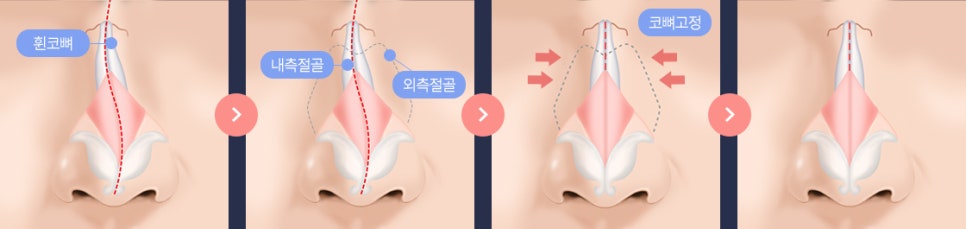
For this type, simply covering the line with an implant alone has limitations.
If an implant is placed over a bent structure, asymmetry may become visible again over time.
Therefore, the bent and protruding parts are removed,
the sides and central area are osteotomized,
and the structure is straightened and fixed in place.
If the implant position is the problem, the implant is repositioned or replaced
to straighten the nasal bridge.
When the septal cartilage is bent
Source: TS Plastic Surgery website
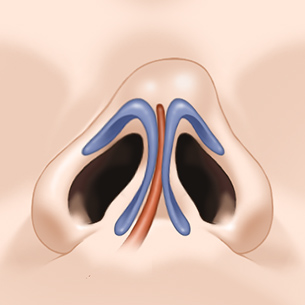
The septum is a key structure that supports the center of the nose,
and if this area is bent, the entire nose can appear to be pulled and tilted to one side.
This type often comes with not only cosmetic asymmetry
but also functional problems such as nasal congestion and breathing difficulty.
How to improve it
Source: TS Plastic Surgery website
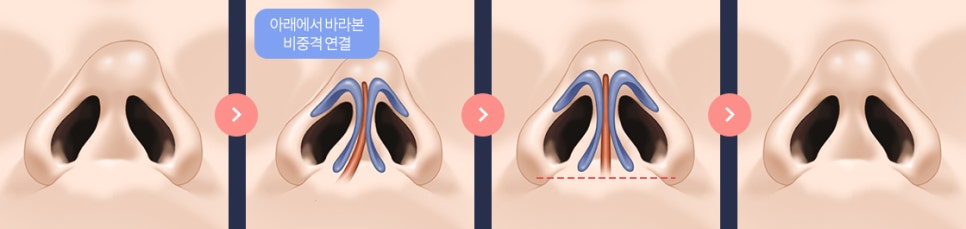
For a crooked nose caused by the septum, correcting only the outer line
is not enough to achieve a fundamental improvement.
Therefore, the bent septum is straightened,
and the nasal cartilage is also properly aligned and fixed.
A crooked nose caused by a deviated septum is a representative type that
must consider both aesthetics and function.
When the tip cartilage is asymmetric and bent
Source: TS Plastic Surgery website
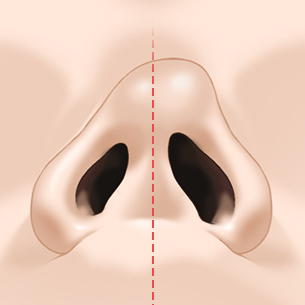
This type has a nasal bridge that looks relatively straight, but the tip leans to one side,
making the whole nose appear crooked.
From the front, the center of the nasal tip is often misaligned,
and the asymmetry often becomes more noticeable when smiling.
Among the three types, it is the most difficult to correct.
How to improve it
Source: TS Plastic Surgery website
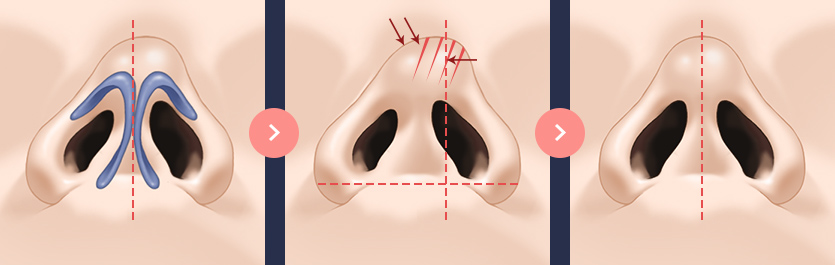
Because this is caused by curvature of the alar cartilage that forms the nostrils
and by overall soft tissue asymmetry,
it is a high-difficulty case.
The curvature of the tip is corrected through alar cartilage correction
and soft tissue grafting, such as dermal grafts.
Rather than excessive tip rotation, centering the nose in a way that matches facial proportions
leads to a more natural result.
Crooked nose correction: why can’t the same method be used?
Source: TS Plastic Surgery website
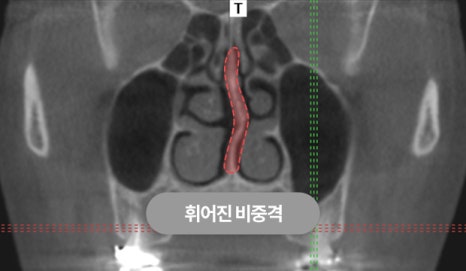
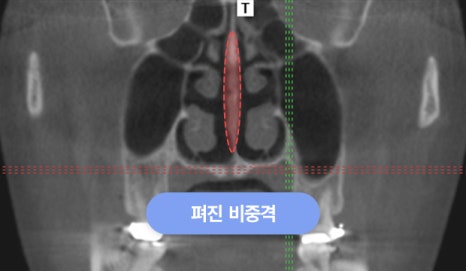
Even if crooked noses look similar from the outside, in reality the location where the problem begins inside the nose is different in each case.
Bridge problems are mainly about bone and cartilage alignment,
deviated septum problems require correction of the nasal central axis,
and tip problems are determined by cartilage balance and fixation strength.
If the underlying structure is different but all cases are corrected using the same method,
they may look straight at first,
but over time there is a high chance that asymmetry will appear again.
The important part of crooked nose correction is not simply matching the visible line,
but accurately identifying where the imbalance begins
and correcting it with the appropriate method.
In closing
The most important part of crooked nose correction is
not which surgery is performed,
but accurately determining why the nose became crooked.
Even if it looks like the same crooked nose,
the appropriate approach can differ depending on whether the imbalance began in the bridge, septum, or tip.
Therefore, after consulting with a specialist and comprehensively analyzing the individual cause
and nasal structure,
planning a correction method that matches the case
can help support a more natural result.
※ Because side effects such as inflammation, bleeding, and nerve damage may occur depending on the individual, sufficient consultation with medical staff is necessary before surgery.