Recently, among those considering rhinoplasty, more people are preferring a nose line that blends naturally with the overall facial atmosphere rather than simply a high and dramatic nose.
-
When you want a nose that does not look very obviously operated on
-
When the bridge is already present to some extent, but the tip feels lacking
-
When you feel 부담감 about implants
-
When you want a natural straight line or a slightly straight line
In particular, many people become interested in implant-free rhinoplasty in these cases.
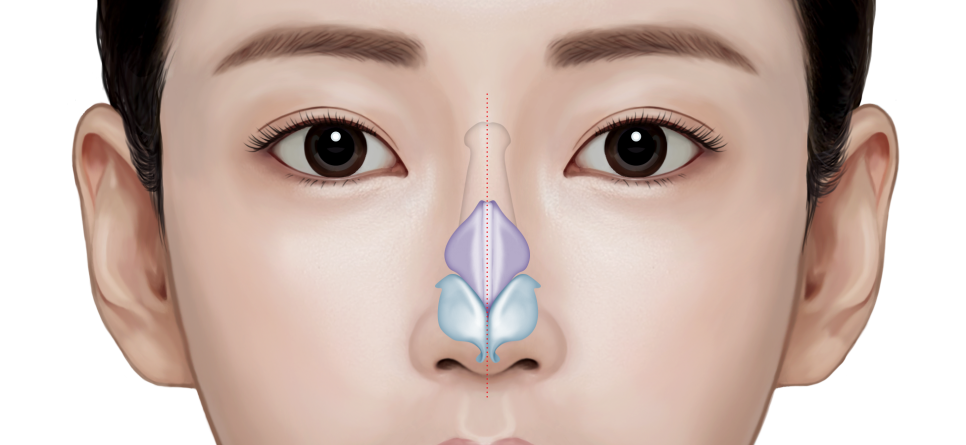
Source: TS Plastic Surgery
Implant-free rhinoplasty is a surgical method that improves the nose line by using the body’s own tissue, such as septal cartilage, ear cartilage, or autologous rib cartilage, without using artificial implants like silicone or Gore-Tex. However, implant-free rhinoplasty is not necessarily advantageous for everyone, and it does not apply the same way to all cases. This is because suitability can vary depending on the current nasal structure and the degree of change desired.
Cases where implant-free rhinoplasty may be suitable
When consulting about implant-free rhinoplasty, many people visit with similar needs than expected. Typical cases include the following.
- When the basic bridge is present, but the tip feels lacking
From the front, there may not seem to be a major issue, but if the tip looks round or blunt, if the tip height is insufficient, or if the tip appears drooped, it may be possible to design the procedure around the tip without greatly increasing the bridge. In such cases, septal extension, cartilage repositioning, and cartilage tying may be used to adjust the height and direction of the tip and plan a more refined nose line.
- When you want a natural change without it looking overly operated on
Recently, many people prefer a nose that looks natural yet still elegant, rather than one that looks obviously high. In particular, when someone wants a straight line, a natural slightly straight line, or a soft tip line, designing the procedure around the tip, columella, and nasolabial angle rather than aggressively raising the bridge may lead to a more natural result.
- When asymmetry of the nostrils or the volume of the columella is a concern
Rhinoplasty does not only mean a surgery that raises height. Some patients decide to undergo nose surgery because of asymmetric nostril shape, a deviated nose, or insufficient tip support. In such cases, surgery can be planned to create a more natural shape while reinforcing the support structure of the columella and tip using the patient’s own tissue.
What TS considers important in implant-free rhinoplasty
Implant-free rhinoplasty is not simply a surgery that avoids implants. It is important to analyze the current nose height, skin thickness, condition of the tip cartilage, support, and facial proportions together, and then plan the direction that will fit most naturally. In particular, TS plans a nose line that harmonizes with the face rather than simply making the nose higher by forming the support structure of the tip, designing the columella and nasolabial angle, adjusting the direction and height of the tip, and analyzing the balance between the front and side views. In addition, when necessary, autologous rib cartilage is used to secure more stable support and perform surgery with consideration for the direction and durability of the tip.
Source: TS Plastic Surgery
Why autologous rib cartilage is used
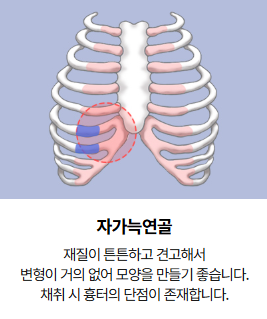
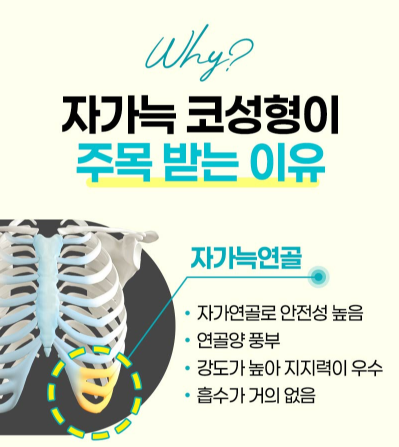
One of the materials often used in implant-free rhinoplasty is autologous rib cartilage. Autologous rib cartilage uses the patient’s own rib cartilage, allowing a sufficient amount to be secured, and it is often used when tip support is needed.
Source: TS Plastic Surgery
In particular,
it may be helpful in forming a stable structure. Also, because it is autologous tissue, it has high biocompatibility and advantages in long-term durability, making it one of the materials considered by patients who want a natural nose line.
On the other hand, not every nose can achieve sufficient results with implant-free methods alone. In particular, when the bridge itself is very low, when a large increase in bridge volume is needed, or when improvement from the side view is more important than from the front, it may be difficult to create the desired height using only autologous tissue, and implants may also be considered.
Therefore, the important thing is not to insist on implant-free surgery no matter what, but to determine which method can create the most natural and stable result for your current nasal structure.
What matters most in implant-free rhinoplasty is finding the surgical method that fits your nose
Implant-free rhinoplasty can be a good option for people who already have a certain degree of bridge height but want improvement in the tip or a more natural change in appearance. In particular, if you want a change that is not overly obvious as surgery but still makes the tip more defined and fits naturally within the balance of the whole face, it is definitely worth considering.
However, the appropriate surgical method can vary depending on the nasal structure, skin conditions, and the degree of change desired, so it is important to decide on the most suitable direction through sufficient consultation and analysis.
※ Depending on the individual, side effects such as inflammation, bleeding, contracture, and asymmetry may occur, so sufficient consultation with the medical staff before surgery is necessary.