Extreme Eye Revision Surgery: Is Correction for Excessively Open Eyes Necessary?
Among people considering revision eye surgery, some are concerned not only about loosened or thickened creases but also about eyes that open too widely due to overcorrection.
The pupils may be excessively exposed, creating a startled appearance, or the person may want to open their eyes naturally without exerting force but find it difficult to control them. Eyes that open excessively are often affected by more than just the double-eyelid crease; the condition of the muscles and ligaments responsible for opening the eyes, as well as the skin and fat tissue, can also play a role. In particular, if the force used to open the eyes has become excessive after a previous surgery or the levator muscle of the upper eyelid has been pulled too tightly, upper eyelid retraction or overcorrection may be suspected.
Because such cases are considered relatively complex among revision eye surgeries, it is important to accurately determine why the eyes are opening too widely before planning the surgical approach.
Cases That May Be Considered “Extreme Eyes”
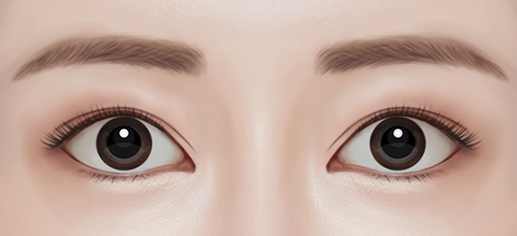
Source: TS Plastic Surgery
In revision eye surgery consultations, “extreme eyes” does not simply refer to dissatisfaction with the double-eyelid crease. It refers to a condition in which one or more of the skin, fat, or muscle tissues has been affected by a previous surgery or tissue damage, causing the opening and closing movements of the eyes to appear unnatural.
Typical examples include:
-
Cases in which the eyes do not close properly because there is insufficient skin
-
Cases in which multiple creases do not easily disappear and continue to form repeatedly
-
Cases in which the eyes open too widely due to muscle damage or excessive correction
-
Conversely, cases in which it is difficult to open the eyes properly
-
Cases in which excessive pupil exposure creates a startled appearance
In particular, when the eyes open so widely that more than 120% of the pupils are visible, it is often difficult to adjust them naturally even when the person consciously tries to relax the muscles. This is because the force that opens the eyes may be structurally transmitted with excessive strength, rather than this being a simple matter of opening the eyes slightly less.
When the Levator Muscle of the Upper Eyelid Is Pulled Too Tightly
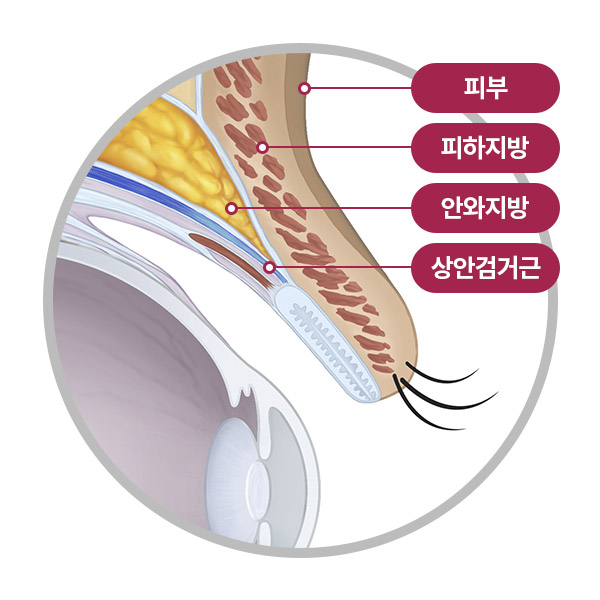
Source: TS Plastic Surgery
The levator muscle of the upper eyelid plays an important role in opening the eye. This muscle lifts the eyelid, and the eyelid rises and the eye opens as its force is transmitted to the tarsal plate. However, if eyelid-opening surgery was performed too aggressively during a previous procedure, or if the muscles and ligaments have been pulled into a shortened position, the eyelid may rise more than necessary. In this situation, the eyes may open too widely, the pupils may become excessively exposed, and a permanently startled appearance may result. This condition is also sometimes referred to as upper eyelid retraction.
In simple terms, it is a condition in which the force used to open the eye is transmitted too strongly, causing the eyelid to sit higher than its normal position.
Why Correction of Upper Eyid Retraction May Be Necessary
When upper eyelid retraction is present, simply lowering the double-eyelid crease may not resolve the problem. Although the crease itself may not appear particularly abnormal from the outside, the actual problem may lie in the transmission of force among the levator muscle of the upper eyelid, the ligaments, and the tarsal plate beneath the crease.
In such cases, it may be necessary to reduce the force of the excessively tightened muscle and adjust the length of shortened tissues so that the eyelid does not rise excessively.
In other words, correction of upper eyelid retraction, or lowering an overcorrected eyelid, can be understood as surgery performed in the opposite direction from eyelid-opening correction. While eyelid-opening correction supplements insufficient opening force to help the eyelid rise more effectively, upper eyelid retraction correction reduces excessive lifting force so that the eyelid stops at an appropriate position.
Why the Internal Structures Must Be Examined During Upper Eyelid Retraction Correction
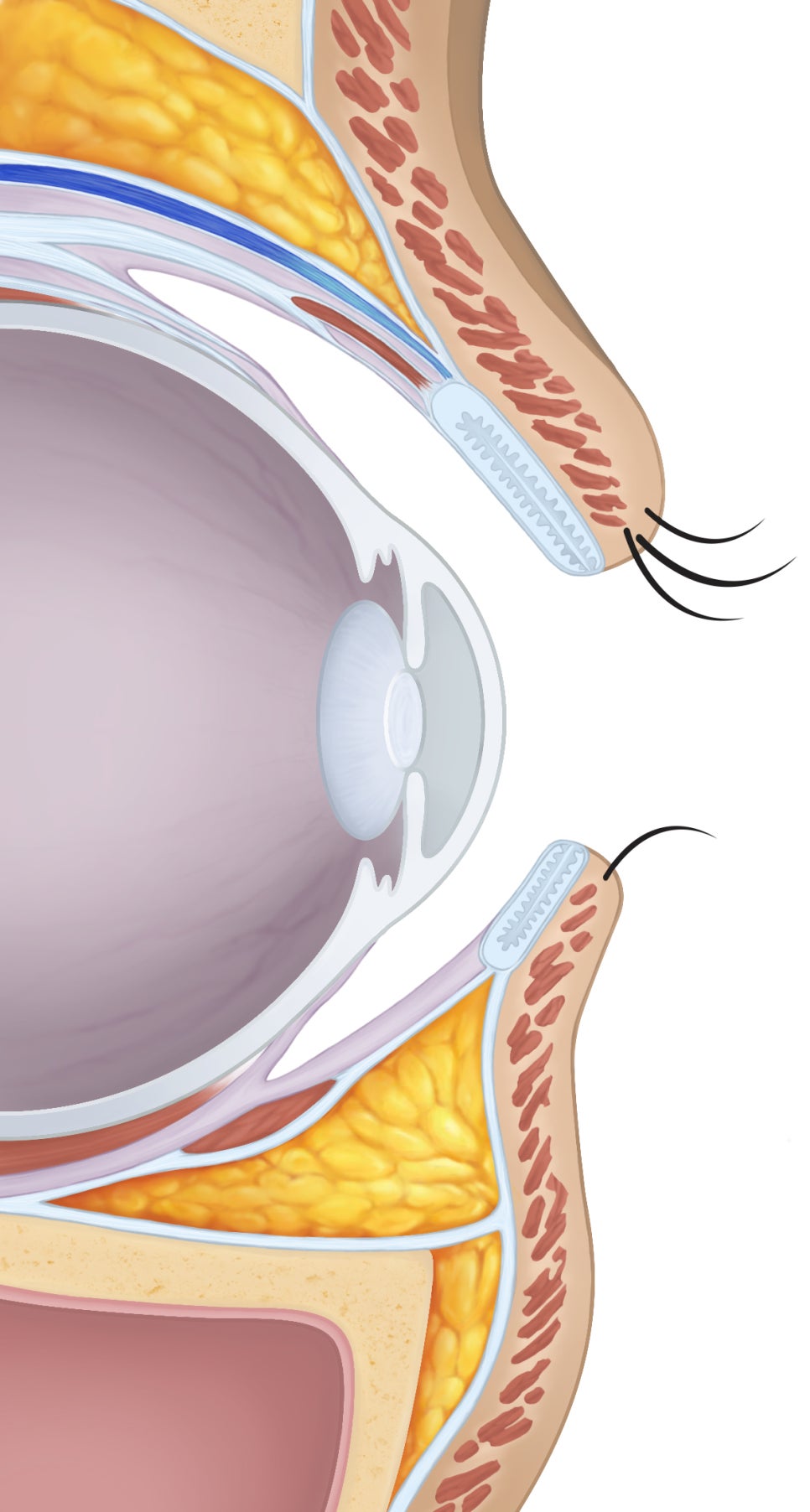
Source: TS Plastic Surgery
Upper eyelid retraction correction is not a procedure that addresses only the visible double-eyelid crease. Because the levator muscle of the upper eyelid, the tarsal plate, and the surrounding fat tissue need to be examined, it may be necessary to make an incision along the existing double-eyelid crease to access the internal structures. The eyelid consists of multiple layers, including the outer skin, subcutaneous fat, muscle, the membrane surrounding the orbital fat, and the levator muscle of the upper eyelid and tarsal plate.
Because the levator muscle of the upper eyelid is directly connected to the function of opening the eye, it is necessary to determine whether the muscle has been pulled too tightly, whether the tissue has shortened, and the extent of any adhesions. In revision surgery, adhesions or scar tissue from previous procedures are also often present.
Therefore, the procedure may involve more than simply lowering the muscle. Depending on the circumstances, the fat may be spread out or repositioned, adhesions may be released, and the double-eyelid crease may be reconstructed so that it folds naturally.
What Is the Principle Behind Lowering an Overcorrected Eyelid?
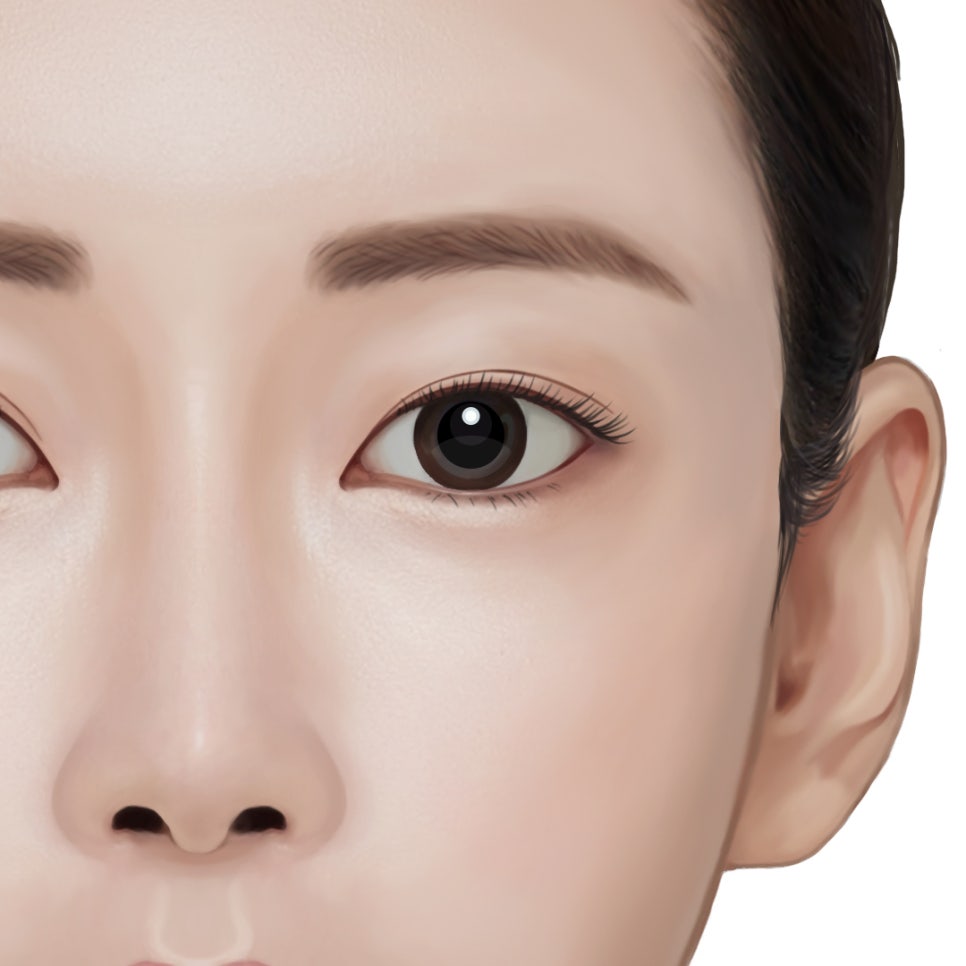
Source: TS Plastic Surgery
Surgery to lower an overcorrected eyelid approaches the problem by adjusting the force of the excessively tightened levator muscle and ligaments, thereby reducing the force transmitted to the tarsal plate. In simple terms, it appropriately reduces the strength of the force that opens the eye so that the eyelid does not rise too far.
The procedure may lengthen the muscles and ligaments or release adhered tissues, while adjusting the eyelid so that it can move in a more stable position.
As a result, in cases where excessive pupil exposure created a startled appearance before surgery, the upper eyelid may naturally cover part of the upper portion of the pupil after surgery, creating a softer appearance.
In general, compared with eyes in which too much of the pupil is exposed, eyes in which the eyelid naturally covers part of the pupil may appear more stable and relaxed.
Accordingly, the focus of upper eyelid retraction correction is not simply to make the eyes smaller, but to lower excessively open eyes to an appropriate position and enable them to open naturally.
When Fat Repositioning and Double-Line Release May Also Be Needed

Source: TS Plastic Surgery
In extreme eye revision surgery, upper eyelid retraction correction may sometimes need to be performed together with fat repositioning or a double-line release procedure, rather than as a standalone procedure.
When strong adhesions have formed after a previous surgery or multiple creases have developed, it may be difficult to create a natural crease by adjusting only the muscle force. In such cases, the existing adhesions must be released and, when necessary, the fat repositioned so that the crease folds smoothly.
In particular, when multiple creases do not easily disappear, movement among the skin, muscle, and fat is often not smooth. In these cases, a double-line release approach may be used to release adhesions from the existing crease and allow a new crease to settle securely.
In other words, extreme eye revision surgery is not a procedure that can be resolved through eyelid-opening correction alone. Rather, it involves examining the various tissues that make up the eyelid and adjusting the necessary areas step by step.
Why Upper Eyelid Retraction Correction Is Difficult
Upper eyelid retraction correction is considered one of the more challenging types of revision eye surgery. This is because the tissues may already have been damaged by previous surgery, the skin and fat may be insufficient, and strong adhesions may have formed. In addition, excessively weakening the force used to open the eyes can make them appear sleepy, while insufficient correction may leave them looking startled. Therefore, it is necessary to carefully assess how far the eyelids should descend to look natural, how much pupil exposure is appropriate, and whether there is any difference in the opening force between the two eyes.
When there is insufficient skin, the ability to close the eyes must also be taken into consideration. If the approach involves lowering the crease excessively or forcibly pulling the tissues downward, closing the eyes may become more uncomfortable. It is therefore important to make a comprehensive assessment of the remaining skin, fat, and muscle.
The Most Important Consideration in Extreme Eye Revision Surgery
The most important consideration in extreme eye revision surgery is not simply lowering the double-eyelid crease. It is necessary to examine why the eyes are opening too widely, how strongly the levator muscle of the upper eyelid is acting, the condition of existing adhesions and fat, and whether there is sufficient excess skin. In particular, overcorrected eyes are often difficult to control even when the person wants to relax the muscles.
Therefore, upper eyelid retraction correction should focus on reducing the excessive force transmitted to open the eyes and creating a condition in which the eyelids can move naturally.
Even when the double-eyelid crease itself does not appear significantly problematic, the surgical approach may vary depending on the condition of the internal muscles and adhesions. After accurately evaluating the current structure and function of the eyes through a thorough consultation and examination, considering the necessary methods—including upper eyelid retraction correction, fat repositioning, and double-line release—may help achieve a more natural and stable improvement in the appearance of the eyes.
※ Depending on the individual, side effects such as inflammation, bleeding, nerve damage, scarring, asymmetry, and discomfort when closing the eyes may occur. A thorough consultation with a medical professional is therefore necessary before surgery.