Have you ever felt that the tip of your nose looks especially blunt and large every time you look in the mirror, or that your nose takes up a large portion of your face in photographs?
A nose commonly called a bulbous or pug nose can look heavy and stuffy even when the nasal bridge is well defined, because the tip appears wide, round, and spread out. For this reason, many people with a bulbous nose wonder, “Could my nose have too much fat?” or “Would removing the fat make my nose thinner?”
However, a bulbous nose may not simply be caused by an excess of fat at the tip.
To create a more refined nasal tip, it is necessary to examine not only the thickness of the skin and the amount of fat, but also the size and degree of separation of the nasal tip cartilage, the strength of the cartilage, and the tissue between the skin and cartilage.
Why a Bulbous Nose Is Not Caused by Subcutaneous Fat Alone
Source: TS Plastic Surgery
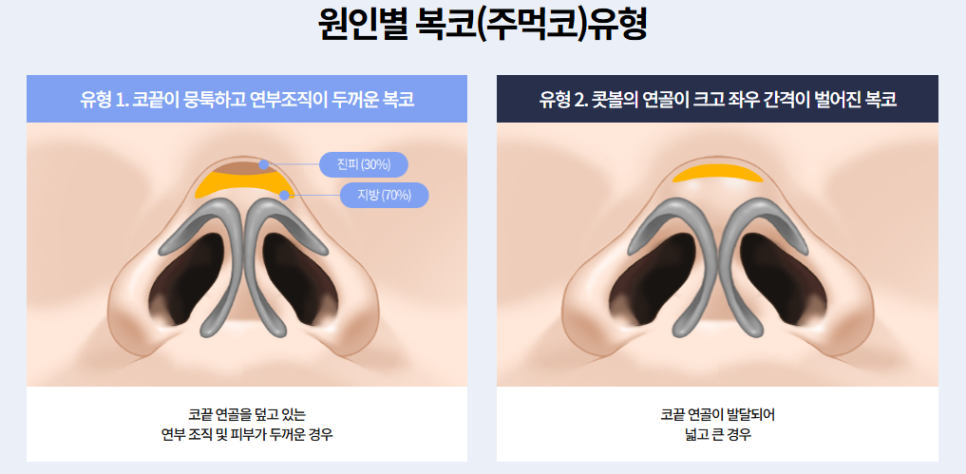
The causes of a bulbous nose vary from person to person. Common contributing factors include thick nasal tip skin, well-developed subcutaneous fat and soft tissue, large and widely separated nasal tip cartilage, and weak support at the nasal tip.
In particular, when the cartilage on both sides of the nasal tip is widely separated, removing fat from the tip may not produce as refined a change as expected because the underlying framework of the nasal tip itself remains broad.
In other words, when planning surgery for a bulbous nose, it is important to first determine “why the nasal tip looks wide,” rather than simply asking “how much fat is present?”
Does Removing More Fat Make a Bulbous Nose Thinner?
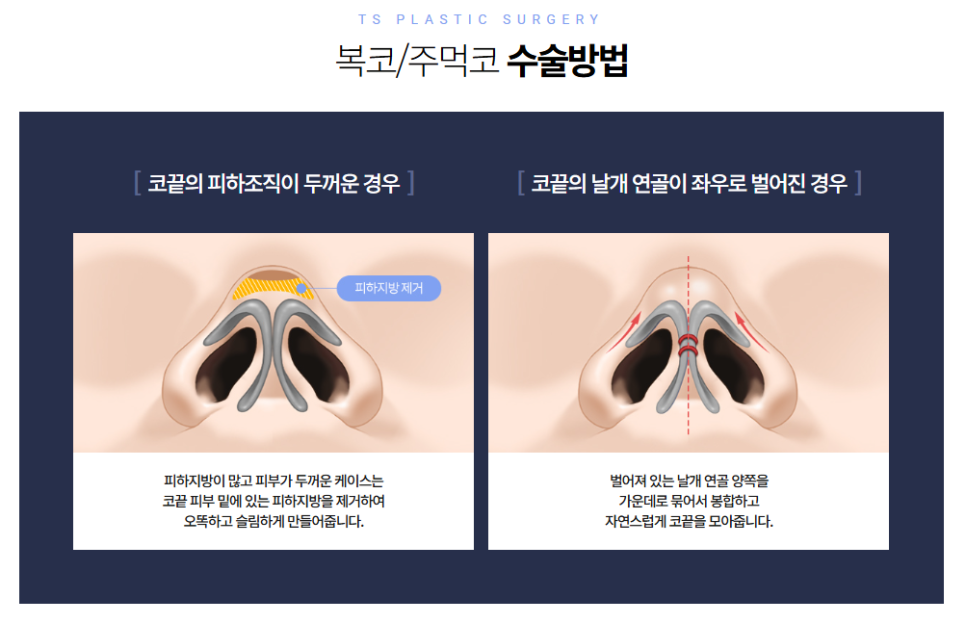
Appropriately reducing fat or thick soft tissue at the nasal tip can certainly be helpful in bulbous nose surgery. However, removing a large amount of fat does not make the nasal tip proportionally thinner. If tissue beneath the skin is removed excessively, an unnecessary space may form between the skin and cartilage, or adhesions and scar tissue may develop during recovery, causing the tip to feel thick and firm again. In addition, when the skin is thick, the visible change may be limited even after some fat is removed because of the skin’s thickness.
Therefore, the key to fat removal for a bulbous nose is not “removing a lot,” but appropriately reducing only the tissue that is necessary.
Source: TS Plastic Surgery
“Tip Cartilage Binding” to Bring Together a Separated Nasal Tip
One of the important aspects of correcting a bulbous nose is the shape of the nasal tip cartilage. If the cartilage forming the nasal tip is widely spread outward, the tip appears round and broad when viewed from the front. Bringing this separated cartilage inward is commonly referred to as nasal tip cartilage binding. Appropriately adjusting the position and shape of the cartilage can help reduce the width of the nasal tip and define a tip that previously appeared spread out. However, binding the cartilage as tightly as possible is not always better. The surgical approach should differ for people with large, firm cartilage and those with thin, weak cartilage.
In particular, when the nasal tip lacks sufficient support, it may be difficult to maintain the desired shape by simply binding the cartilage. In such cases, methods to reinforce the supporting structure of the nasal tip may also be considered using material suited to the patient’s condition, such as septal cartilage, ear cartilage, or rib cartilage. Ultimately, what matters is not how tightly the cartilage is bound, but creating a structure that allows the tip to come together naturally without collapsing.
Why “Dissection” Is Important in Bulbous Nose Surgery
Source: TS Plastic Surgery
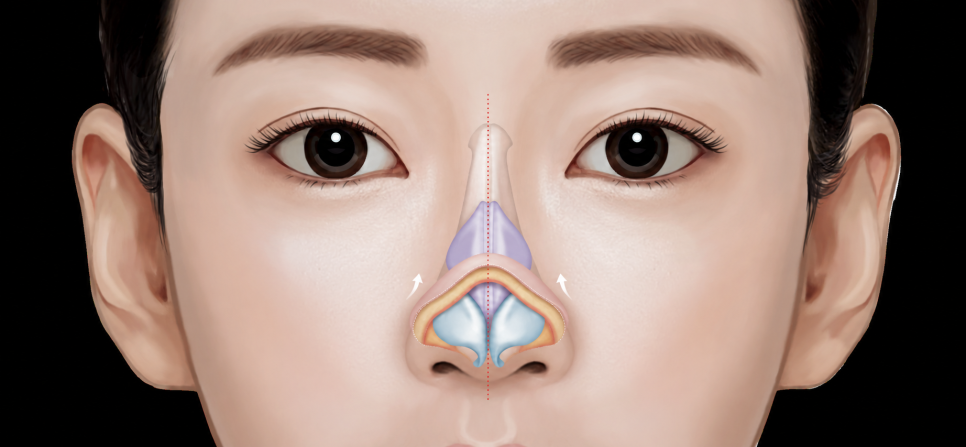
In correcting a bulbous nose, dissection—the process of separating the tissue between the skin and the nasal tip cartilage—also plays an important role.
When the skin and soft tissue at the nasal tip are firmly attached to the existing structure, changing only the shape of the cartilage may limit how naturally the skin settles over the new nasal tip structure. Therefore, it may be necessary to appropriately dissect between the skin and cartilage within the required range to create space, and then reposition or bind the nasal tip cartilage.
However, wider dissection is not always better. Dissecting more extensively than necessary can increase tissue damage and the burden of swelling or scar tissue formation. Conversely, if the dissection range is too limited, it may be difficult to sufficiently adjust the nasal tip cartilage, or the desired change in shape may be restricted. For this reason, it is important to determine and dissect the precise range required based on the patient’s skin thickness, the amount of soft tissue, and the size and shape of the cartilage.
Surgical Methods Should Differ Even for People with the Same Bulbous Nose
Some people may have highly developed fat and soft tissue, while in others the primary cause may be that the nasal tip cartilage itself is wide and separated rather than an excess of fat. In still others, the skin may be very thick, limiting the extent of visible change even after correcting the structure of the nasal tip.
Therefore, when planning bulbous nose surgery, it is important not to focus solely on removing fat from the nasal tip, but to also assess the skin thickness, the amount of fat and soft tissue, the width and separation of the nasal tip cartilage, and the cartilage’s supporting strength.
When necessary, appropriately reducing fat and soft tissue, bringing together separated nasal tip cartilage, and creating sufficient support may be performed together to help create a more natural and refined nasal tip.
If having a nose that looks large and blunt because of a bulbous nose has been a long-standing concern, the first priority is to receive an accurate diagnosis through consultation regarding the primary cause of your bulbous nose and how the cartilage and skin need to be corrected.
The key to bulbous nose surgery is not to create an unconditionally small and pointed nose, but to refine a nasal tip that appears spread out within the limits allowed by the current skin and cartilage structure, creating a defined nasal tip that suits the face.
*The surgical method and results may vary from person to person. Because side effects such as bleeding, infection, inflammation, and scarring may occur after surgery, it is important to determine the surgical plan through a thorough consultation.