Fat grafting #micro fat grafting #autologous fat grafting #facial fat grafting #autologous facial fat grafting #fat injection #facial micro fat grafting #full-face fat grafting #full-face fat transfer #youth surgery
#facial contour correction #contour-correction fat grafting #Col-fat fat grafting #forehead hollowing #sunken forehead #forehead wrinkles #deep forehead wrinkles #forehead wrinkle fat grafting #hollow forehead #forehead asymmetry #youth plastic surgery
#uneven forehead #youth surgery #temples #temple fat grafting #temple hollowing #temple asymmetry #asymmetric temples #asymmetric forehead #Col-fat fat grafting #colfat fat grafting
#thin cheeks #cheeks #cheek fat grafting #facial fat grafting #facial asymmetry #facial asymmetry correction #upper eyelid hollowing #eyelid hollowing #upper eye fat grafting #eyelid fat grafting #upper eyelid
#upper eyelid fat grafting #sunken eyes fat grafting #eyelid fat grafting #eyelid hollowing #lower eyelid hollowing #eyelid wrinkles #under-eye wrinkles #under-eye hollowing #under-eye plastic surgery #under-eye fat grafting
#under-eye wrinkle fat grafting #dark circles #dark circle surgery #dark circles #dark circle fat grafting #under-eye dark circles #under-eye dark circles #aegyo-sal #aegyo-sal surgery #under-eye aegyo-sal #under-eye aegyo-sal
#under-eye aegyo-sal fat grafting #aegyo-sal fat grafting #low nose #nose fat grafting #low nose fat grafting #crooked nose #crooked nose correction #crooked nose fat grafting #nose plastic surgery fat grafting #nasoplasty #nose augmentation
#nose augmentation fat grafting #prominent cheekbones #inverted triangle face #sunken scar #sunken scar correction #glabellar wrinkles #glabellar wrinkle fat grafting #glabellar wrinkle correction #wrinkle fat grafting #wrinkle improvement fat grafting
#mouth corner wrinkles #nasolabial folds #mouth corner wrinkle fat grafting #nasolabial fold fat grafting #forehead scar #paranasal surgery #Indian wrinkle #Indian band #Indian wrinkle fat grafting #receded chin #receded chin correction
#chin fat grafting #receded chin fat grafting #lip plastic surgery #lip surgery #lip fat grafting #male thin cheeks #flat nasal tip #crooked-looking nose #saddle nose #small chin #deep-set chin #asymmetric chin
#forehead fat grafting #autologous cheek fat #fat grafting after fillers #forehead fat grafting swelling #hollow-cheek fat grafting #nasolabial fat grafting #sunken cheek fat grafting #back-of-hand fat grafting #chin tip fat grafting
#micro autologous fat grafting #male facial fat grafting #autologous fat #Seoul fat grafting #Doohan #Doohan Plastic Surgery #Doohan autologous fat grafting #Doohan micro fat grafting #fat grafting area #youthful
#sunken scar #sunken scar improvement #sunken scar correction #scar improvement #scar correction #scar fat grafting #facial scar #under-eye wrinkle fat grafting #under-eye hollowing fat grafting #aegyo-sal surgery #under-eye surgery
#Director Shin Doohan #facial fat grafting swelling #how to gain facial fat #upper cheekbone fat grafting #nose fat grafting #facial fat grafting #forehead fat #revision paranasal surgery #fat grafting revision surgery #fat insertion
#hollow eye fat grafting #eye fat grafting #facial fat redistribution #sunken eyes #double eyelid folds in multiple layers #horizontal forehead wrinkles #forehead wrinkle lines #facial wrinkle lines #facial volume #board-certified plastic surgeon
#fat grafting by area #mini fat grafting #forehead hollowing #sunken forehead #hollow forehead #deep forehead wrinkles #wrinkle lines #facial wrinkle lines #nose revision surgery #nasal bridge fat grafting #nose surgery #nose plastic surgery
#thin cheeks #facial asymmetry #asymmetric face #eyelid fat grafting #hollowing above the eye #deep-set eyes #sunken eyes #inverted triangle face #lower eyelid #eyelid hollowing #under-eye wrinkles
#under-eye hollowing #sunken under-eyes #glabellar wrinkles #glabellar wrinkle correction #facial wrinkle improvement #wrinkle improvement #wrinkle eraser #wrinkle correction #facial wrinkles #wrinkle fat grafting #a clinic that does fat grafting well
#low nasal bridge #low nasal tip #cheek plastic surgery #cheek surgery #male cheek fat grafting #male thin cheeks #male fat grafting #masculine fat grafting #deep forehead wrinkle lines #deep wrinkle correction #under-eye
#Gangnam fat grafting #Apgujeong fat grafting #Sinsa fat grafting #Seoul fat grafting #famous fat grafting clinic #fat grafting specialist #recommended fat grafting hospital #well-known fat grafting hospital #fat plastic surgery

Fat grafting
Create soft and beautiful facial contours
with micro fat grafting~
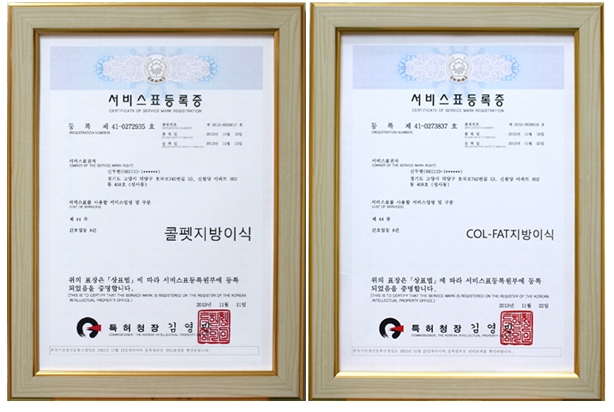
"Col-fat fat grafting trademark"
Col-fat fat grafting is exclusive intellectual property
of Doohan Plastic Surgery.
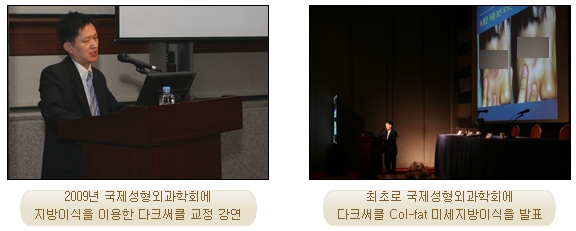
What is Col-fat fat grafting?
Micro fat grafting achieves graft take as the transplanted fat becomes vascularized by surrounding capillaries after transplantation.
The graft-take process takes at least three months, during which time the fat may be absorbed because it has not been vascularized, or it may be compressed and disappear due to pressure from surrounding tissue.
Therefore, because the effect of simply increasing the amount of fat alone may be insufficient, Col-fat fat grafting is designed to promote the body’s own collagen production, improve fat graft take, and create youthful, elastic skin and contour.
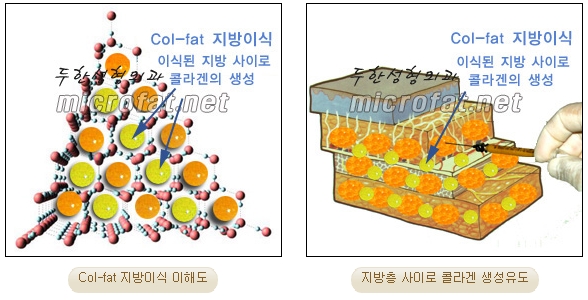
What are the features of Col-fat fat grafting?
| 1. It supplies serum, the source of nutrients in the early stage of fat graft take. |
|---|
| 2. It minimizes pressure from surrounding tissues and increases the graft-take rate. |
| 3. The fat is grafted evenly, so it does not create uneven contours. |
| 4. Because collagen is self-produced, the contour-correction effect is greater. |
| 5. Tissue and skin gain elasticity, helping to correct wrinkles and create a more youthful appearance. |
How is Col-fat fat grafting performed?
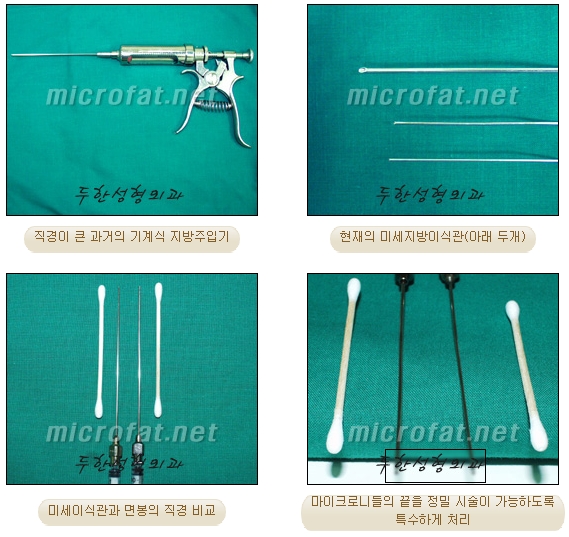
At our clinic, the procedure is performed using a micro needle developed in-house.
The key point of the micro needle is that the tip of the probe is precision-machined to induce collagen production during subcutaneous tunneling.
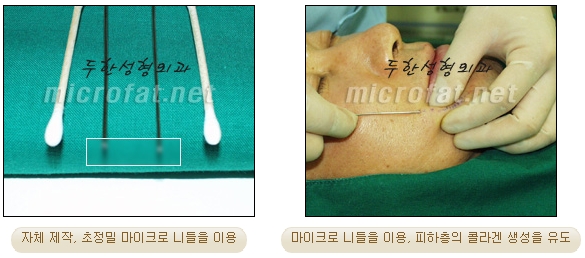
We have achieved ultra-precise fat grafting with the Col-fat technique.
Because it has the advantage of performing precise procedures in 1–2 mm increments even in areas that require great delicacy, such as very fine wrinkles, under the eyes, and above the eyes, even difficult areas can be treated without problems.
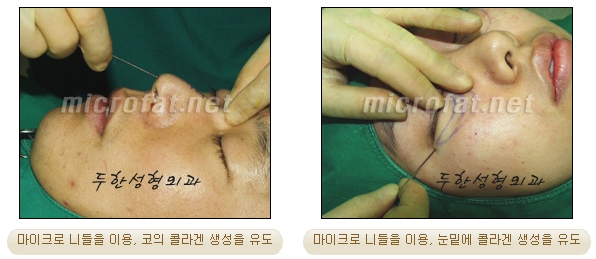
For correction of under-eye dark circles, a procedure using a micro probe makes it possible to achieve an effective dark-circle correction with almost no unevenness.
With tunneling using a micro probe and micro fat grafting using a micro needle, even the most difficult under-eye procedures can be performed effectively.
What is the difference between ordinary fat grafting and Col-fat fat grafting?
| Comparison | Ordinary fat grafting | Col-fat fat grafting |
|---|
| Contour | Unevenness may occur. | No unevenness occurs. |
| Graft-take pattern | May take unevenly. | Takes almost evenly. |
| Collagen production | No collagen production. | High collagen production. |
| Graft-take rate | Relatively lower. | High graft-take rate; effective facial contour correction is possible. |
| Skin elasticity | Has little effect on skin elasticity. | Collagen production increases skin elasticity. |
What is fat grafting for facial contour correction?
Fat grafting is also called fat injection.
It refers to using a syringe to harvest fat from the patient’s own body and inject it into the desired area to correct the facial contour.
It is often called micro fat grafting, meaning a more precise and delicate procedure.
It can effectively correct facial hollowness, unevenness, and deep wrinkle lines, and it can be applied to most areas of the face.
The procedure is simple, has no side effects, and can naturally correct any area to the desired degree, so fat grafting is one of the effective facial contouring procedures.
Which areas can be corrected with fat grafting?
| Forehead hollowness or asymmetry | Low nose or crooked nose |
|---|
| Temple hollowness or asymmetry | Face with prominent cheekbones |
| Thin cheeks or facial asymmetry | Inverted triangle face |
| Upper eyelid hollowness | Multiple sunken scars |
| Lower eyelid hollowness or wrinkles | Forehead wrinkles, glabellar wrinkles |
| Creating aegyo-sal in the lower eyelid | Nasolabial folds around the mouth |
Examples of fat grafting applications
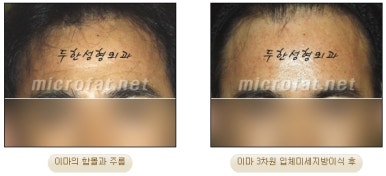
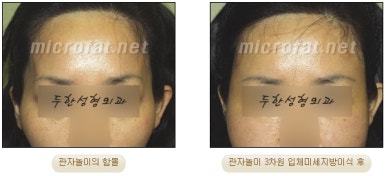
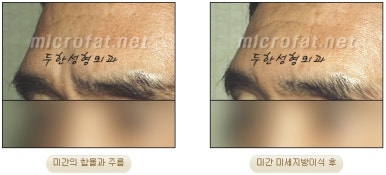
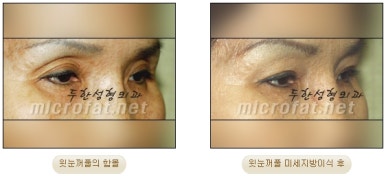
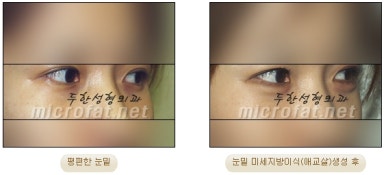
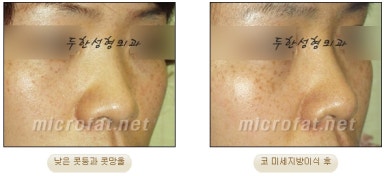
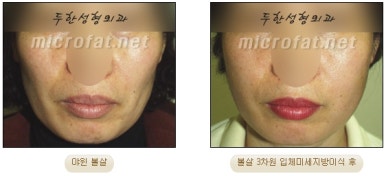
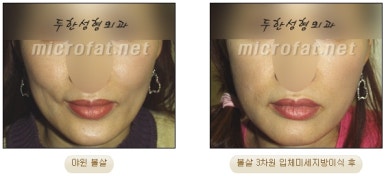
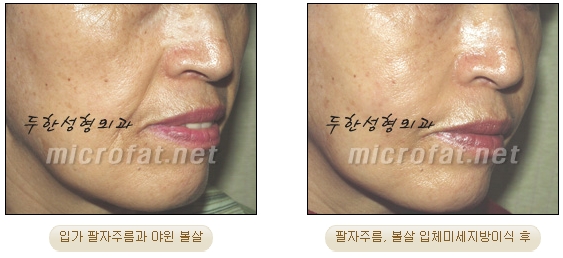
What are the advantages of fat grafting?
| ★ Because it is a transplant of autologous tissue, there are no side effects at all. |
|---|
| ★ Because there is no incision like surgery, the procedure is simple. |
| ★ Compared with other filling materials (Artecoll, AlloDerm), the cost is lower. |
| ★ It can be performed on any area as much as desired. |
| ★ Repeat procedures are possible, and the effect lasts a long time. |
What are common misconceptions about fat grafting?
Some people say that fat grafting is quickly absorbed and has no effect, but this is a misunderstanding.
In principle, fat grafting is effective only when performed properly.
The results vary depending on the operator’s experience and skill.
From harvesting and refining the fat to grafting it, the process must be carried out accurately and carefully to achieve good results.
A procedure that ignores these principles may have little effect or may even cause side effects.
Proper fat grafting often produces satisfactory results with just one procedure, and the effect lasts for a very long time.
In areas such as the cheeks, the effect is often permanent.
Comparison between fat grafting and filling materials (fillers)
Fat grafting can be considered an effective and safe procedure for correcting facial contours.
Various filling materials (fillers) are commercially available and are used in plastic surgery and dermatology to correct facial wrinkles and scars.
Examples include collagen, AlloDerm, Restylane, Artecoll, Juvederm, Aquamid, and Interpol.
These filling materials are mainly used to correct fine wrinkles rather than for facial contour correction.
When used for facial contour correction, the quantity is too small, the cost is high, and inappropriate use for the intended purpose may raise concerns about side effects, so caution is necessary.
| Fat grafting | Commercialized filling materials (fillers) |
|---|
| Scope of application | Can be applied to all areas and ranges of the face | Can be applied to fine wrinkles and small-area hollow correction |
| Cost | Low | High |
| Amount used | A sufficient amount can be used as desired | Using a large amount is costly; injecting large amounts increases the frequency of side effects. |
| Side effects | Almost none | Depending on the product, allergic reactions or inflammation may occur. |
| Procedure | Slightly complex | Simple procedure |
| Swelling and bruising | Slight | Slight |
| Return to daily life | Immediately possible | Immediately possible |
| Cost burden for revision surgery | Half of the initial cost | Same as the initial cost |
| Treatment effect | Excellent in most areas | Effective only within a limited range |
What are the features of our clinic?
All anesthesia is performed under local anesthesia (sedation anesthesia).
All fat grafting procedures are performed under local anesthesia, regardless of the area treated.
Local anesthesia is combined with sedation anesthesia, allowing the procedure to be performed without any pain during anesthesia or even after the anesthesia ends.
Depending on the area, hyaluronidase, an anti-swelling agent, is mixed into the local anesthetic and administered.
Hyaluronidase is an expensive anti-swelling agent with a tissue-fluid diffusion effect that helps prevent swelling from occurring almost immediately after the procedure.
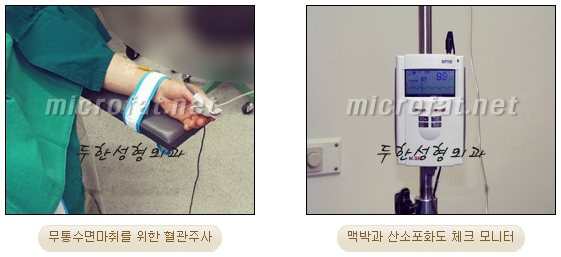
We have a systematic and advanced fat grafting system.
The success of fat grafting depends on the graft-take rate. The following are necessary to maximize graft take.
| Live fat cells must be harvested. |
|---|
| To increase fat purity, the fat is purified as much as possible through centrifugation and removal of unnecessary oil. |
| Before fat grafting, subcutaneous tunneling in the graft area secures space where the fat will be placed. |
| Micro fat grafting cannulas are used to perform precise and delicate fat grafting in each area. |
| By grafting minutely into multiple layers in a 3D manner, the graft-take rate is improved and a soft contour is created. |
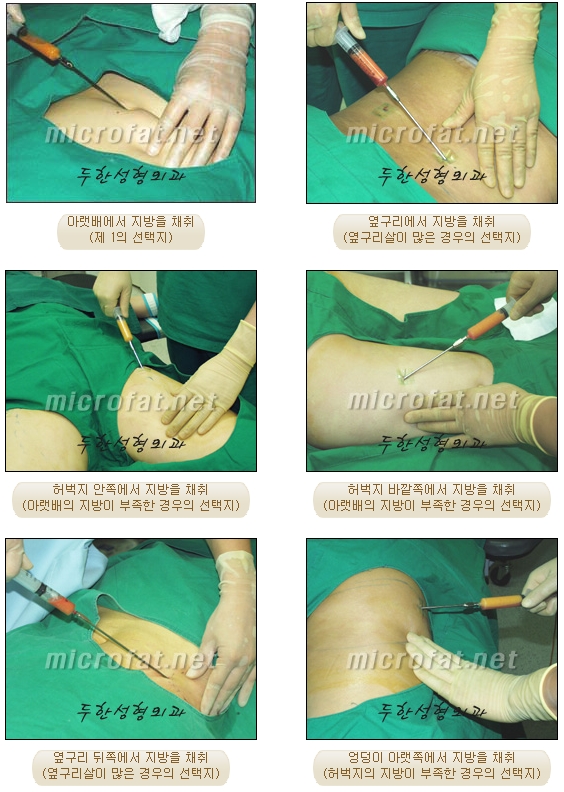
We select appropriate and various fat-harvesting sites.
The most commonly used area for fat harvesting is the lower abdomen. The lower abdomen is the first choice for fat harvesting because there is less pain after the procedure, less swelling and bruising, and it is a comfortable area for daily life.
If there is not enough fat in the lower abdomen or if the person prefers another area, fat may be harvested from other areas as well. The next most commonly selected area is the inner thighs, followed by the outer thighs.
If there is not enough fat to harvest from the thighs, the area below the buttocks or the flanks may also be used.
There is no fixed rule about which area is better for fat graft take.
No matter where it is harvested, the results are similar. The ideal harvesting site is the area of the body with the most excess fat, but it is best to choose the site by considering the amount of fat to be harvested and activity after grafting.
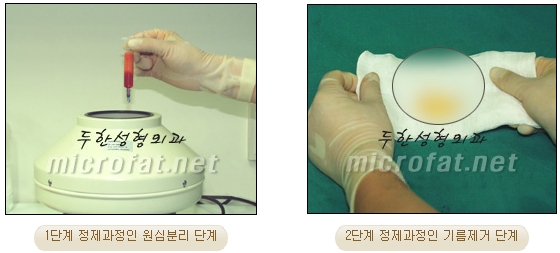
We maximize graft take through a two-step purification process for the harvested fat.
The harvested fat undergoes a two-step purification process to remove impurities other than fat cells.
Among the impurities in the harvested fat, the largest proportion is local anesthetic, followed by oil.
It also contains impurities such as serum and red blood cells.
In the first step, it undergoes centrifugation for about 3–4 minutes, and in the second step it goes through oil removal.
The parts purified by centrifugation are local anesthetic, red blood cells, and serum.
Oil is removed manually through natural absorption.
Through the two-step purification process, almost 100% concentrated fat is obtained, maximizing the effect of fat grafting while increasing the graft-take rate as much as possible.
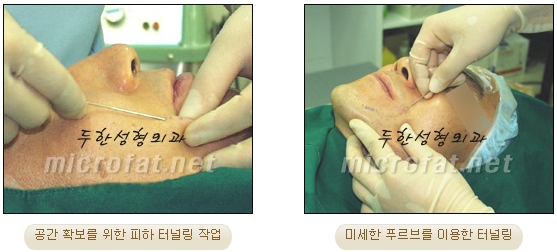
We secure space for fat grafting through subcutaneous tunneling.
Subcutaneous tunneling is a necessary process for securing space in advance in the area where fat will be grafted, in order to achieve a high graft-take rate and even grafting.
Using a thin probe, the tissue under the skin is moved repeatedly in a fan-shaped pattern to create space for the fat to be grafted.
The effect of subcutaneous tunneling is to increase the graft-take rate and prevent the fat from clumping, creating a smooth and even contour.
With 3D micro fat grafting, a soft and even facial contour can be achieved.
Although there are exceptions depending on the area, the basic method of fat grafting is the 3D approach.
By placing fat evenly in small amounts across multiple layers in each area, the graft-take rate is improved and the grafting becomes more uniform, helping create a soft contour.
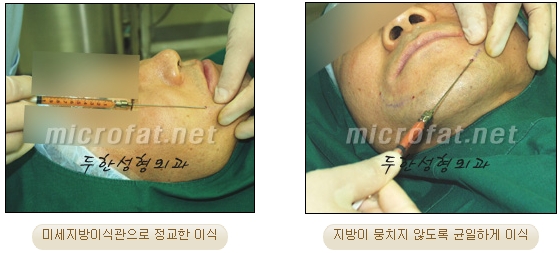
We use micro fat grafting cannulas for precise fat grafting.
In the past, methods using fat injection devices pushed fat under the skin with high pressure, which caused various problems.
The absorption rate of fat was high, graft take was uneven, the contour became lumpy, and grafting was difficult in delicate areas such as under the eyes.
To solve these problems, the fat is transferred again into a thin 1 cc syringe and grafted into the desired area during fat grafting.
At our clinic, we use micro needles (micro grafting cannulas) developed in-house.
Micro needles are special grafting cannulas used only at our clinic that allow ultra-precise grafting.
Fat grafting can also be performed on the upper eyelids, lower eyelids, forehead wrinkles, glabellar wrinkles, nasolabial folds, and the nasal bridge, making fat grafting possible in almost all cases except for very fine wrinkles.
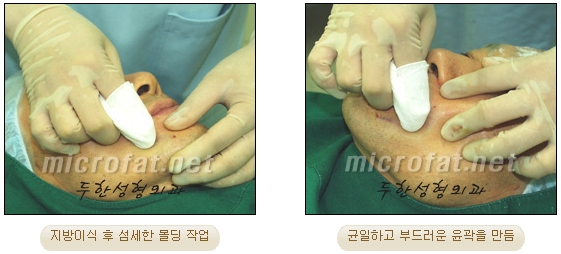
After fat grafting, molding is performed to create a uniform and soft facial contour.
Immediately after fat grafting, delicate molding is performed so that the transplanted fat spreads evenly and creates a soft shape.
Molding is the final step of fat grafting and one of the most important steps.
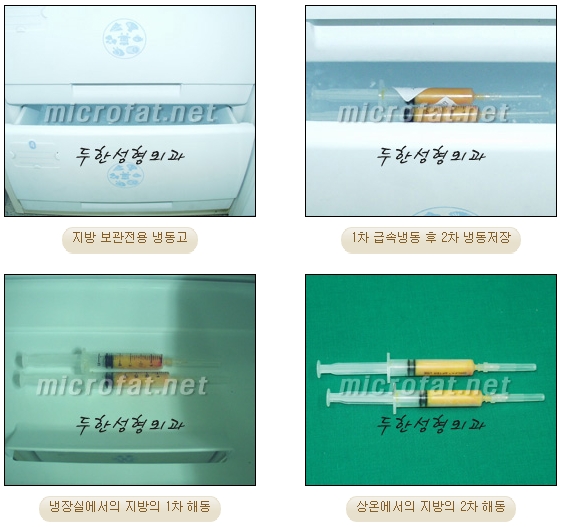
The remaining fat is cryopreserved aseptically to simplify a second procedure.
If a second procedure is performed more than three months after fat grafting, the remaining fat from the first procedure is used instead of harvesting fat again.
The fat remaining after the first procedure is cryopreserved and stored aseptically.
For the second procedure, the stored fat is thawed, making the treatment more convenient.
The storage period for fat is up to 10 months. If you visit within 10 months, the procedure will be performed using the stored fat.
Thorough aftercare system
After fat grafting, we provide careful follow-up until the fat has fully taken by thoroughly managing aftercare.
During follow-up, if necessary, we try to minimize dissatisfaction by using swelling-reduction injections, shape correction, and molding.
What is the fat grafting procedure?
First fat grafting procedure
Fat grafting is performed through a staged and systematized process.
The procedure is carried out through multiple steps, including painless sedation anesthesia, fat harvesting, purification, tunneling, and grafting.
The procedure time may be as short as 30 minutes, and when grafting a large area, it may take more than 2 hours.
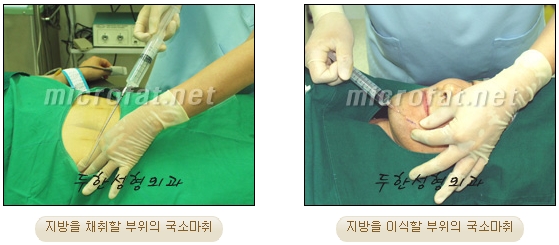
① The area to be grafted is marked with design ink.
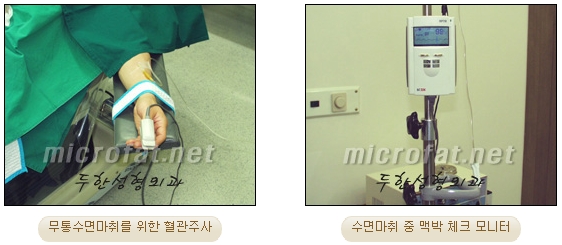
② An IV line is started for painless sedation anesthesia.
Sedation anesthesia is a supplemental anesthetic used to keep you asleep during the 5 minutes of local anesthesia so that the pain of local anesthesia is removed.
③ While sedation anesthesia is being administered, local anesthesia is applied to the fat-harvesting area and the area to be grafted.
Because you are under sedation anesthesia, there is no pain at all during the anesthesia.
After the local anesthesia is complete, you wake up from sleep, and from then on the procedure is performed without any pain because the area is still anesthetized.
In some cases, hyaluronidase, an anti-swelling agent, is mixed into the local anesthetic and administered.
Hyaluronidase is an expensive anti-swelling agent with a tissue-fluid diffusion effect that helps prevent swelling from occurring almost immediately after the procedure.
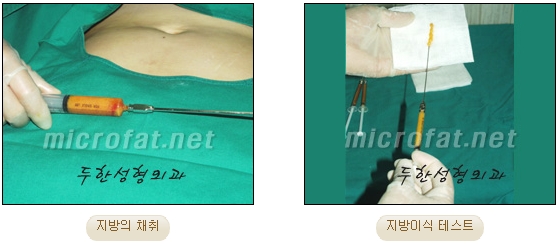
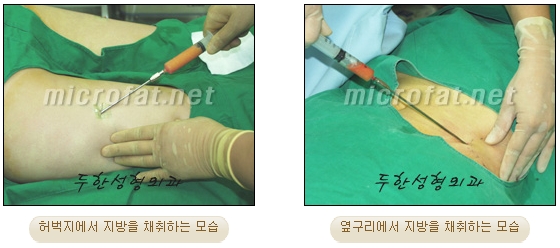
④ Fat is harvested from areas where fat is accumulated, such as the lower abdomen, thighs, or flanks.
A thin liposuction cannula is inserted to collect the needed amount of fat into the syringe.
In small cases, 60 cc may be harvested; when the graft area is large, up to 200 cc may be harvested.
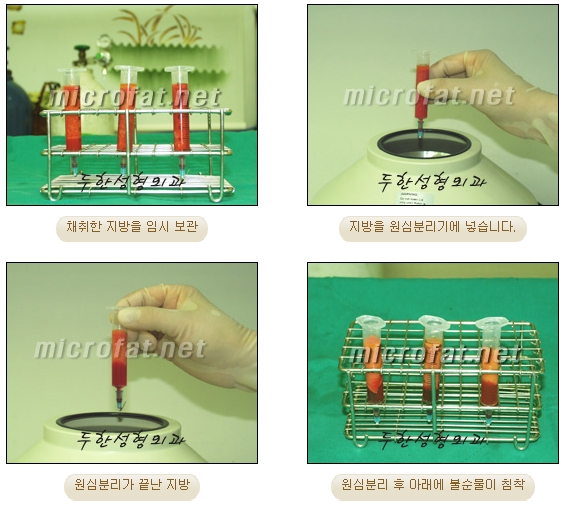
⑤ After the required amount of fat has been harvested, it is left standing for a short time.
After a few minutes, impurities settle to the bottom.
The settled impurities consist of local anesthetic, water, serum, and red blood cells.
After all the impurities have settled, the lower layer of impurities is discarded and the remaining fat undergoes the first-stage fat concentration process, centrifugation.
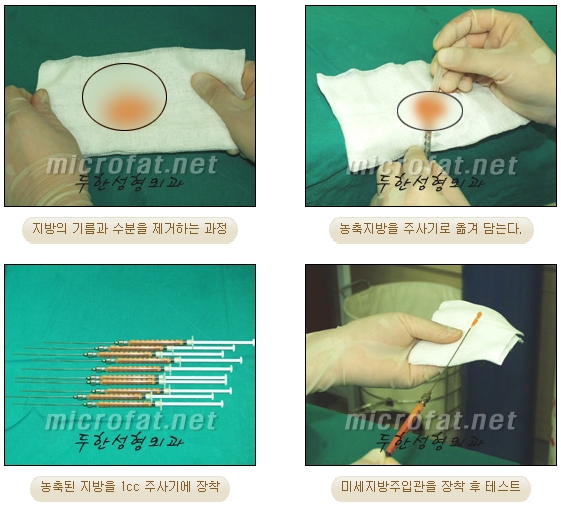
⑥ After centrifugation, the fat enters a third concentration step in which the oil is removed.
The fat that has been purified by centrifugation is placed on sterile gauze and wrapped so that unnecessary oil and moisture are removed by natural absorption.
After the second purification step is complete, almost 100% concentrated fat is obtained.
The graft-take rate of fat depends on how properly the fat is concentrated.
The more concentrated it is, the greater the advantage of being able to graft a larger number of fat cells into the same area.
Because there is a big difference in treatment results between fat concentrated close to 100% and fat that is not, concentration alone through centrifugation is not enough; an additional oil-removal step is essential.
⑦ Before injecting the fat, subcutaneous tunneling is performed in advance in the graft area.
This process creates space so that the grafted fat can take well under the skin.
It is also a step to ensure that the fat is grafted evenly and creates a soft contour.
In other words, subcutaneous tunneling is a preparatory step to improve graft take and create a soft contour.
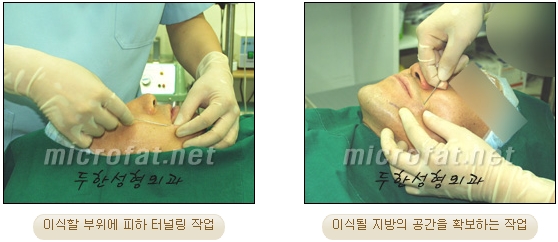
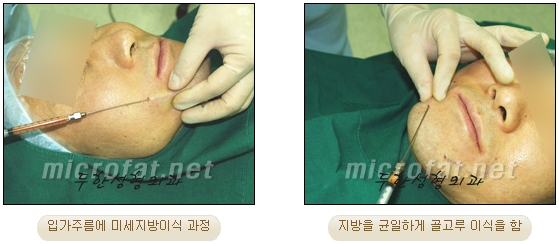
⑧ The concentrated fat is grafted into the area where tunneling has been completed.
We use a micro needle (micro grafting cannula) developed in-house.
Micro needles are special grafting cannulas used only at our clinic that allow ultra-precise grafting.
The graft is placed evenly in small amounts across multiple layers so that the graft-take rate can be maximized.
This is commonly called 3D volumetric fat grafting.
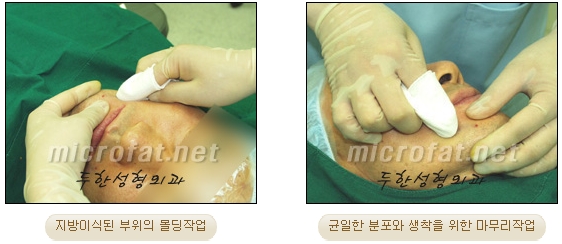
⑨ After fat grafting is complete, molding is performed to create a soft contour.
Molding gently presses or moves the grafted area so that the fat spreads evenly.
Molding is the final step of fat grafting and also one of the most important steps in shaping.
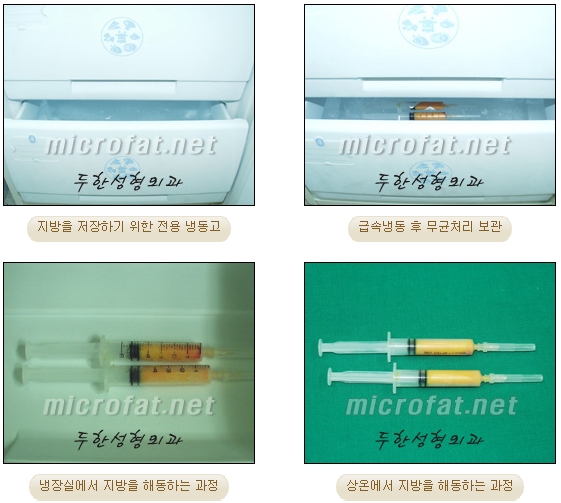
⑩ After fat grafting is complete, the remaining fat is cryopreserved and stored aseptically.
The fat is usually stored for up to 10 months, and when a second procedure is needed, the fat can be thawed and a second fat grafting procedure can be performed easily.
The fat is first thawed in a refrigerator and then, a few minutes before fat grafting, it is thawed a second time at room temperature.
⑪ Regardless of the area treated, fat grafting does not require adhesive bandages on the face or bandaging.
After the procedure, you can go home immediately and return to daily life.
Procedure for a second fat grafting session
Fat grafting does not always end with just one session.
The graft-take rate varies by area, and there are individual differences as well.
On average, about 50% of the transplanted fat is absorbed, so even if the shape looks good at first, it may gradually be absorbed over time, and in some cases a second procedure may be needed.
| 3 to 10 months after the first fat grafting, you return to the plastic surgery clinic for follow-up. |
|---|
| If a second fat grafting session is judged necessary, the frozen fat stored during the first procedure is thawed and injected again after local anesthesia. |
| Since the fat-harvesting step is omitted compared with the first procedure, the procedure time is much shorter, and the cost is about half that of the first fat grafting session. |
| If the first procedure has taken well and the shape is judged to be satisfactory, no further fat grafting is needed. In other words, a second procedure is performed only if necessary, and you can decide by looking at the shape yourself. |
Fat grafting usually requires one to two sessions.
If a second session is needed, it is performed between 3 and 10 months.
With an average of one to two sessions, satisfactory facial contour correction can be achieved.
What are the pre- and post-procedure steps and post-treatment care guidelines for fat grafting?
These are the steps before and after undergoing fat grafting surgery.
-
Make a consultation appointment by phone or online.
-
Visit at the scheduled consultation time for the consultation.
-
If you wish to proceed with the procedure, make a surgery appointment immediately after the consultation and leave. You can also make the surgery appointment later by phone or online.
-
Arrive 30 minutes before the scheduled surgery time, receive an explanation of the fat grafting procedure, and have the design marked.
-
After the design is complete, change clothes and receive an IV injection for painless sedation anesthesia.
-
The fat grafting procedure time varies by area, and if multiple areas are treated at the same time, it may take longer. On average, it takes 30 minutes to as long as 2 hours.
-
After the procedure, you will receive antibiotic and anti-inflammatory injections and rest in the recovery room for about 30 minutes.
-
You will be given post-procedure precautions and schedule your next visit.
-
Return 2 days after the procedure to check the fat grafting area, and the fat-harvesting site will be disinfected. Showering is possible starting 2 days after the procedure.
Return on day 7 to check the progress and remove the stitches from the fat-harvesting site (the navel). If your home is too far away to visit, you do not need to come in.
- If a second procedure is needed, return between 3 and 10 months later for treatment.
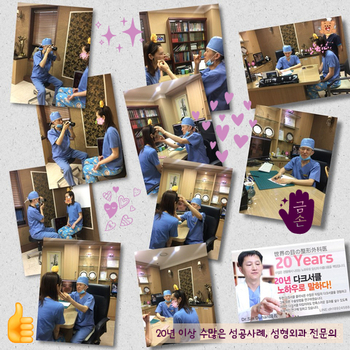
Based on more than 20 years of rich clinical experience and know-how, we perform multilayer (layer-by-layer) fat grafting.
The key to fat grafting is ensuring that the fat cells are live so that they can achieve a high graft-take rate.
To increase the graft-take rate, a large amount is not injected into one place; instead, the fat is grafted evenly across multiple layers.
Between the skin and the bone there are multiple tissue layers such as fat and muscle, and the fat must be injected in a multilayer structure without overlapping, such as between the periosteum above the bone and between the fascial layers above and below the muscle.
Multilayer fat grafting lasts 3 to 4 times longer than conventional methods, and the fat survival rate is also higher.
Fat grafting at the Doohan Plastic Surgery autologous fat grafting clinic also includes a process called "tunneling," which allows the graft to make maximum contact with the rich surrounding blood vessels and receive continuous nourishment.
Tunneling means making space for the fat just under the skin using micro needles. In other words, space is created like making a tunnel, and then the fat is injected, so even after all the fat has been inserted, it does not sag downward due to gravity or become uneven.
In addition, a delicate injection method allows for customized design.
By thoroughly managing aftercare after fat grafting, we provide careful follow-up until the fat has fully taken.
During follow-up, if necessary, we try to minimize dissatisfaction by using swelling-reduction injections, shape correction, and molding.