Hello, this is Duhan Plastic Surgery.
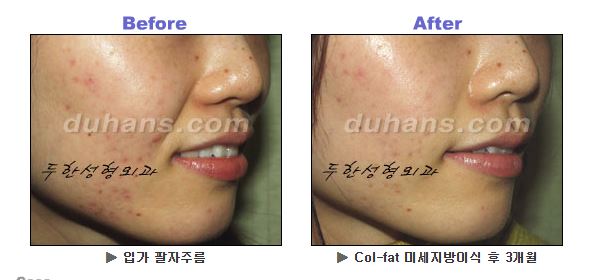
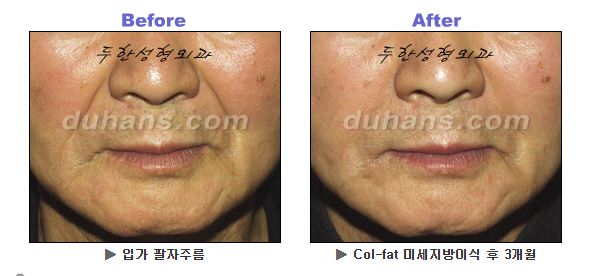
Nasolabial folds are one of the most representative signs of aging that influence the overall impression of the face. Deep wrinkles extending from the sides of the nose to the corners of the mouth can make you look older than your actual age and may also create a tired or expressionless appearance.
Recently, interest has been growing not only in fillers but also in fat grafting for nasolabial folds using the patient’s own fat. However, fat grafting is not simply a procedure that involves adding fat. Every step—from fat harvesting and purification to grafting and fat retention—can affect the outcome.
Today, we will discuss the process of nasolabial fold fat grafting and the factors that can help improve fat retention.
☑️What Is Nasolabial Fold Fat Grafting?
Nasolabial fold fat grafting is a procedure in which fat is harvested from areas such as the abdomen, thighs, or flanks, purified, and then grafted into the nasolabial fold area.
Because the patient’s own tissue is used, there is less concern about foreign-body reactions, and natural texture and volume can be achieved.
Rather than simply filling wrinkles, the procedure can help create softer facial contours by three-dimensionally restoring areas that have become hollow.
☑️Is There Any Need to Worry About Pain?
Pain is one of the aspects many people are most curious about.
Fat grafting is generally performed using a combination of painless sedation and local anesthesia.
Because the areas where the fat is harvested and grafted are anesthetized while the patient is sedated, discomfort during the anesthesia process can be reduced. The procedure is then performed under local anesthesia.
💡The Most Important Factor in Fat Grafting Is “Fat Retention”
Satisfaction with fat grafting ultimately depends on how much of the grafted fat settles stably.
Some of the grafted fat naturally undergoes absorption, and fat retention is generally understood to stabilize after approximately three months.
Therefore, it is important to harvest the fat in a healthy condition, remove impurities, and concentrate it.
Two-Step Fat Concentration System
Harvested fat contains blood, moisture, and oily components in addition to pure fat cells.
To remove these substances, centrifugation is performed first, followed by an additional purification process to remove oil and moisture.
Through this two-step concentration process, fat with a higher level of purity can be prepared for grafting.
💡Why Is Microfat Grafting Important?
Injecting a large amount of fat at once does not necessarily increase the fat retention rate.
In fact, if the fat clumps together in one area, it may be more difficult for it to survive.
Therefore, it is important to graft the fat evenly in small amounts across multiple layers.
This is known as microfat grafting. By distributing the fat across multiple areas, it can help create more natural contours and an environment conducive to fat retention.
☑️What Is Three-Dimensional Fat Grafting?
The face consists of various tissue layers, including the fat layer, fascia layer, and muscle layer beneath the skin.
Three-dimensional fat grafting is a method of dividing and grafting fat across multiple layers according to the areas requiring treatment.
However, not all areas are treated in the same way.
Multilayer grafting may be helpful for areas such as the forehead, cheeks, and chin, while certain areas, such as the eyelids, may be more appropriately treated by grafting into only a specific layer.
Therefore, a customized plan that takes the anatomical structure of each area into consideration is important.
💖Nasolabial Fold Fat Grafting Review
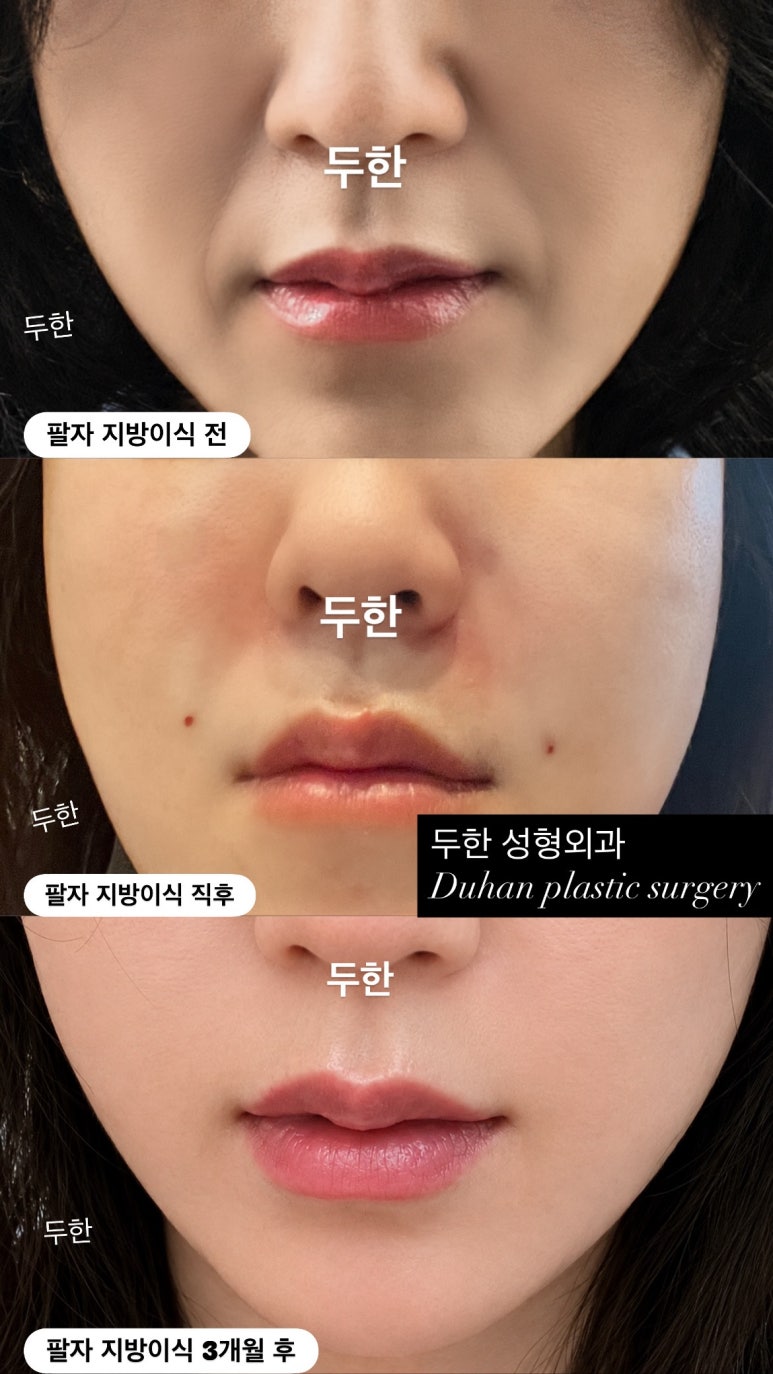
“While undergoing orthodontic treatment, the area around my mouth became very hollow, and my nasolabial folds grew deeper, which was stressful. Especially when I wasn’t smiling, the area around my mouth looked deeply sunken, making me look tired and older than I wasㅠㅠ”
At first, I considered fillers, but I was concerned about how long they would last, so I started looking into fat grafting. The procedure was over much more quickly than I expected. I was very nervous, but the anesthesia was completed while I was sedated, so the pain was manageable!!
I think it turned out really natural, and these days I’m happy to look in the mirror!! People around me have been saying, “Your face looks plumper and younger these days,” a lot lately haha.
After about three months, the slight unevenness and asymmetry had become completely natural, and I’m satisfied because when I take photos, it no longer feels as though my nasolabial folds are the only thing I can see, unlike before~~
If you want a naturally younger-looking appearance, I think it could be a good option~~
🎀Swelling and Recovery Time After Fat Grafting
Swelling and bruising after fat grafting vary from person to person.
Generally, swelling may be present for about one week and then gradually subside as the area naturally recovers.
In particular, facial fat grafting generally allows for a relatively quick return to daily activities, but recovery speed may vary depending on an individual’s constitution and the extent of the procedure.
🍀Is One Fat Grafting Procedure Enough?
Many people expect to achieve all their desired results with a single procedure, but in reality, fat retention varies by area and from person to person.
After checking the results approximately three months later, when fat retention has stabilized, a second fat grafting procedure may be considered if additional volume enhancement is needed.
If stored fat is available, an additional procedure can be performed without harvesting fat again.
📍How Is the Remaining Fat Managed?
Fat remaining after the procedure can be frozen and stored under sterile conditions.
The stored fat may be used if additional fat grafting is needed in the future, reducing the need to repeat the fat-harvesting process.
☑️Can Fat Grafting Make the Face Look Uneven?
When researching fat grafting, you may come across information that the face can become uneven or lumpy.
This can occur when the fat is not distributed evenly or is injected in excessive amounts.
Therefore, it is important to distribute small amounts of fat across multiple layers and encourage an even distribution through molding after the procedure.
🤍Nasolabial Fold Fat Grafting: What Should You Check?
Nasolabial fold fat grafting is not simply a procedure involving the injection of fat.
Every step—from fat harvesting, purification, and concentration to subcutaneous tunneling, microfat grafting, and fat-retention management—can affect the outcome.
Therefore, it is important to receive an accurate evaluation of your facial structure and skin condition through a thorough consultation and establish an appropriate treatment plan.
Duhan Plastic Surgery provides attentive care aimed at creating natural volume and balanced facial contours based on the fundamental principles of fat grafting.
Thank you.