In plastic surgery, the second attempt is often more frightening and more difficult than the first.
Compared with the first operation, it is usually more complex and must be performed with greater care in order to correct what went wrong
and also meet the patient’s needs.
Therefore, revision plastic surgery should be performed by a careful and experienced specialist.
In particular, revision rhinoplasty requires an accurate understanding of the cause of failure and the current condition,
followed by diagnosis and response. It must also take into account the nose’s functional role, the balance of the entire face,
and the standards of beauty, that is, the aesthetic aspect, so even more caution is needed.
So how should you prepare for revision rhinoplasty?
Let’s look at precautions for revision rhinoplasty and the implants used in revision rhinoplasty
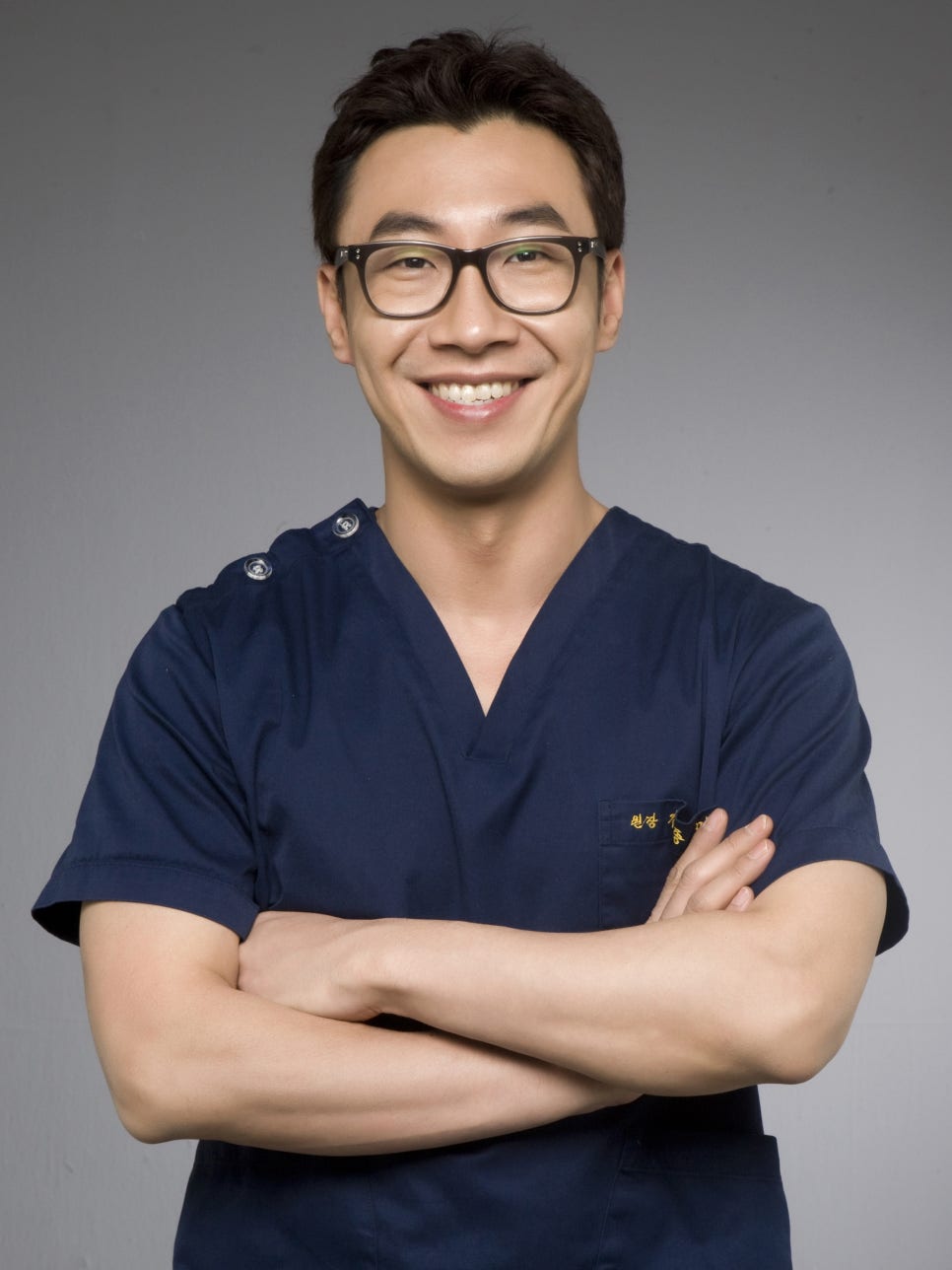
together with Dr. Kim Jong-myeong, a plastic surgeon.
As the standard of beauty has shifted to focus on naturalness rather than extravagance,
inquiries about revision rhinoplasty are increasing further.
How to choose a plastic surgery clinic for nose surgery
When deciding on a revision rhinoplasty clinic, make sure to check whether it is a clinic that can properly correct noses that have become contracted or deformed due to various side effects,
whether it is a clinic that can perform customized revision rhinoplasty according to each side effect case,
whether a board-certified plastic surgeon with abundant experience and expertise is on site and provides responsible treatment,
and whether postoperative care is also carried out through systematic 1:1 customized care.
Check the implant before nose surgery
In addition, because there are cases where implant insertion is unavoidable,
it is also a good idea to check the implants used in nose surgery.
Various implants are used in rhinoplasty. They can largely be divided into artificial implants and autologous tissue implants.
Recently, preference has been increasing for autologous tissue implants, which have fewer rejection reactions and can safely maintain a beautiful nose shape for a long time.
What is autologous tissue rhinoplasty?
It refers to nose surgery in which tissue suitable for the individual is selected, the autologous tissue from the selected area is harvested,
and then meticulous suturing is performed.
The autologous implant is designed to match the surgical area, the area is incised and dissected,
and the autologous implant is then transplanted into the surgical site.
Autologous tissue nose implants use the patient’s own tissue to create a refined bridge and line.
They provide a soft feel to the nose, form a natural shape without any foreign-body sensation,
have little risk of inflammation or pain, and are less likely to change shape even when exposed to external impact.
They can be used in a wide range of cases, such as when the nasal tip is round and blunt, when the nostrils are wide and the tip is flat and spread out,
when the skin tissue and fat are thick, when the tip width is relatively wider than the width of the nose,
when the nasal tip is short, and when there is a hump nose.
Types of autologous tissue rhinoplasty implants
Autologous dermis
The dermis is harvested from the lower buttock area below the tailbone, which is the thickest area.
Autologous dermis is the thickest and highly elastic, so its shape does not spread sideways,
and once the dermis takes, it is characterized by not causing deformation in the nose.
Septal cartilage
This is cartilage that stands upright like a board inside the partition between the two nostrils.
Because it has a plate-like shape, it is an autologous tissue material mainly used when building the support of the nasal tip.
Ear cartilage
This material is softer than septal cartilage and has a curved shape,
making it useful for creating a natural-looking nasal tip.
Rib cartilage
This is used when creating a more elevated and refined nasal tip, or when the septal cartilage is small and insufficient,
or in cases of contraction. Autologous rib cartilage may be harvested, or donated rib cartilage from another person may be used.
Temporalis fascia
This is used to improve cases where the implant appears angular or is severely visible after surgery.
Wrapping the implant with fascia can give it a softer and fuller feel.
Autologous fat
Fat is harvested from the abdomen or thighs to raise a low nasal bridge, or additional procedures can be performed on sunken or insufficient areas after surgery
without removing the silicone.
If you still do not feel reassured even after checking the above
A clinic that maintains an individualized diagnosis, design, and management system
A clinic where a sterilization and disinfection management system is in operation, confirming the safety of surgical instruments and management equipment
A clinic that safely manages the anesthesia system by accurately reflecting various information such as the patient’s medical history and surgical history
A clinic equipped with a monitoring system that transparently discloses the surgical process
A clinic that also considers recovery management systems such as swelling care, bruising care, and pain management after surgery
It is better to check these and proceed accordingly.
But above all, what matters most is
meeting a board-certified plastic surgeon with abundant knowledge of anatomy, aesthetic sense, and nose surgery experience.
[Diva Plastic Surgery Consultation & Inquiries]
Phone ☎ 02-542-7002
KakaoTalk ID @디바성형외과 (https://pf.kakao.com/_igxaLl)
Website >> http://www.diva-ps.com/
Under-eye youth surgery >> http://www.diva-ps.com/eyeunder/
Nose Slim Edition >> http://www.diva-ps.com/noseslim/