
As we age, signs of aging begin to appear in various parts of the body. Among them, the eyelids and the area around the eyes can make a person look older than deep wrinkles in other parts of the face.
In particular, the skin around the eyes is thin and moves frequently, so aging appears faster there than in other areas, and fine lines also tend to increase. As aging progresses, elastin and collagen decrease, reducing skin elasticity, and depending on the situation, a sunken appearance around the eyelids may also be observed. In addition, under the eyes, reduced elasticity in the lower eyelids and the pouch containing fat can cause the fat to protrude, leaving the area beneath it hollow.

Changes around the eyes like this not only create an aged appearance, but if handled poorly, they can also create a bad impression, as if too many procedures have been done. For that reason, people may consider approaches such as a midlife double eyelid procedure. This refers to eye surgery for middle-aged patients, and includes various methods such as upper blepharoplasty, brow lift, lower blepharoplasty, and under-eye fat repositioning. It is important not to focus only on the aesthetic aspect, but to improve functional aspects as well.

Before performing the procedure, the medical team should carefully assess each person’s current condition, including sagging skin, protruding fat, and even fine eye muscles, so that a wise plan can be established. This is because in midlife cosmetic procedures, where the aging process tends to progress faster, satisfaction increases only when individual differences are carefully checked and issues are addressed. In the case of a midlife double eyelid procedure, it is not enough to focus only on the double eyelid line, since many people also experience eyelid sagging, and that area should also be improved. Of course, there may be individual differences, but to overcome eyelid sagging caused by skin aging, combining other types of surgery may be helpful.
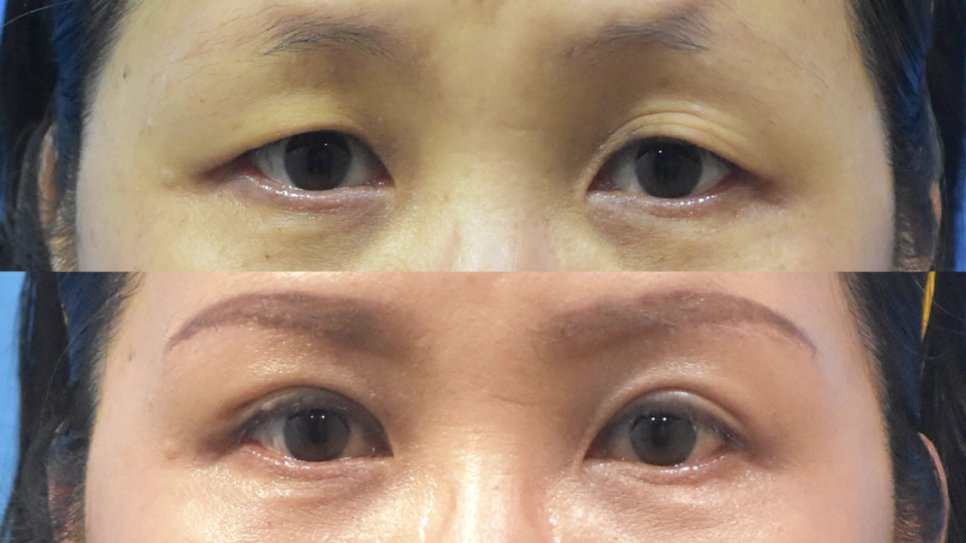
Moreover, in middle-aged and older adults, age-related ptosis tends to appear frequently. This occurs when the function of the levator palpebrae superioris muscle, which opens the eyes, is weakened. In such cases, the person may look sleepy, and visual decline such as astigmatism may also occur because of the drooping eyelids. Since it can also restrict the field of vision, it may cause not only cosmetic concerns but also functional problems.
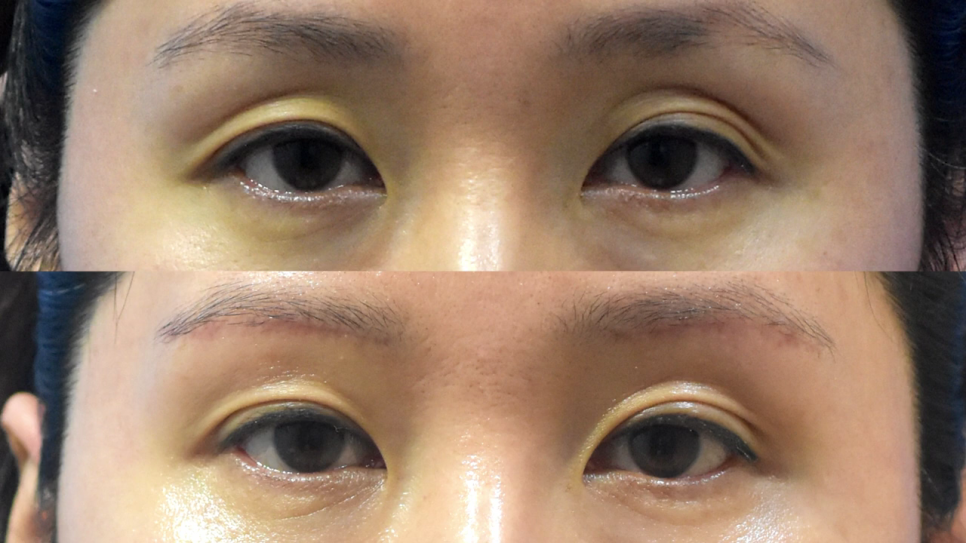
Depending on the affected area, the surgical methods can be divided into upper blepharoplasty and lower blepharoplasty, and both can be performed together with a midlife double eyelid procedure. First, the former is a method that strengthens the function of the levator palpebrae superioris muscle, which causes eyelid sagging.
Symptoms may include the eyelid drooping and covering the pupil, or the double eyelid line forming in multiple layers.
This can also negatively affect vision. During the surgical process, the eye shape and degree of sagging are checked in advance, and the line is planned to suit the individual. The procedure is performed on the principle of removing the muscles and fat from the sagging skin and then securing the double eyelid line. The incision is carefully sutured to help reduce scarring, improving the sagging eye shape and resulting in a clearer eye appearance.
The latter is a method that improves puffiness under the eyes by removing sagging skin and fat caused by gravity. It aims to improve under-eye wrinkles by lifting and fixing the area upward. Along with this, it helps reduce dark circles and allows the eyes to appear brighter. This method is performed after assessing the degree of sagging, the extent of fat protrusion, and the amount of skin to be removed. An incision is made in a less visible area beneath the lower eyelashes. Then, after releasing the under-eye groove, fat repositioning is performed, the stretched skin is removed, and the eyelid muscle is firmly fixed to the orbital periosteum for lifting. This also helps make the under-eye area cleaner and improves the overall appearance to look younger.

However, not everyone needs to undergo lower blepharoplasty and upper blepharoplasty together with a midlife double eyelid procedure, so it is advisable to make the decision through a thorough one-on-one consultation with the medical team before proceeding. Careful consideration is also needed when choosing the medical team. If they have extensive clinical experience and know-how, they will be able to design a detailed plan tailored to each individual. If the procedure is carried out through a differentiated process rather than a standardized one, ideal results can be achieved.

If you mainly have severe wrinkles above or below the eyes that make you look shadowed, puffiness under the eyes that makes you look tired, under-eye fat that makes you look older, fine wrinkles around the eyes that you want improved, sagging skin that makes you look older, or drooping upper eyelids that block your field of vision, then applying a midlife double eyelid procedure as soon as possible may help resolve those issues. One reason it is better to do a midlife double eyelid procedure as early as possible is that various symptoms can cause many inconveniences in daily life.

For example, skin aging can cause the outer corners of the eyes to droop, or the eyelid skin to sag and block the field of vision. Eyelashes may poke the eyes, causing frequent tearing or swelling. With such repeated symptoms, the skin around the eyes can even become irritated, which may lead to ophthalmic problems. For this reason, proceeding with a midlife double eyelid procedure promptly may be helpful. However, to avoid indiscriminate procedures, as mentioned earlier, choosing the medical team is of utmost importance. This is because the results, as well as potential side effects and issues related to revision surgery later on, can vary depending on the skill of the medical team, including whether they have extensive knowledge in the field and have treated many different cases. It is important to keep this in mind.
** This post is a promotional post written by Diva Plastic Surgery Clinic in compliance with the Medical Advertisement Act. **