
It is not right to judge people only by their outward appearance, but in workplaces where one must make a good impression in a short amount of time, as well as in meetings, interviews, and service industries that deal with people, it is natural to pay close attention to keeping one’s appearance neat and tidy.
In particular, because the nose is located at the center of the face, if it is not well defined or is low in shape, it can be difficult to create a three-dimensional, clear impression, so improvement may be needed.
However, hesitation can also arise due to concerns about obviousness or pain,
and in such cases, using a nose implant may be enough to emphasize natural-looking results.
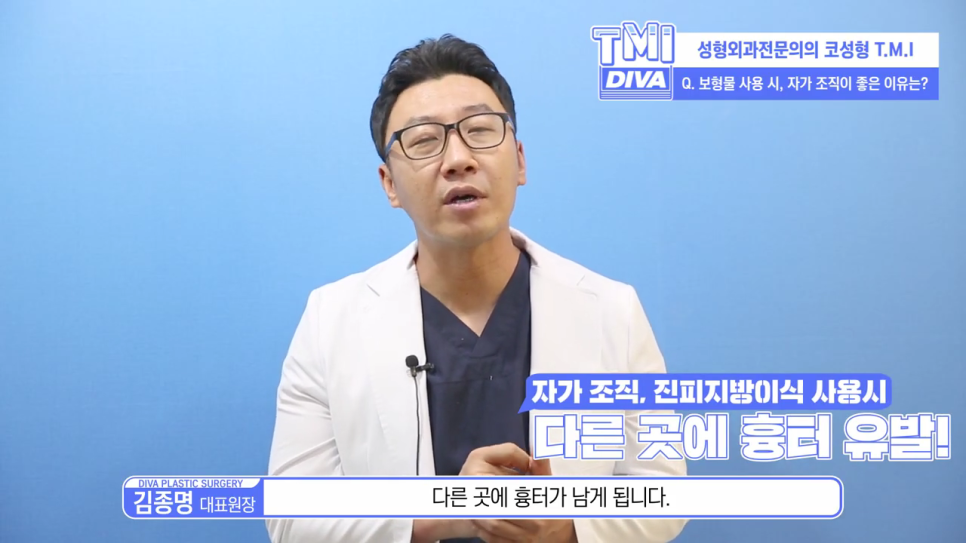
This procedure does not insert implants such as silicone; instead, it uses autologous tissue from the patient’s own body, such as septal cartilage, ear cartilage,
costal cartilage, autologous dermis, and fascia,
to create a more three-dimensional and natural-looking nose shape.
If there is reluctance to use artificial implants, or if there is a risk that the implant may show through due to inflammatory reactions or thin skin,
this procedure can be a good option.
The autologous tissues used here each have different characteristics, advantages, and disadvantages, so
it is important to make a decision based on sufficient communication with the medical staff.

Among the autologous tissues used for nose implants, ear cartilage has a shape similar to the nose and is round and elastic, making it suitable for building the structure of the nasal tip.
It is also an adequate area to use additionally if there is not enough septal cartilage.
The septum is the area located inside the nose, and after it is shaped, it is mainly used to lift the nasal tip or
extend the length of the nose.
Because it is harvested from inside the nose, there is no need for a separate incision process,
which also reduces the risk of scarring.
Next, costal cartilage is also called chest cartilage, and since it is located below the ribs,
concerns about side effects can be reduced, and its strong support and durability make it possible to secure a sufficient amount.
In addition, it can be considered a method that offers both functionality and functionality.

Another autologous tissue used for nose implants, autologous dermis, serves to fill beneath the skin when the skin over the bridge of the nose is thin
or when there is insufficient soft tissue in the nose.
Because it causes almost no foreign-body sensation, it is advantageous for those with sensitive skin or thin skin.
Lastly, fascia is mainly taken from the temporal fascia inside the scalp.
It works by wrapping the implant in fascia, creating an additional layer of fascia between the implant and the skin,
so it may also be suitable in cases of thin skin.
As can be seen, there are many materials for nose implants alone, and the areas they can be applied to are diverse, so the outcome can vary depending on the skill of the medical staff.
Therefore, it may require the delicate hands of medical staff who can handle multiple types and help each person choose the ideal autologous tissue according to its distinct strengths.
In general, when surgery is performed using ear cartilage for a nose implant, it corrects the nasal column, bridge, and nasal tip,
harmoniously connecting the overall height of the nose with the tip.
If it is applied together with septal cartilage, ear cartilage is used for the nasal tip where curvature is needed,
and septal cartilage is used where straight support is needed,
allowing for better improvement.

Because costal cartilage is a strong supportive autologous tissue, it can also be used in cases where the cartilage support structure is weak or
tissue damage has occurred and revision nose surgery is needed.
Since it uses cartilage or dermis from one’s own body, inflammation and
foreign-body reactions can be reduced, significantly lowering the burden of side effects as well.
In general, septal cartilage and ear cartilage are used frequently in nose implants, and after several revision surgeries,
if both ear cartilage and septal cartilage are no longer available, costal cartilage may be used.
Autologous dermis is used when raising the bridge of the nose. Compared with silicone,
its shape is not particularly ideal, but when repeated revision surgeries limit the use of silicone,
it is applied as a secondary option to raise the bridge of the nose.

If an artificial implant is used, the likelihood of inflammation is higher,
and it may also cause the implant to become crooked.
In addition, there are often cases where the bridge of the nose becomes too high and looks burdensome,
and even on CT scans, a disadvantage is that its shape is clearly visible.
By contrast, when autologous tissue is used for a nose implant, the tissue integrates well,
so its shape cannot be identified even on imaging, resulting in a more natural-looking nose.
Therefore, unless you are trying to raise a very low nasal bridge significantly, choosing this procedure, which is less noticeable, may be wise.

Before undergoing the procedure, it is a good idea to establish a plan through a one-on-one examination and consultation with the medical staff.
Using a variety of three-dimensional diagnostic systems, different nasal structures, bone frameworks, shapes, and more can be examined in detail,
and based on this, the proper procedure should be carried out.
If the plastic surgery team has years of clinical experience, then even if any variables arise,
they will be able to respond smoothly based on the accumulated expertise they have built up over time.

If you are reluctant to use artificial implants, want to raise both the bridge and tip of the nose at the same time,
have a contracted nose with a lifted and shortened tip, or no longer have cartilage left to use after using septal cartilage,
please consider selecting the most suitable option for you from the autologous tissues discussed above and seek change.
Please use this as a reference.
** This post is a promotional post written by Diva Plastic Surgery Clinic in compliance with the Medical Advertising Act. **