
The eyes are an important area
that determines a person’s impression.
Whether by choice or not, we live our lives
while being evaluated by many people,
and people with small, heavy-looking eyes
may feel stressed even if
they do not consider themselves that kind of person.
People who are stressed by small, heavy-looking eyes
often worry at the same time about thick fat above the eyes.
In such cases, eyelid fat removal and
a surgery to define the double eyelid line
can be performed together to create a brighter, more refreshing image.

Although eye surgery is highly aesthetic,
it is not a procedure that can be performed
without considering functional aspects,
so it is advisable to work with a board-certified plastic surgeon
who clearly understands the anatomical perspective.
You can think about how to create the double eyelids,
from a natural in-line shape to a more dramatic out-line
that makes the eyes look brighter and more open.
The most important thing is to meet a trusted specialist
and find the design that suits you best.
When you work with a board-certified plastic surgeon with abundant experience,
you can find a method that allows you to feel positive changes
through a wider range of cases.

When performing eyelid fat removal as well as
other eye procedures,
various problems can arise,
and the results can vary greatly depending on
who performs the surgery.
That is why, rather than focusing on cost,
it is recommended that you choose a clinic
after checking which board-certified plastic surgeons are on staff.
Once the design has been decided and the surgery is performed,
even if you are not satisfied with it,
you will need to live with that state for a while,
so it is only natural that caution is necessary.
Of course, as time passes, you may decide you do not like it and undergo revision surgery,
but revision surgery is not only more difficult than the first surgery,
it also increases the likelihood of related problems,
and there is a possibility that the desired design will not be achieved,
so caution is needed.

To achieve large, open-looking eyes,
it is not enough to define only the double eyelid line.
Of course, some people may do well with only the line,
but not everyone has little fat around the eyes
and thin skin, so the surgery must be performed
with the patient’s condition in mind.
Some people need eyelid fat removal at the same time as line formation
to create a clearer look,
and some people need additional procedures such as inner corner or outer corner extension
to improve length-related concerns,
so operating on every patient in the same way
is not advisable.

However, not everyone will perform surgery
just for me, exactly as I want.
That is why, rather than focusing on cost,
it is best to prioritize finding a clinic
that can closely examine the condition of my eyes.
When choosing a plastic surgery clinic,
if you select one that provides 1:1 customized care,
the likelihood that surgery tailored to you will be performed
can be a little higher.
If the chief doctor personally provides consultation and diagnosis,
performs the examination and surgery,
and also handles post-operative care,
that would be ideal.

If you do not have much experience and cannot judge
how much eyelid fat should be removed,
the likelihood of problems even after surgery
can only be higher.
Since in many cases it cannot be reversed once performed,
extra caution is necessary.
If too much eyelid fat is removed
or too little is removed,
it is difficult to achieve satisfactory results.
This is because, for the line to settle properly
and form into the desired design,
appropriate eyelid fat removal must be performed.
These aspects are the skills of a board-certified plastic surgeon
that come from experience, which is why
experience is considered more important than anything else.

When getting double eyelids,
you may wonder whether to choose the incision or non-incision method.
The non-incision method has a relatively faster recovery period
and leaves less scarring, so you may want to choose it.
However, choosing between incision and non-incision
should not be based on personal preference alone,
but should be decided after carefully examining
the condition of the eyes.
The amount of muscle and fat,
as well as the degree of sagging,
are among the many factors that must be checked.
Rather than what to choose being the important thing,
the results should come first,
so the surgery that can bring about the most positive change
should be selected.

After eyelid fat removal
and creating the line through an incision,
swelling will occur.
Usually, major swelling goes down within 1 to 2 weeks,
and residual swelling may last for 3 months,
or even up to 6 months,
so it would be good to keep this in mind when making plans.
Compared with the buried-suture method performed without an incision,
the recovery period is longer,
but there is less worry about the line loosening,
and a sharper line can be created,
so many people who undergo the incision method
feel highly satisfied.
Each method has its pros and cons,
so please decide after consultation
depending on the characteristics of your eyes.
After eyelid fat removal,
many people say that not only do their eyes look more refreshing,
but their eyes, which once felt heavy, also become lighter,
making daily life more comfortable.
In addition to those who naturally have a lot of fat above the eyes,
it is also possible to improve cases where fat grafting was performed
to correct sunken eyes,
but the eyes became bumpy,
or where the eyes feel heavy due to excessive grafting,
so rather than just worrying,
please consider having a consultation.
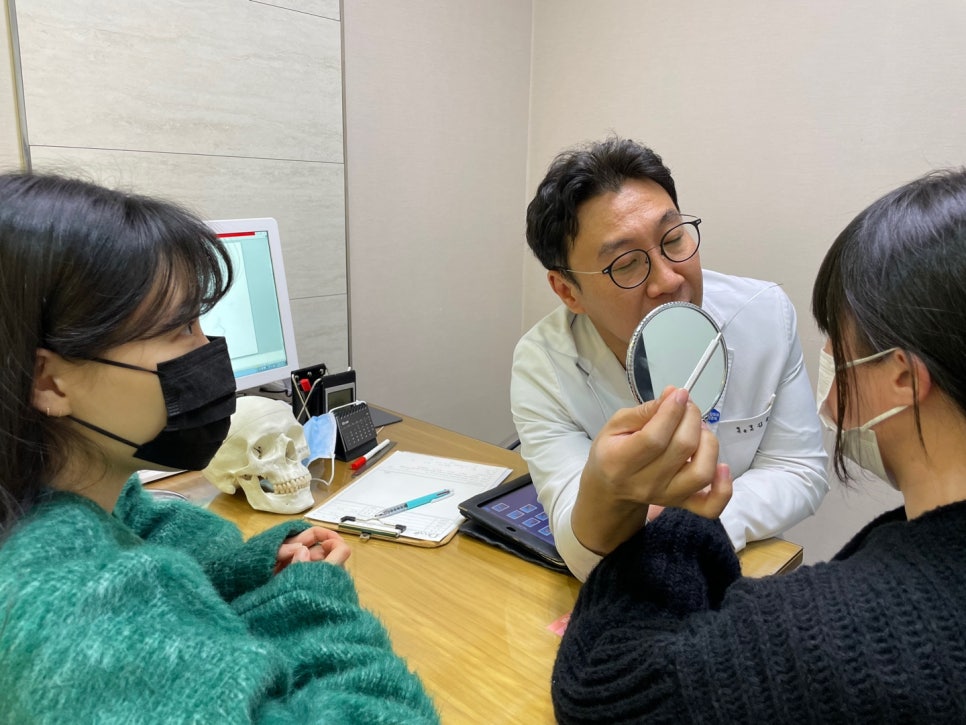
Eye surgery is a method that can have a significant impact
on daily life due to the dramatic change it creates.
After thinking for a long time about whether it is necessary for you,
please choose your clinic and plastic surgeon carefully
to achieve good results.
This was Diva Plastic Surgery, which provides systematic 1:1 customized care
from consultation to post-operative management.
** This post is a promotional post written by Diva Plastic Surgery in compliance with the Medical Advertising Act. **