Laser Treatment for Melasma and Solar Lentigo
Hello, this is Raon Dermatology in Sangwangsimni :)
Today’s topic is "pigment treatment." There always seem to be a lot of opinions about pigment laser treatment and laser toning. There are many comments such as, "The treatment effect is not very large," or "Even after treatment, it easily comes back." But is that really true? Today, let’s look at how pigment concerns can be improved through laser toning.
Laser Treatment for Melasma and Solar Lentigo
Melasma & Solar Lentigo
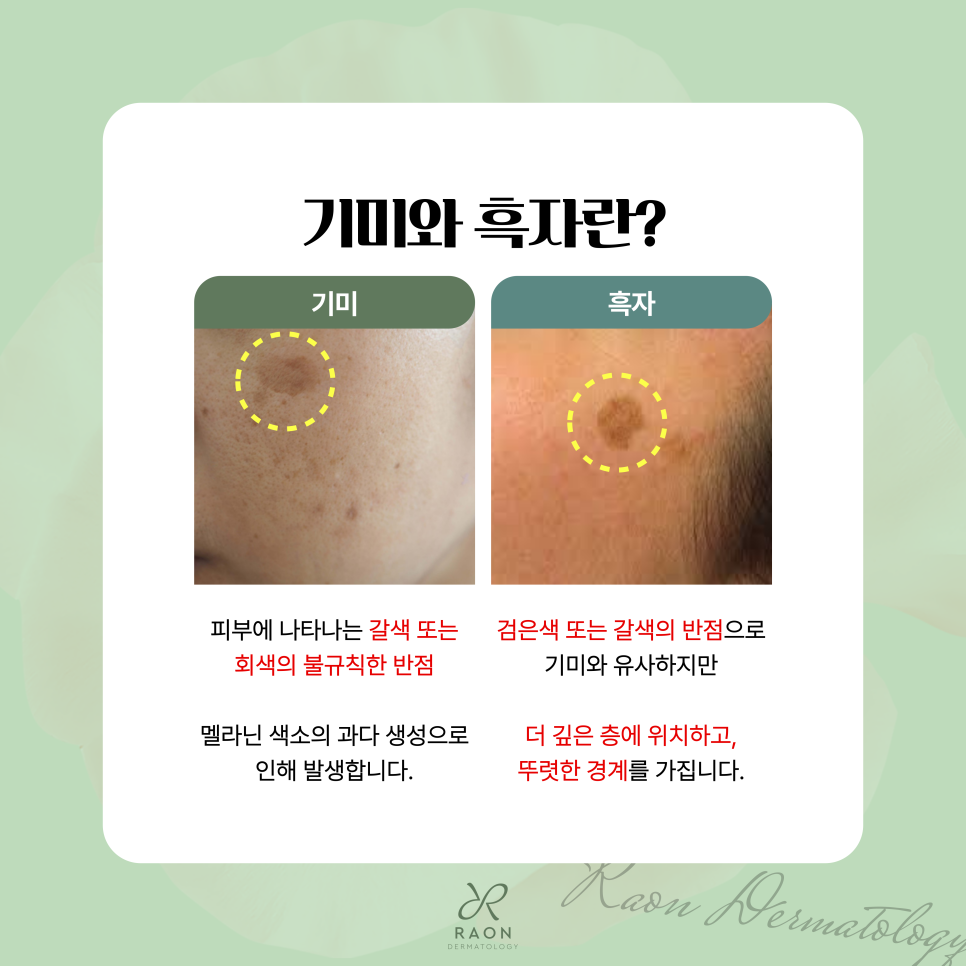
First, let’s briefly look at melasma and solar lentigo, which can be considered the most representative pigment lesions. Most people have probably heard of melasma at least once. It refers to irregular brown or grayish spots, and it is a lesion caused by excessive production of melanin pigment. It is located in the deeper layers of the skin, and when high-intensity lasers are applied, it can actually darken due to recoil.
Solar lentigo is a lesion that appears black or brown and is often confused with melasma. It is located in a deeper layer than melasma and is characterized by clear borders. It usually occurs due to sun exposure, but it can also form naturally during the aging process.
Melasma & Solar Lentigo
Key Points of Laser Toning
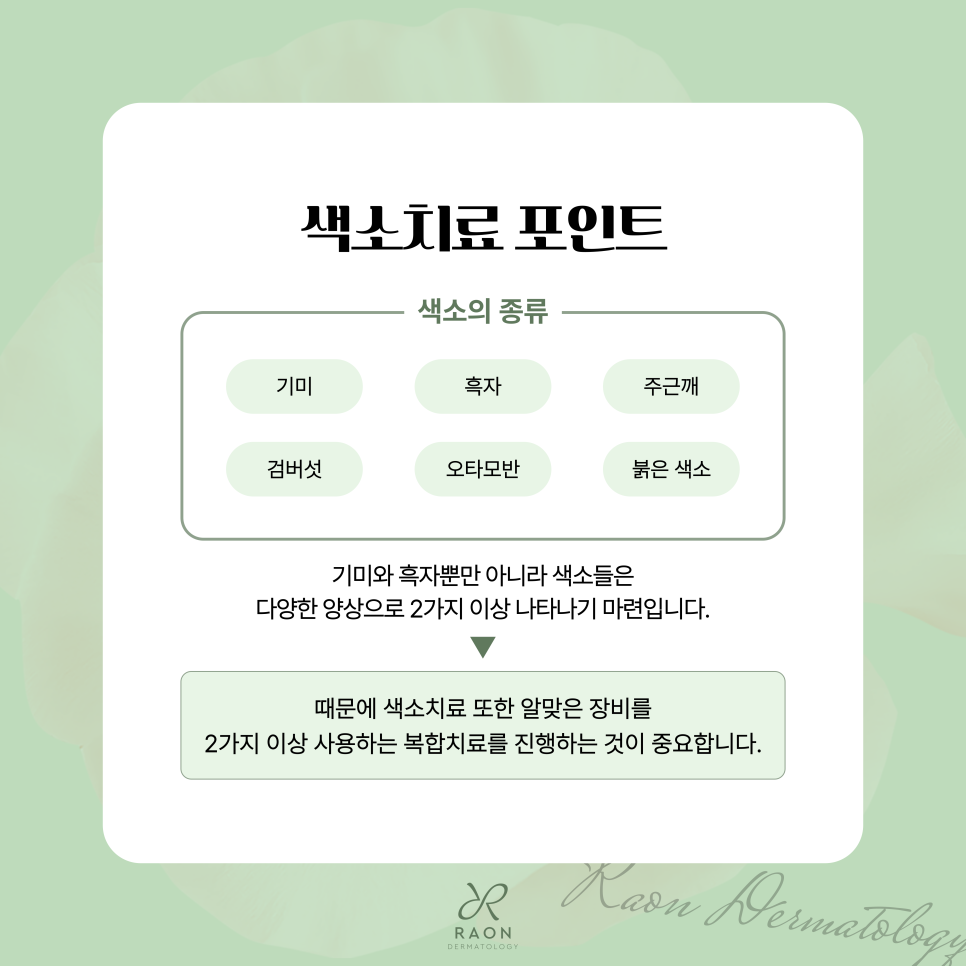
When you look at photos of melasma and solar lentigo, what comes to mind? From color to size and shape, they do not seem very different at first glance. In addition, there are many different types of pigment lesions, such as freckles, age spots, and Ota nevus, and in many cases they are difficult to distinguish with the naked eye. Also, in many cases, several types of pigment are mixed together in the same person at the same time.
Because of this, it is virtually impossible to treat all lesions with just one laser. The core of laser toning is to combine multiple laser devices suited to each pigment type and treat them gradually.
<Important Points>
-
Various types of pigment lesions
-
At least 2–3 different types are mixed together
-
Multiple lasers are needed for each type
Key Points of Laser Toning
- Helios 785
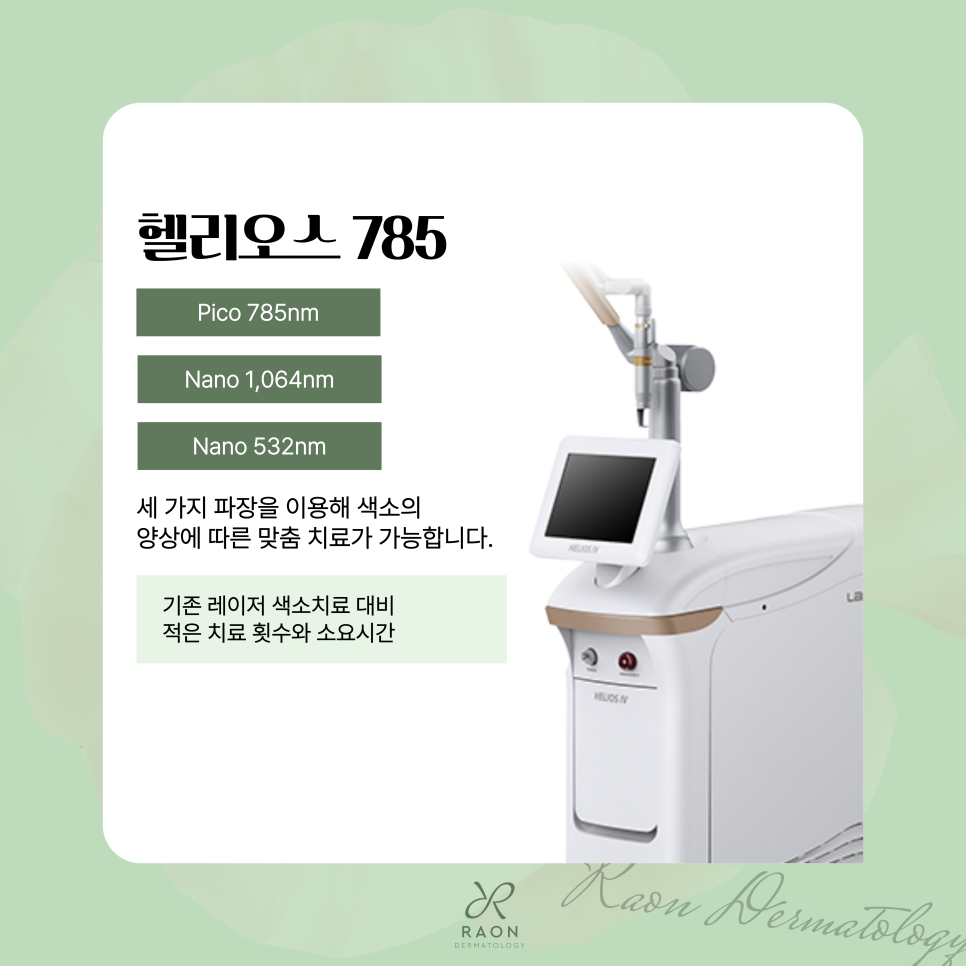
From this slide onward, let’s look at several laser treatments commonly used for pigment treatment. The first is a laser called Helios 785. It can treat a variety of pigments using a total of three wavelengths: the 785nm picosecond wavelength and the 1,064nm and 532nm nanosecond wavelengths.
Because it uses both picosecond and nanosecond technology, it allows for customized selection depending on the type of lesion. That means it can treat many different kinds of lesions! It also has the advantage of producing satisfactory results in fewer treatment sessions.
<Helios 785>
-
Picosecond + nanosecond
-
Can treat multiple types of pigment
-
Melasma, blemishes, freckles, etc.
-
Satisfactory results with fewer sessions
-
Helios 785
-
M22 IPL
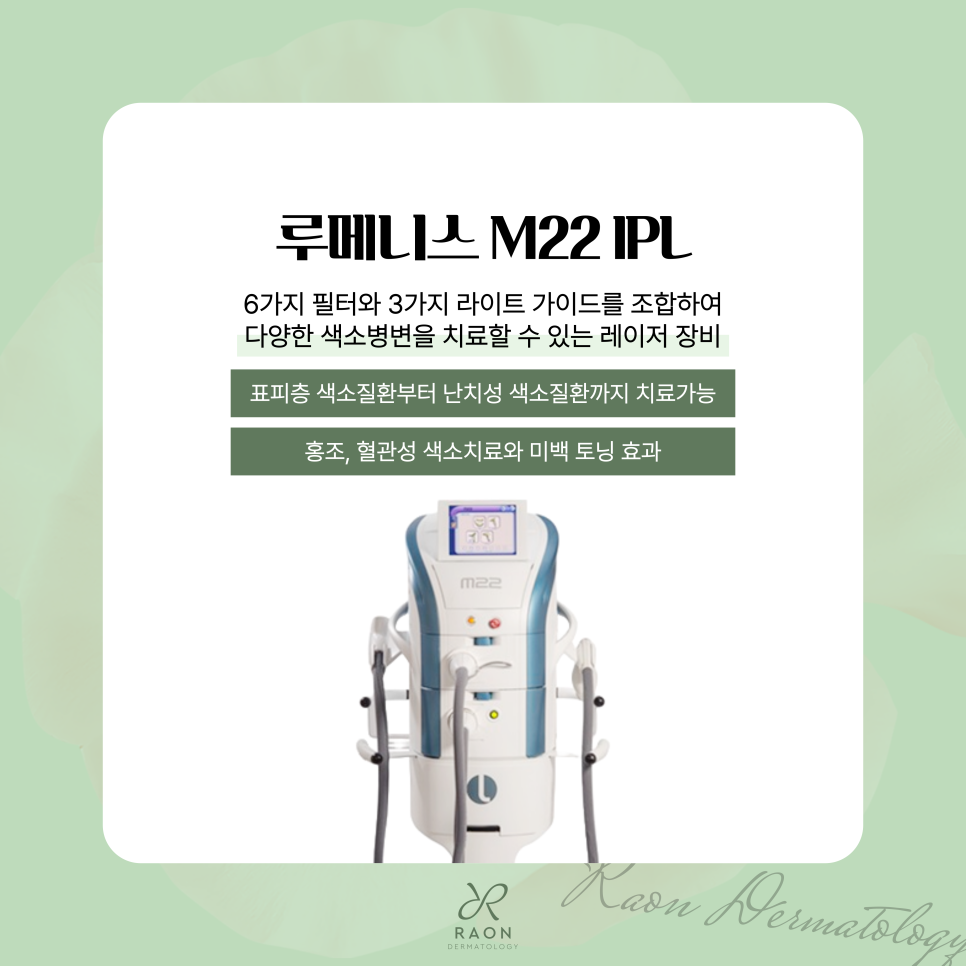
Next, let’s look at M22 IPL. It uses various wavelength ranges from 515 to 755nm and can combine 6 filters and 3 light guides! Thanks to this, like Helios 785, it can effectively treat multiple pigment lesions.
It is effective not only for melanin-based pigments such as freckles and melasma, but also for vascular lesions. For those who have brown pigmentation along with redness in various areas of the face, combining M22 IPL treatment can be a good option.
<M22 IPL>
-
6 filters & 3 light guides
-
Can treat various pigment types
-
Also applicable to vascular lesions
-
M22 IPL
-
DDR Laser
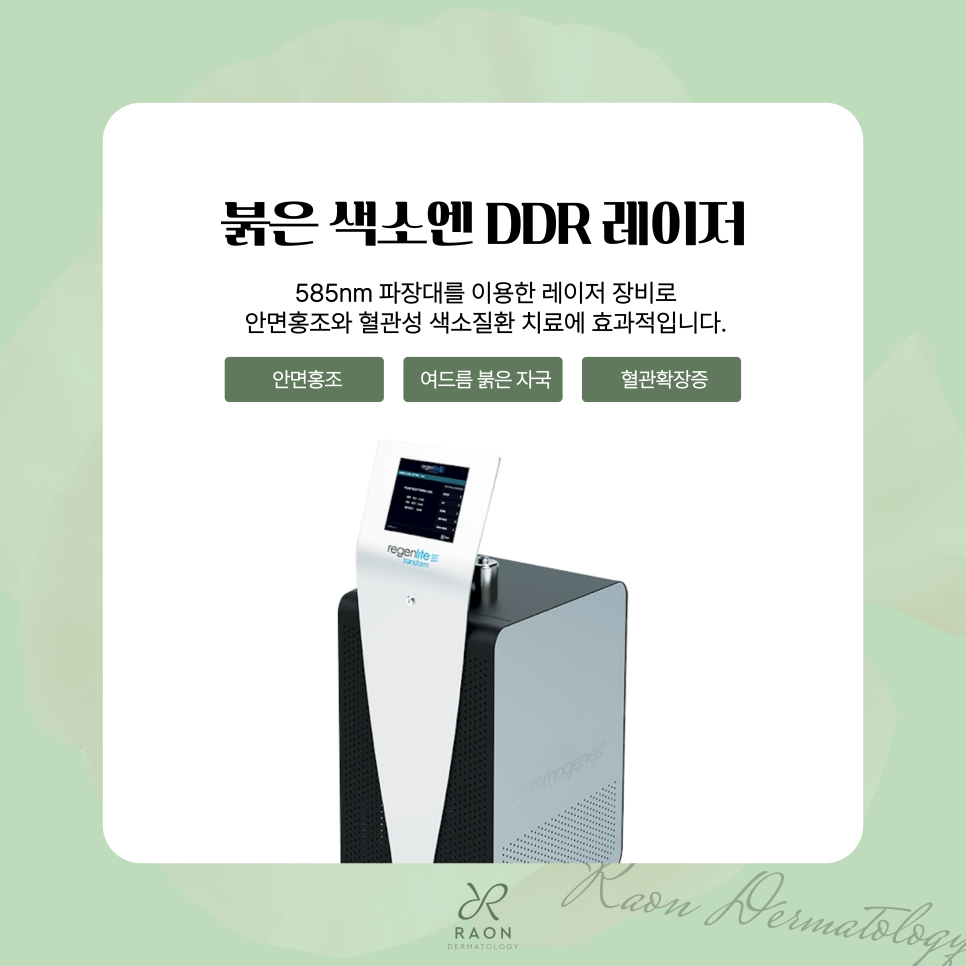
Lastly, let’s take a look at the DDR laser, which is highly effective for facial flushing and vascular pigmentation. It uses a 585nm wavelength and can maximize treatment effects by appropriately utilizing biostimulation mode and thermal mode. Because it has a high absorption rate for red tones, it is very helpful when treating vascular melasma or the red pigmentation of acne.
Meanwhile, I mentioned that the DDR laser is also effective for treating facial flushing! By destroying excessively dilated blood vessels and calming inflammation within the skin, it can quickly improve facial redness.
"Combination treatment according to skin condition"
So far today, we have looked at various aspects of pigment treatment. It is certainly a difficult and demanding treatment area. However, if you receive proper treatment in the right way, you can expect sufficient results. If you are concerned about pigmentation, please be sure to refer to today’s information :)
- DDR Laser
Things to Consider During Pigment Treatment

Located in a prime spot near Wangsimni Ogeori
👉 Easy access to 4 subway lines
Line 2 (Sindang, Sangwangsimni, Seongsu)
Line 5 (Singeumho, Haengdang, Majang, Dapsimni)
Gyeongui-Jungang Line (Oksu, Eungbong, Cheongnyangni)
Suin-Bundang Line (Seoul Forest)