Burn treatment, quick response is important!
Hello, this is Wangsimni Laon Dermatology Clinic :)
We have recently received a few inquiries about burn treatment, and while it is a problem that can happen very easily in everyday life, many people seem unsure about how to respond. So today, through this blog post, I would like to summarize how to respond in the early stages of a burn and how to manage it afterward. Early response is more important than anything else, so please read today’s post carefully :)
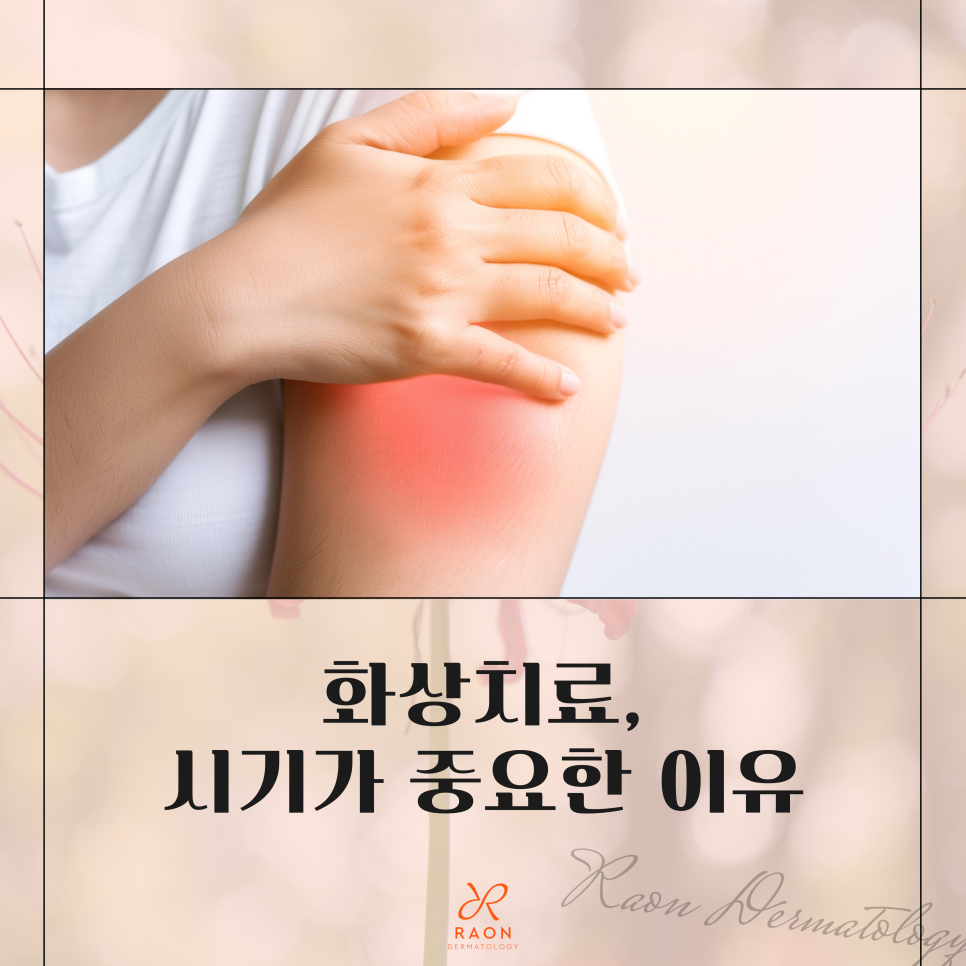
Burn treatment, quick response is important!
What is a burn?
A burn refers to skin damage caused by sudden exposure to hot water, equipment, or ultraviolet rays. Not only heat and electricity, but also chemicals can be the cause! For burns, not only the moment of the accident but also the care afterward is extremely important. At first, it may simply look red, but if it is not managed properly, please remember that there is a high risk of it worsening into deep tissue damage.
Situations that can easily happen in daily life include getting burned while cooking, being careless while using a hair straightener, hot compresses, and strong UV exposure. In particular, UV burns can seem to have only mild early symptoms, making it easy to let your guard down! However, as time passes, they can lead to pain or pigmentation, so caution is needed.
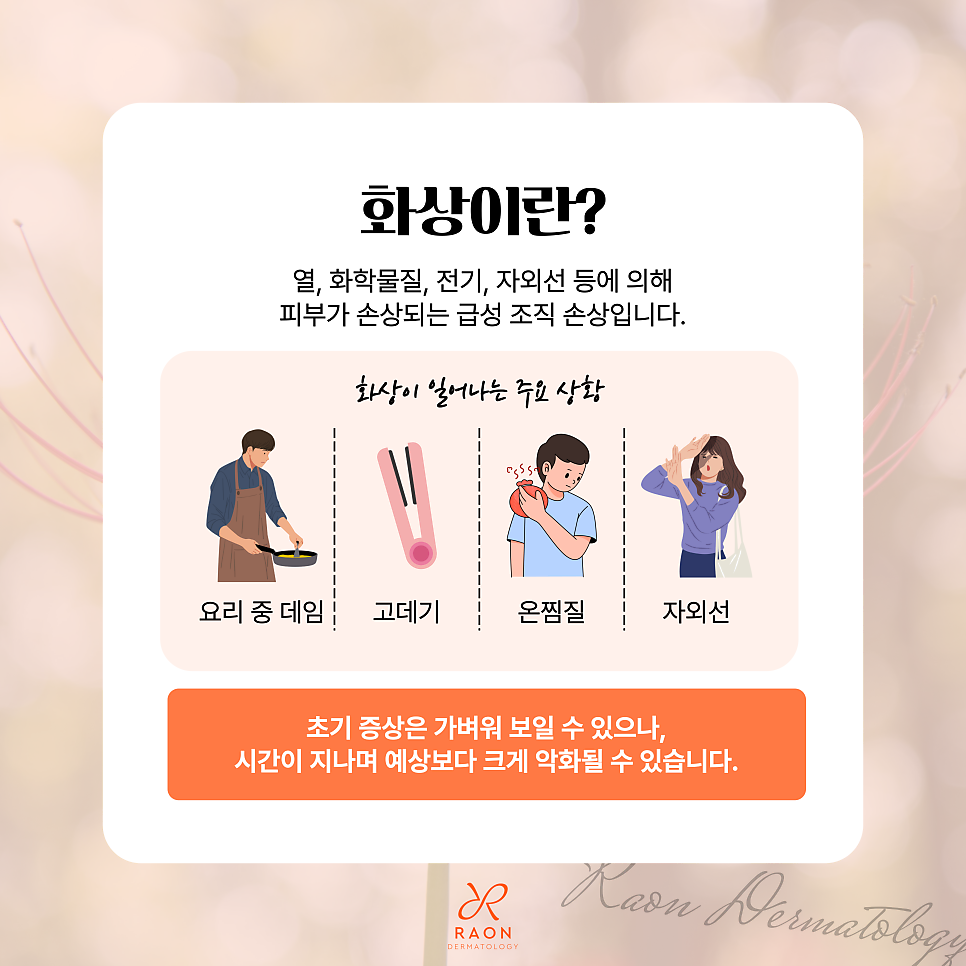
What is a burn?
Different types
Burns are generally classified according to the depth of the damaged skin. The mildest first-degree burn affects only the epidermis, causing redness and swelling, but it heals without scarring. However, starting with second-degree burns, blisters form and the pain becomes more severe. Do not leave it untreated and get treatment quickly, right~? First, superficial burns can recover within 2 weeks if treated properly.
On the other hand, deep second-degree burns are deeper and may be difficult to recover from, to the point that skin grafting may be necessary. And the most serious third-degree burn causes necrosis of the full thickness of the skin and absolutely requires professional treatment. As such, treatment methods and care vary greatly depending on the degree and depth of the damage, so a dermatologist’s care is not a choice but a necessity.
<From first degree to third degree>
-
1st degree: epidermal damage, heals without scarring
-
2nd degree superficial: clear blisters and pain
-
2nd degree deep: skin grafting may be needed in severe cases
-
3rd degree: full-thickness skin necrosis, professional treatment essential
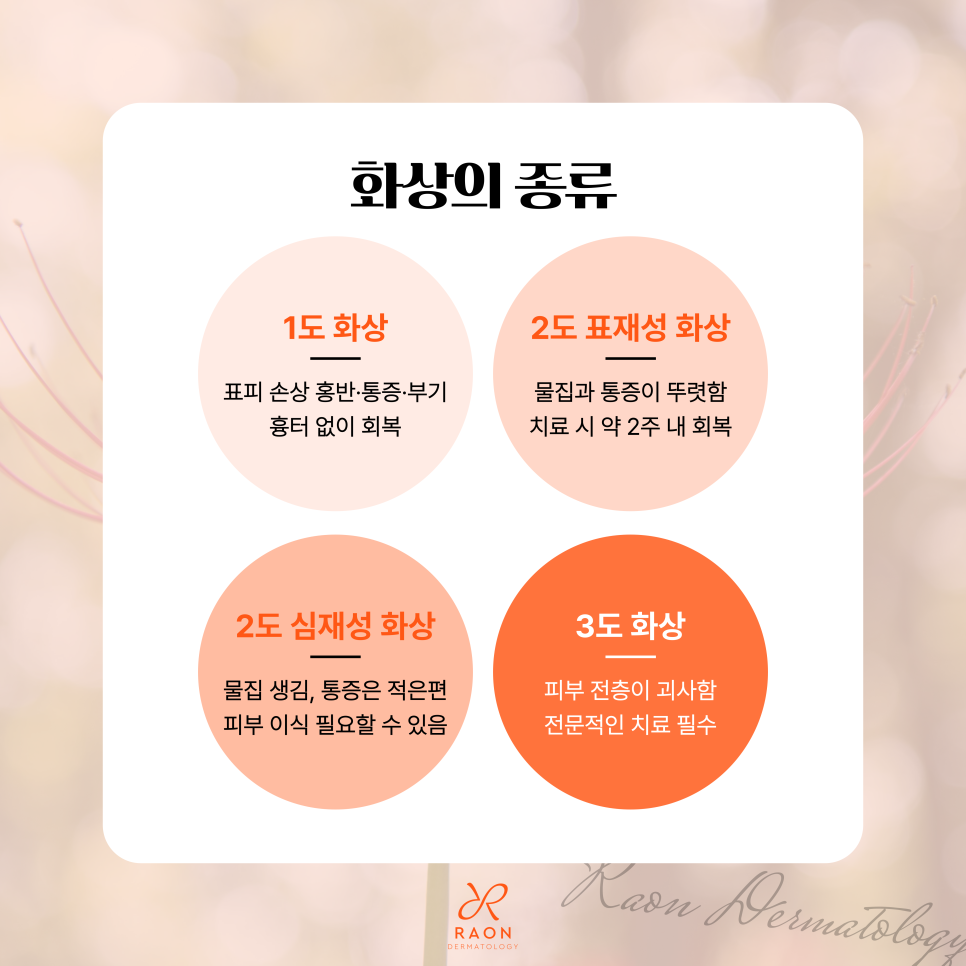
Different types
What happens if you don’t get treated in time?
As mentioned earlier, the longer you delay, the more serious the condition can become. If you leave it alone, thinking it is no big deal in the beginning, the damage can progress deeper into the skin, increasing the risk of scars and pigmentation remaining behind. In particular, recovery with only ointments purchased from a pharmacy is difficult, and side effects such as thickened skin or discoloration may occur!
To prevent such problems, early treatment is absolutely necessary. Even if scars remain, dressing and anti-inflammatory treatment at a clinic must be carried out in order to reduce the size and color of the scar. In addition, after treatment, scar care using laser devices and other methods can minimize the traces of the burn.
Q. What happens if you don’t get treated in time?
-
Becomes progressively worse over time
-
Difficult to recover with pharmacy ointments alone
-
Scars and pigmentation remain semi-permanently
-
Dressing and anti-inflammatory treatment must be performed
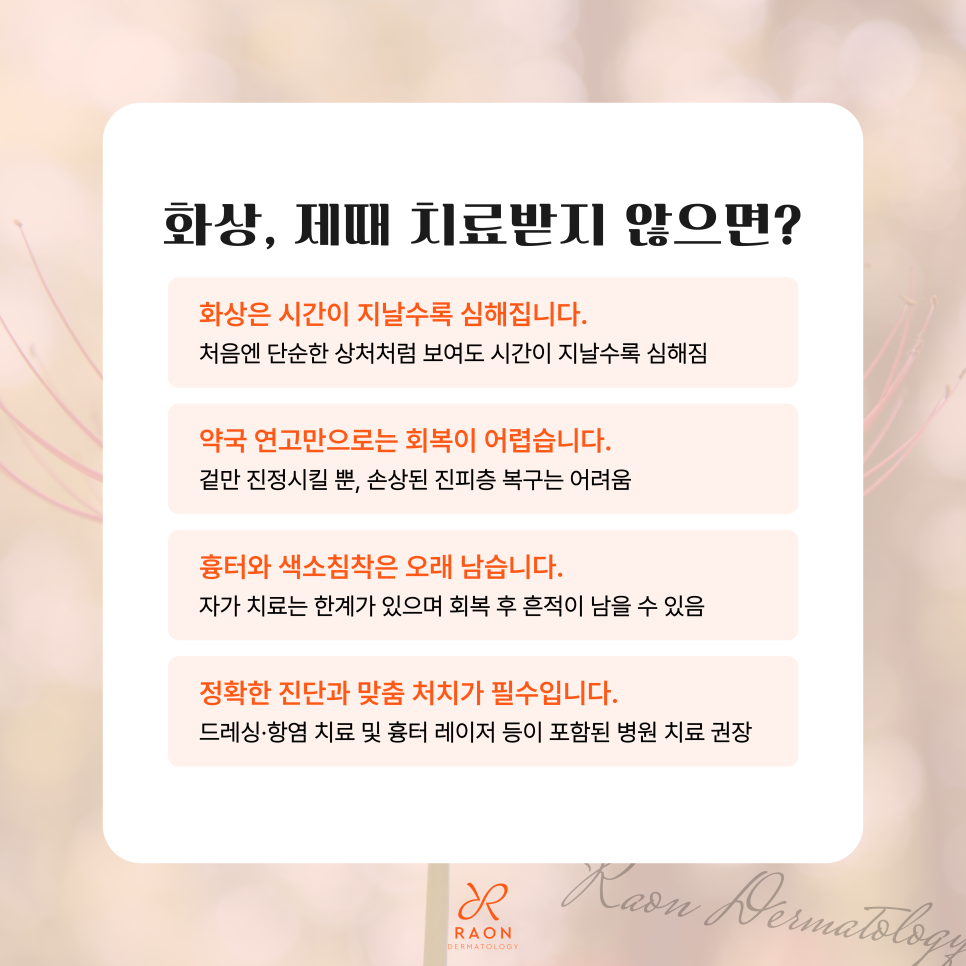
What happens if you don’t get treated in time?
How should you respond at the early stage?
Then what is the first thing to do when you get a burn? First, you should cool the injured area thoroughly with cold water for at least 20 minutes. This helps reduce heat damage and also relieves pain. At this time, you should not use ice, and if blisters form, it is important not to burst them and to leave them as they are. Bursting them increases the risk of secondary infection!
After that, you should visit a dermatologist as quickly as possible to have the exact condition checked. Be careful, as trying to soothe it with ointments or home remedies may actually worsen the condition. Please keep in mind that proper early response leads to a better treatment prognosis and leaves fewer aftereffects :)
<Early response methods>
-
Cool immediately with cold water for at least 20 minutes (do not use ice)
-
Do not burst blisters
-
Visit a dermatologist quickly for treatment
-
Avoid irritating ointments and home remedies
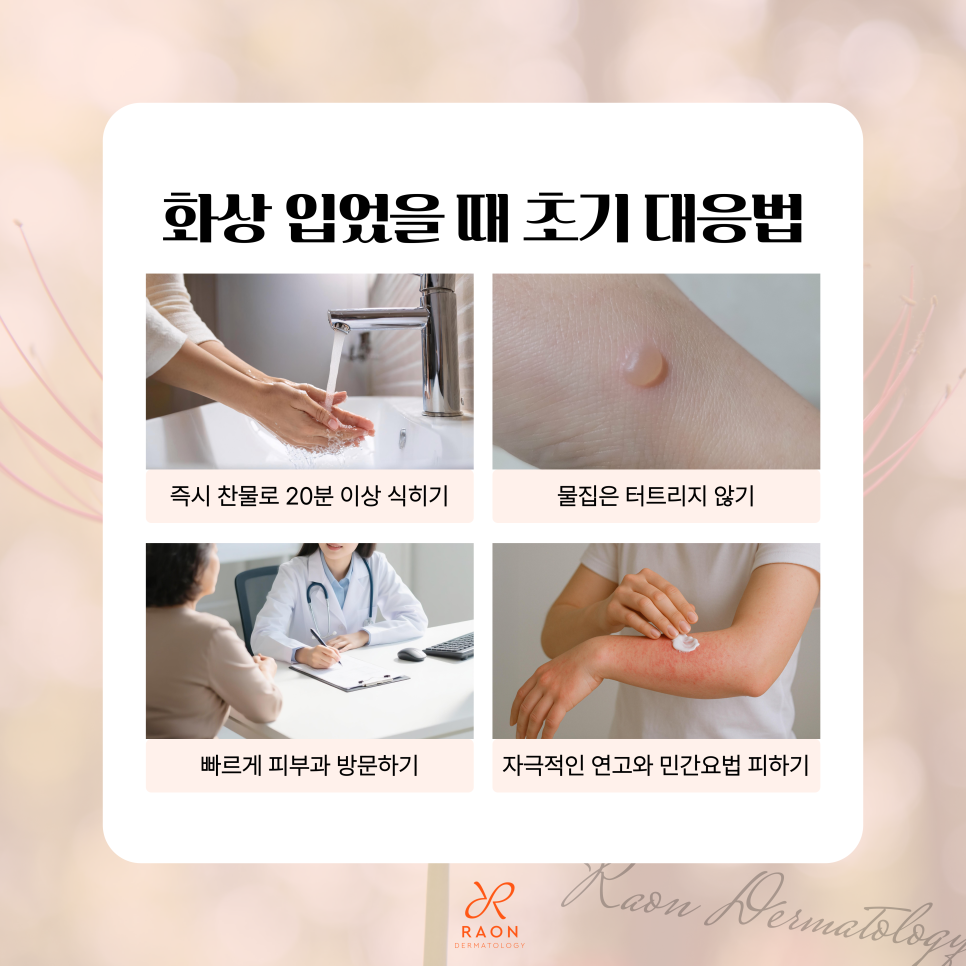
This is how to respond early!
How to care after treatment
After treatment, care should not be neglected either. It is necessary to change the dressing regularly, keep the wound area clean, and properly block excess moisture. In particular, during the recovery period, you should refrain from drinking alcohol and smoking so that the wound can heal normally.
When visiting a dermatology clinic, regenerative treatment can be combined from the early stage of treatment~ Through this, the scars left by the burn can be minimized. Pigmentation and erythema can also be minimized through appropriate early treatment.
"Do not leave it untreated; consult a specialist!"
So far, we have looked at how to respond to burns and how to treat them. As emphasized throughout the post, prompt response can minimize your time / effort / cost. Please be sure to remember the points covered! Then I will wrap up today’s post here. Thank you!
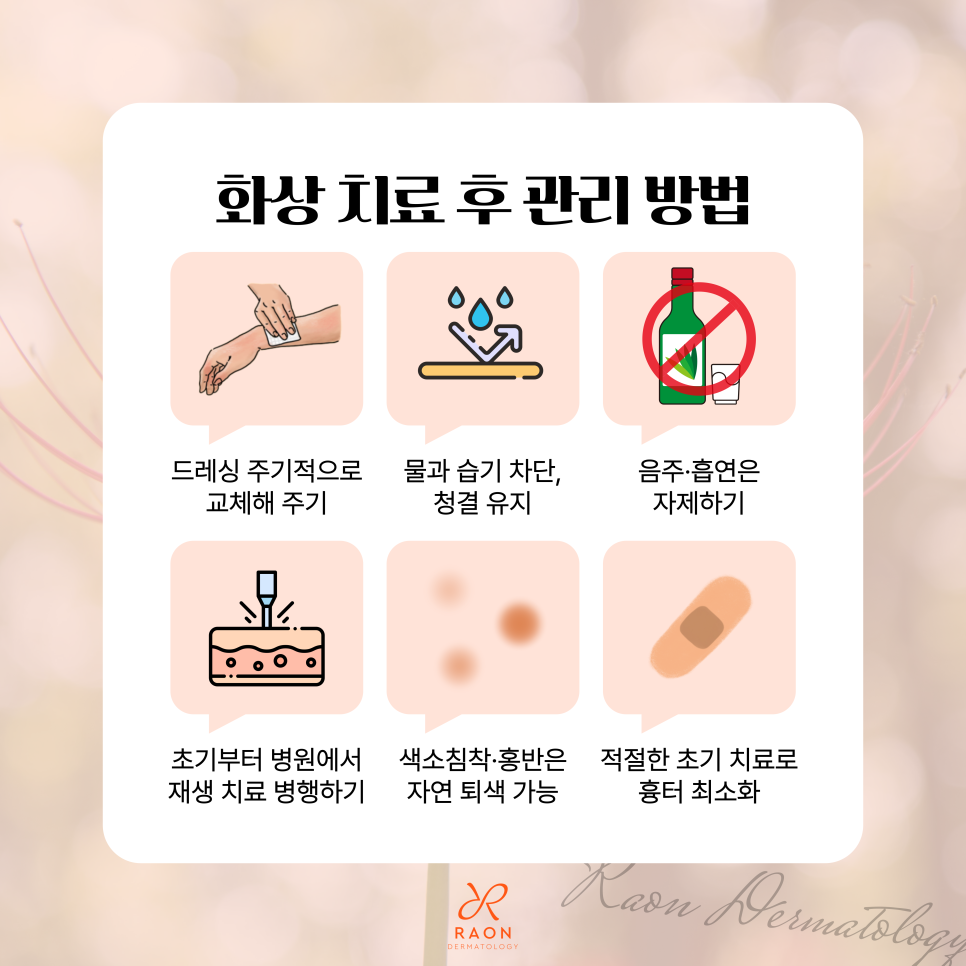
How to care after treatment
Early response and treatment for burns
Located in the prime area near Wangsimni Intersection
- Exit 9 of Wangsimni Station, Haengdang-dong, Seongdong-gu -
👉 Direct access to 4 subway lines
Line 2 (Sindang, Sangwangsimni, Seongsu)
Line 5 (Singeumho, Haengdang, Majang, Dapsimni)
Gyeongui-Jungang Line (Oksu, Eungbong, Cheongnyangni)
Suwon–Bundang Line (Seoul Forest)