Corn Cryotherapy
Hello, this is Raon Dermatology in Seongdong-gu!
A callus on your toe that appeared without you noticing. You may think it is just a simple callus, but as time passes, it becomes more prominent and may start to hurt. In many cases, this can actually be a corn! It is not life-threatening, but it can cause a lot of inconvenience in daily life. So today, let’s take a look at the "cryotherapy" method, which can treat corns safely and effectively :)
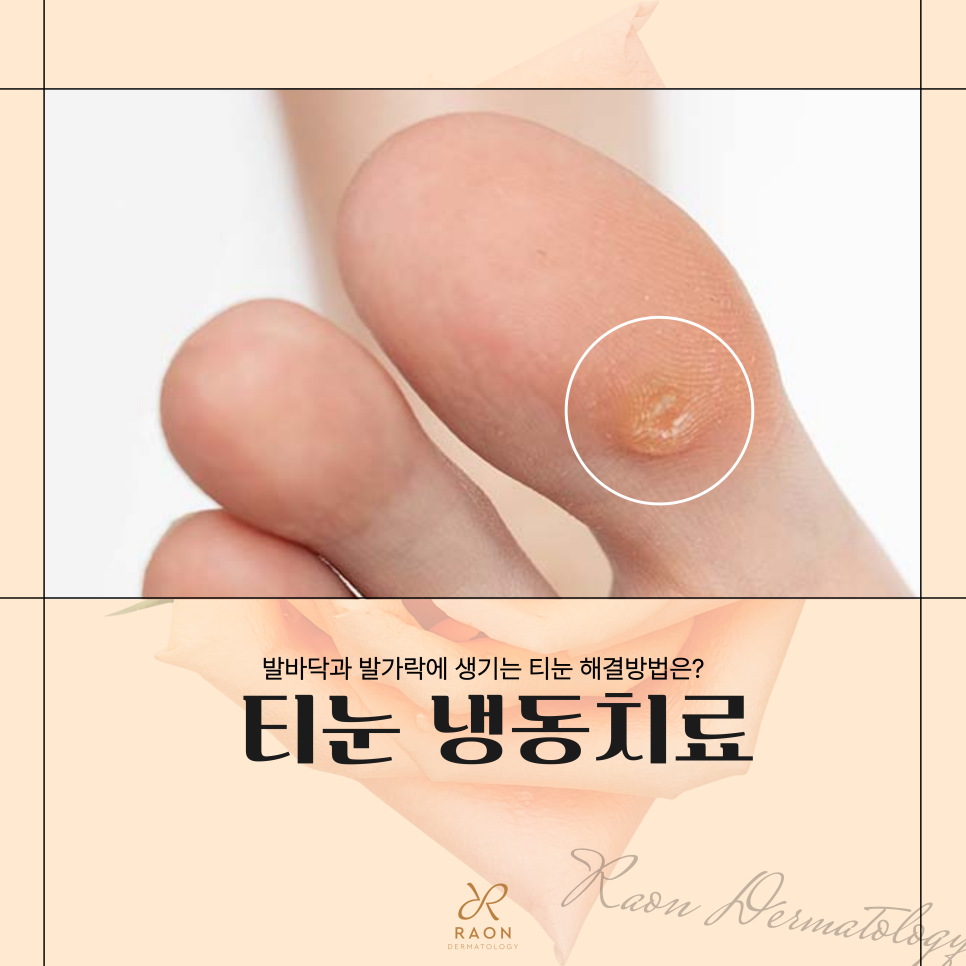
Corn Cryotherapy
What Is a Corn?
A corn is a localized thickening of the skin caused by repeated pressure or friction. It may look like a simple callus at first, but as a core develops inside, pain begins to appear! It usually forms on the toes or soles of the feet, and it can cause a sharp pain when walking.
Unlike simple skin thickening, a corn is a lesion with a hard keratin core embedded in the center. As this core continuously digs into the skin and stimulates the nerves, pain occurs when pressure is applied or when walking. If left untreated, it can gradually become deeper, so it is best to treat it early if possible.
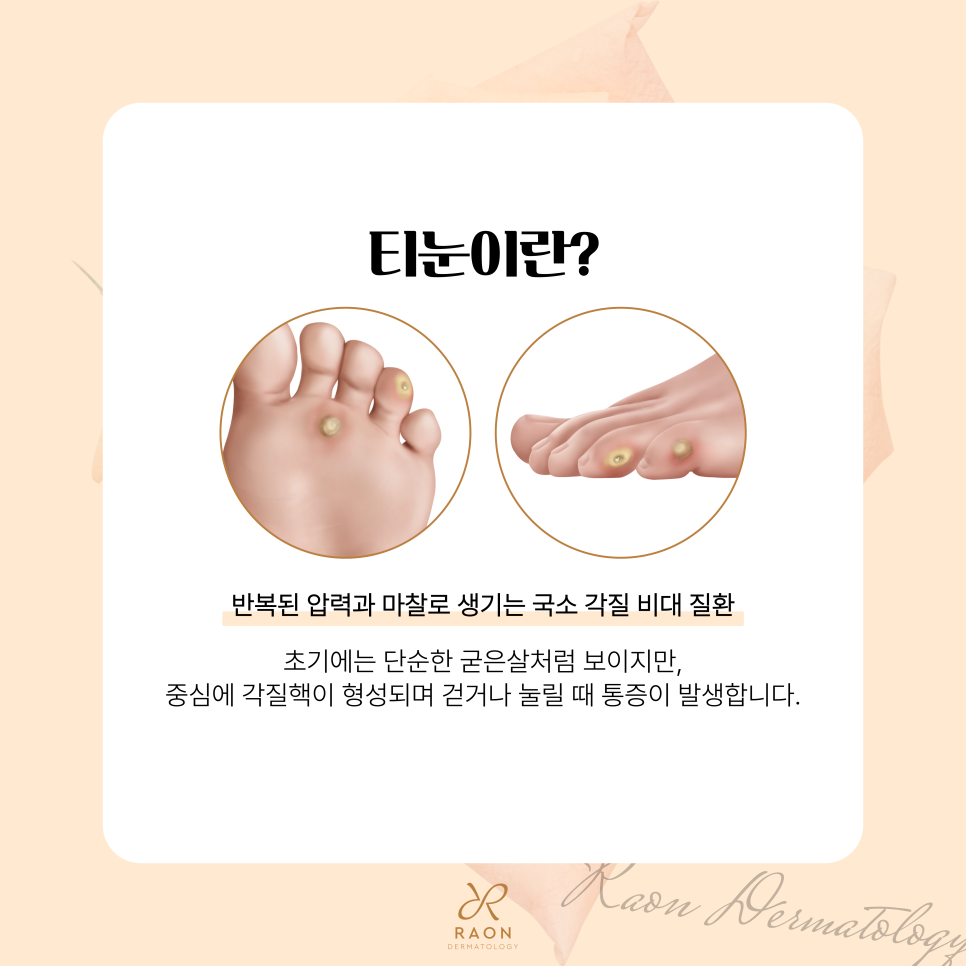
What Is a Corn?
Main Causes and Features
So why does it happen? In general, it occurs when a specific area is repeatedly irritated over time. Wearing shoes that are too small and do not fit well, high heels, or hard dress shoes for long periods can concentrate pressure on the toes or soles, making corns more likely to develop. They can also occur in people whose weight is repeatedly placed on one side, such as athletes or those who hike often.
Unlike ordinary calluses, corns are characterized by very distinct localized tenderness. As mentioned above, there is a hard keratin core embedded like a central root, so pressing on it causes a stabbing pain. However, unlike warts caused by a viral infection, corns are not contagious.
<Causes and Features>
-
Continuous irritation such as small shoes or excessive walking
-
Repeated weight bearing on one side
-
Pain caused by a hard core when it develops
-
Unlike calluses, localized pain is clearly present
-
Unlike warts, it is not contagious
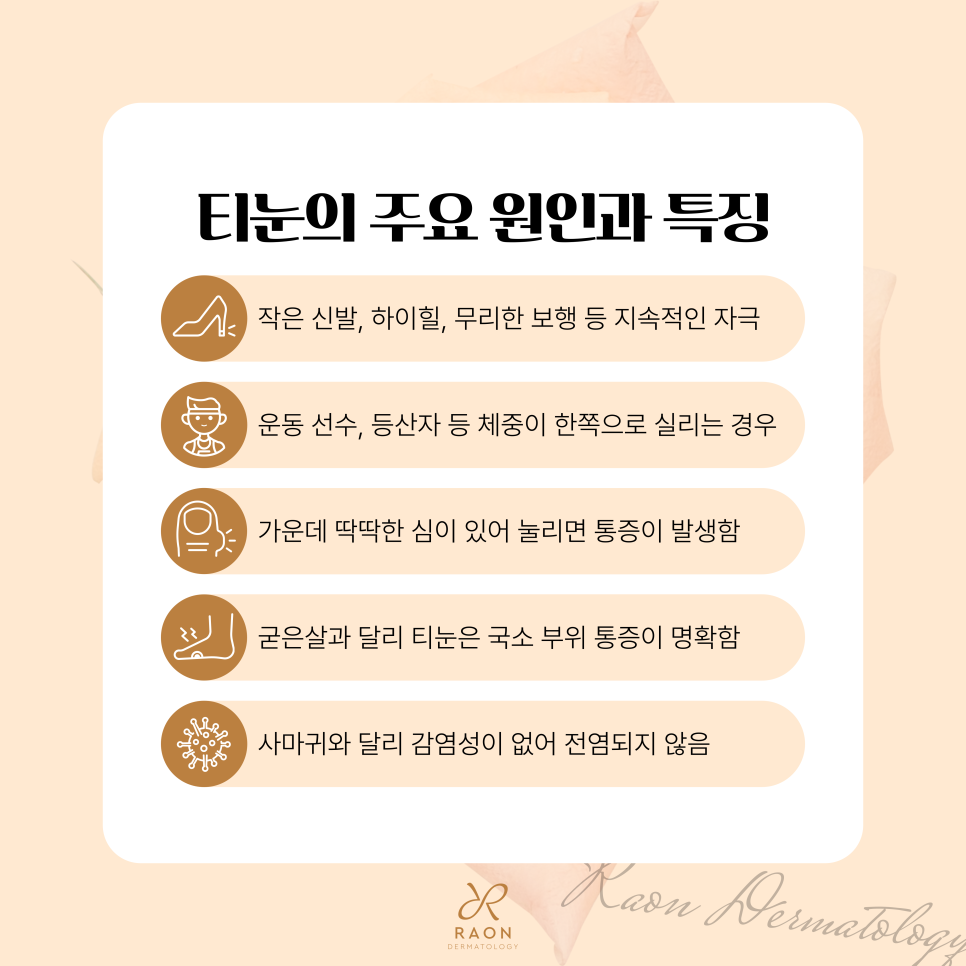
Main Causes and Features
Corn Cryotherapy
For corn treatment, cryotherapy, that is, a method using liquid nitrogen, is widely used. When liquid nitrogen at about -196°C is applied to the center of the corn for a short time, the lesion cells can be rapidly cooled and destroyed. After that, the lesion is guided to fall off during the skin’s regeneration process.
A major advantage is that the corn can be removed without a laser or incision, making it relatively simple to apply. In particular, when reaching the deeply embedded core, treatment intensity and depth control are important. Cryotherapy can target the center accurately, which may also help reduce the possibility of recurrence later on.
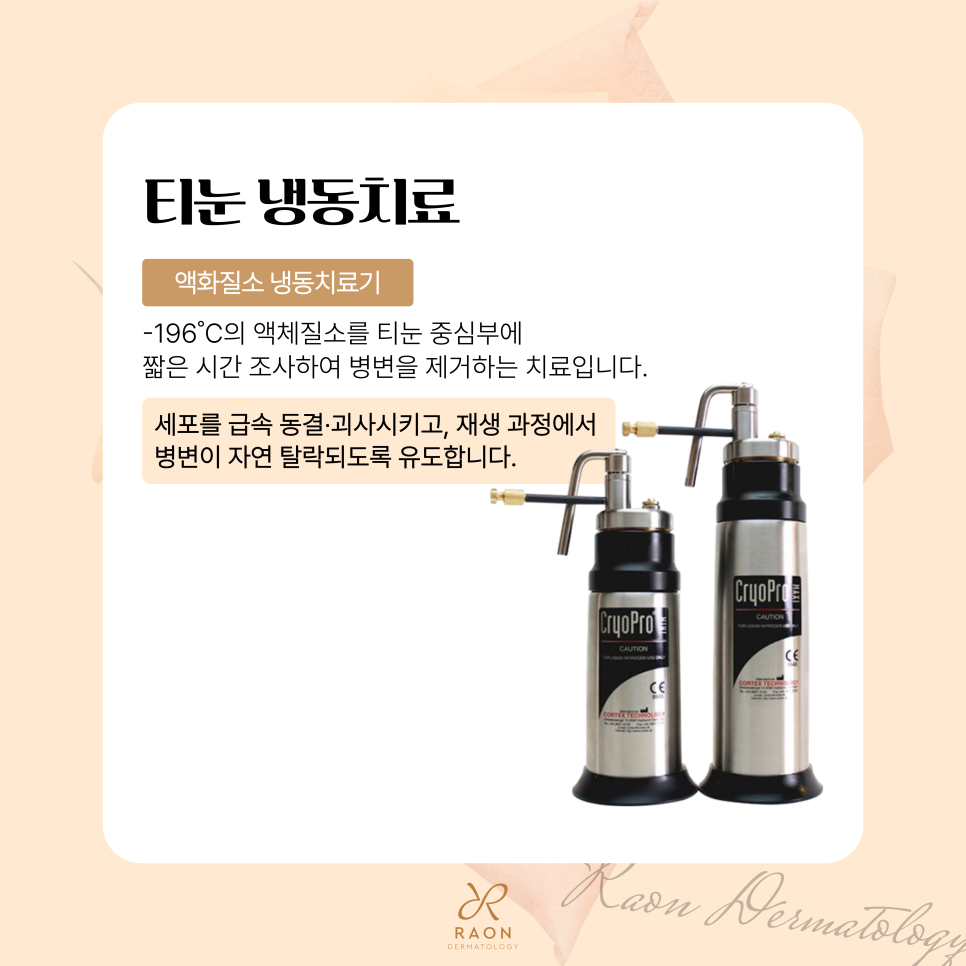
Corn Cryotherapy
What Are the Advantages?
So what advantages does cryotherapy have compared with other treatments? First, it is less burdensome because it is a non-surgical method. Since only the lesion area is selectively frozen and removed, damage to surrounding tissue is minimal, and it has the advantage of being able to treat even the deeper parts of the corn. Please keep in mind that if it does not reach the center sufficiently, the chance of recurrence increases accordingly.
It is also a good option to consider even during a busy daily routine because the treatment time is short and recovery is relatively quick. As the keratin naturally falls off and the skin gradually returns to normal, recovery is often possible without additional sutures or dressings.
<Safe and Reliable>
-
Selectively removes only the lesion without incision
-
Reaches the center to help prevent recurrence
-
Treatment time and recovery period are relatively short
-
The skin naturally recovers to normal afterward
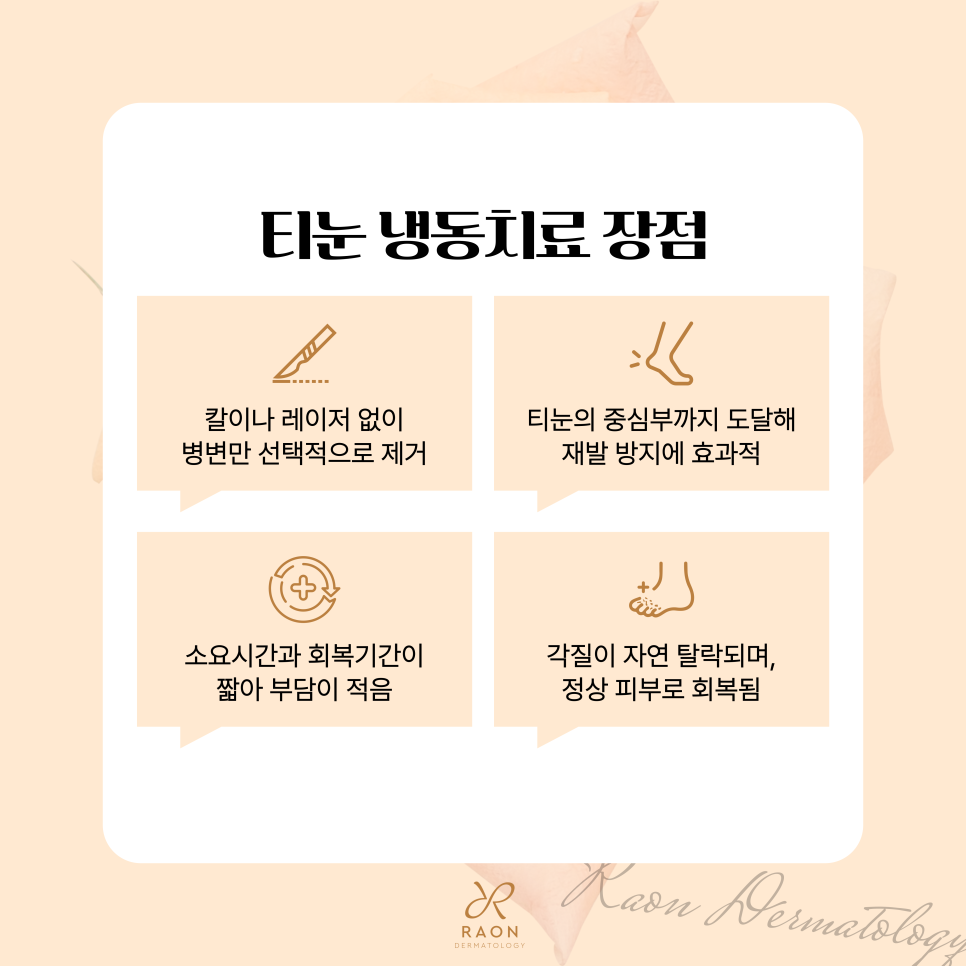
What Are the Advantages?
Things to Watch Out for After Treatment
After cryotherapy, following a few precautions carefully can greatly help recovery. You should avoid scratching the treated area or intentionally removing scabs, and be careful not to put pressure on it so as not to irritate the area. If blisters form more than necessary, you should pay extra attention to hygiene! If the lesion is deep, one treatment session may not be enough, so repeated cryotherapy may be needed. You can learn more about this after a consultation with a specialist, right~?
<After-Treatment Care>
-
Do not touch blisters or scabs that form after treatment
-
Be careful not to apply pressure to the treatment area
-
If a blister occurs, maintain strict hygiene
-
Repeat treatment may be performed if necessary
-
Normal daily activities are possible right away
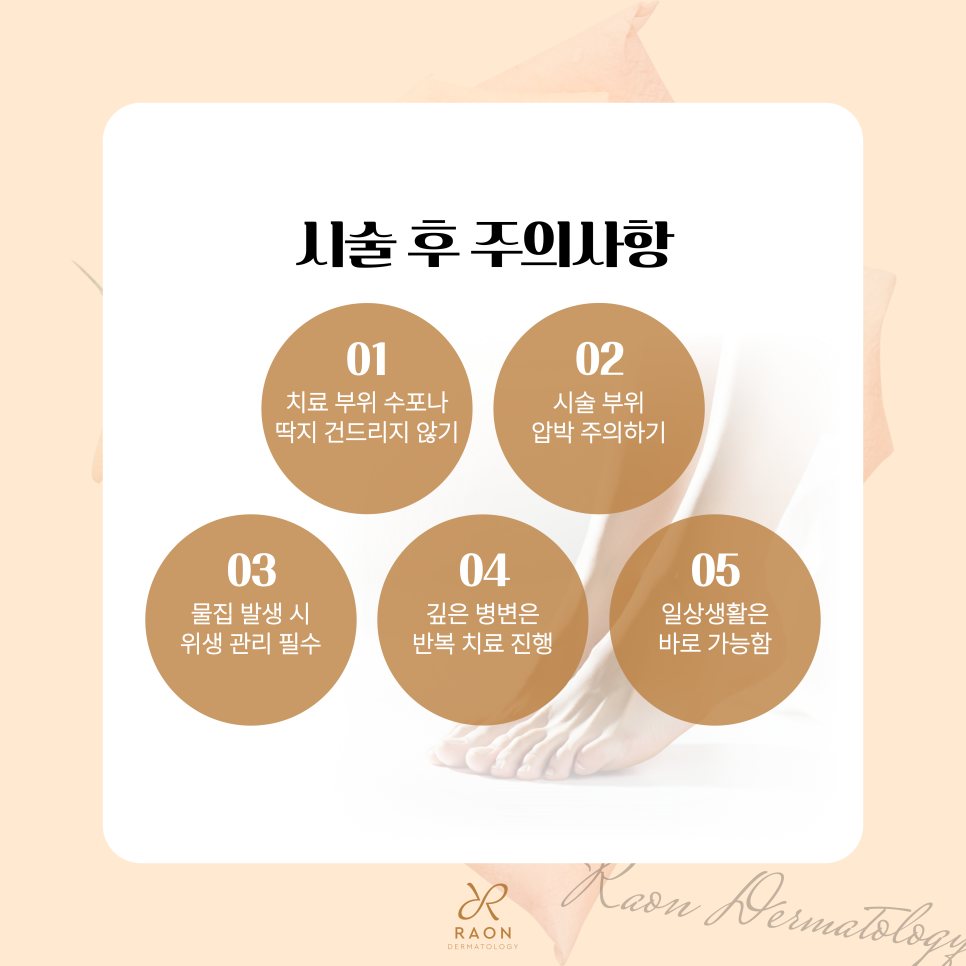
Things to Watch Out for After Treatment
How to Care After Cryotherapy

Located near Wangsimni Intersection, within immediate walking distance of the station
- Wangsimni Station Exit 9 in Haengdang-dong, Seongdong-gu -
👉 Easy access to 4 subway lines
Line 2 (Sindang, Sangwangsimni, Seongsu)
Line 5 (Shinkumho, Haengdang, Majang, Dapsimni)
Gyeongui–Jungang Line (Oksoo, Eungbong, Cheongnyangni)
Suin–Bundang Line (Seoul Forest)