Burn Treatment After a Summer Vacation
Hello, this is Raon Dermatology in Wangsimni!
When you go on a summer vacation, you end up spending more time outdoors than usual at beaches, swimming pools, campgrounds, and more. Even during enjoyable times, unexpected skin burns can easily happen! Not only strong sunlight, but also hot flames, oil, and contact with cooking utensils can cause burns, so caution is needed. In this content, we will go over the types and stages of burns that can easily occur during a summer vacation, as well as the proper treatment and aftercare methods.
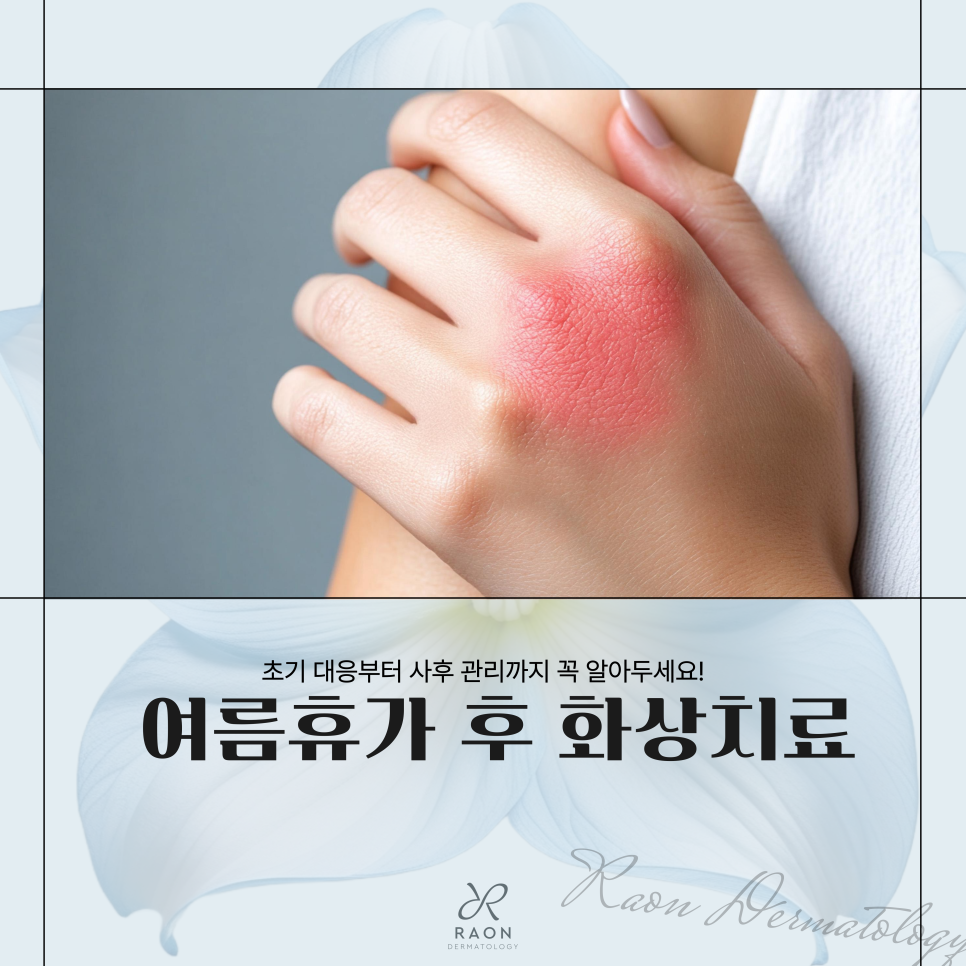
Burn Treatment After a Summer Vacation
Burns That Occur in Summer
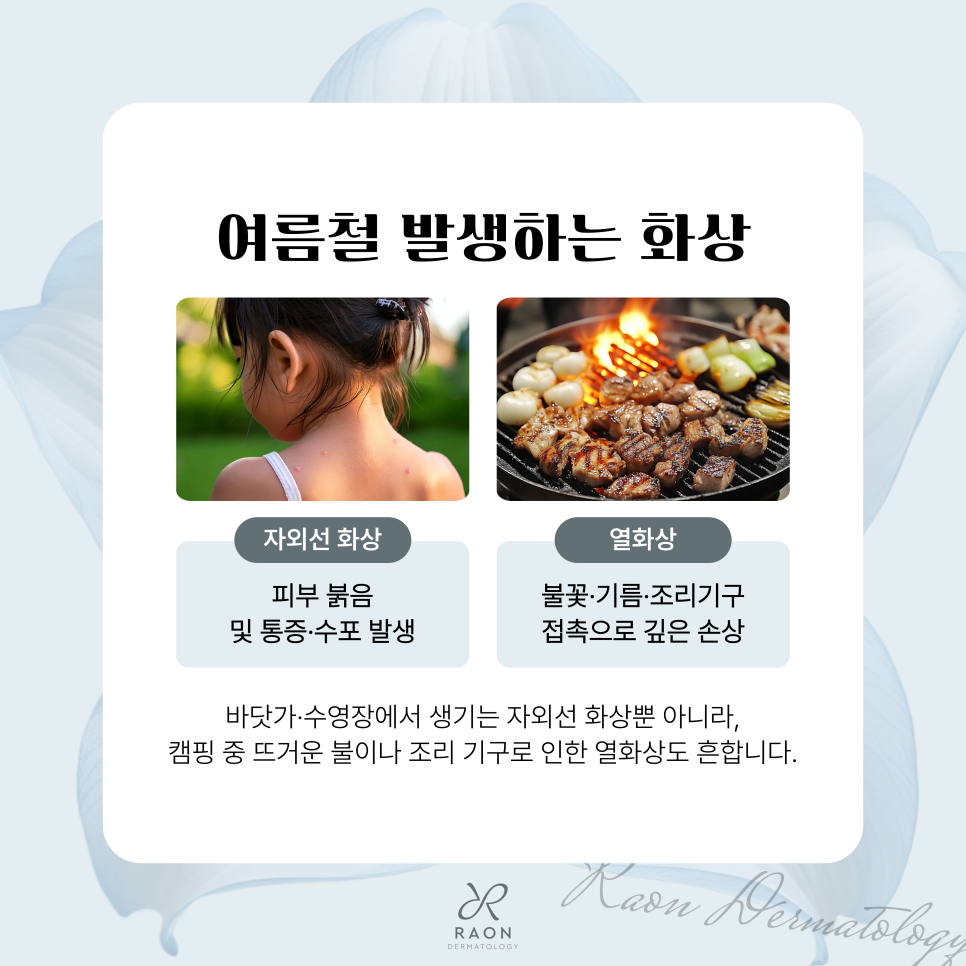
Burns commonly experienced at summer vacation spots can be broadly divided into two types. First, there are ultraviolet burns caused by prolonged exposure to sunlight. In particular, when swimming in the sea or playing in the water, the skin becomes wet, which increases UV penetration, so even a short period of exposure can cause the skin to turn red or become painful. In some cases, the skin may peel or ooze, so it should not be thought of as simply “getting sunburned.”
Second, there are thermal burns. These often occur when sparks fly while using an outdoor barbecue or campfire, or when the skin comes into contact with a hot grill, pot, or frying pan. In such cases, the burned area is more likely to be deeply damaged, and the skin recovery period may be longer. Depending on the situation, both types of burns can occur at the same time, so you should always pay attention to skin safety during vacation.
<Burns That Occur in Summer>
-
Ultraviolet burns: skin redness / pain / blisters
-
Thermal burns: contact with flames, oil, cooking utensils
-
Can cause deep damage
Burns That Occur in Summer
Stages of Burns
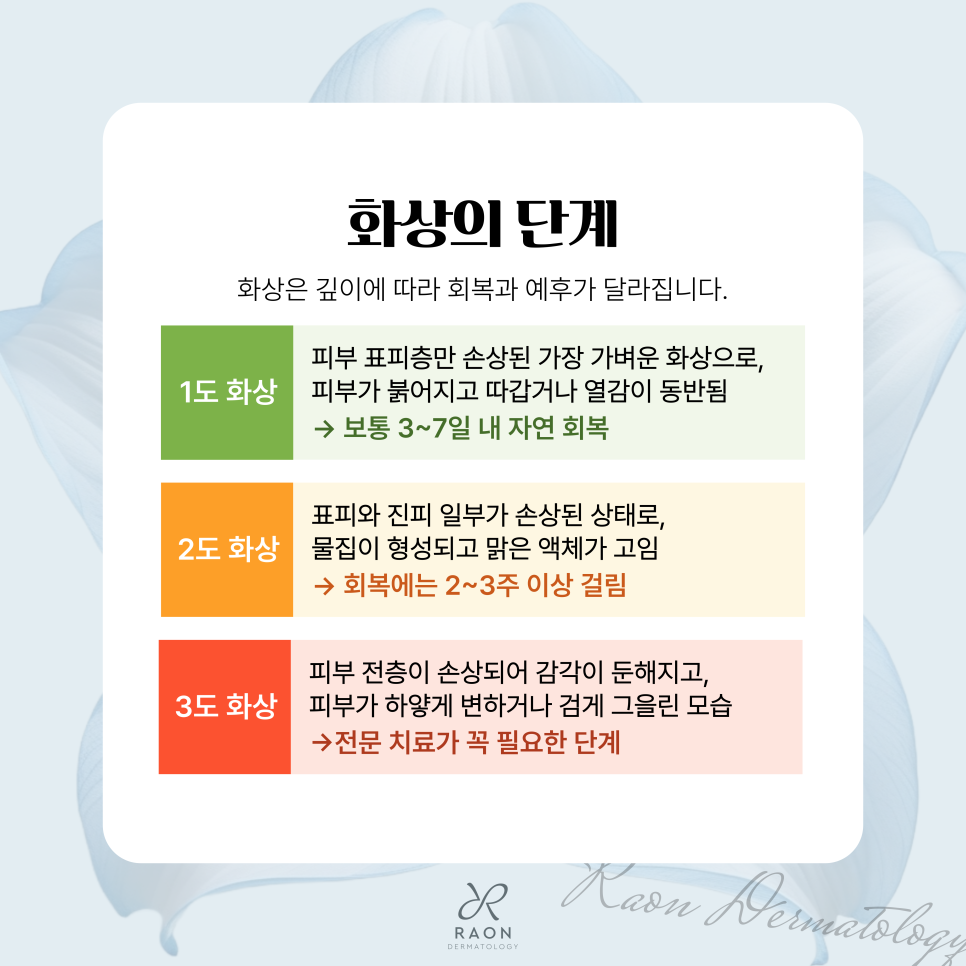
Burns are classified as first-degree, second-degree, and third-degree depending on the depth of the damage. A first-degree burn damages only the epidermis on the skin surface, causing redness, warmth, and pain, but no blisters. It usually heals within a week, but sun protection and moisturizing are essential.
A second-degree burn damages the epidermis and part of the dermis, forming clear or yellowish blisters and causing severe pain. Recovery takes two to three weeks or longer, and if care is inadequate, scarring may remain. A third-degree burn damages the full thickness of the skin, with reduced or absent sensation, and the skin may appear white or charred. At this stage, professional treatment and long-term skin reconstruction are absolutely necessary.
Stages of Burns
Why Burn Treatment Is Essential
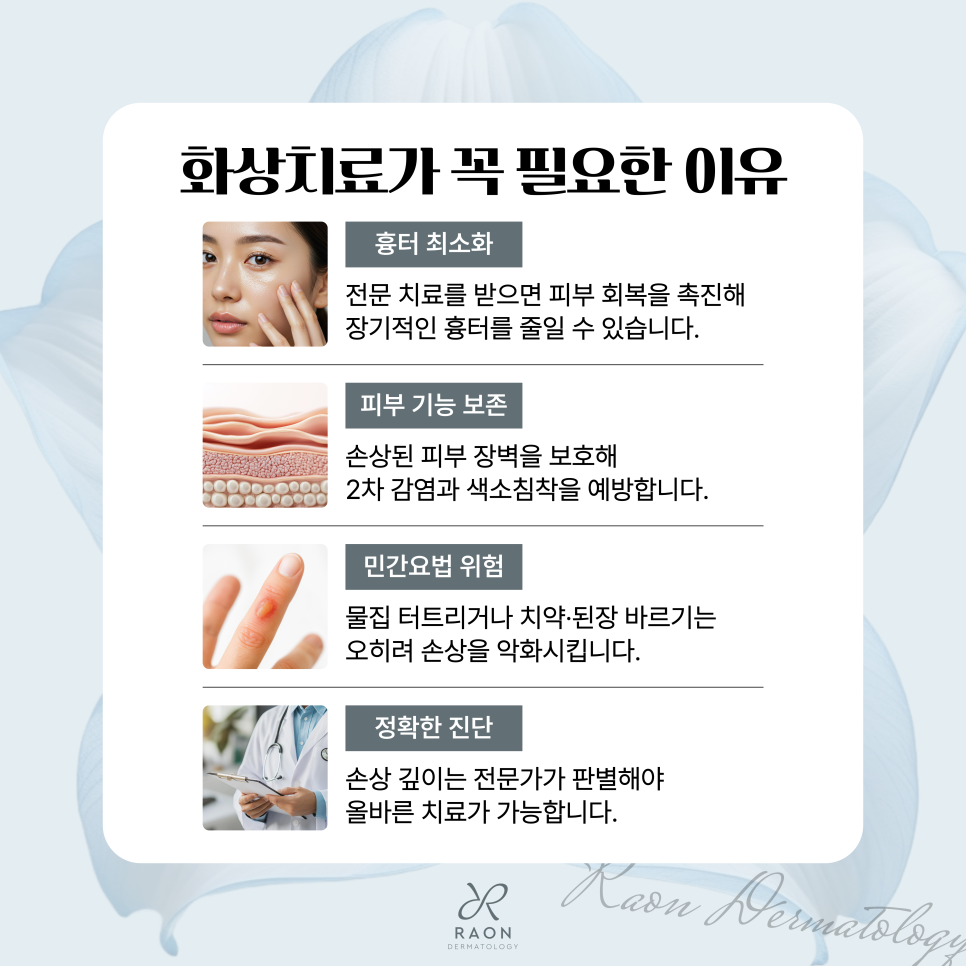
What happens if treatment is neglected? Later complications such as scars, skin discoloration, and infection may remain in the affected area. In particular, burns of second degree or higher recover more slowly with self-care alone, and even after recovery, there is a higher risk of uneven skin color or thick scars. At a dermatology clinic, the condition of the injured area is carefully assessed, and wet dressings to protect the wound and promote healing, skin regeneration lasers, and injections to suppress scarring are used together.
And there is one thing you must remember! That is, incorrect folk remedies can actually worsen the wound. Popping blisters on your own increases the risk of bacterial infection, and applying doenjang, soy sauce, or toothpaste can deepen the skin damage due to chemical irritation. Skin treatment should begin early to minimize scarring, so please keep this in mind :)
<Why Burn Treatment Is Necessary>
Why Burn Treatment Is Essential
How to Respond to a Burn at the Initial Stage
The first thing to do when you get burned is to cool the area quickly. Cooling the burned area under clean running cool water for about 10 to 20 minutes can help prevent the heat from spreading deeper into the skin. However, you should be careful not to apply ice directly, as it can constrict the skin blood vessels and slow recovery.
After first aid, gently cover the area with sterile gauze to prevent secondary contamination, and if possible, seek medical care right away. In particular, children, older adults, and people with diabetes, whose skin recovery is slower, need prompt treatment. Actions that should absolutely be avoided include popping blisters, touching the area with contaminated hands, or using folk remedies such as applying oil or butter. These actions can promote infection and scar formation, so please be careful.
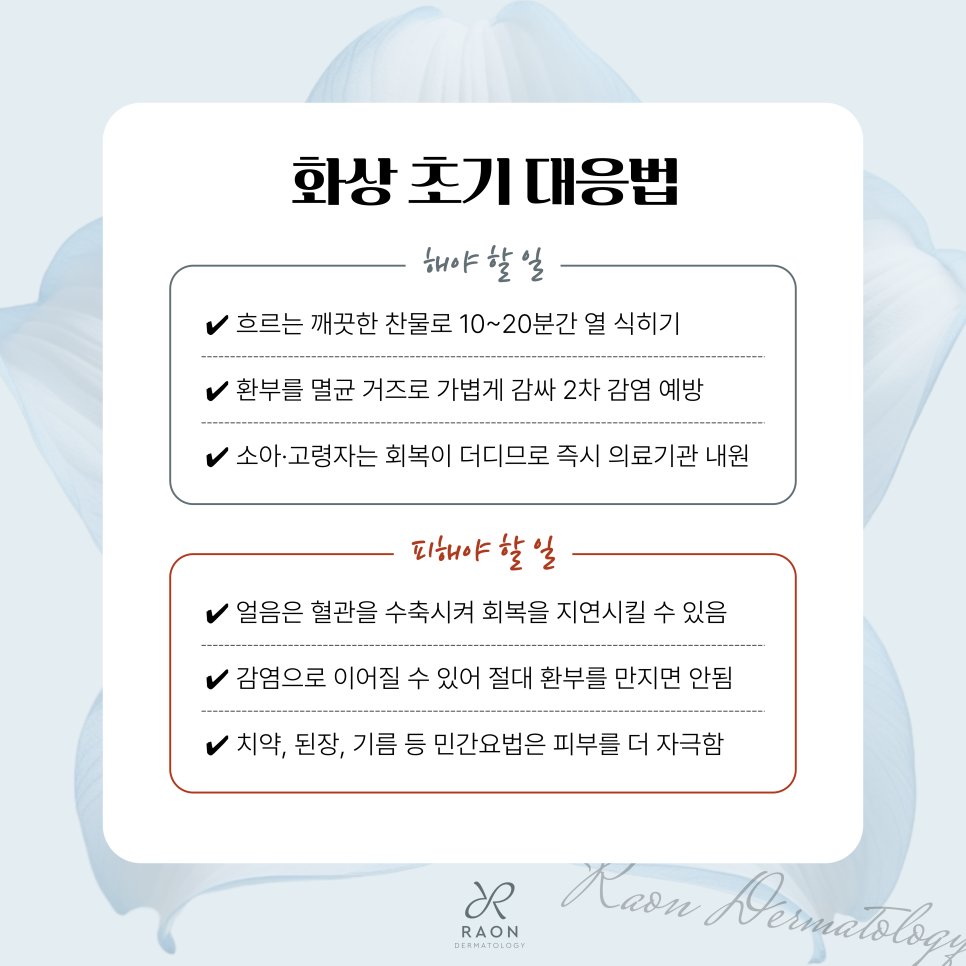
How to Respond to a Burn at the Initial Stage
How to Care for the Skin After Burn Treatment
After treatment, the skin is very sensitive to external irritation, so moisturizing and sun protection are key. During the recovery period, apply a low-irritation moisturizer frequently so the wound area does not become dry and skin regeneration can be supported. When going বাইরে, use a sunscreen with SPF 30 or higher, and it is best to cover the area with clothing or a hat when possible.
Also, if itching, redness, or scabbing remains in the treated area, do not scratch or peel it off carelessly, and if necessary, receive scar management treatment from a specialist. Regular follow-up and customized care can greatly reduce long-term skin damage. On the other hand, if aftercare is neglected right after treatment, it will ultimately take more time and effort, so please keep that in mind as well :)
<How to Care After Treatment>
-
Moisturizer / promote skin regeneration
-
Sunscreen / protect with clothing and hats
-
Do not touch scabs or redness
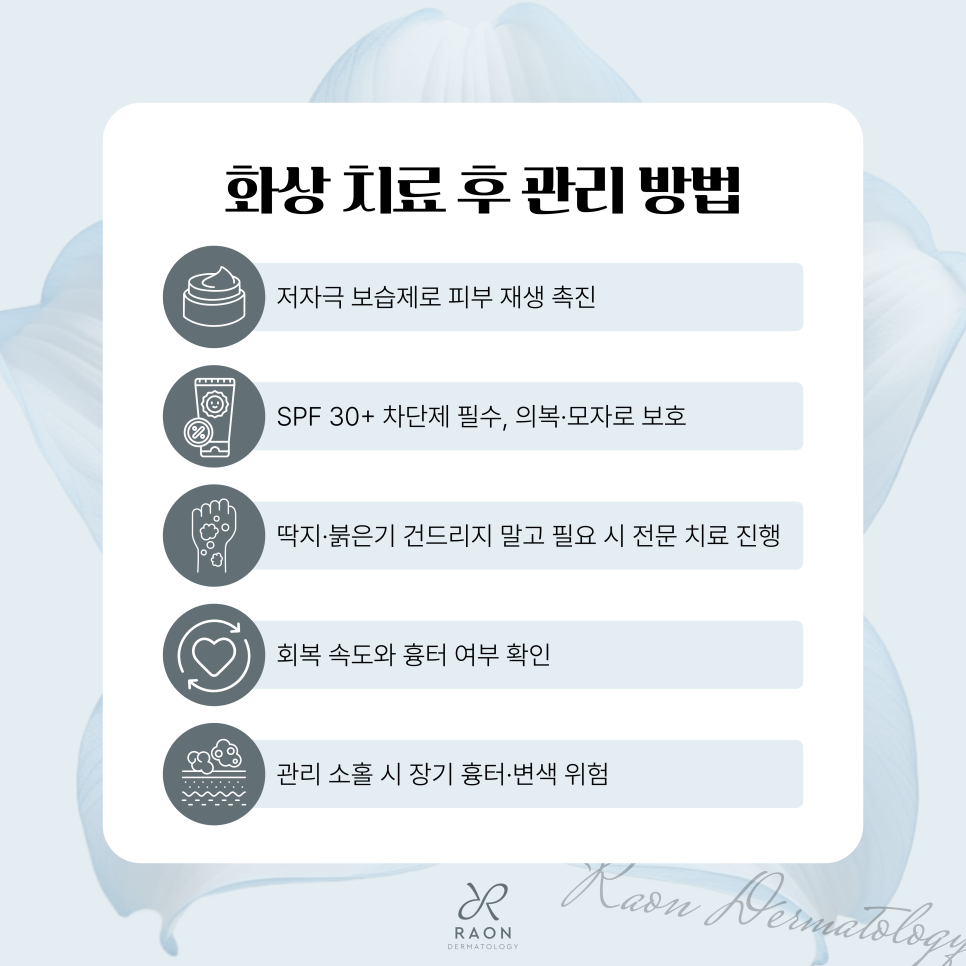
How to Care for the Skin After Burn Treatment
Burns That Occur After a Summer Vacation — How Are They Treated?

Located near Wangsimni Ogeori, a prime station area
- Exit 9 of Wangsimni Station in Haengdang-dong, Seongdong-gu -
👉 Direct access to 4 subway lines
Line 2 (Sindang, Sangwangsimni, Seongsu)
Line 5 (Singeumho, Haengdang, Majang, Dapsimni)
Gyeongui-Jungang Line (Oksu, Eungbong, Cheongnyangni)
Suin-Bundang Line (Seoul Forest)