Cryotherapy & CO2 Laser
Hello, this is Raon Dermatology :)
When bumps or thickened clusters of keratin appear on the hands, feet, or face, they can be bothersome and cause inconvenience in daily life depending on their location. Even if they are small, they can still become noticeable if pain develops from friction or pressure. They not only look unattractive and create cosmetic concerns, but if left untreated, they may grow larger or increase in number. Today, let’s take a closer look at common everyday lesions such as warts and corns, as well as the representative treatment methods used to remove them: cryotherapy and CO2 laser treatment.
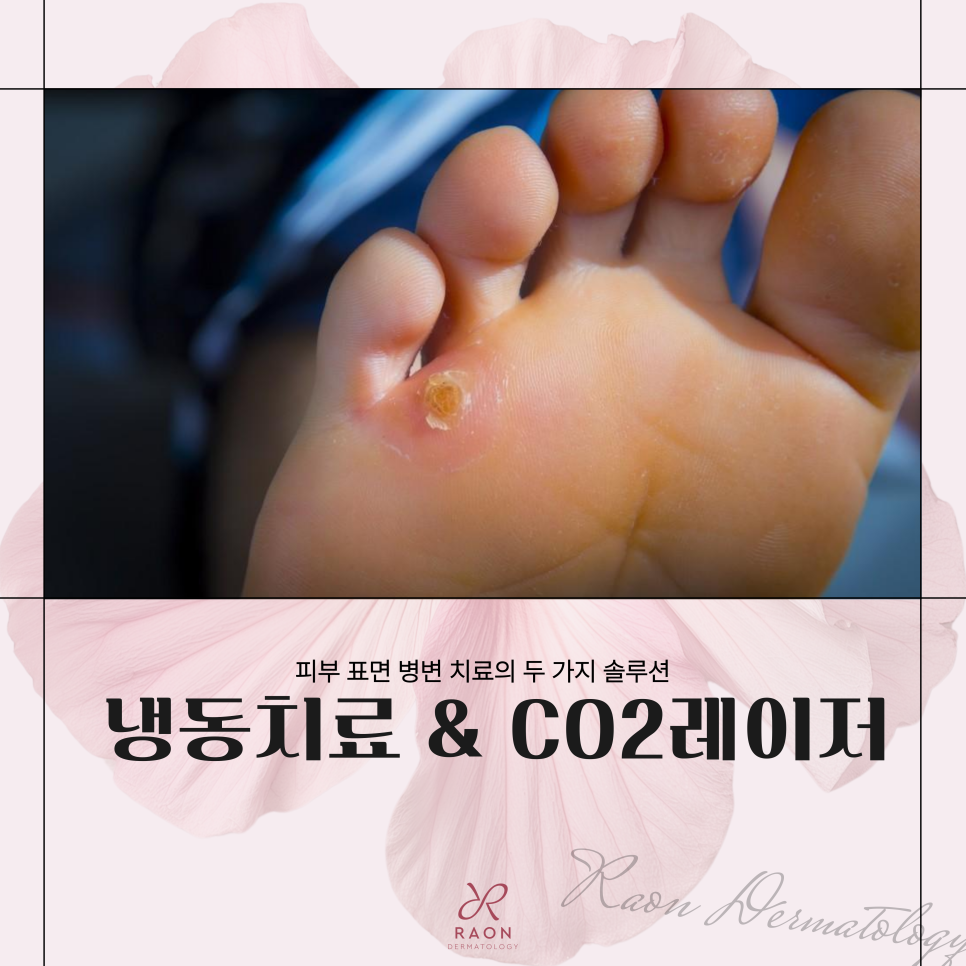
Cryotherapy & CO2 Laser
Warts
Warts are an infectious skin condition caused when the human papillomavirus (HPV) enters through tiny breaks in the skin. The keratinocytes within the skin proliferate abnormally, creating a rough, uneven lesion on the surface. Small black dots may be visible on the surface; these are pinpoint hemorrhages caused by blocked capillaries.
They commonly develop on areas exposed to frequent friction and pressure, such as the fingers, soles of the feet, and knees. Because they are highly contagious, they can spread through contact within families, shared towels, shoes, and similar items. If immunity is weakened, they can grow quickly and increase in number, so prompt treatment is necessary. On the other hand, if treatment is delayed, they may spread faster than expected!
<Warts>
-
Caused by human papillomavirus (HPV) infection
-
Rough and uneven / contagious / areas with frequent friction
-
When immunity is low / size and number can spread quickly
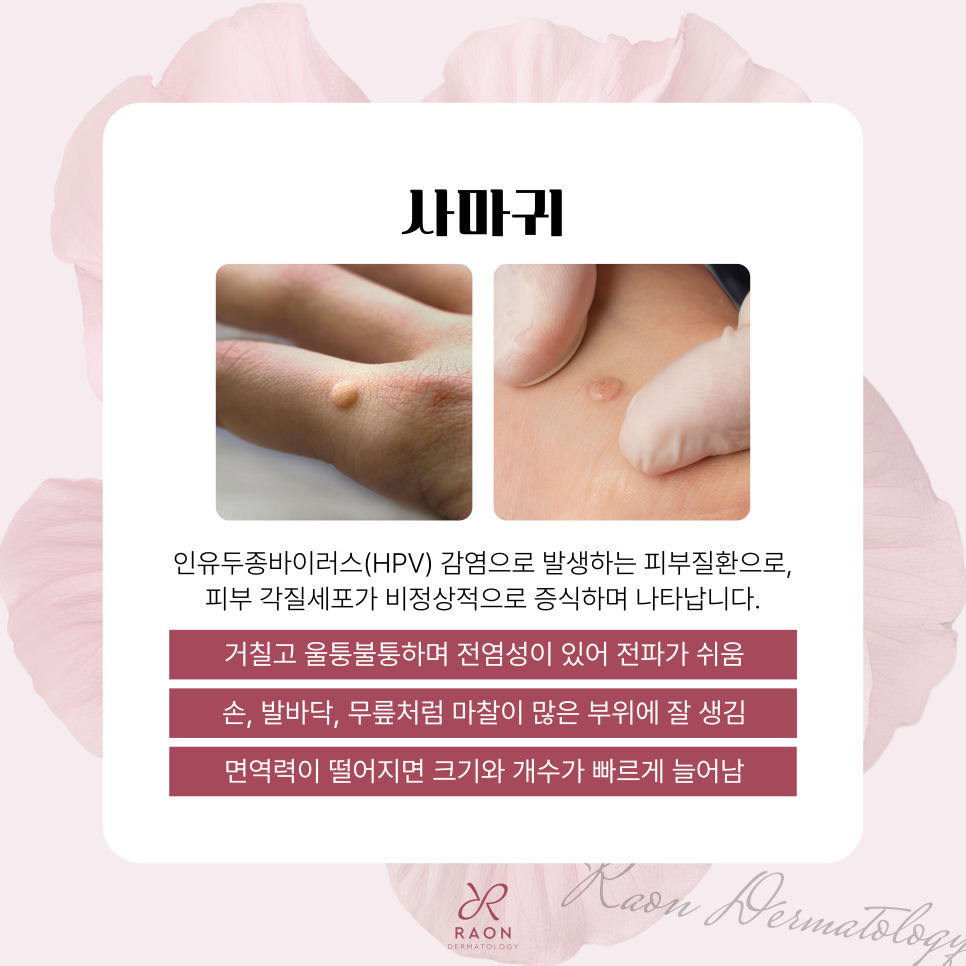
Warts
Corns
What are corns, another representative epidermal lesion along with warts? Due to repeated pressure and friction, the skin becomes locally thickened, and hardened keratin grows inward into the skin like a root. They commonly occur on areas where pressure is concentrated, such as the soles of the feet, between the toes, and the palms. Wearing shoes that do not fit well, occupations that require standing for long periods, and repeated specific hand movements are major causes.
At first glance, corns are easy to confuse with calluses. However, calluses spread broadly and flatly, while corns have a hard core deeply seated in the center, causing a sharp, needle-like pain when walking. If left untreated, walking posture can become unbalanced, which may also place strain on the ankles, knees, and lower back.
<Corns>
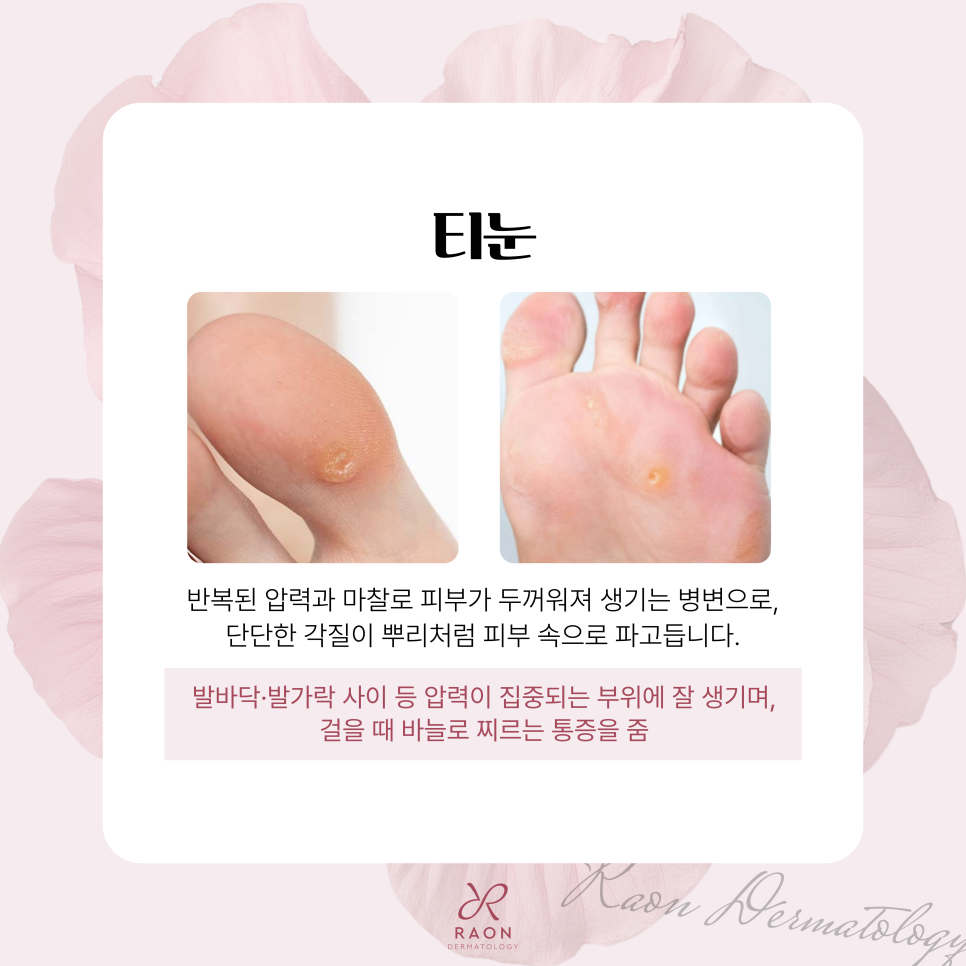
Corns
Troublesome Warts / Corns
Although their detailed characteristics differ, if warts and corns are left untreated, the lesions commonly become deeper and spread wider. Warts can spread to surrounding skin and increase in number, and recurrence is frequent when immunity is weakened. Corns can become more painful, changing the way a person steps, which can then place strain on other joints as well.
When deciding on a treatment method, it is necessary to comprehensively evaluate the size, depth, location, and skin condition of the lesion. Relatively simple cryotherapy is recommended for lesions on the surface or shallow lesions, while CO2 laser treatment is recommended for deeper lesions or those with a thick keratin layer. If needed, both methods may be used together to improve treatment effectiveness.
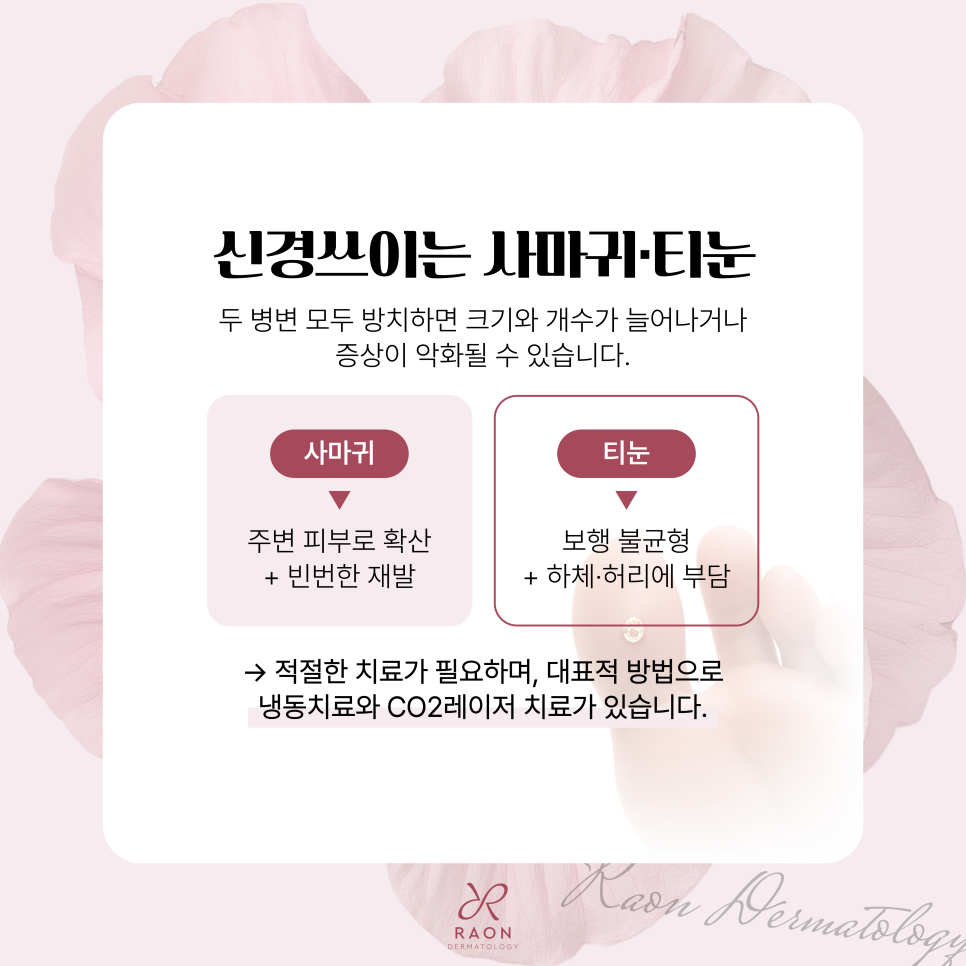
Troublesome Warts / Corns
Cryotherapy
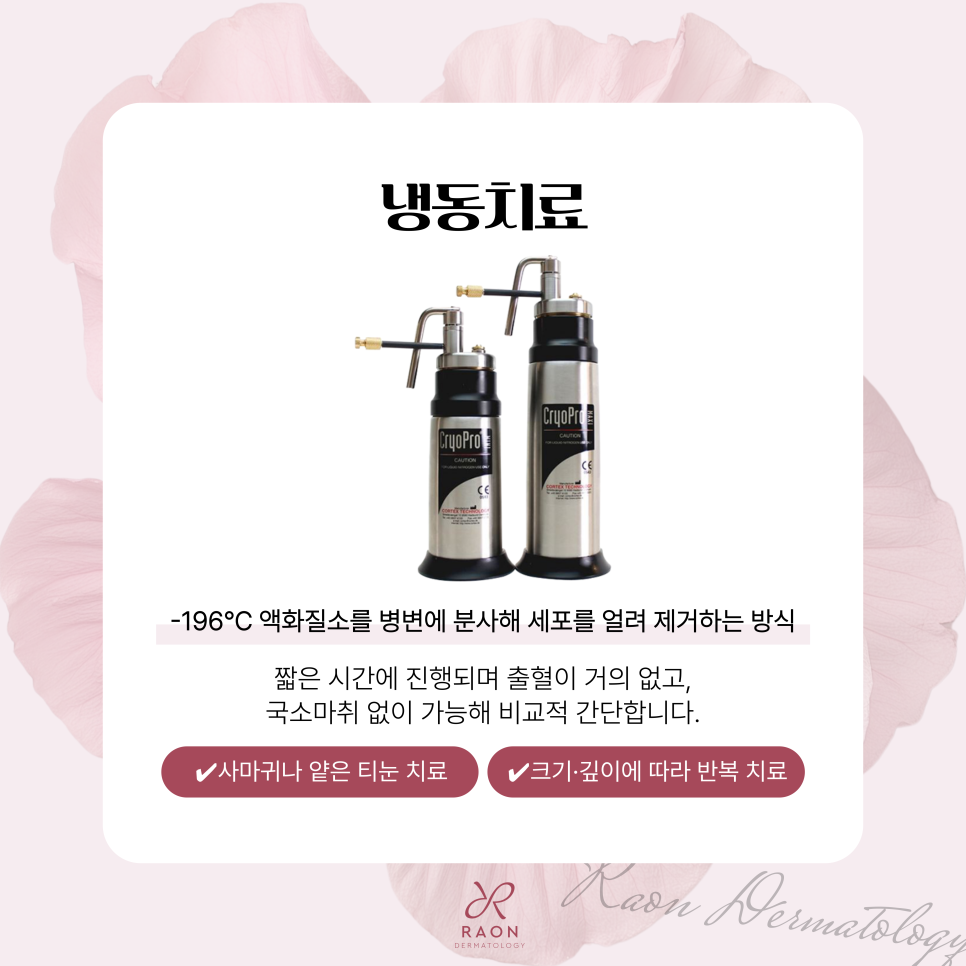
Now, let’s look at the specific treatment methods. Cryotherapy works by spraying liquid nitrogen at -196°C or applying it with a cotton swab or probe to instantly freeze the lesion and destroy the tissue. As the water inside cells freezes and crystallizes, the cell membrane is damaged, and the lesion gradually necroses and falls off.
The treatment time is short, taking only a few minutes. There is also very little bleeding, and in many cases it can be performed without local anesthesia. It is effective for warts and shallow corns, with a low risk of infection and quick recovery. However, blisters, swelling, or mild pain may occur after the procedure, so pressure should be avoided for several days, and hygiene and moisturizing care are needed. Depending on the size and depth of the lesion, 2 to 5 repeated treatments may be necessary, and managing immunity and improving the surrounding environment are important to help prevent recurrence :)
<Cryotherapy>
-
A method that removes lesions by freezing the cells
-
Short treatment time / very little bleeding
-
Used for warts / thin corns / repeated treatment if needed
Cryotherapy
CO2 Laser Treatment
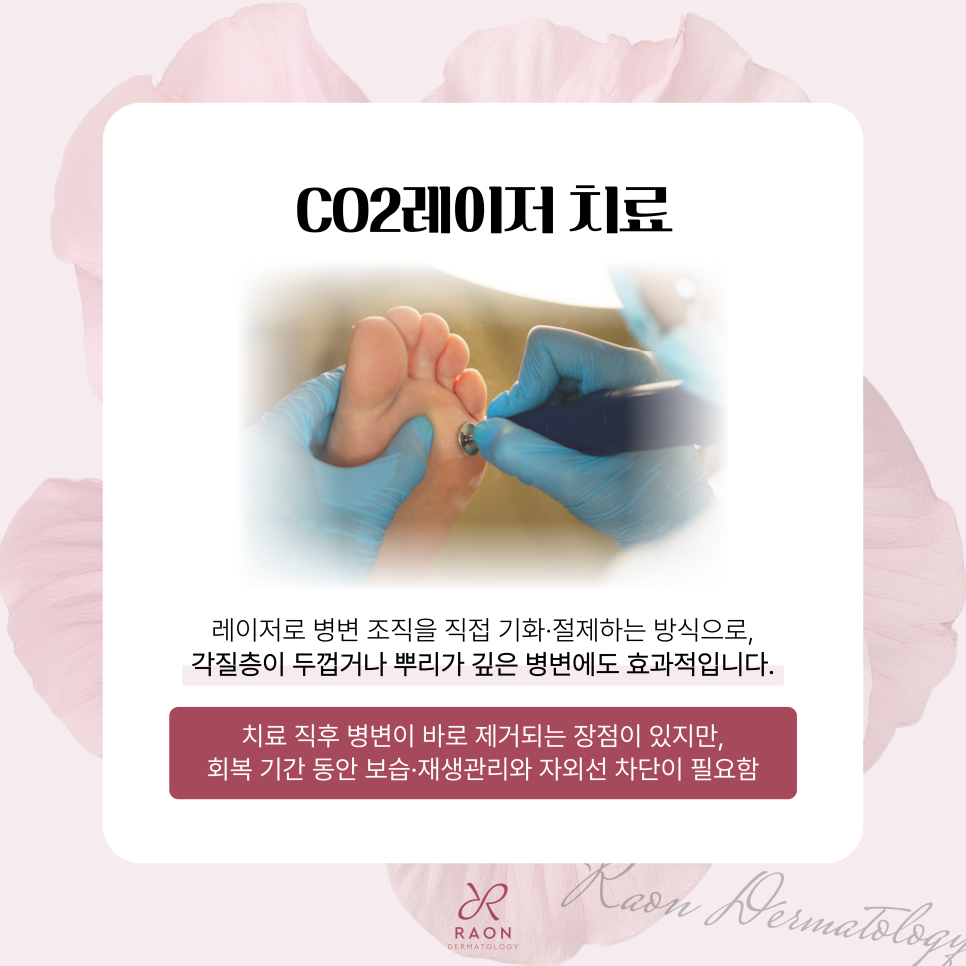
CO2 laser treatment uses a powerful carbon dioxide laser beam to directly vaporize and excise the lesion. Taking advantage of the wavelength that is easily absorbed by water, it precisely removes the lesion while instantly evaporating the moisture within the tissue. It can effectively remove lesions with a thick keratin layer or deep roots while minimizing damage to the surrounding normal tissue.
If needed, the procedure is performed after local anesthesia, and larger lesions may be removed in stages. Although the lesion becomes visibly gone right after treatment and the recurrence rate is low, the wound site remains after excision, so caution is needed during the recovery period. Using moisturizing products and regenerative ointments, as well as sun protection, is essential. When treating the feet, it is also a good idea to use pads or cushions to reduce friction.
CO2 Laser Treatment
Cryotherapy & CO2 Laser Treatment
Prime location near Wangsimni Ogeori
- Wangsimni Station Exit 9 in Haengdang-dong, Seongdong-gu -
👉 Direct access to 4 subway lines
Line 2 (Sindang, Sangwangsimni, Seongsu)
Line 5 (Singeumho, Haengdang, Majang, Dapsimni)
Gyeongui-Jungang Line (Oksoo, Eungbong, Cheongnyangni)
Suin-Bundang Line (Seoul Forest)