Hair Loss Causes and Treatments
Hello, this is Raon Dermatology Clinic in Wangsimni!
Hair is not just something that enhances appearance; it is an important part of self-confidence and social image as well. That is why noticeable hair loss or a reduction in hair density can be a major concern for many people! It is not uncommon for people to feel psychologically discouraged from the moment they hear someone say, “Your hair seems thinner.” If the exact cause is identified and appropriate treatment and lifestyle management are carried out together, the progression can be sufficiently slowed down. That is why early response is the most important thing to emphasize :)
Hair Loss Causes and Treatments
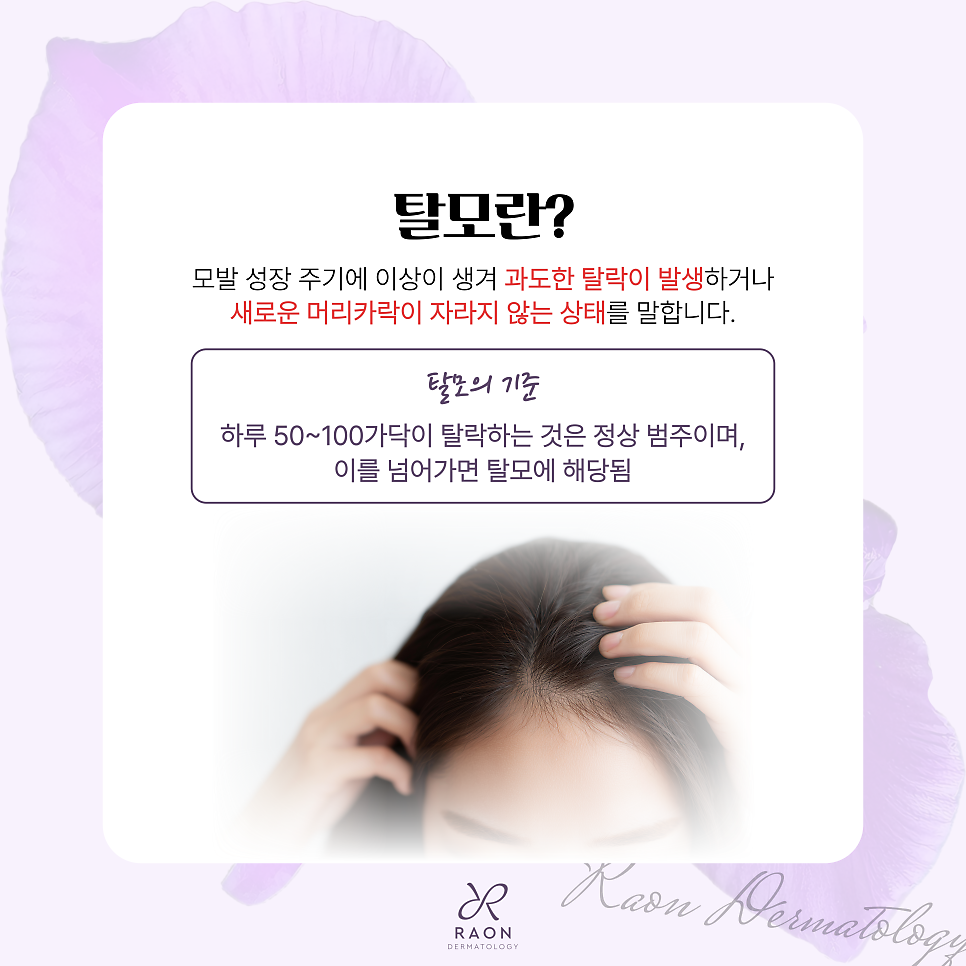
What is hair loss?
Hair loss refers to a condition in which the normal growth cycle of hair changes, causing excessive shedding or preventing new hair from growing properly. Normally, losing about 50 to 100 strands a day is a natural phenomenon, but if more than that falls out or the scalp becomes visible in certain areas, it may meet the criteria for hair loss.
The causes are very diverse. Genetic factors and changes in male hormones account for a large share, but stress, thyroid disease, nutritional deficiencies such as iron deficiency, taking certain medications, and severe dieting can also cause hair loss. Symptoms appear as hair gradually becoming thinner or shedding faster, and depending on the degree of progression, there may be differences by area such as the forehead, crown, or temples.
What is hair loss?
Common Types of Hair Loss
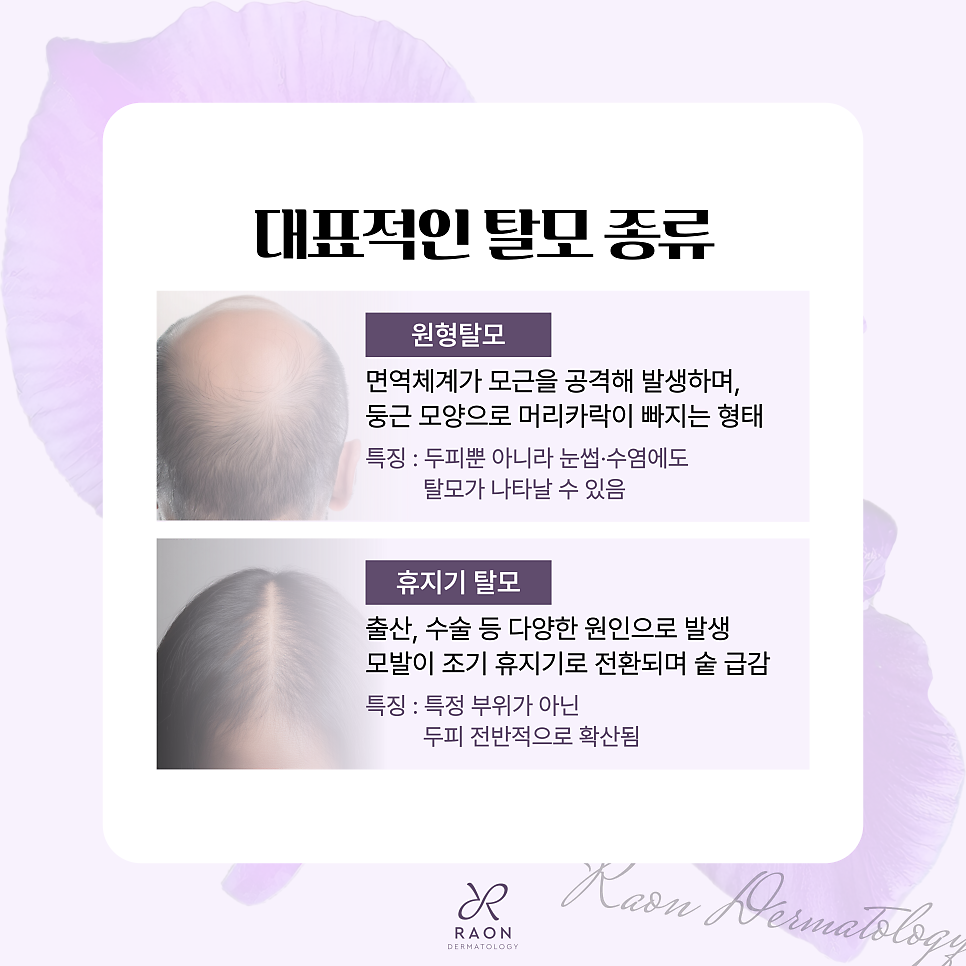
Among hair loss types, the well-known alopecia areata appears as round, coin-shaped patches of hair loss. It occurs when the immune system mistakenly attacks the hair follicles, and it can appear not only on the scalp but also on the eyebrows or beard. Because it often develops suddenly, patients may feel a great deal of anxiety! It can also be associated with psychological stress, an allergic tendency, or autoimmune disease.
Telogen effluvium is a little different. In this condition, hair quickly shifts from the growth phase into the resting phase, creating the feeling that hair density has suddenly dropped. It often appears after childbirth, major surgery, sudden weight changes, or illnesses accompanied by high fever. Its 특징 is that thinning occurs across the scalp rather than in just one area, and although it may recover over time, it can become chronic if the cause keeps recurring.
Common Types of Hair Loss
What are the treatment methods for hair loss?
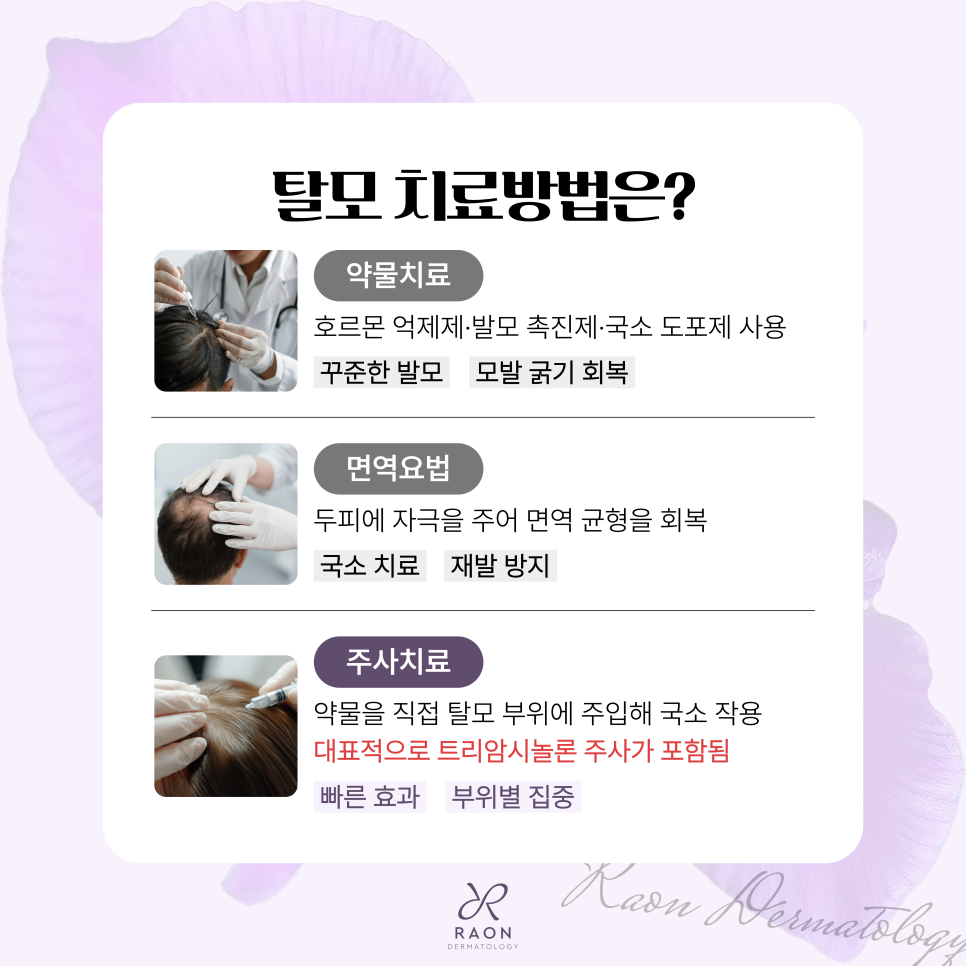
Hair loss treatment options vary depending on the cause and the degree of progression. The first approach dermatology clinics usually consider is medication treatment. In male pattern hair loss, medications that suppress hormonal action or promote hair growth are used, while in female pattern hair loss, topical agents are often used. These medications help extend the hair growth phase and restore thin hair to a thicker state.
In cases where immune reactions are the problem, such as alopecia areata, immunotherapy may also be performed. This method applies mild stimulation to the scalp to help balance the immune system so that it does not attack the hair follicles. Another important method is injection treatment! Medication is injected directly into the hair-loss area so that it acts locally. Among these, today we will take a closer look at triamcinolone injections.
<Hair loss treatment methods>
-
Medication treatment: consistent hair growth / restored hair thickness
-
Immunotherapy: local treatment / recurrence prevention
-
Injection treatment: fast effect / focused by area
What are the treatment methods for hair loss?
Triamcinolone injection treatment
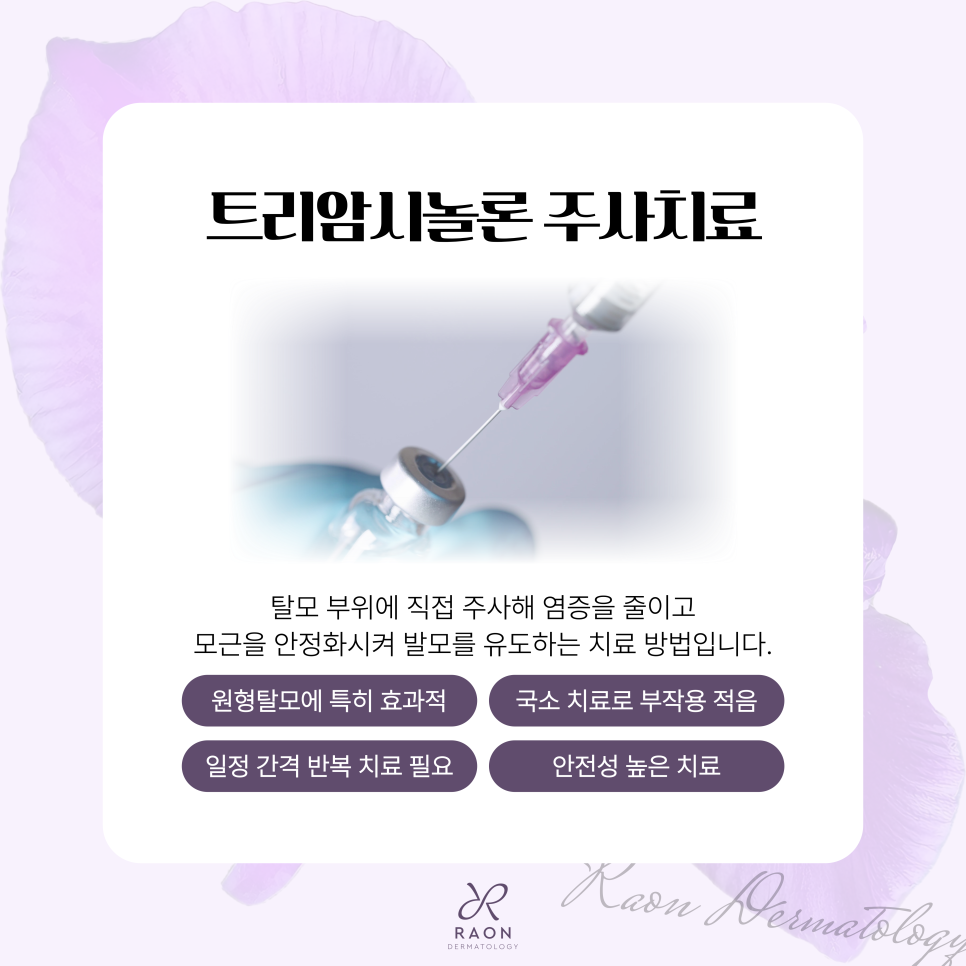
Triamcinolone injections involve directly injecting a steroid into the hair-loss area and are especially effective for alopecia areata. By reducing inflammation and helping stabilize the hair follicles, they create an environment where hair can grow again. Because it acts intensively on the area where hair has fallen out, visible changes can be expected!
Another advantage is that it has fewer systemic side effects than oral medication. However, treatment is often not completed with just one session, and multiple procedures at regular intervals are usually needed. In rare cases, side effects such as thinning of the skin at the injection site or pigmentation changes may occur, so it is safest to perform the treatment under the judgment of a dermatologist. If the interval and number of sessions are adjusted properly according to the degree of hair loss progression, you can expect satisfactory results :)
<Triamcinolone injection treatment>
-
Direct injection into the hair-loss area / inflammation relief / follicle stabilization
-
Effective for alopecia areata / local treatment / fewer side effects
-
Repeated treatment at regular intervals required / high safety
Triamcinolone injection treatment
Hair loss prevention habits
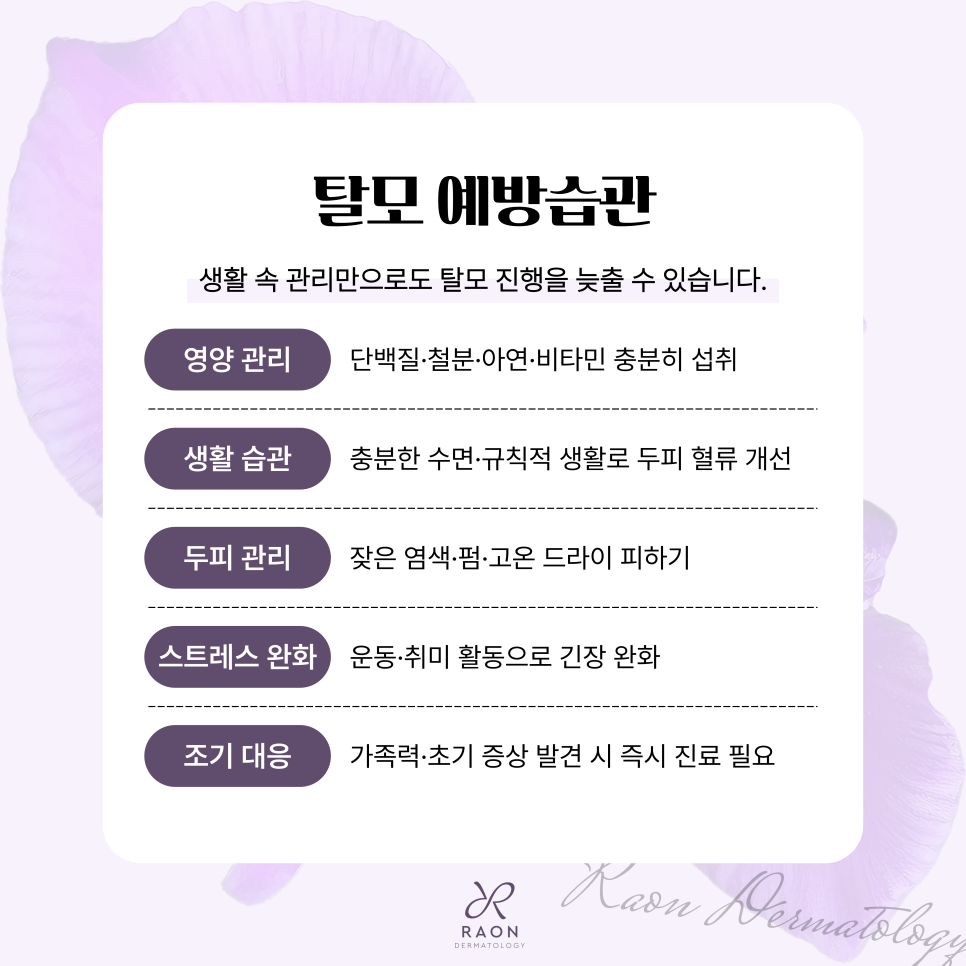
Just managing your lifestyle well can help slow the progression of hair loss. First, you should eat a balanced intake of nutrients needed for hair, such as protein, zinc, iron, and vitamins, and it is best to avoid extreme dieting. Sufficient sleep and a regular daily routine improve scalp blood flow and have a positive effect on hair health.
Reducing habits that irritate the hair also helps. Frequent dyeing or perming, as well as using hot blow-dryers, can cause hair damage and scalp irritation, so it is better to leave longer intervals between these practices. Stress is also one of the major factors that can worsen hair loss! It helps to relieve tension through exercise or hobbies. In particular, if you have a family history or already notice early changes, do not leave it untreated—please receive medical care early and start managing it.
<Hair loss prevention habits>
Hair loss prevention habits
From the causes of hair loss to treatment methods