Pigment Disorders by Age Group
Hello, this is Raon Dermatology in Sangwangsimni!
When you look in the mirror, there are times when your skin tone feels less even than before. These changes in color may not be simple blemishes, but pigment disorders caused by changes in the distribution and activity of melanin. In particular, as age increases, factors such as UV exposure, hormonal changes, and reduced skin regeneration work together, causing the type and depth of pigmentation to differ! That is why even the same pigment disorder can require completely different treatment approaches in teenagers and in people in their 40s. Today, let’s take a look at what kinds of pigmentation occur by age group and what kind of care is needed.
Pigment Disorders by Age Group
Characteristics of Pigment Disorders
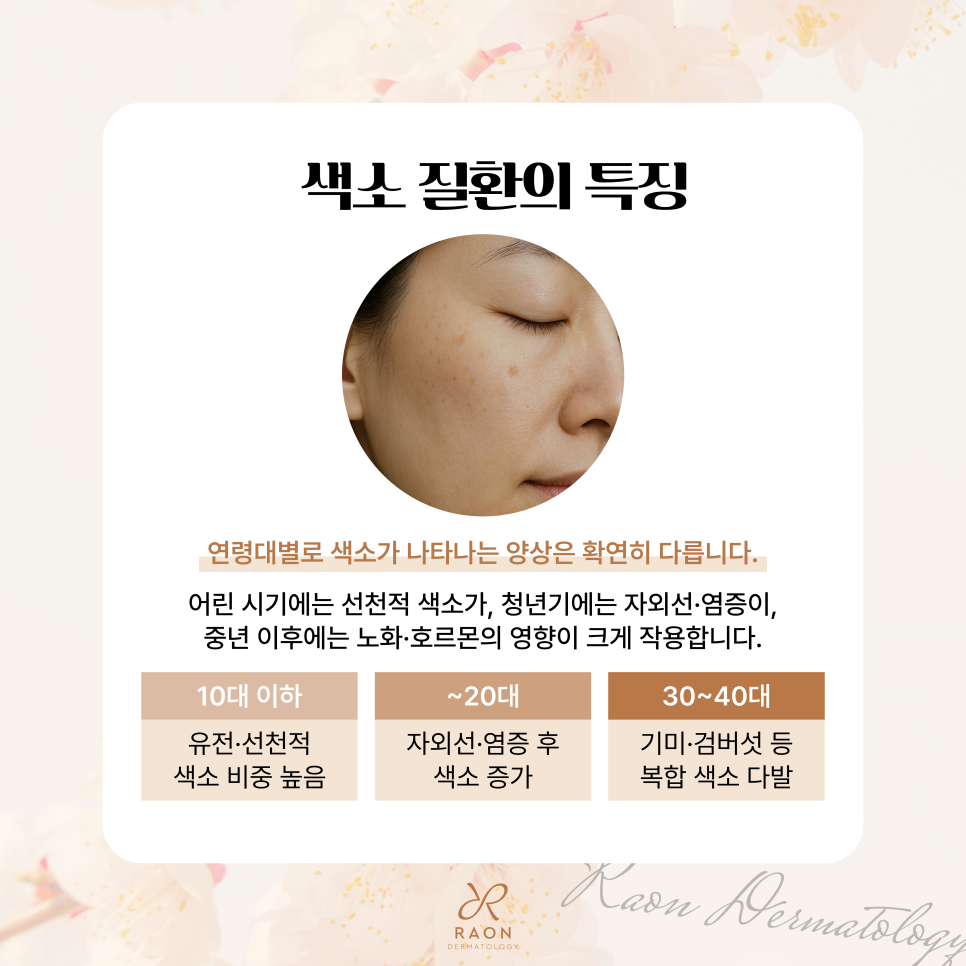
Pigment disorders are caused by excessive melanin production in the skin or by melanin not being distributed evenly. The skin naturally produces melanin to protect itself from UV rays, but when melanin builds up abnormally due to various factors, it remains as blotches.
The reason pigmentation patterns change with age is because skin structure and environmental stressors differ. In childhood, congenital factors are more prominent; in young adulthood, UV exposure and post-inflammatory hyperpigmentation are more common; and in middle age and beyond, aging and hormonal changes become central. That is why diagnosis and treatment tailored to each age group are needed :)
<Characteristics of pigment disorders by age group>
-
Under teens: Higher proportion of genetic / congenital factors
-
~20s: Increased UV-related / post-inflammatory pigmentation
-
30s~40s: Melasma / age spots / multiple mixed pigment lesions
Characteristics of Pigment Disorders
Pigment Disorders in Children and Teens
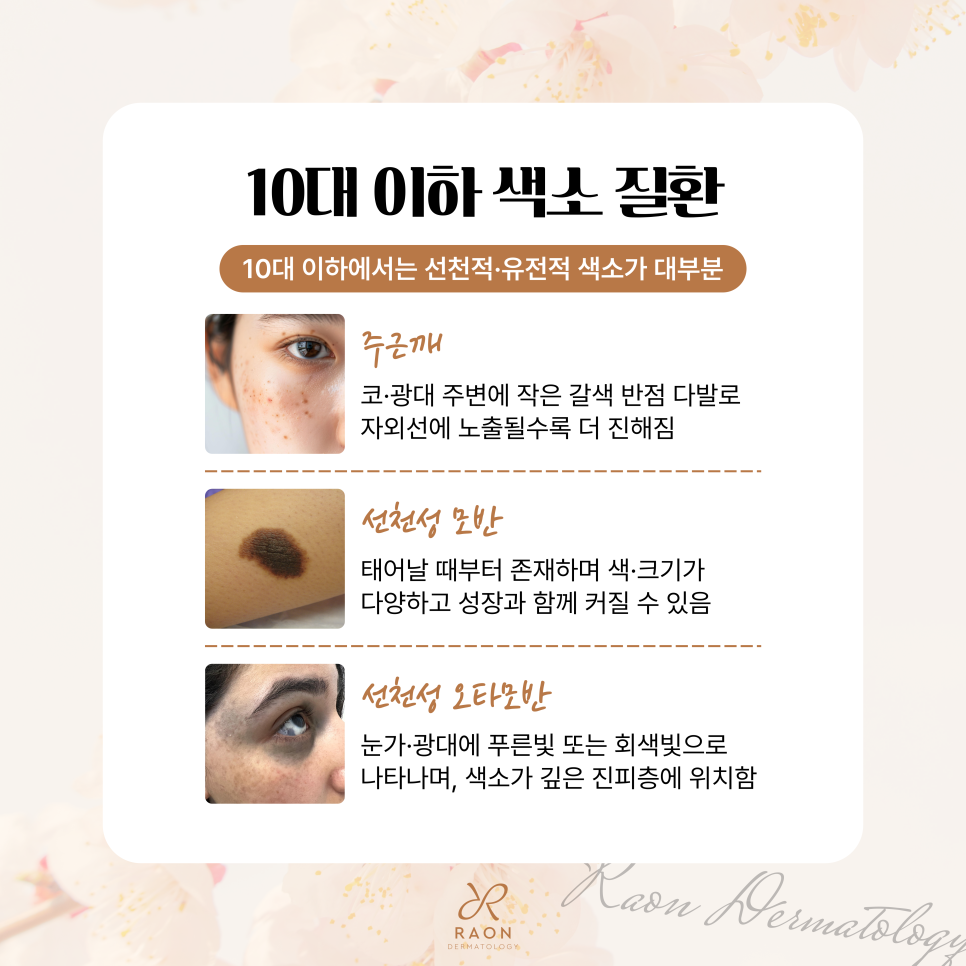
First, in people under their teens, genetic and congenital pigment disorders are the most common. Freckles appear as multiple small brown spots on the center of the face or around the nose and become darker with UV exposure. They are often seen in children with fair and thin skin, and may naturally fade after puberty.
Congenital nevi are pigmented spots present from birth, appearing brown or dark brown and varying in size and shape. Some may grow along with the body, so regular monitoring is important! Congenital Ota nevus appears as a bluish color around the eyes or on the cheekbone area, and because the pigment exists in the deeper dermal layer, improvement is difficult with surface treatment alone. In such cases, specialized laser treatment can be helpful.
Pigment Disorders in Children and Teens
Pigment Disorders in Your 20s
Your 20s are a period of increased exposure to the external environment, and pigmentation is more likely to develop due to UV rays, stress, and irregular sleep. Typical examples include blemishes and post-acne hyperpigmentation. Blemishes (solar lentigines) form when melanin is produced excessively after repeated UV exposure, and the color becomes progressively darker if left untreated.
Post-acne hyperpigmentation is a form of pigment left behind at the site where inflammation has subsided, settling in the dermal layer. If you squeeze or irritate pustular acne with your hands, the pigmentation may remain even darker! During this period, it is important to consistently use sunscreen and suppress melanin production through soothing and regeneration care.
<Pigment disorders in your 20s>
-
Blemishes: Repeated UV exposure / darkens quickly
-
Post-acne hyperpigmentation: Brown / red pigment marks
-
Becomes darker with irritation
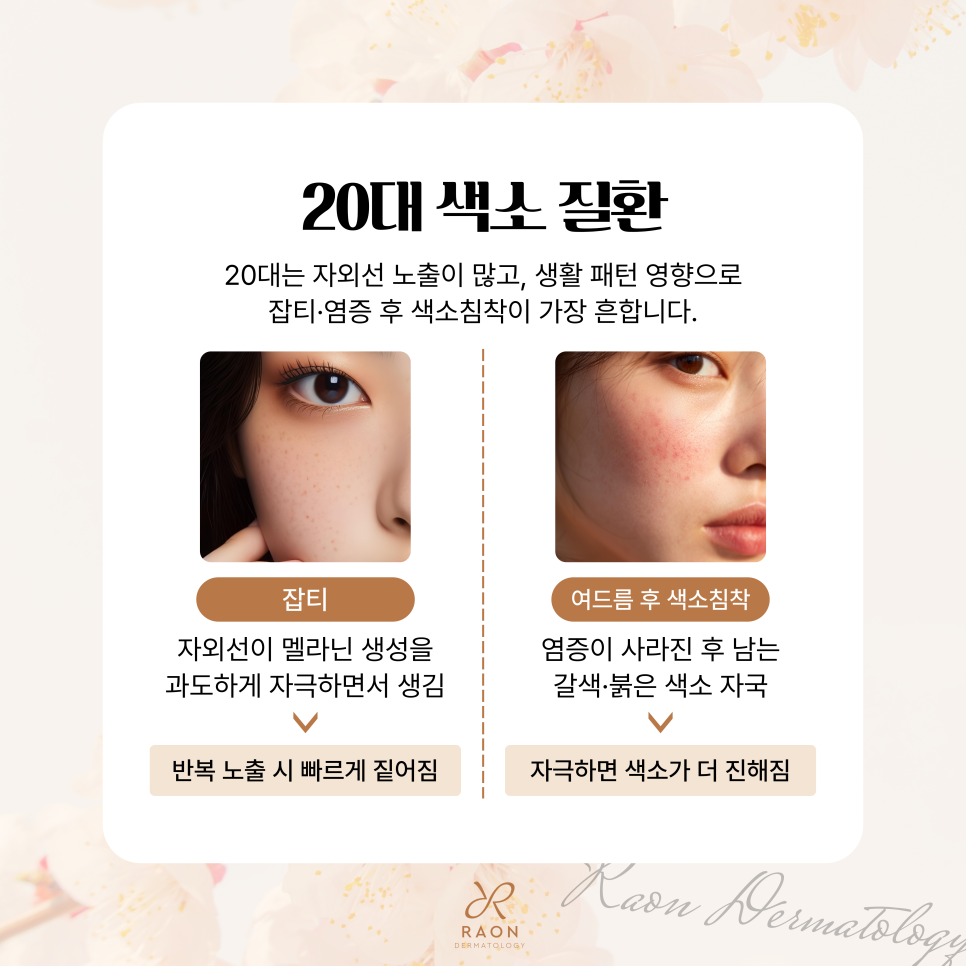
Pigment Disorders in Your 20s
Pigment Disorders in Your 30s to 40s
In your 30s to 40s, pigmentation tends to appear in more complex forms. Typical examples are melasma and age spots. Melasma develops symmetrically on both cheeks, the forehead, or around the upper lip as hormonal changes, pregnancy, oral contraceptive use, and UV exposure work together, and its intensity can vary by season. To improve it, consistent treatment and UV protection are essential.
Age spots (senile lentigines) arise as keratinocytes proliferate excessively due to cellular aging, appearing as flat brown or dark brown patches. Because they are deeper and darker than blemishes, combination treatment is more effective than a single laser. Since the causes of pigmentation are diverse during this period, accurate diagnosis and step-by-step treatment are very important.
<30s~40s>
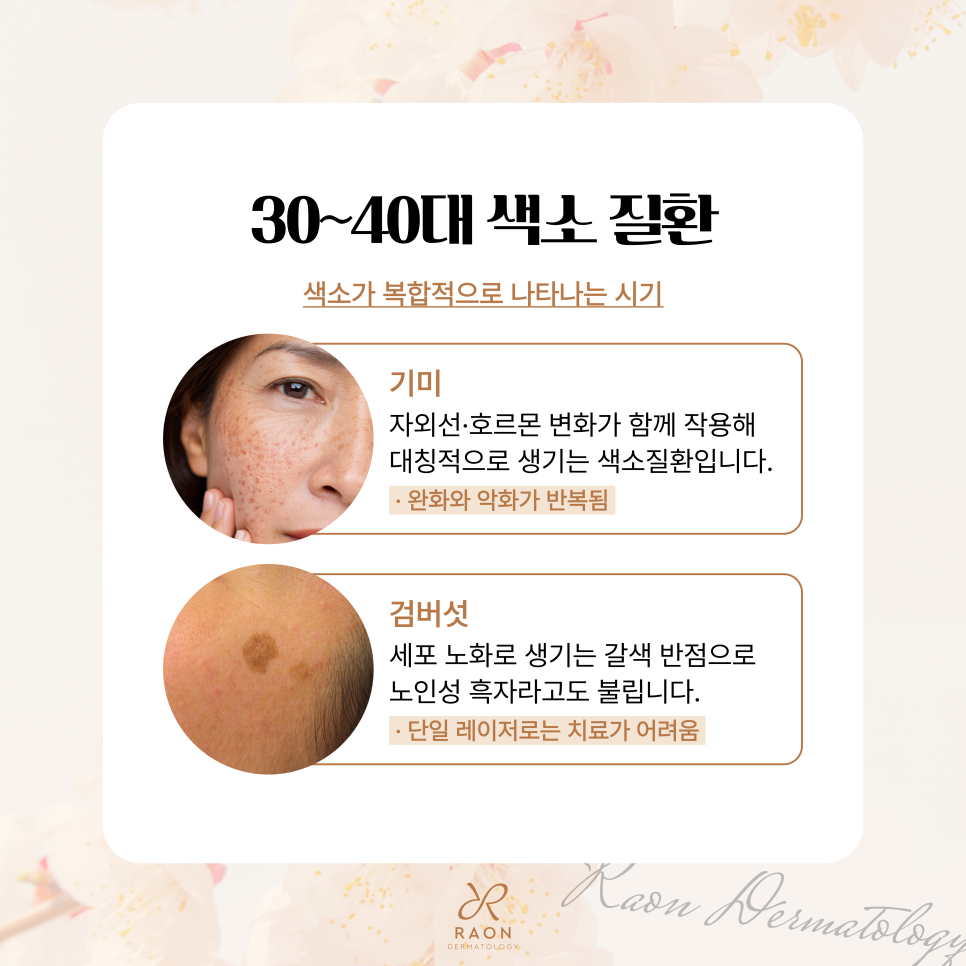
Pigment Disorders in Your 30s to 40s
What Is Needed for Successful Pigment Treatment?
Pigment disorders require different approaches depending on their depth, cause, and skin tone. IPL and Pico Toning are effective for epidermal pigmentation, while Pico laser and Spectra laser are effective for pigment in the deeper dermis. Since complete improvement is difficult with a single treatment, combination therapy should be used to manage melanin suppression and regeneration together.
At Raon Dermatology, we precisely diagnose the depth and cause of pigmentation and provide a combination solution that pairs laser treatment with regenerative care. When consistent treatment and lifestyle correction are carried out together, pigmentation gradually fades, and the skin can regain its natural clarity :)
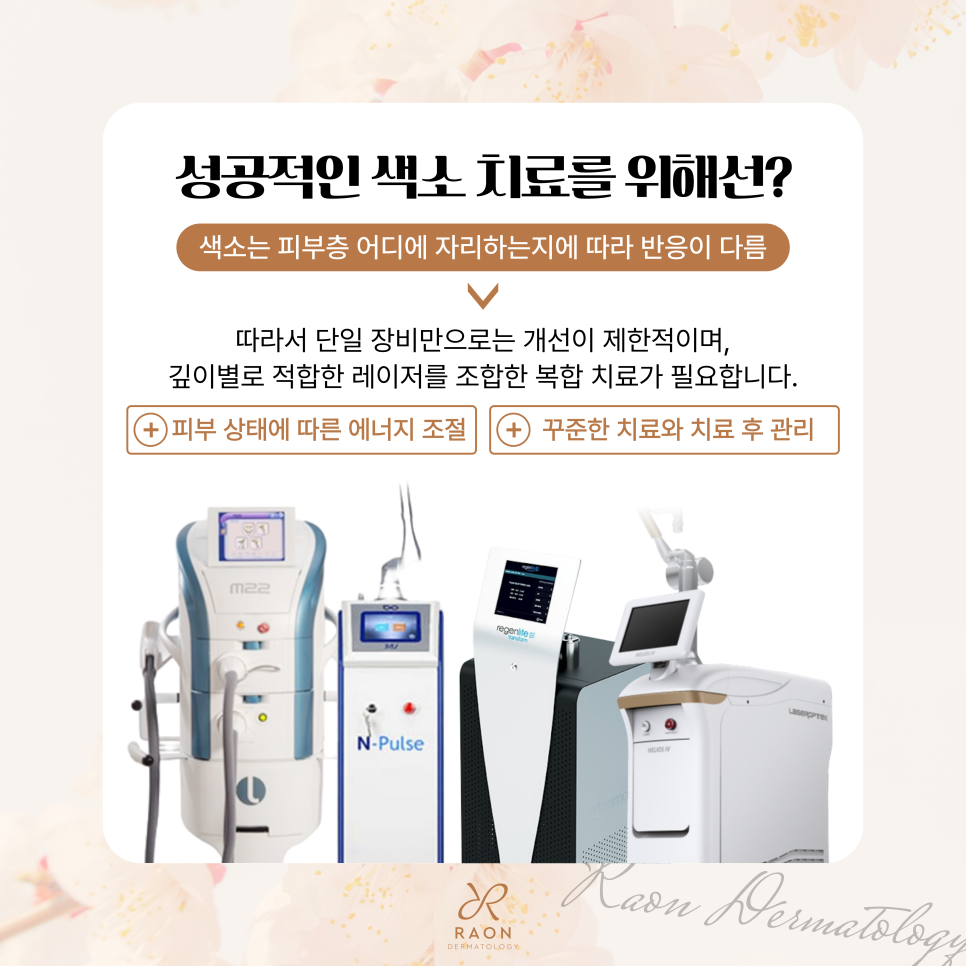
What Is Needed for Successful Pigment Treatment?
Pigment Disorders by Age Group