Winter Corn Treatment Methods
Hello, this is Raon Dermatology Clinic in Kumho-dong!
When winter comes, many people end up wearing thick socks and shoes for long periods. At times like this, many people complain of discomfort caused by corns that feel like hard pressure points on the soles or toes. In particular, when enjoying sports such as skiing or snowboarding, where equipment is worn for long periods, repeated pressure can make symptoms more noticeable. Today, we’ll go step by step through how to care for corns that interfere with your daily life.
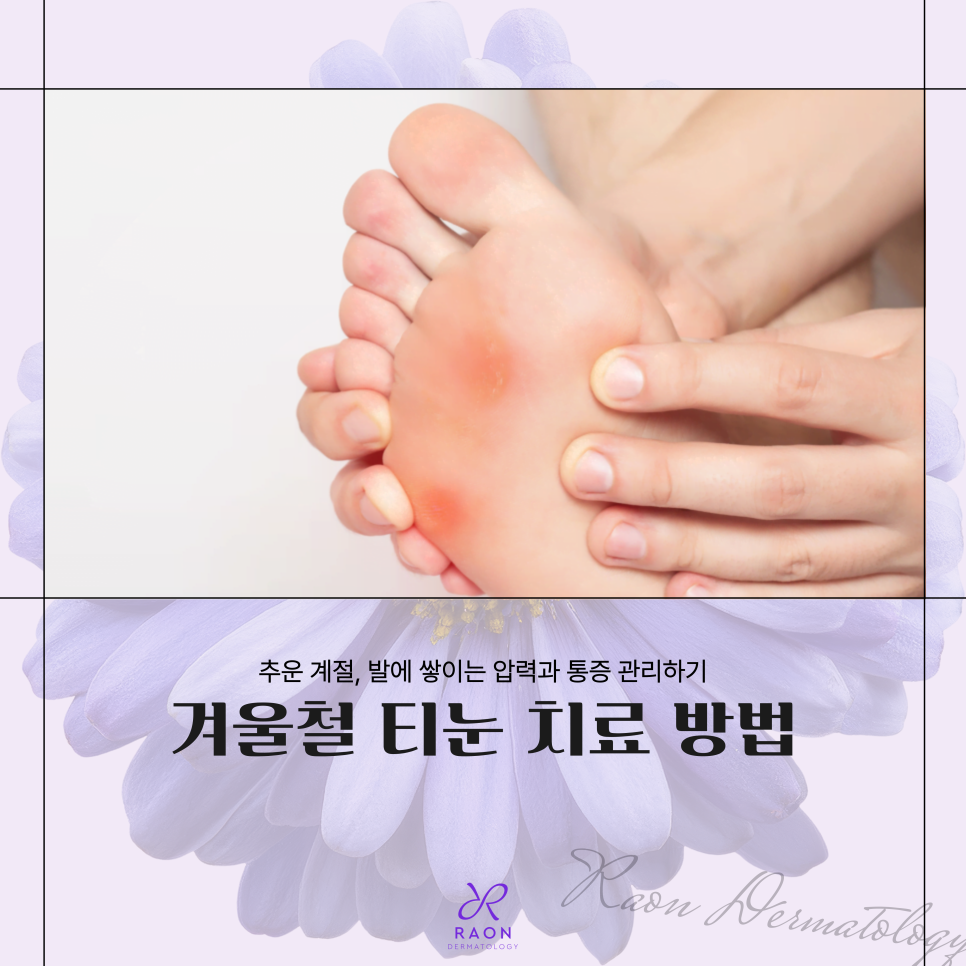
Winter Corn Treatment Methods
What Are Corns?
Corns refer to a condition in which the skin on the feet hardens in response to repeated pressure, forming a firm core in the center. Although they may look similar to calluses at first glance, a pressure point exists deep inside, so they can easily cause stabbing pain when walking. They occur especially in areas that bear body weight, so people who stand for long periods or walk a lot often experience them.
Even if they are small, pain can become severe when pressure is concentrated. If it feels like a grain of sand is stuck in the sole, or if a particular pair of shoes causes unusually strong pain, you may want to suspect a corn. Of course, walking habits and shoe choices in daily life also have an effect, so it is important to find the right direction for care based on an accurate diagnosis.
<Corn Features>
-
Repeated pressure / skin hardening
-
Formation of a firm core in the center
-
Sharp pain / discomfort in daily life
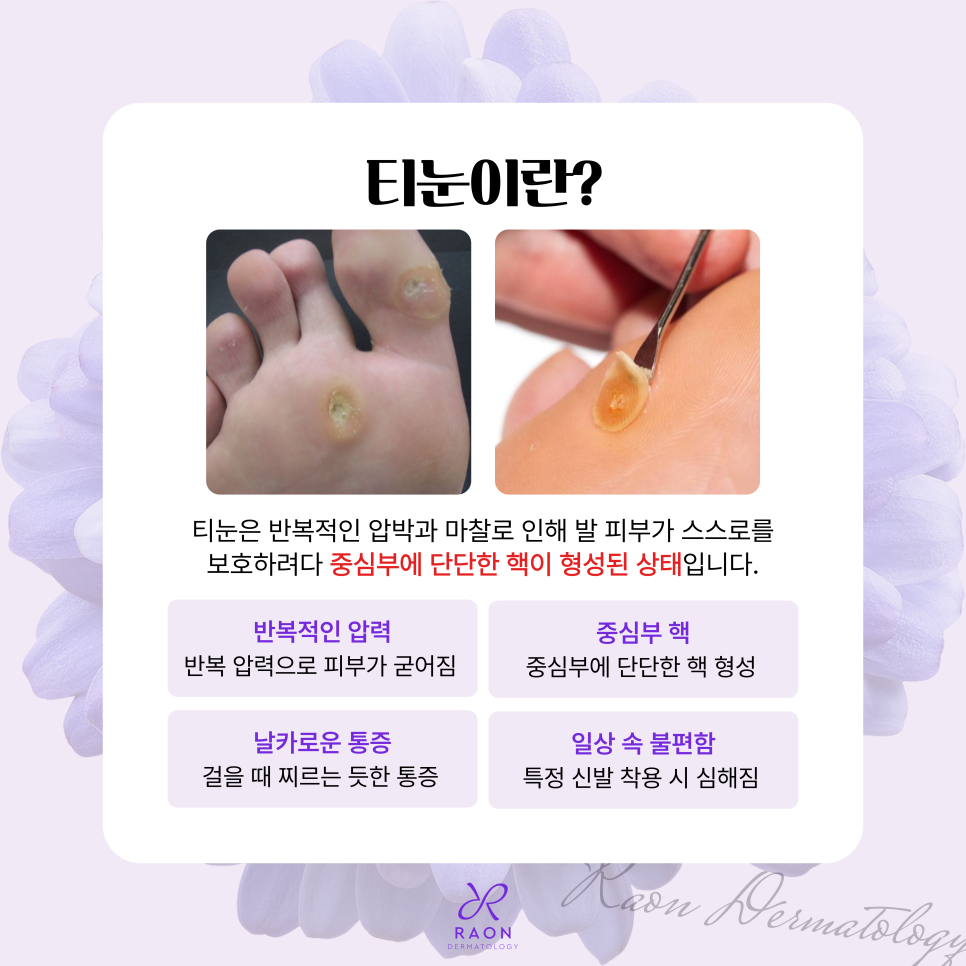
What Are Corns?
Why They Are Common in Winter
The reason corns occur more often in winter is not simply the cold, but changes in lifestyle patterns and how equipment is worn. Ski and snowboard boots firmly hold the foot in place, so constant pressure over long periods can encourage corn formation. In addition, when thick socks are layered, the space inside the shoe becomes tighter and pressure often increases.
Another factor is that as activity levels decrease in winter, the burden on the soles of the feet can shift more to one side than usual. When the balance of the foot is disrupted, certain areas are pressed more, and as a result, even small corns can become more painful. Dry weather also contributes by making the skin crack and thicken more easily. When all of these factors work together, corns can worsen more easily in winter.
<Why They Are Common in Winter>
-
Winter sports / repeated pressure / thicker shoes
-
Layering socks / reduced activity / difficulty distributing weight evenly
-
Dry weather / dead skin builds up more easily
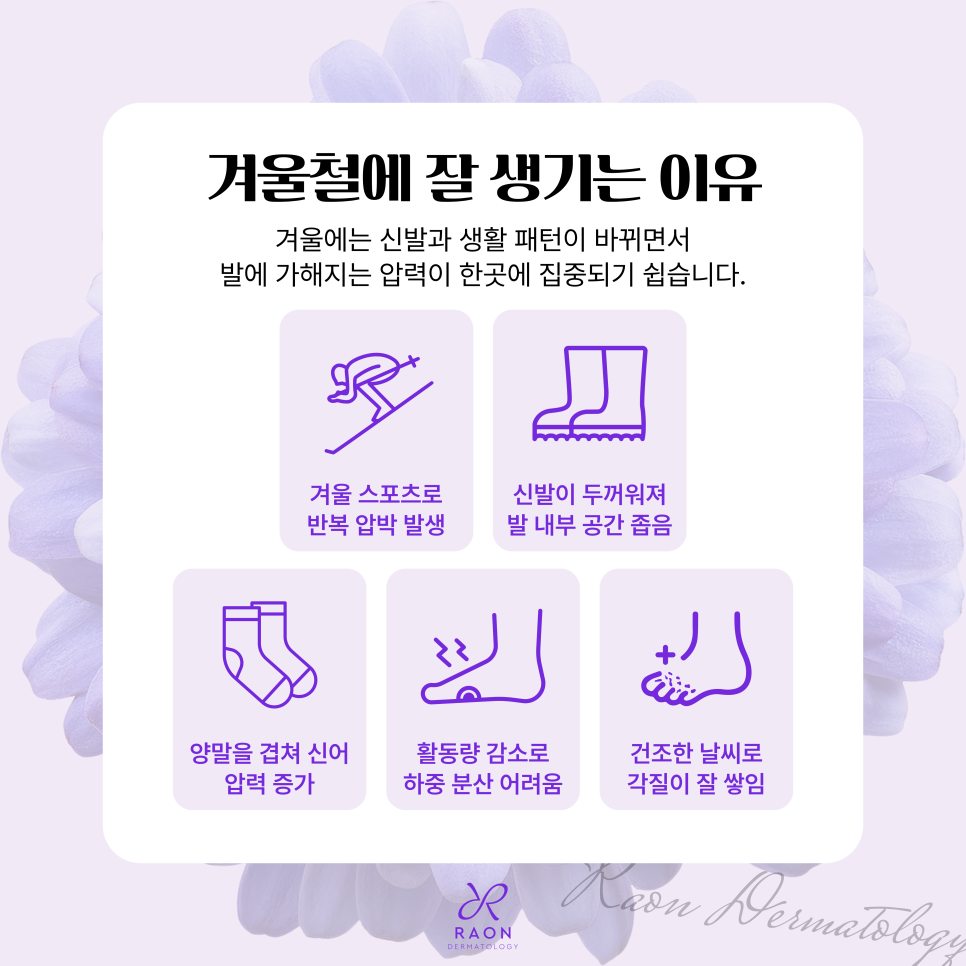
Why They Are Common in Winter
Cryo Treatment
Today we’ll look at two treatment methods! The first is cryo treatment. This method rapidly cools the corn tissue using liquid nitrogen. The cold stimulus freezes the cells from within, helping damaged keratinized tissue naturally shed. Since the temperature drops not only at the surface but also in the core area, it helps address deep pressure points. Another advantage is that the procedure takes a relatively short amount of time.
It also has the benefits of allowing a quick return to daily life after treatment, causing less burden because no needle or incision is needed, and being applicable to various areas because the treatment temperature can be carefully adjusted. Of course, depending on the depth and hardness of the corn, one or two additional treatments may be needed, but because the procedure itself is simple, it can be a suitable method for ongoing care.
<Cryo Treatment Advantages>
-
Procedure without incisions or needles
-
Quick return to daily life
-
Short treatment time / low burden
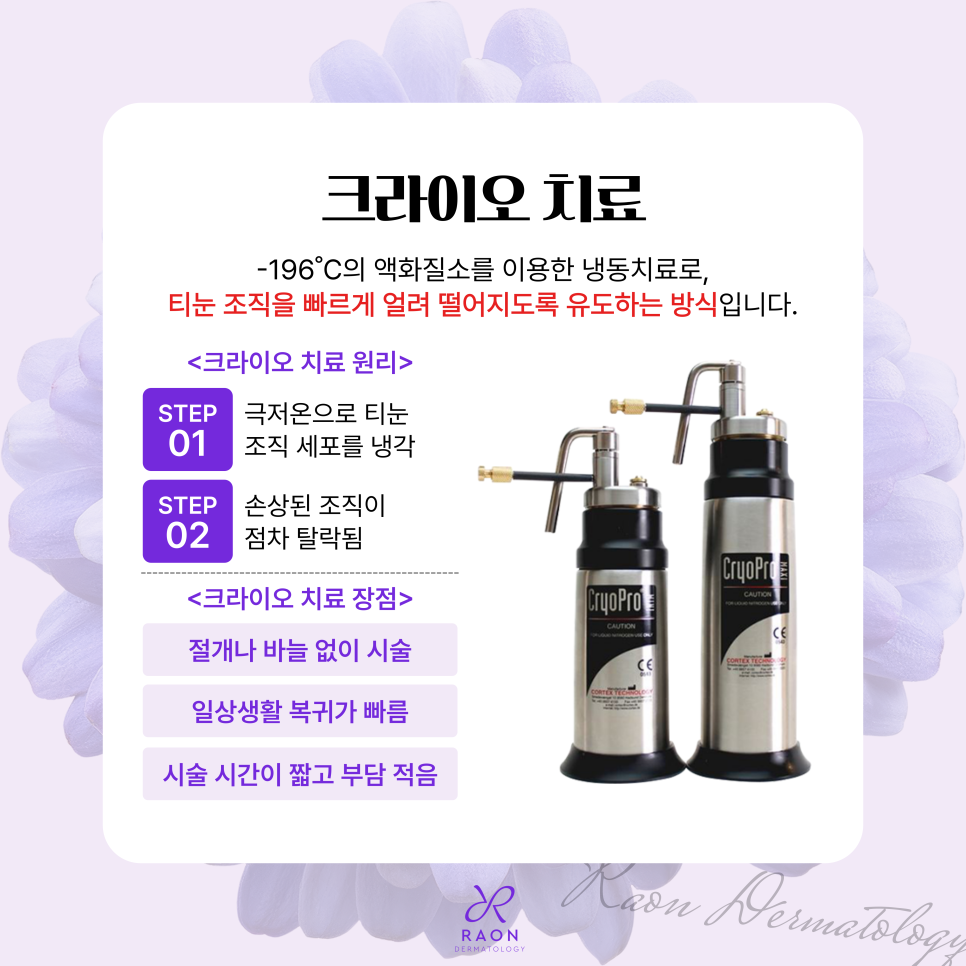
Cryo Treatment
CO2 Laser Treatment
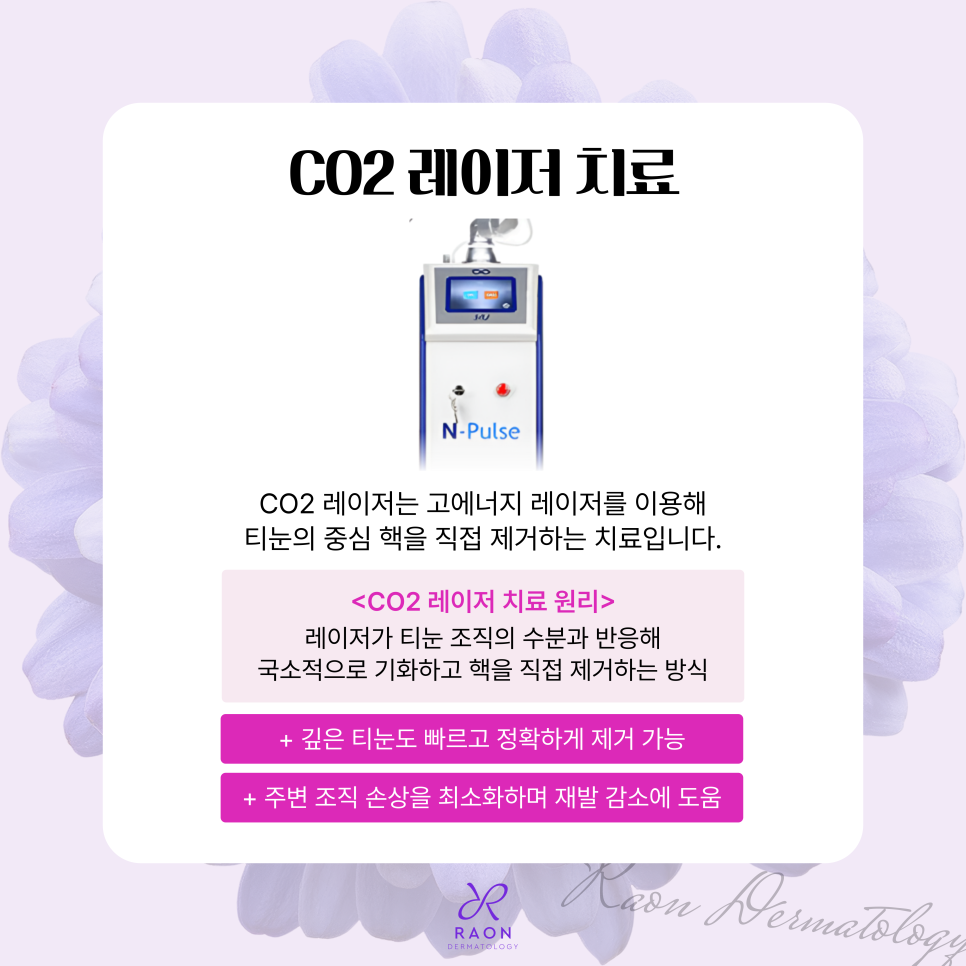
CO2 laser treatment removes the center of the corn directly using high-energy light. The laser works by reacting with the moisture in the tissue and locally vaporizing it, making it possible to approach even corns with deeply rooted cores precisely. Because it can target deep areas accurately, it helps quickly relieve tenderness and pain.
It also has major advantages in that it can remove only the desired area while minimizing damage to surrounding tissue, and it can remove tissue to a sufficient depth to help reduce the risk of recurrence. After treatment, a small wound is created, so simple dressing is needed, but the recovery process is relatively stable. You can think of this as a method commonly used for structurally deep corns.
CO2 Laser Treatment
Cryo & CO2 Laser
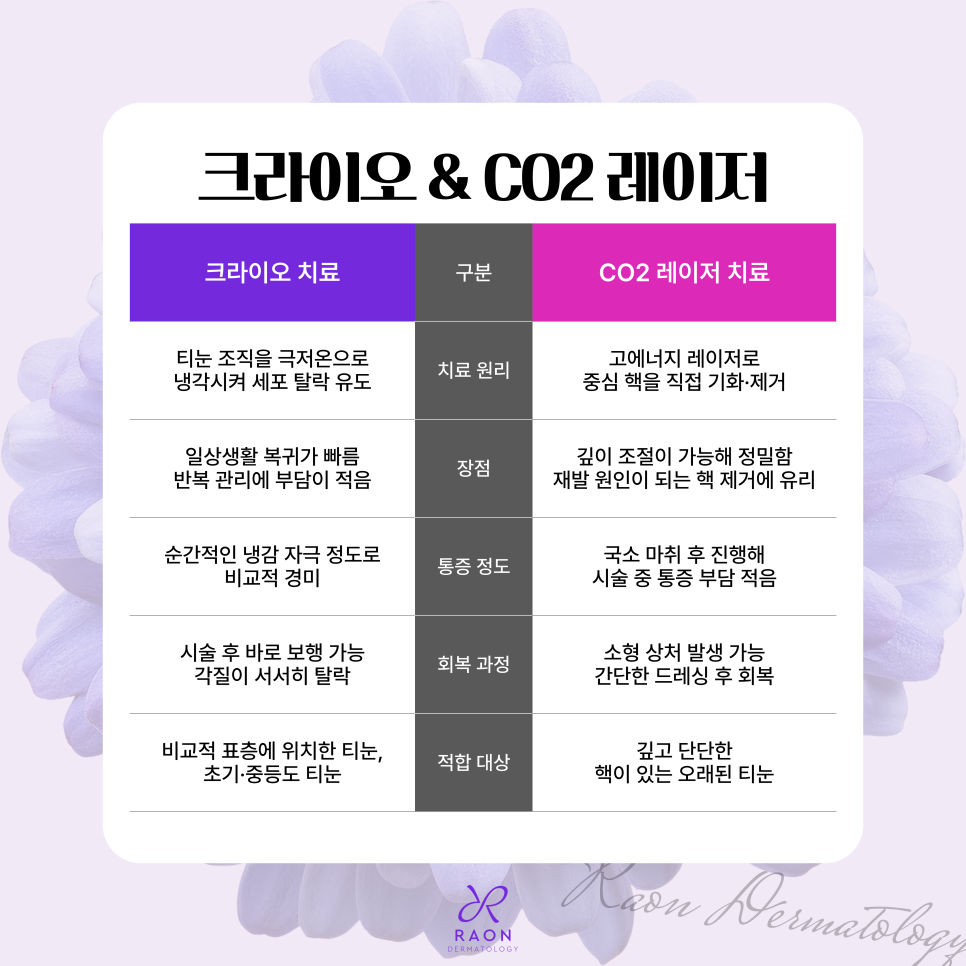
When planning corn treatment, it is difficult to choose just one method because the depth, location, and pain pattern of the tissue all differ. Cryo treatment is a method that freezes the tissue so the damaged tissue gradually falls away, and it is often chosen by people who want low-burden care. In cases where the core is shallow, such as corns that remain relatively superficial, this process alone often makes the pressure point that caused discomfort while walking much more comfortable.
On the other hand, CO2 laser treatment is used when the deep area needs to be handled precisely because it directly removes the firm core located in the center. Although dressing is needed for a short time after treatment, recovery tends to be fast, and many people find it helpful for old corns or areas that have repeatedly been painful. It cannot be said that one method is better than the other; the choice depends on your lifestyle and pain pattern, so it is best to find a comfortable direction together during the consultation.
Cryo & CO2 Laser
How Should Winter Corns Be Treated?