Precautions for Laser Lifting
Hello, this is Raon Dermatology in Haengdang-dong!
As time passes and the skin’s support structure weakens, elasticity naturally decreases and the facial line begins to sag. When you notice deeper nasolabial folds than before or a drooping jawline, it is only natural to become concerned about how to care for your skin! Many people look into lifting procedures in hopes of restoring firm, healthy skin. However, rather than deciding on a procedure without enough information, it is essential to clearly understand the possible side effects and precautions first :)
Precautions for Laser Lifting
What is laser lifting?
Laser lifting is a method that improves elasticity by delivering energy deep into the skin instead of using a scalpel-based surgical approach. It mainly uses high-intensity focused ultrasound or radiofrequency energy to induce collagen regeneration inside the skin! It is effective for refining the facial line by contracting tissue that has loosened due to aging while placing little stress on the skin surface.
Because the skin layer reached varies depending on the type of energy used, the appropriate method should be selected by considering each person’s skin thickness and degree of sagging. Ultrasound methods deliver energy to the deepest SMAS layer of the skin, while radiofrequency methods focus on improving elasticity in the dermis. These lifting procedures are preferred by many people because the recovery period is short and they cause little disruption to daily life :)
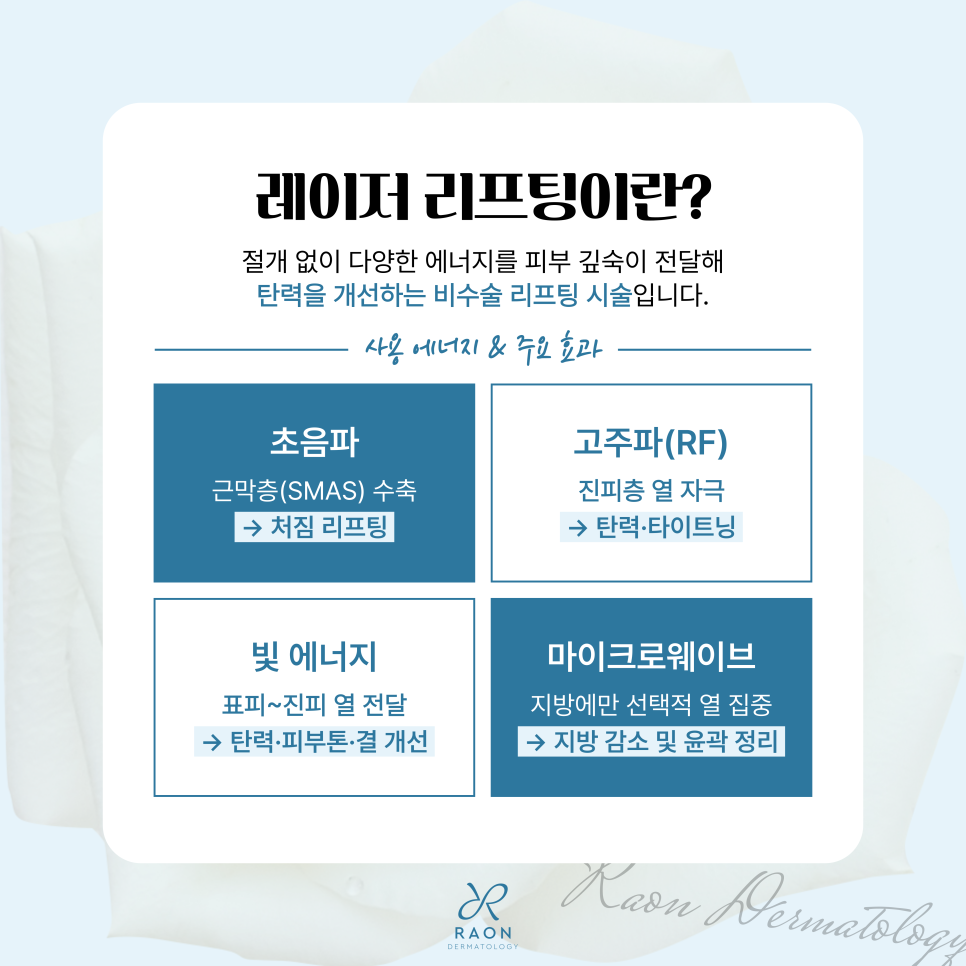
What is laser lifting?
Common lifting side effects
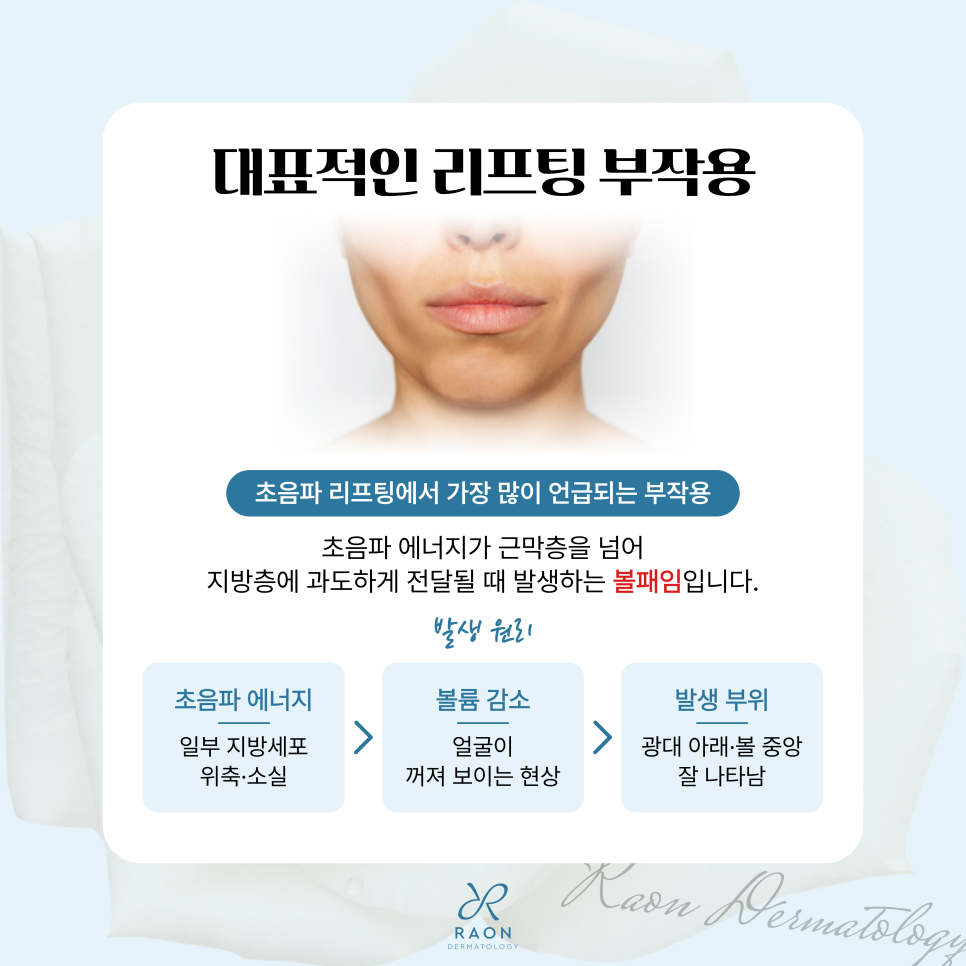
One of the common concerns many people have is a hollowed look in the cheeks after the procedure. This usually occurs during ultrasound lifting when the energy goes beyond the target SMAS layer and is excessively concentrated in the fat layer! The principle is that ultrasound energy can shrink or destroy fat cells, reducing volume in unwanted areas.
If a procedure intended to create a smooth facial line instead makes the face look gaunt, like a skull, that would understandably be very upsetting, right~? In particular, if too much fat is lost below the cheekbones or in the center of the cheeks, there is a risk that the face may appear sharper or older. Therefore, it is extremely important to accurately assess the fat distribution across the entire face and carefully adjust the location and intensity of energy delivery.
<How cheek hollowness occurs>
-
Ultrasound energy: some fat cells shrink / are lost
-
Volume decreases: the face looks hollow
-
Common areas: below the cheekbones / center of the cheeks
Common lifting side effects
Who should be cautious about cheek hollowness
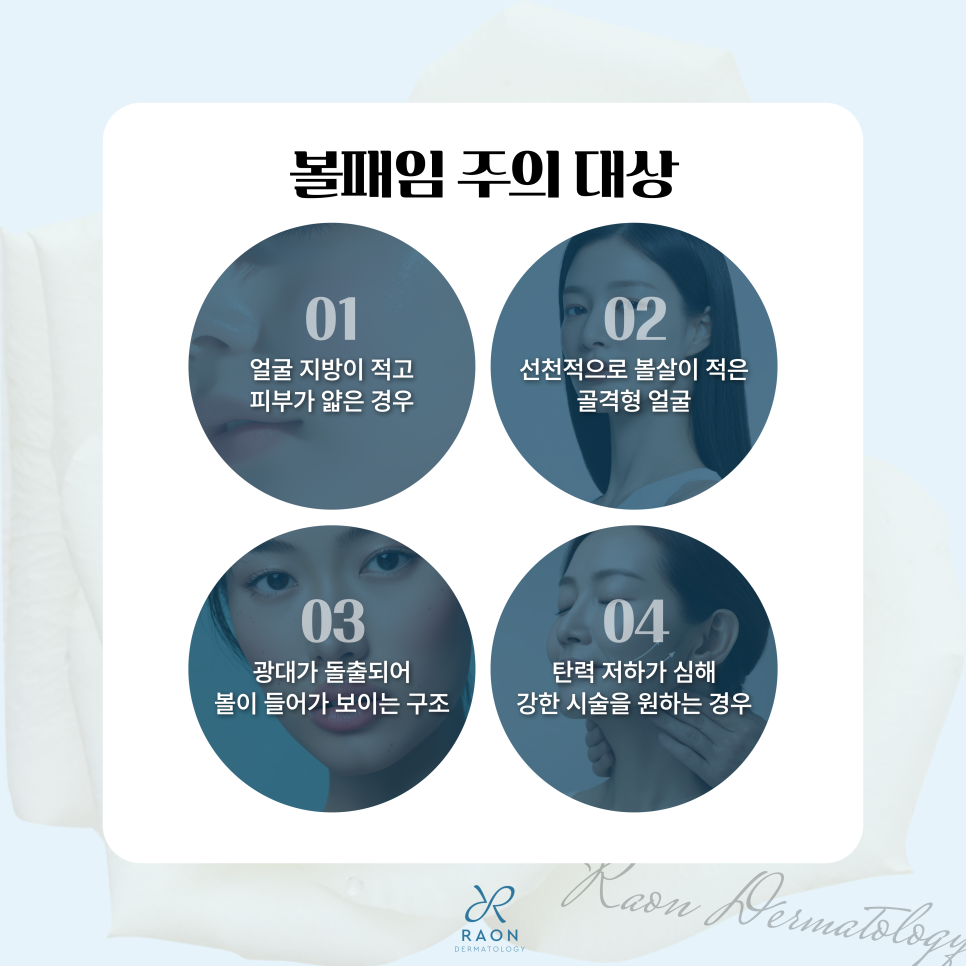
The side effect of cheek hollowness does not occur the same way for everyone; it can happen more frequently in certain facial types. First, people with naturally thin skin and little subcutaneous fat may feel a noticeable loss of fat even with a small amount of energy! Those who have long been concerned about lacking cheek volume or who have a bony facial structure with angular features need a more careful approach before treatment.
Also, if prominent cheekbones make the cheek area appear relatively sunken, incorrect energy delivery can make that area look even more deeply hollowed. Caution is also needed when performing a strong treatment on skin that already has significantly reduced elasticity and feels loose! In this way, receiving treatment in a one-size-fits-all manner without considering each person’s facial structure and soft tissue characteristics should be avoided.
<Who should be cautious about cheek hollowness>
-
Little facial fat / thin skin
-
Naturally low cheek volume / bony facial structure
-
Prominent cheekbones / severe loss of elasticity, or when a strong treatment is desired
Who should be cautious about cheek hollowness
Radiofrequency lifting side effects
Meanwhile, radiofrequency lifting involves delivering strong thermal energy to the dermis to help collagen contract and regenerate, which carries a risk of deep tissue burns. Although the skin surface is protected through a cooling system, the inside of the tissue is kept at a high temperature, so insufficient technique can damage the tissue! This problem can occur when the device tip does not adhere evenly to the skin surface or when excessive energy remains in one area.
Deep tissue burns can cause inflammation and scarring in the deeper tissue rather than on the skin surface, making treatment more difficult and complex. That is why the technical skill of the medical staff, who must monitor the patient’s response in real time and maintain appropriate energy density during the procedure, is essential! Receiving treatment from a specialist with a thorough understanding of the device and extensive clinical experience is the surest way to protect your safety :)
<Causes of radiofrequency lifting side effects>
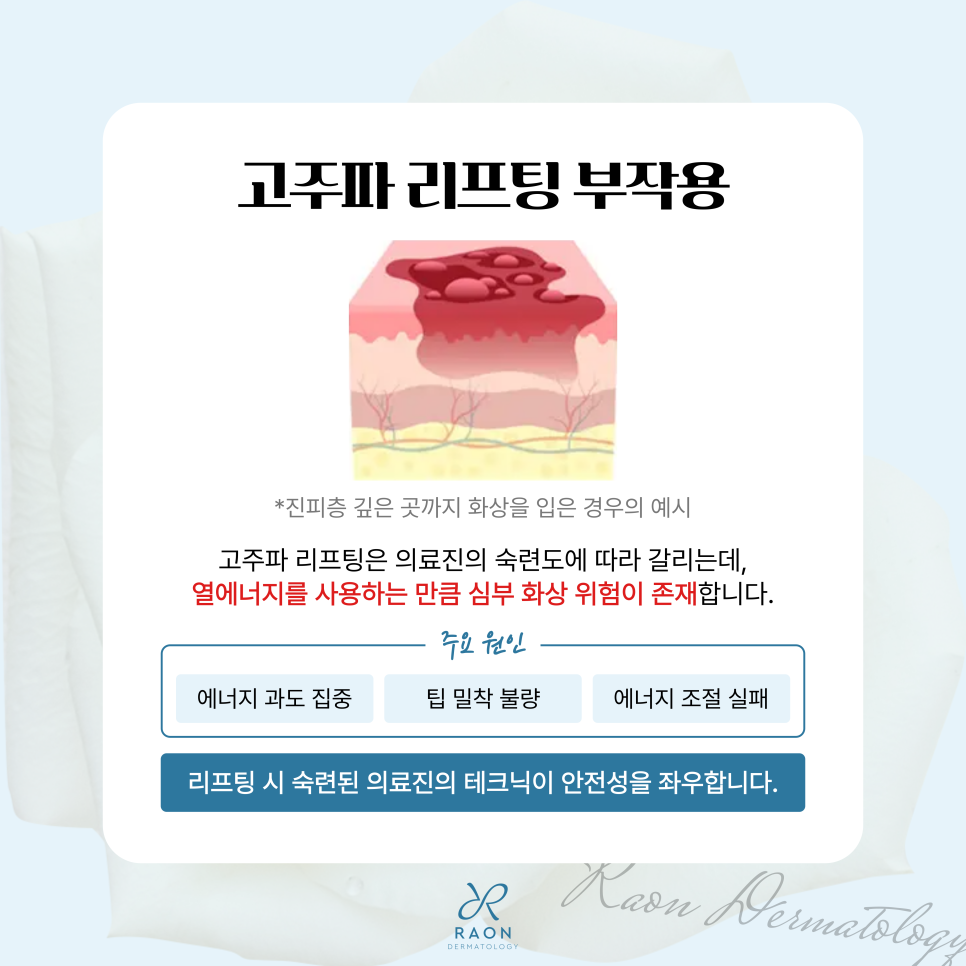
Radiofrequency lifting side effects
Lifting after fillers & fat grafting
If you have previously had filler or fat grafting procedures, special caution is needed when deciding the timing of lifting. This is because transplanted fat or filler ingredients are sensitive to heat, and when exposed to the high-temperature energy of lifting lasers, the ingredients may change or be absorbed more quickly! As a result, the carefully established facial volume may collapse or become distorted.
In general, it takes at least 2 to 4 weeks or more for fillers or fat grafting to fully settle and integrate. The time it takes to reach a stable phase varies by individual, so be sure to inform the medical staff in detail about any prior procedures before lifting! The procedure should be performed only after an adequate waiting period so that you can safely enjoy improved elasticity while maintaining the existing volume. We hope you will keep in mind the precautions explained today and welcome healthy, beautiful changes :)
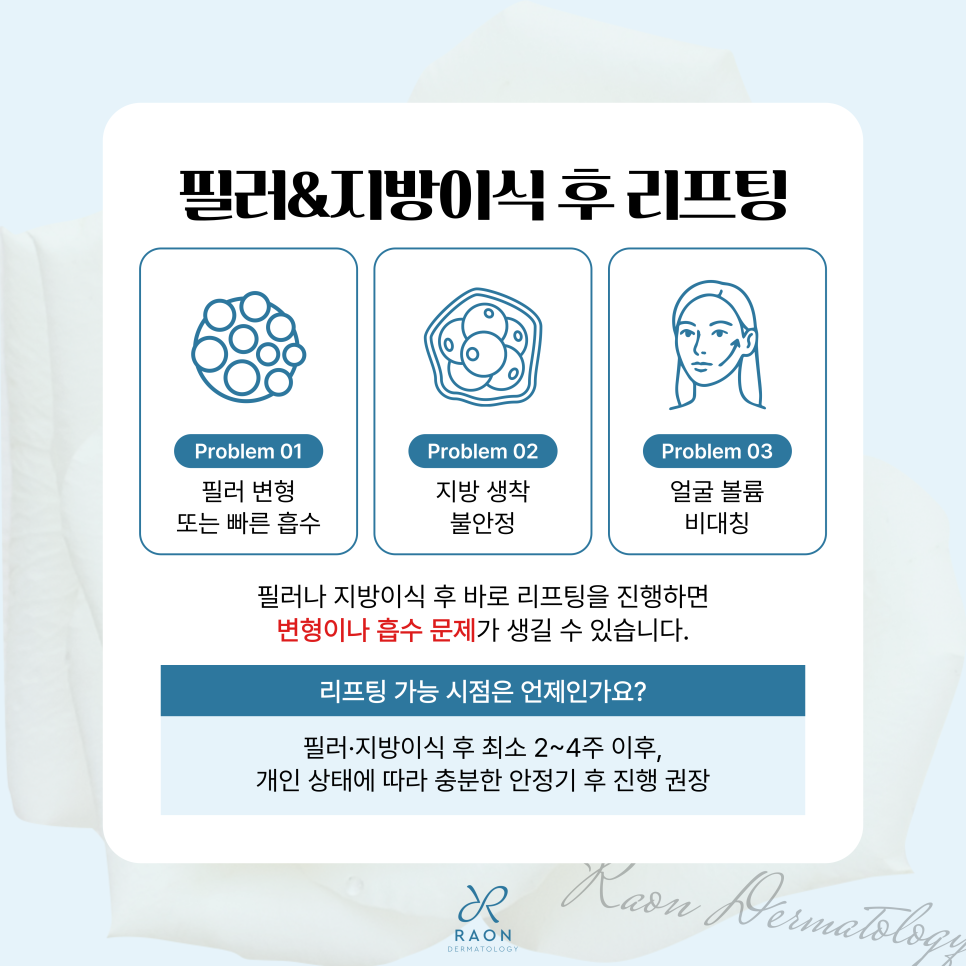
Lifting after fillers & fat grafting
Precautions for Laser Lifting