If you’re worried about skin booster pain
Hello, this is Raon Dermatology in Seongdong-gu!
If you’re considering a skin booster for healthy, lively skin but can’t quite make up your mind, the biggest reason is probably fear of pain. Because the active ingredients must be delivered directly into the dermis, the process involves using needles. Of course, the degree of pain varies greatly from person to person, but it is also something that can be sufficiently controlled depending on the treatment method and equipment chosen. Rather than simply enduring it, it’s important to understand what causes the pain and find the right way to ease it for you :)
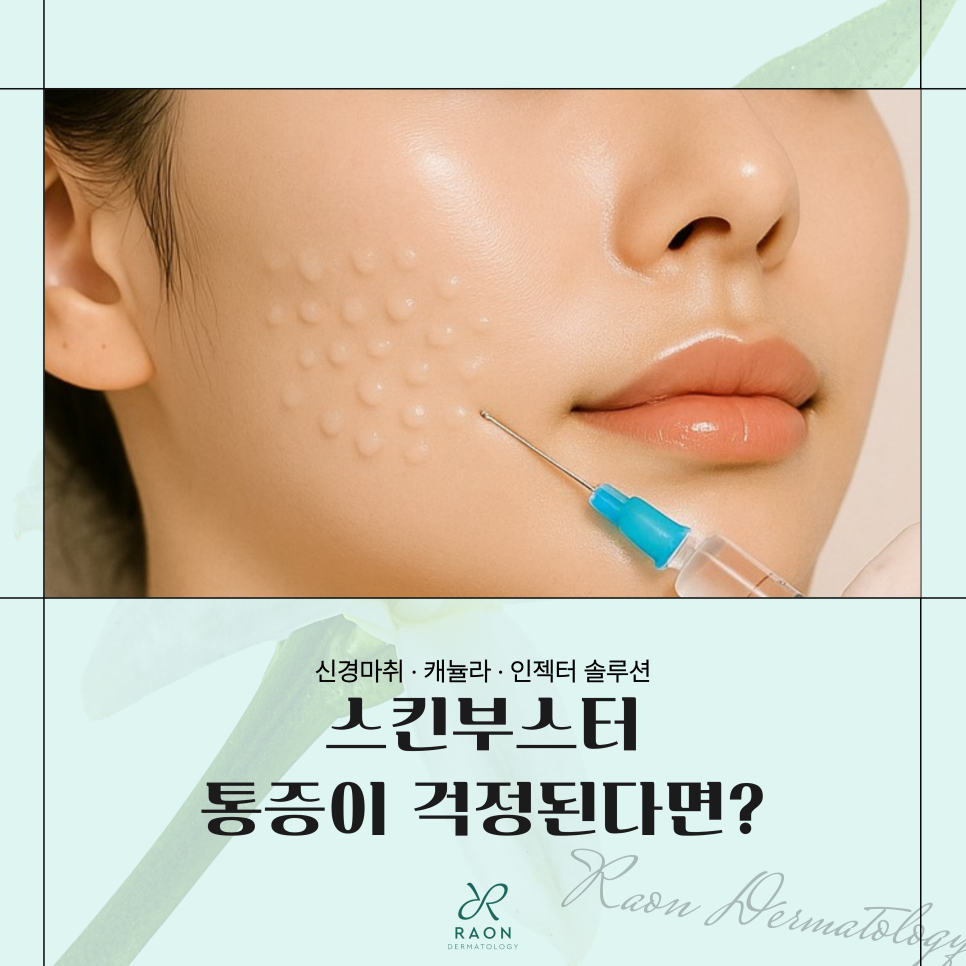
If you’re worried about skin booster pain
Causes of skin booster pain
The pain felt when medication is injected into the skin can largely be divided into three factors. First, physically, when the needle passes through the epidermis, it stimulates the nerve fibers concentrated in the dermis, causing a sharp pain. Since the process is repeated dozens to hundreds of times across the entire face rather than just once, the pain can accumulate and feel stronger as the treatment goes on!
The physical properties of the medication are also an important factor in determining how intense the pain feels. When liquid is injected into the skin, the surrounding tissue is pushed aside and expands, and the resulting pressure can create a strong feeling of tightness. In particular, products with larger particles or high viscosity and high concentration tend to increase tissue resistance, which can make the pressure feel greater. Also, when a high-concentration medication creates an osmotic effect that causes a difference in concentration inside and outside the cells, the nerves may be stimulated and a stinging pain may occur.
<Causes of pain?>
-
Pain from needle puncture
-
Tight pain during the injection process
-
Stinging pain caused by osmosis
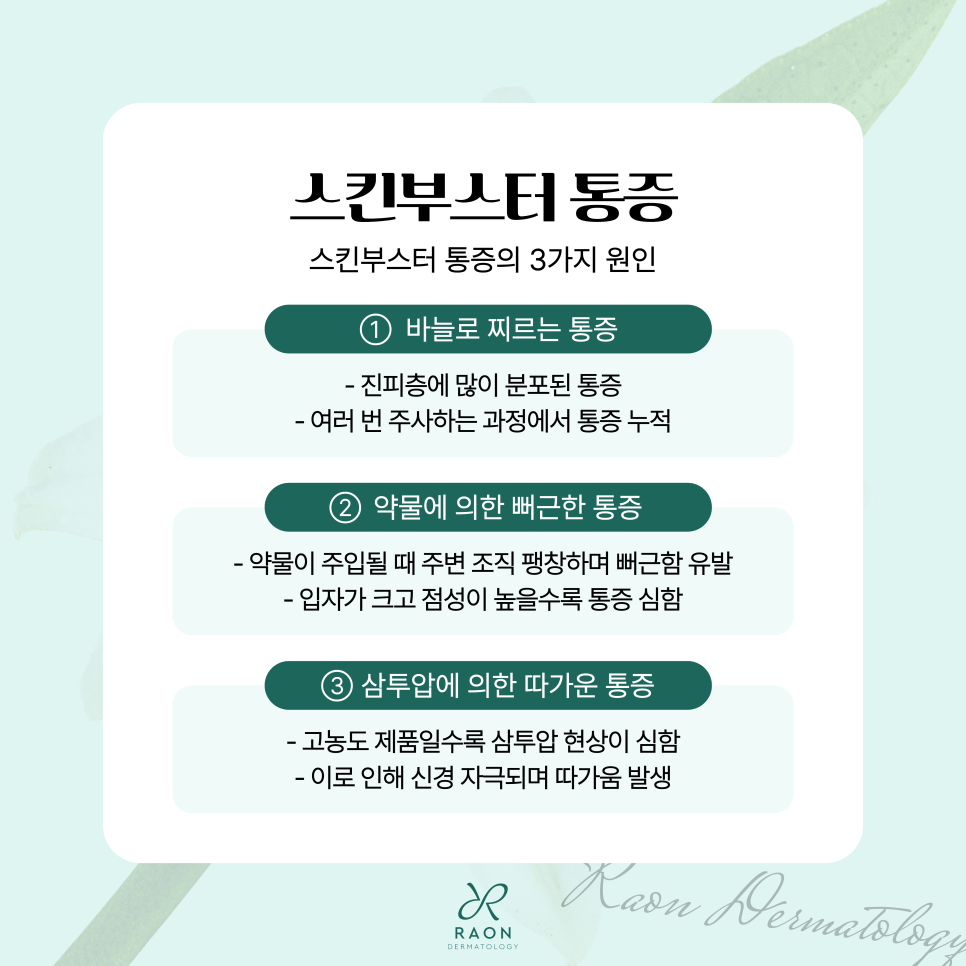
Causes of skin booster pain
Nerve anesthesia
For those whose pain is difficult to control with regular topical anesthetic alone, nerve anesthesia can be an effective alternative. Nerve anesthesia works by directly injecting an anesthetic near the nerve trunks that control sensation in the facial area, temporarily blocking sensation in that region. While topical anesthetic dulls sensation on the surface of the skin, nerve anesthesia directly blocks the pain transmission pathway, so a much stronger pain-reducing effect can be expected. It also greatly helps reduce the discomfort felt during injection, providing psychological comfort as well :)
However, right after anesthesia, sensation around the mouth or facial muscles may become dull, so making facial expressions may temporarily feel awkward. You should also keep in mind the possibility of very slight bruising during the injection of the anesthetic. These symptoms naturally disappear over time, so there is no need to worry too much. If you are highly sensitive to pain or if the treatment volume is large and a long procedure is needed, it is reasonable to discuss nerve anesthesia with the medical staff.
<Nerve anesthesia>
-
Anesthetic injected directly into the nerve trunk
-
Strong pain reduction / relief of psychological stress
-
Facial expressions may temporarily feel dull
-
Possibility of bruising from the nerve injection
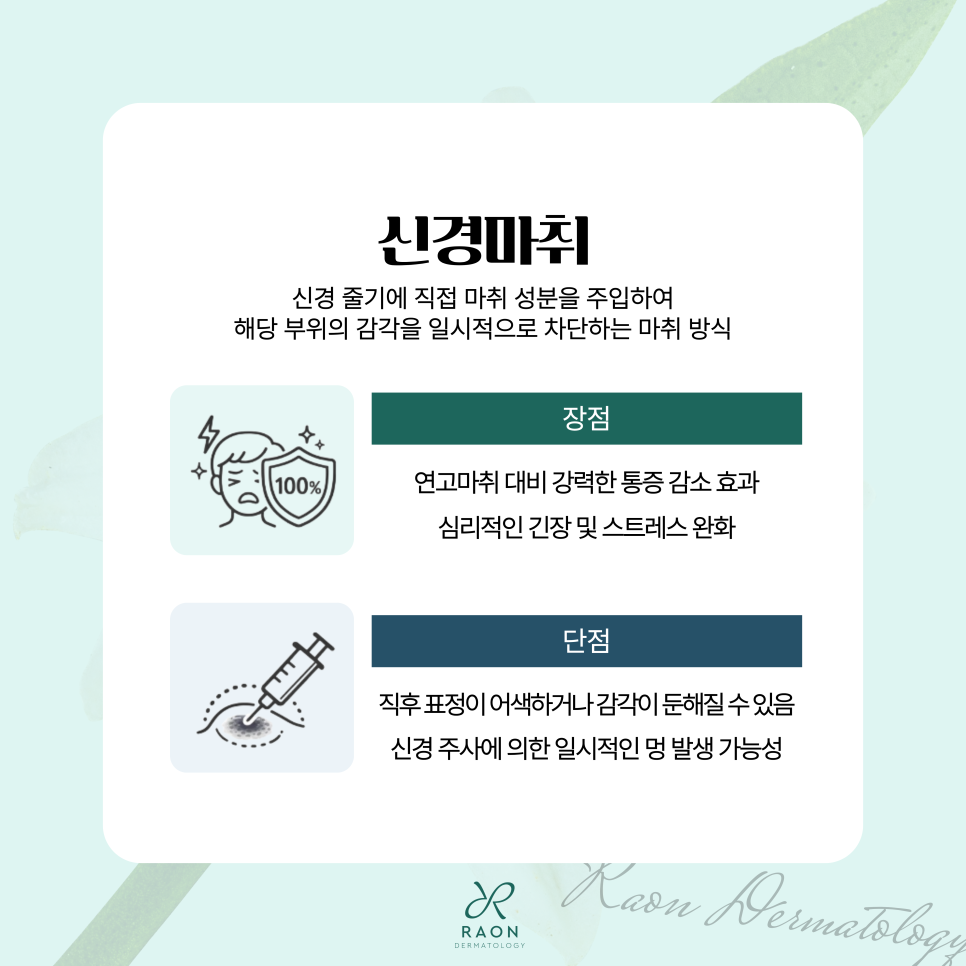
Nerve anesthesia
Cannula needle
If you want to reduce direct tissue damage caused by needles, using a cannula needle is an appropriate method. Unlike a standard injection needle with a sharp tip, a cannula is made in the form of a blunt, rounded tube. Because the tip is dull, when it moves through the skin it passes by pushing aside blood vessels and nerves rather than piercing them directly. As a result, the likelihood of bruising or swelling from vessel damage is lower, and the pain felt during the procedure is relatively mild.
Of course, a cannula is not perfect in every situation. When medication needs to be injected very precisely in small amounts into a very superficial layer of skin, it may be somewhat less delicate than a standard needle, which is considered a limitation. In addition, a separate guide hole must be made to insert the cannula, and the outcome and level of pain can vary greatly depending on the skill of the medical professional handling it inside the skin. Therefore, it is important to choose the proper tool based on your skin thickness and the purpose of the treatment.
<Cannula needle>
-
A needle with a blunt, rounded tip
-
Reduces pain and tissue damage, with less bruising and swelling
-
Limited when delicate injection is needed / skill is important
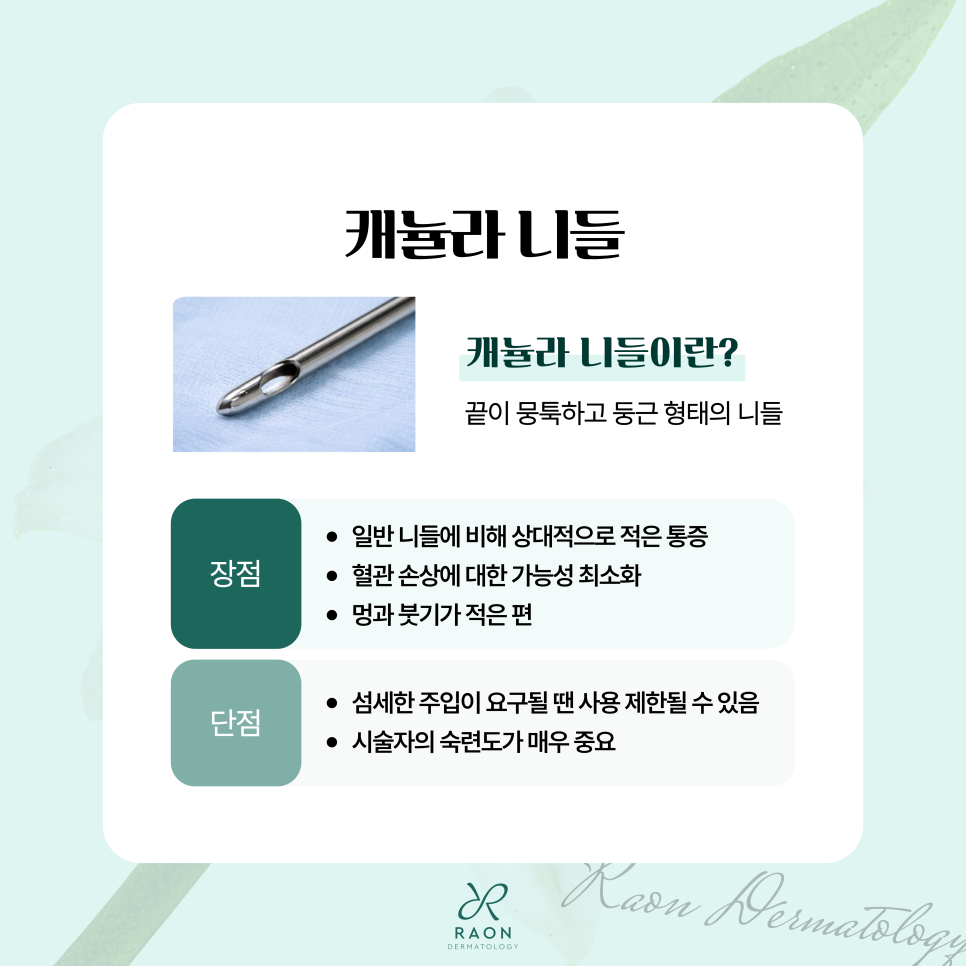
Cannula needle
DermaShine injector
To address the irregular injection depth and pain issues of manual injections, injector devices such as DermaShine are also used. The injector works by using negative pressure to briefly lift and tighten the skin, then injecting medication through tiny multi-needles. Because the needle enters while the skin is stretched, the stimulation to pain receptors is dispersed, making the procedure much easier to tolerate than manual injection.
Another major advantage of using an injector is that it can deliver a fixed dose accurately to the intended location. It allows efficient treatment by minimizing medication loss from leakage out of the skin while spreading it evenly throughout the dermis. Compared with manual injection, it is faster and causes less skin irritation, so it can be a suitable option when treating a wide area of the face. Another appealing point is that treatment can be customized to the patient’s skin condition through adjustment of the device pressure.
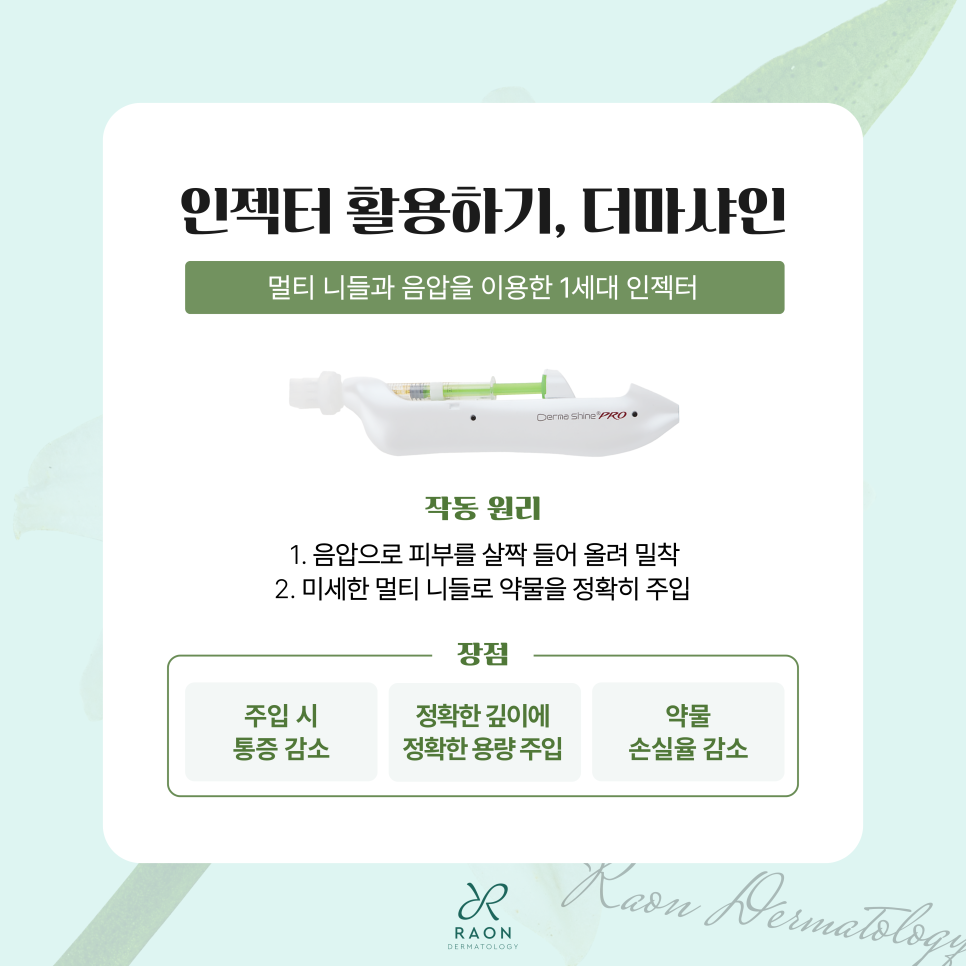
DermaShine injector
MiraJet injector
If you have an extreme fear of needles themselves, MiraJet, which delivers medication without needles, becomes an excellent solution. MiraJet is a needle-free jet injector that converts the powerful energy of a laser into pressure and sprays medication in the form of an ultra-fine jet stream. Because the medication passes through the skin in a thickness thinner than a strand of hair, pain is barely felt, and bruising or embossing that can appear after needle procedures is also significantly reduced :)
MiraJet can be expected not only to inject medication but also to stimulate the skin with microjets and induce collagen regeneration. Thanks to this mechanism, it shows excellent results in treatments that require precise refinement of skin texture, such as pore tightening or scar improvement. In this way, the ingredients of the skin booster and the regenerative effect of the device work in synergy to improve the skin’s overall condition. Since there are many ways to reduce pain like this, if you communicate thoroughly with the medical staff according to your preferences and skin concerns, you should be able to start treatment with peace of mind :)
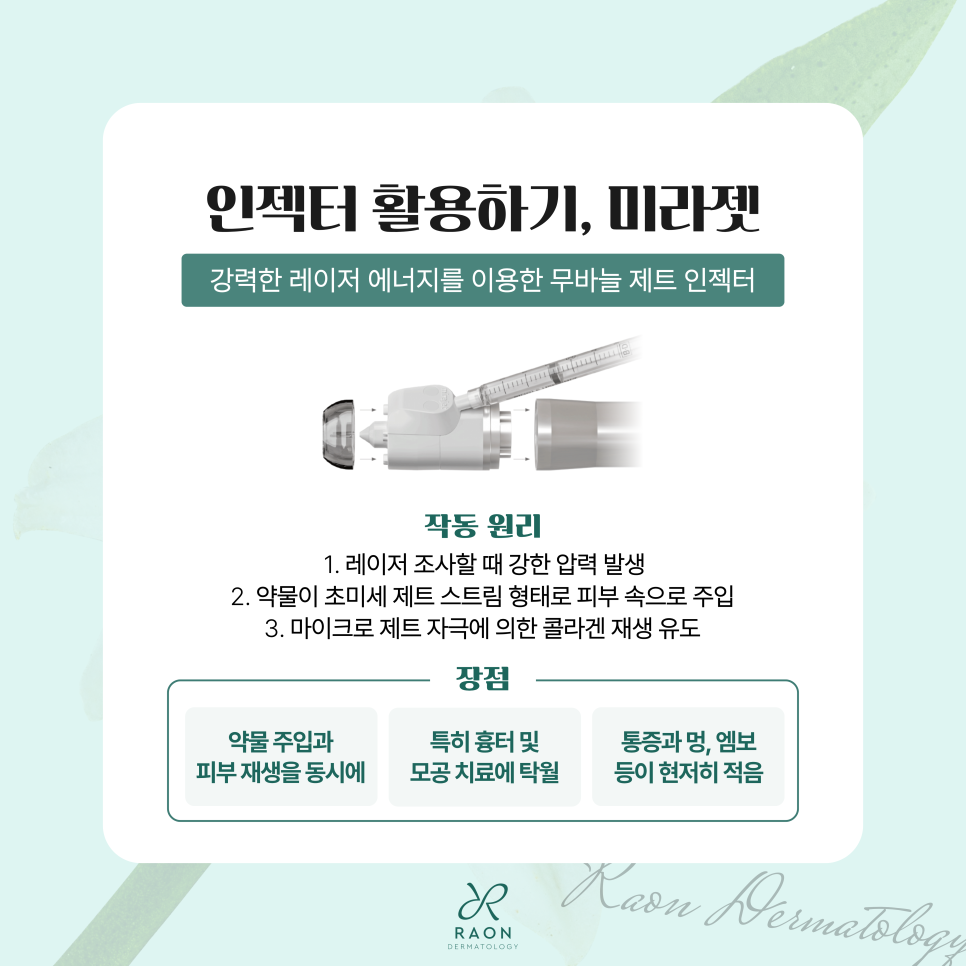
MiraJet injector
What are the ways to reduce skin booster pain?